
Affiliate Disclosure
Some links on this page are affiliate links. As an Amazon Associate, we earn from qualifying purchases — at no extra cost to you. We do not buy, test, or physically handle the products we cover; our rankings come from aggregated owner reviews, ratings and expert consensus. Commissions never change our verdicts. How we rank & full disclosure.
The short version: the spec that actually matters on a garage air compressor is SCFM at 90 PSI — the air it delivers — which must exceed what your thirstiest air tool needs. Inflation and nailing need almost nothing (a 6-gallon pancake is plenty); impact wrenches need more; sanders and paint guns need a big 30-gallon unit. Also weigh noise (quiet models exist) and oil-free vs oil-lubricated. Ranked across aggregated owner reviews, our #1 pick is the ultra-quiet California Air Tools 8010. Below is the full field and how to choose.
A compressor pairs with the rest of your air setup. For tire duty specifically, see our portable tire inflator guide, and for the bench and storage around it, the workbench and tool chest guides. The full garage tools hub has more.
Top Picks at a Glance
Our #1 Pick: California Air Tools 8010
Our top pick is the California Air Tools 8010. It hits the sweet spot for a home garage: an 8-gallon tank and enough SCFM for inflation, nailing, blowing and light air tools, an oil-free pump that needs no maintenance, and — the standout — genuinely quiet 60 dBA operation, about the level of conversation, versus the 80–90 dBA racket of a typical pancake. It is wheeled and reasonably light for its size. Owners rate it highly for being capable and civilized to run. If your compressor lives in an attached garage or you simply value your ears, this is the one to beat. For heavy continuous tool use, step up to the Makita or the 30-gallon Industrial Air below.
Best Garage Air Compressors 2026: The Ranked Field
Best for a quiet, capable all-round garage compressor
- 8-gallon steel tank, ~2.2 SCFM @ 90 PSI
- Ultra-quiet 60 dBA operation
- Oil-free, low-maintenance pump
- Wheeled, lightweight for its size
Why buy it: the compressor owners rate highest — genuinely quiet at 60 dBA, oil-free so there is no maintenance, and enough air for inflation, nailing, blowing and light air tools.

Best for the best-selling portable pancake
- 6-gallon tank, 165 max PSI
- 2.6 SCFM @ 90 PSI
- Oil-free, maintenance-free pump
- Only 30 lb, easy to carry
Why buy it: the value standard — a hugely popular pancake that delivers strong air for inflation, nailing and light tools, is light enough to carry anywhere, and costs very little.

Best for durability and air for continuous tool use
- Big Bore oil-lubricated pump
- 4.2-gal twin-stack, 4.2 SCFM @ 90 PSI
- Runs cooler and quieter (~79 dBA)
- Cast-iron pump built to last
Why buy it: the premium pick — an oil-lubricated Big Bore pump that runs cooler and delivers more sustained air, so it drives impact wrenches and runs longer without the wear of oil-free pumps.

Best for the quietest option for a shared space
- Enclosed in a sound-proof cabinet
- 40 dBA — near-conversation quiet
- 8-gallon steel tank, oil-free
- Ideal near living space
Why buy it: the quietest pick — housed in a sound-proof cabinet at 40 dBA, so you can run it in an attached garage or near living space without the usual compressor racket.

Best for a light grab-and-go compressor
- 6-gallon tank, 150 max PSI
- 2.6 SCFM @ 90 PSI
- Oil-free, ~78.5 dBA
- High-efficiency motor starts in cold
Why buy it: the grab-and-go pick — a light, cheap, oil-free pancake with strong output for inflation and nailing, and a motor that starts reliably even in a cold garage.
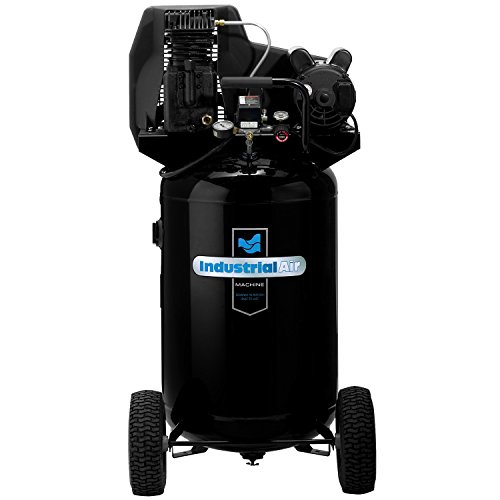
Best for running demanding air tools and paint
- 30-gallon vertical tank
- Cast-iron pump, belt-driven
- ~5.3 SCFM @ 90 PSI, 120/240V
- Space-saving vertical footprint
Why buy it: the big-job pick — a 30-gallon cast-iron belt-drive that supplies the sustained high CFM impact wrenches, sanders and paint guns need, in a space-saving vertical footprint.
SCFM Is the Spec That Matters — Match It to Your Tools
Ignore the marketing around horsepower and peak PSI; the number that decides whether a tool works is SCFM at 90 PSI. Every air tool needs a certain air delivery, and if the compressor cannot supply it continuously, the tool bogs down while you wait for the tank. Inflation, nailing, blowing need under ~2 SCFM — a 6-gallon pancake is plenty. Impact wrenches, ratchets, die grinders need ~3–5 SCFM. Sanders and paint guns run continuously and need 5+ SCFM, calling for a 30-gallon or larger unit. Pick a compressor rated above your thirstiest tool, then let tank size determine how long you run before the pump catches up.
How to Choose a Garage Air Compressor
Start with the tools you will run and their SCFM, then buy a compressor rated above the thirstiest. Match the tank to run time — small for intermittent tasks, 30-gallon-plus for continuous tools. Decide oil-free vs oil-lubricated — oil-free for low-maintenance intermittent use, oil-lubricated for durability under heavy load. Weigh noise — a 60 dBA quiet model or a cabinet-enclosed unit is worth it in an attached garage. Check power — most units run on 120V, but big compressors may want 240V. And factor portability if you carry it around versus a stationary shop unit.
Setup and Maintenance
Place the compressor where it has ventilation and, for oil-lubricated units, sits level. Drain the tank after use — condensation collects inside and causes rust that shortens tank life; a quick daily drain of the valve prevents it. Keep the intake filter clean, check oil on oil-lubricated units, and use a water separator on the air line if you spray paint. Wear hearing protection with louder units. Use the right hose diameter and fittings so you do not choke the air delivery you paid for. A little maintenance keeps a compressor running well for many years.
Portable vs Stationary for a Home Garage
For a home garage the first fork is portable versus stationary. A portable pancake or hot-dog compressor (6–8 gal) is light enough for one person to carry to a job, and owners who have had both consistently recommend a quiet, portable oil-free unit like the DeWALT pancake if you ever work away from the bench. A stationary vertical (30 gal and up) trades portability for a bigger tank and sustained air. Most home users never outgrow a portable unit for inflation, nailing and light air tools — you only need the stationary route if you run impacts, sanders or a paint gun for hours at a time.
Inflating Tires and Other Quick Jobs
Topping up tires is the job most owners buy a compressor for first. Any 6-gallon unit holds enough air to bring all four tires and the spare up to pressure, and the built-in gauge makes it simple. If tires are genuinely all you need, a small electric air inflator is cheaper and lives in the trunk — see our portable tire inflator guide. But a garage compressor also blows out filters, seats tubeless tires and drives a blow gun, which a standalone inflator cannot do.
Single-Stage vs Two-Stage and 120V vs 230V Power
Most garage compressors are single-stage — one piston stroke compresses air to tank pressure, good for around 150 PSI and every home task. Two-stage compressors compress the air twice for higher PSI and more sustained CFM, the choice for a busy shop, where brands like Ingersoll Rand, Rolair and Quincy dominate. Two-stage units and the largest vertical single-stage compressors often need 230V wiring rather than a standard 120V outlet, so check the plug and your electrical panel before you buy. For inflation, nailing and light air tools, a single-stage 120V unit is all you will ever use.
How We Rank
Air compressors are a long-term tool, so we rank by aggregated owner ratings, review volume, and the themes owners repeat rather than a bench test. We weigh four things. Air delivery — honest SCFM at 90 PSI matched to real garage tasks. Build and durability — pump type and quality that lasts under the intended use. Noise — how livable it is to run, especially in an attached garage. And value — capability and quality per dollar. Prices were current at the time of writing.
Quick Comparison
California Air Tools 8010 Ultra-Quiet Oil-Free Air Compressor (8-Gallon, 60 dBA)
Best for a quiet, capable all-round garage compressor
Best Value
DeWALT DWFP55126 Pancake Air Compressor (6-Gallon, 165 PSI)
Check Price on Amazon
Best Premium
Makita MAC2400 Big Bore Air Compressor (2.5 HP, 4.2-Gallon)
Check Price on Amazon
Best Ultra-Quiet
California Air Tools 8010SPC Ultra-Quiet Compressor in Sound-Proof Cabinet (40 dBA)
Check Price on Amazon
Best Ultra-Portable
BOSTITCH BTFP02012 Pancake Air Compressor (6-Gallon, 150 PSI)
Check Price on Amazon
Best for Big Jobs
Industrial Air ILA1883054 Vertical Air Compressor (30-Gallon, Cast Iron)
Check Price on Amazon
The Verdict
For most home garages, the ultra-quiet California Air Tools 8010 is the compressor owners rate highest — capable, oil-free, and civilized to run. For pure value and portability, the best-selling DeWALT DWFP55126 pancake is hard to beat, and for running demanding tools all day the 30-gallon Industrial Air supplies the sustained CFM. Match SCFM to your tools first, then Check Price on Amazon →