

Affiliate Disclosure
Some links on this page are affiliate links. As an Amazon Associate, we earn from qualifying purchases — at no extra cost to you. We do not buy, test, or physically handle the products we cover; our rankings come from aggregated owner reviews, ratings and expert consensus. Commissions never change our verdicts. How we rank & full disclosure.
The short version: car ramps are the fast, stable way to get one end of the car up for an oil change or underbody look — you just drive up onto them. The things that matter are the incline (for low cars), the lift height, and the weight rating. Ranked across thousands of owner reviews, our #1 pick is the RhinoGear RhinoRamps: a grippy non-skid base, a gentle incline and a light polymer build. Lowered car? The Race Ramps RR-40 clear splitters others snag. Below we cover ramps-versus-jack-stands and how to use them safely.
Ramps are a home-garage staple for drive-up service. See the full garage tools hub, or when the wheels need to come off, our floor jack guide.
Top Picks at a Glance
Our #1 Pick: RhinoGear RhinoRamps
The RhinoRamps are the ramps owners recommend first because they solve the classic ramp fear — sliding. The CoreTRAC non-skid base grips the floor so the ramps do not shoot forward as you drive up, which is exactly when a cheap ramp scares you. The 17-degree incline is gentle enough for lower cars, the 12,000-pound rating covers most vehicles, and the polymer build is light enough to carry with one hand and stack in a corner. They are not for lowered cars with splitters — that is where the Race Ramps come in — but for everyday oil changes and underbody work on a normal car, they are the pick owners trust.
Best Car Ramps 2026: The Ranked Field
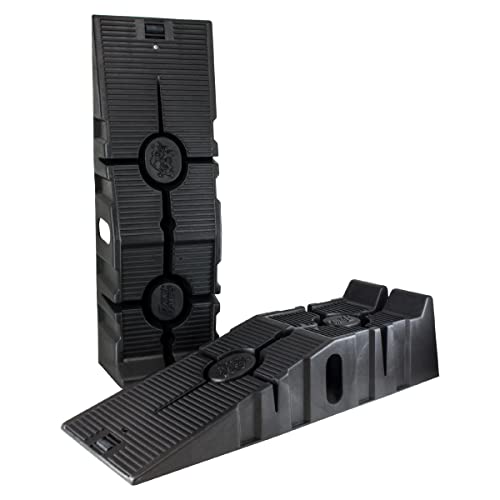
Best for the best all-round DIY service ramps
- 12,000 lb GVW capacity (pair)
- Non-skid base and tread
- 17° low-clearance incline
- Lightweight polymer, easy to store
Why buy it: the ramps owners recommend first — a grippy CoreTRAC base keeps them from sliding as you drive up, the gentle 17-degree incline suits lower cars, and the polymer build is light to carry yet rated for most vehicles.
Best for all-weather grip on a budget
- Open-grid anti-slip surface
- Up to ~6" of lift
- Sheds snow, water and dirt
- Light and stackable
Why buy it: the value pick owners like for wet or snowy conditions — an open-grid deck lets water, snow and grit fall through so your tires and shoes keep grip, at a friendly price for occasional use.

Best for low sports cars with splitters
- 7" of lift, gentle long incline
- Solid high-density foam
- For lowered/short-nose cars
- Anti-slip coating, very light
Why buy it: the premium pick owners with lowered cars swear by — a long, gentle incline clears low front bumpers and splitters that snag steeper ramps, and the solid foam is featherlight yet supports the car.
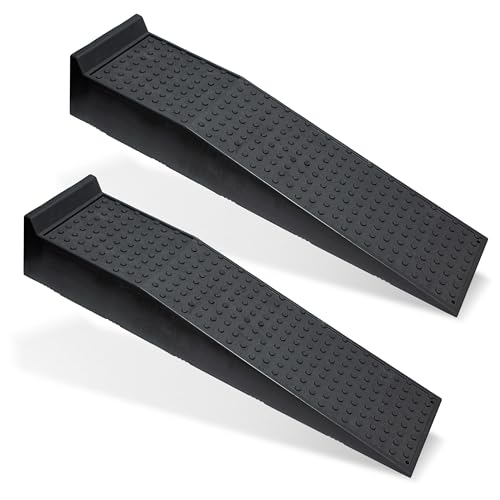
Best for trucks, vans and SUVs
- 6.6" of lift, heavy-duty plastic
- High per-tire weight rating
- Textured non-skid surface
- For trucks, pickups and vans
Why buy it: the pick for bigger vehicles owners choose for the extra height and strength — a taller 6.6-inch lift and a high per-tire rating handle trucks and vans a car-focused ramp cannot safely support.
Best for the highest-capacity RhinoRamps
- 16,000 lb GVW capacity (pair)
- Non-skid base
- Extra-strong polymer
- Handles heavier vehicles
Why buy it: the heavy-duty RhinoRamps owners pick for larger trucks — the same trusted non-skid design with a higher capacity, giving extra margin for heavier vehicles than the standard set.

Best for preventing flat spots on parked cars
- Curved low-profile ramps
- Cradles the tire when parked
- Prevents flat-spotting
- Portable plastic build
Why buy it: the specialty pick owners use for stored or seasonal cars — curved ramps cradle the tire to spread the load and prevent the flat spots that form when a car sits for months on one patch of rubber.
Ramps vs Jack Stands: Use the Right One
Ramps and jack stands are not interchangeable, and using the wrong one is unsafe. Ramps are for drive-up jobs where the wheels stay on — oil changes, exhaust and underbody inspection — and they are quick and stable because the tire sits fully supported. Jack stands are what you need whenever the wheels come off, like brakes or tire rotation, since ramps obviously cannot lift a wheel you are removing. Never try to substitute one for the other. And with either, you are on level, hard ground with the parking brake set — ramps do not change those rules.
Using Ramps Safely
Three habits make ramps safe. First, chock the grounded wheels — the end that is still on the ground must be blocked front and back so the car cannot roll off; the parking brake alone is not enough. Second, match the ramp to your car: a low front end needs a gentle, long incline (Race Ramps) or it will scrape, and a heavy truck needs a truck-rated ramp (BISupply), not a car ramp. Third, drive up slowly and straight, with a spotter if you can, and stop when the tires seat against the ramp stop. Get those right and ramps are one of the safest ways to get under a car.
Ramp Material: Plastic vs Metal
Most car ramps sold today are heavy-duty plastic — a reinforced polymer that is light to carry and will not rust, which is why the RhinoRamps and BISupply sets dominate the field. Steel and metal ramps still have a following for shop use: they take more abuse, some fold flat for storage, and brands like Black Widow build metal and even hydraulic-assist ramps for handling heavier or very low vehicles. For most home garages the plastic ramps are ideal — cheaper, lighter, and rated well past what a daily driver weighs. Choose metal only if you need the ruggedness of a shop tool and do not mind the extra weight and cost that come with it.
Low-Profile Ramps and Lift Height for Oil Changes
Two numbers decide whether a ramp suits your job: the incline and the lift. For a simple oil change you want enough lift to slide under with a drain pan and filter wrench, but a low-profile ramp with a long, gentle incline is what lets a lowered or sports car climb on without scraping its splitter. The Race Ramps and other low-profile designs trade a little height for that clearance. Taller service ramps give more working room underneath but need a steeper approach. Decide what you are doing under there first — a quick oil-and-filter needs less lift than crawling fully under for exhaust work.
Heavy-Duty Ramps for Trucks and Vans
Weight rating is not a spec to guess at. A car-rated ramp will not safely hold a loaded truck, so for pickups, vans and SUVs step up to a heavy-duty set like the BISupply, which pairs a taller 6.6-inch lift with a high per-tire max rating. The heavy-duty RhinoRamps Pro do the same at a higher gross rating. Always buy ramps rated comfortably above your vehicle’s curb weight and never run to the max — the pair rating assumes ideal, level ground. When in doubt, size up; the price gap between a car ramp and a heavy-duty one is small next to what it protects.
RhinoRamps, Race Ramps and BISupply: The Field
Three names cover most of what owners actually buy. Rhino Ramps from RhinoGear are the default all-rounder — grippy, light polymer, well-rated, and cheap enough that most drivers start there. Race Ramps are the specialists for low and lowered cars, using a long, gentle foam incline that clears splitters the others snag. And BISupply covers the heavier end, with a taller lift and a high per-tire rating for trucks and vans. Between them these three handle nearly every home job. Match the brand to your car's ride height and weight rather than buying on price alone.
Tire-Saver Storage Ramps for Parked Cars
A different kind of ramp solves a problem that has nothing to do with service: flat-spotting. When a car sits for months on one patch of rubber, the tire develops a flat spot you feel as a thump until it warms up. Curved tire-saver ramps cradle each tire and spread the load, which is ideal for stored classics, seasonal cars and anything parked long-term. They are low, light and take no real skill to use — drive on, and the curved cradle does the rest. If you store a car over winter, these are cheap insurance against a set of thumping tires come spring.
Black Widow, Hydraulic and Heavy Metal Ramps
Beyond plastic, a metal-ramp niche exists for tougher jobs. Black Widow and similar brands build steel and even hydraulic-assist ramps aimed at handling heavier or very low vehicles that plastic ramps struggle with — the hydraulic versions lift the car as you drive on, easing a low front end up without scraping. They cost more, weigh more, and are overkill for a normal SUV or sedan oil change, but for a shop or a collector running low sports cars they earn their place. For most home garages the polymer ramps handle an SUV or truck fine; reach for metal only when you need genuine shop-grade ruggedness.
Quick Comparison
RhinoGear RhinoRamps Vehicle Ramps (12,000 lb)
Best for the best all-round DIY service ramps
Best Premium
Race Ramps RR-40 Solid Foam Ramps (Pair)
Check Price on Amazon
Best for Trucks
BISupply Vehicle Service Ramp Set (6.6" Lift)
Check Price on Amazon
Best Heavy-Duty
RhinoGear RhinoRamps Pro Vehicle Ramp (16,000 lb)
Check Price on Amazon
Best for Storage
BISupply Tire Saver Storage Ramps (2-Pack)
Check Price on Amazon
How We Rank
Car ramps are judged on stability, clearance and capacity, so we rank by aggregated owner ratings, review volume, and the themes owners repeat. We weigh four things. Stability — a non-skid base that will not slide as you drive up. Incline and clearance — a gentle enough angle for the cars owners actually drive. Capacity and lift — the right weight rating and height for the vehicle. And value and portability — price and how easy they are to store. Prices were current at the time of writing.
The Verdict
For the best all-round drive-up service ramps, the RhinoGear RhinoRamps are the ones owners rate above the rest. Have a lowered car? The Race Ramps RR-40 clear splitters that snag steeper ramps, and the BISupply set handles trucks and vans. Remember: ramps for wheels-on jobs, jack stands when the wheels come off — and always chock. Check Price on Amazon →