

Affiliate Disclosure
Some links on this page are affiliate links. As an Amazon Associate, we earn from qualifying purchases — at no extra cost to you. We do not buy, test, or physically handle the products we cover; our rankings come from aggregated owner reviews, ratings and expert consensus. Commissions never change our verdicts. How we rank & full disclosure.
The short version: a creeper saves your back and clothes when you work under and around a car, and the things that matter are caster size, whether it converts to a seat, and how it holds up to grime. Ranked across thousands of owner reviews, our #1 pick is the Pro-Lift C-2036D: it folds into a rolling stool and lays flat to slide under the car, so one tool does both. Want the smoothest roll on rough concrete? The Traxion ProGear with big 5-inch casters is the premium call. Below we cover casters, convertible-versus-flat, and cleanup.
A creeper is a comfort upgrade for any home garage. See the full garage tools hub or our home workshop setup guide for the rest of the space.
Top Picks at a Glance
Our #1 Pick: Pro-Lift C-2036D Z-Creeper
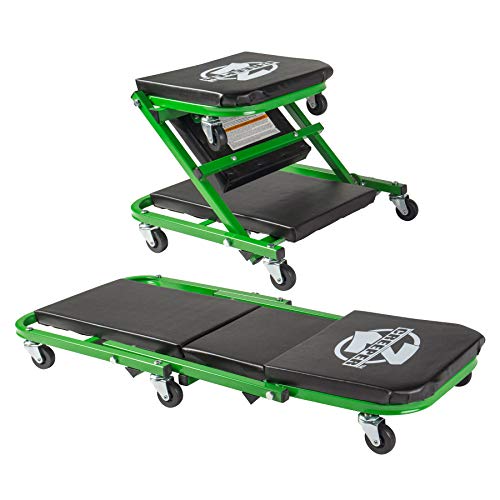
The Pro-Lift C-2036D is the creeper owners recommend first because it does two jobs a garage genuinely needs. Folded into its Z-shape, it is a rolling stool at wheel height — perfect for brakes, wheels and detailing where you want to sit; laid flat, it slides under the car so you can work on your back. Six swivel casters let it glide and spin, the bed is padded, and it holds up to 300 pounds. On rough floors the smaller casters can catch, which is where the Traxion earns its premium, but for a versatile, affordable creeper that covers both working positions, it is the pick owners trust.
Best Mechanic Creepers 2026: The Ranked Field

Best for a 2-in-1 creeper and mechanic seat
- Folds Z-shape into a seat
- 6 swivel casters
- 300 lb capacity, padded
- Rolls flat or sits upright
Why buy it: the creeper owners recommend first — it folds into a Z to become a rolling stool for wheel and brake work, then lays flat to slide under the car, so one tool does both jobs a garage needs.
Best for the convertible creeper for less
- Same Z-fold 2-in-1 design
- 6 swivel casters
- 300 lb capacity
- Thick padded bed
Why buy it: the value version of our top pick owners buy to save a few dollars — the same fold-flat-or-sit-up convertible design and padded bed, just in a different finish.
Best for the smoothest roll on rough floors
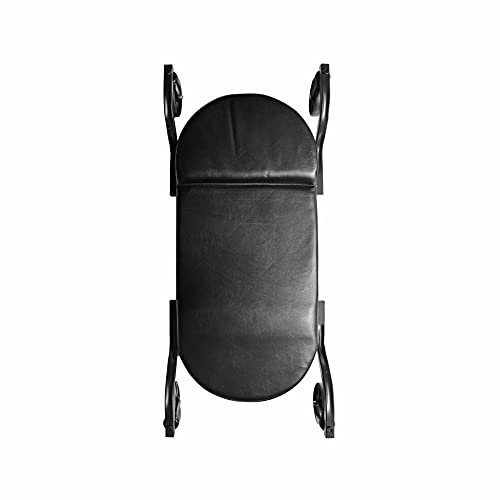
- Big 5" all-terrain casters
- Low-profile outrigger frame
- Wide contoured deck, lumbar support
- Rolls over cracks and cords
Why buy it: the premium flat creeper owners praise for comfort and glide — oversized 5-inch casters roll over cracks and extension cords a small-wheel creeper snags on, and the wide contoured deck supports your back.
Best for a longer, higher-capacity convertible
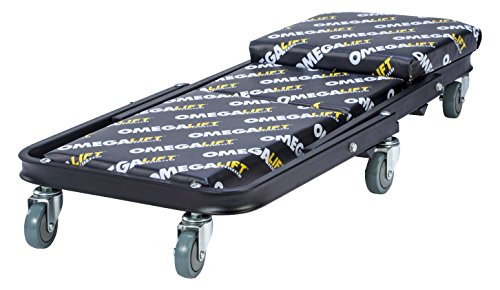
- 40" length, folds to a seat
- 450 lb capacity
- 6 swivel casters
- Thick padded bed
Why buy it: the heavy-duty pick owners choose for a longer, stronger creeper — a 40-inch bed and 450-pound rating suit taller or larger mechanics, and it still folds into a seat when you need one.
Best for a padded stool with a headrest
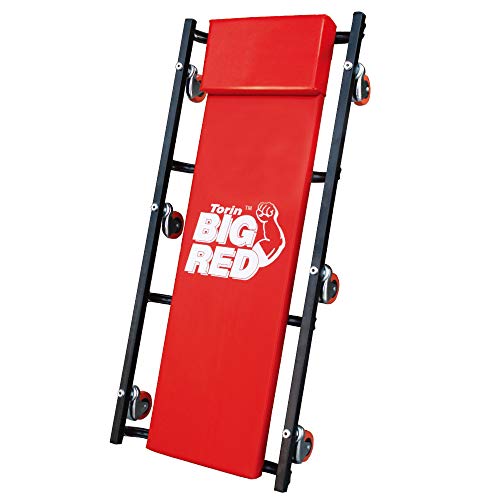
- Padded bench + headrest
- 6 swivel casters
- Heavy-duty steel frame
- Compact rolling design
Why buy it: the rolling-seat pick owners like for jobs at wheel height — a padded bench with a headrest that glides on six casters, ideal for brakes and detailing where you sit rather than lie down.

Best for a wipe-clean plastic creeper with trays
- 40" blow-molded plastic body
- Padded headrest, dual tool trays
- 6 casters
- Wipes clean of oil and grime
Why buy it: the low-maintenance pick owners pick for a messy garage — a molded plastic body that wipes clean of oil instead of soaking it up like fabric, with built-in trays to keep bolts and tools within reach.
Caster Size: The Thing People Overlook
The single biggest difference between a creeper that glides and one that fights you is the casters. Small, hard wheels snag on floor cracks, expansion joints, extension cords and stray bolts, jarring you to a halt mid-slide — maddening when you are trying to scoot under a car. Large casters like the 5-inch all-terrain wheels on the Traxion ProGear simply roll over those obstacles. On a smooth, sealed floor small wheels are fine; on rough concrete, a cluttered shop or a driveway, bigger casters transform the experience. If your floor is anything less than glass-smooth, prioritize caster size.
How to Choose a Creeper
Start with your floor and your body. Rough floors want big casters (Traxion); smooth floors are fine with standard wheels. Decide between a convertible Z-creeper (Pro-Lift, Omega) that doubles as a seat and a flat creeper that is lower and more comfortable underneath. Check the weight and length rating — taller or heavier users want a longer, 450-pound model like the Omega. And weigh padded fabric (comfier, soaks up oil) against molded plastic (wipes clean, adds tool trays) based on how messy your work is. Match those four to how you actually wrench.
Low-Profile Creepers and Ground Clearance
How much room you have under the car decides how low the creeper must sit. A stock sedan or a lowered car leaves only a few inches once it is on ramps or stands, so a thin, low-profile deck is the difference between sliding under and getting stuck at the door sill. Measure your working clearance — jack point to floor — before buying, and remember the padded bed adds height. Flat creepers generally sit lower than a folded convertible. Budget picks from a garage chain like Harbor Freight tend to run thicker; a slim contoured deck is worth it under a low car.
Weight Capacity and Length
Most creepers are rated around 300 lbs, which covers the majority of users, while heavy-duty models like the Omega 91000 reach 450 lbs and add a longer 40-inch bed. Two things follow. If you are near the limit of a 300-pound creeper, size up — a maxed-out frame flexes and wears faster. And if you are tall, a longer bed supports your whole body instead of leaving your legs off the end. A longer, higher-capacity creeper costs a little more but rolls and lasts better under bigger mechanics.
Headrest, Padding and Creeper Mats
Comfort under the car comes down to the deck and the head support. A padded headrest — adjustable on better models — keeps your neck off the hard frame during long jobs, and a contoured deck supports your lower back. Where you only need to roll a short way, a simple foam creeper mat is a cheaper, no-wheels alternative that also insulates you from a cold concrete floor. Fabric padding is the comfiest to lie on but soaks up oil; molded plastic wipes clean. Match the padding to how greasy and how long your jobs run.
Creeper Brands: Snap-on, Harbor Freight and Specialty Makers
Once you have settled on a style, the brand mostly decides price and polish. The field splits into three camps.
Snap-on and Premium Shop Creepers
Professional names like Snap-on build creepers with sealed bearings, thick steel frames and long warranties aimed at daily shop abuse. They roll beautifully and last, but you pay a real premium — overkill for a weekend garage, worth it if you are under cars all day.
Harbor Freight Daytona and Pittsburgh Lines
At the value end, Harbor Freight's Daytona and Pittsburgh creepers give a home mechanic a serviceable roll for a fraction of the price. Owners rate them fine on smooth floors; the common gripe is smaller casters that snag on rough concrete, so budget for that trade-off.
The Magic Creeper and Ultra-Low-Profile Options
Specialty makers solve the clearance problem. The Magic Creeper and similar ultra-thin decks sit barely off the floor, sliding under a lowered car where a padded convertible will not fit. They trade cushioning for height, so they suit tight-clearance jobs rather than long sessions.
Topside Creepers for Engine-Bay Work
Not all creeper work happens on your back. A topside creeper is a padded, roller-mounted platform that hangs over the fender so you can lean deep into the engine bay without digging the edge of the panel into your ribs. It is a niche second creeper rather than a first buy, but owners doing long engine or accessory jobs consistently report it saves both their body and the paint. Pair it with fender covers and the topside creeper turns an awkward reach into a supported one — the same hands-free comfort a floor creeper brings to work underneath.
Quick Comparison
Pro-Lift C-2036D Z-Creeper Seat
Best for a 2-in-1 creeper and mechanic seat
Best Value
Pro-Lift C-2036DG Z-Creeper (Black/Green)
Check Price on Amazon
Best Premium
Traxion 1-100 ProGear Wide-Body Creeper
Check Price on Amazon
Best Heavy-Duty
Omega Lift 91000 40" Z-Creeper (450 lb)
Check Price on Amazon
Best Rolling Seat
BIG RED TR6500 Torin Rolling Creeper Seat
Check Price on Amazon
Best Easy-Clean
BIG RED TRP6240 Torin Plastic Rolling Creeper
Check Price on Amazon
How We Rank
A creeper is judged on how well it rolls, how comfortable it is, and how it holds up, so we rank by aggregated owner ratings, review volume, and the themes owners repeat. We weigh four things. Rolling and casters — how smoothly it glides over real garage floors. Comfort and support — padding, deck shape and back support. Versatility — whether it converts to a seat and its capacity. And durability and cleanup — build quality and how easily it shrugs off grime. Prices were current at the time of writing.
The Verdict
For a versatile creeper that folds into a seat and slides under the car, the Pro-Lift C-2036D is the one owners rate above the rest. Want the smoothest roll on rough concrete? The Traxion ProGear is the premium pick, and the Omega 91000 is the heavy-duty, longer option. Check Price on Amazon →