
Affiliate Disclosure
Some links on this page are affiliate links. As an Amazon Associate, we earn from qualifying purchases — at no extra cost to you. We do not buy, test, or physically handle the products we cover; our rankings come from aggregated owner reviews, ratings and expert consensus. Commissions never change our verdicts. How we rank & full disclosure.
The short version: two of the most respected 1/2" impact wrenches in any garage, and honestly, you can't buy wrong. The DEWALT DCF899B is the value-and-muscle pick — huge breakaway torque, a rugged reputation, and the enormous 20V MAX battery family behind it. The Milwaukee 2767-20 M18 FUEL is the pro's choice — class-leading torque packed into a shorter, lighter, more refined body that shines in tight spaces. Both crack loose anything a home mechanic meets; the real decision usually comes down to which battery platform you already own.
This is a straight head-to-head. For the wider field, our best cordless impact wrench roundup ranks more options, the impact wrench vs breaker bar guide covers whether you even need one, and the garage tools hub maps out a complete kit.
DEWALT vs Milwaukee at a Glance
DEWALT DCF899B 1/2" Impact Wrench
Best for DIYers and pros already on the DEWALT 20V battery platform
How We Compare Them
We don't torque-test wrenches on a bench and log foot-pounds — we read the crowd. For each tool we pull together the aggregated Amazon rating, the volume of reviews behind it, and the themes owners raise repeatedly: whether it cracked loose the bolts they bought it for, how it handles in tight spaces, how it fits their existing batteries, and whether it earned its price. Where thousands of mechanics agree — "took off lug nuts I couldn't budge," "so compact in the wheel well" — that consensus is the signal. Torque ratings set the ceiling; owner reports tell you how each wrench performs on a real, rusty bolt.
Torque: Milwaukee Has the Higher Ceiling
On raw numbers the Milwaukee M18 FUEL leads — roughly 1000 ft-lb fastening and 1400 ft-lb nut-busting, against the DEWALT DCF899B's 700 and 1200. But read the reviews and the practical picture is more nuanced: both are genuinely high-torque tools that owners report removing essentially any lug nut, brake bolt or suspension fastener a home garage throws at them. The Milwaukee's extra headroom earns its keep on the worst offenders — rusted, seized, over-torqued bolts where a little more in reserve matters. For everyday work, both have power to spare. This is a lead for the Milwaukee, not a knockout of the DEWALT.
Size and Handling: Milwaukee's Compact Advantage
Here the M18 FUEL's second strength shows. Owners consistently praise its shorter head and lighter, better-balanced body, which make a real difference in cramped wheel wells and tight engine bays — and reduce fatigue over a long job. The DEWALT is a bit bulkier and heavier; still perfectly usable, but not as nimble when space is at a premium. If you often work in confined spots or just value all-day comfort, the Milwaukee's compactness is the kind of refinement reviewers keep coming back to. Think of it as the tighter line through the corner — same road, more finesse.
Ecosystem and Value: DEWALT's Case
With both tools this good, the batteries often decide it. Each belongs to a massive, mature platform — DEWALT's 20V MAX and Milwaukee's M18 — and both are sold as bare tools, so if you already own a stack of one brand's packs, the matching wrench is the obvious, money-saving choice. On price, the DEWALT typically undercuts the Milwaukee while still delivering serious breakaway torque and a famously rugged build, which is why it lands as the value pick. Owners frequently choose on platform loyalty alone, and given how close the two tools are, that's entirely rational.
The Verdict: Match It to Your Batteries
There's no loser here — both are top-tier impact wrenches with legions of loyal owners. Pick by platform and priorities.
- Pick the DEWALT DCF899B if you're already on the 20V MAX platform, want strong value with huge breakaway torque, and don't mind a slightly bulkier tool. It's the muscle-for-money choice and our value pick.
- Pick the Milwaukee 2767-20 if you're on M18, want the highest torque ceiling for the nastiest bolts, and value a compact, lighter body in tight spaces. It's the pro's pick for maximum capability in a smaller package.
The single best piece of advice the reviews give: if you already own one brand's batteries, buy that brand's wrench. Both are excellent enough that the battery you already have should tip a close call.
Both Impact Wrenches, Side by Side
Best for DIYers and pros already on the DEWALT 20V battery platform
- 700 ft-lb fastening / 1200 ft-lb breakaway torque
- Detent-pin anvil owners find rock-solid
- Huge 20V MAX battery ecosystem
- Bulkier and heavier than the Milwaukee FUEL
Why buy it: the value-and-muscle pick — massive breakaway torque, a rugged reputation, and the enormous DEWALT 20V battery family behind it.
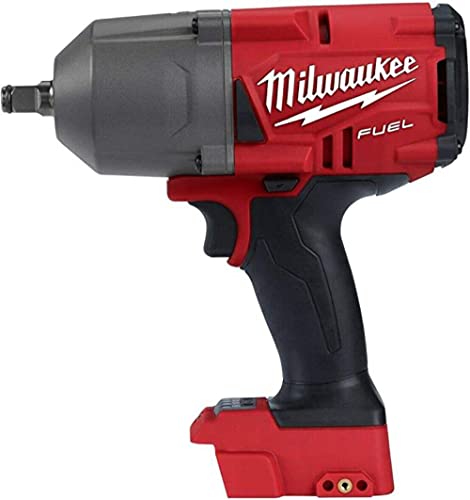
Best for pros who want maximum torque in a compact, refined body
- 1000 ft-lb fastening / 1400 ft-lb nut-busting torque
- Compact, lighter head owners love in tight spaces
- Friction-ring anvil for fast socket changes
- Typically costs more than the DEWALT
Why buy it: the pro’s choice — class-leading torque packed into a shorter, lighter body that shines where space is tight.
Prices are pulled from Amazon and were accurate as of Aug 22, 2026, 7:14 PM EDT. Product prices and availability are subject to change — the live price is shown on Amazon.
Building out the rest of the garage? Our best torque wrench and best mechanic tool set guides both help, and the full ranked field lives in our best cordless impact wrench roundup.