
Affiliate Disclosure
Some links on this page are affiliate links. As an Amazon Associate, we earn from qualifying purchases — at no extra cost to you. We do not buy, test, or physically handle the products we cover; our rankings come from aggregated owner reviews, ratings and expert consensus. Commissions never change our verdicts. How we rank & full disclosure.
Short version: a beginner can build a genuinely capable home mechanic kit for roughly $150 to $300, an intermediate setup that handles most jobs lands around $500 to $800, and a serious lifetime collection climbs from there — but the smart money is not spent evenly. Spend up on the tools you use constantly and where accuracy is safety-critical; save on the specialty tools you touch once a year. The buy-once mindset on core hand tools usually costs less over a lifetime than repeatedly replacing cheap ones. Here is the honest breakdown of where the money goes.
Tool marketing wants you to buy the giant chrome-drawer set on day one. We would rather lay out what home mechanics actually spend to get real work done, so you can build a kit that matches your goals instead of your impulses. Here is the straight cost picture.
The starter budget: $150–$300
For the jobs most people start with — oil changes, brake pads, air filters, spark plugs, basic diagnostics — a starter budget of $150 to $300 is genuinely enough. That range typically buys a decent socket and wrench set, a handful of screwdrivers and pliers, a torque wrench, and a jack with stands. The consensus among home mechanics is that a good mid-range mechanic tool set is better value here than assembling everything piece by piece, because you get the common sizes at a lower cost per tool in one organized case. If the budget is tighter, a strong budget mechanic tool set still covers the essentials. The mistake to avoid is the extreme cheapest throwaway kit, whose tools round off fasteners and slip — a false economy on the very jobs you bought them for.
Where to spend up (and why)
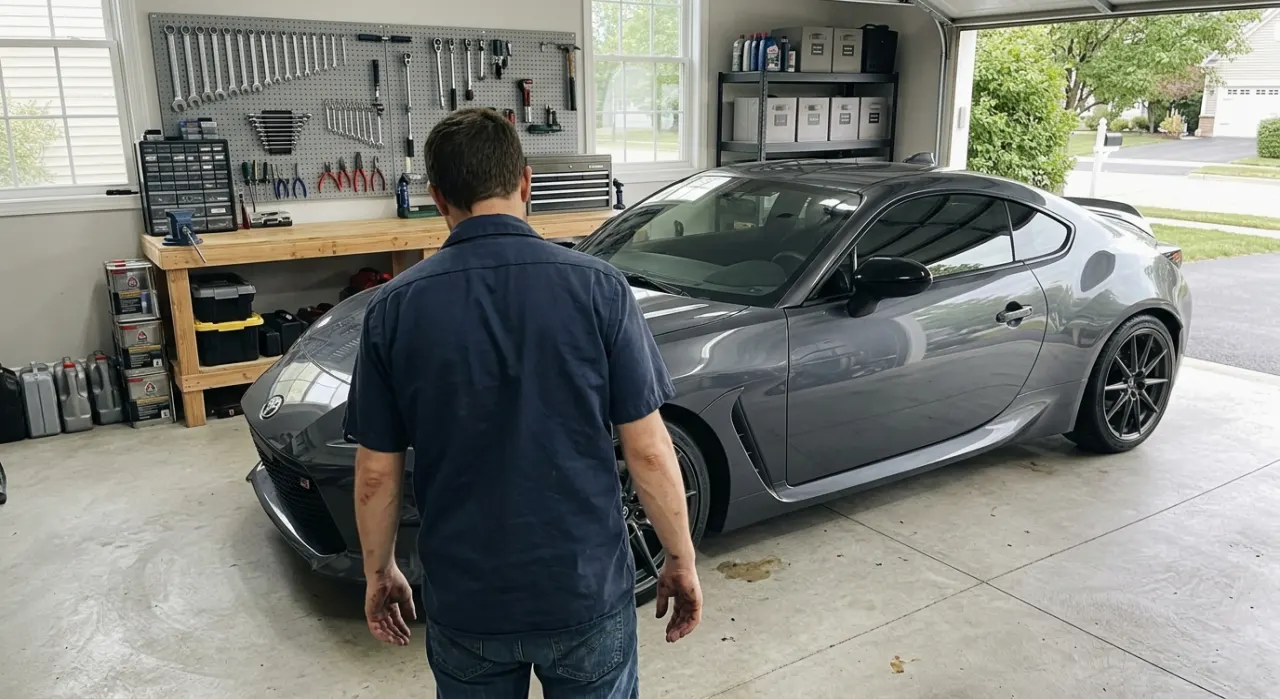
Here is the honest heart of the question: you should not spend the same on every tool. Put your money into the tools you use constantly and lean on hard. Good ratchets and sockets are worth it because you use them on every job and a quality one grips fasteners cleanly instead of rounding them. A torque wrench is worth buying well because accuracy here is safety-critical — under- or over-torqued lug nuts and critical bolts are a real hazard, which is why we treat it as a spend-up item in our best torque wrench guide. Anything that takes high force — breaker bars, impact sockets — is also worth quality so it does not fail under load. On these, the buy-once, cry-once rule genuinely pays.
Where to save without regret
Just as important is knowing where cheap is fine. Specialty tools you use once or twice a year — a specific pulley puller, a one-off trim tool, an odd-size wrench for a single job — do not need to be premium. A budget version that does the job on the rare occasion you need it is a perfectly sensible saving, and spending flagship money on a tool that lives in a drawer is just waste. The consensus habit experienced owners follow is to buy the rarely-used specialty item cheaply when a specific job demands it, and reserve the real money for the core tools they reach for every time. Matching spend to frequency of use is the single biggest lever on getting good value.
The intermediate and lifetime path
As you take on more, the budget grows in a predictable way. An intermediate setup — more socket sizes and drive sizes, better hand tools, an impact wrench, more diagnostic gear, decent garage lighting — commonly lands around $500 to $800 and handles the large majority of home jobs. A serious lifetime collection climbs beyond that, but it is built over years, one targeted purchase at a time, not bought in a single haul. The consensus path is clear: start with a quality set, then add individual tools as you discover what you actually use, upgrading the pieces you reach for most. Understand the foundations in socket set basics and choose wisely with how to choose a mechanic tool set.
The buy-once math and lifetime warranties
Part of "how much to spend" is understanding time. Good hand tools last a very long time, and many reputable brands back their ratchets, sockets and wrenches with a lifetime warranty — break one and you get a replacement, sometimes for decades. That changes the math: buying quality core tools once often costs less over a lifetime than repeatedly replacing cheap ones that fail. The honest caveat is that a warranty only helps on tools you keep using, so it is a strong reason to spend up on frequently-used hand tools and a non-factor on rarely-touched specialty pieces. See how the brands stack up in tool set brands compared.
The honest payoff: tools pay for themselves
One reason not to agonize too much over the budget: the tools pay you back fast. A starter kit in the $150 to $300 range often pays for itself within a few jobs versus shop labor — a couple of brake jobs and an oil change or two, and you are ahead. From there, every job you do yourself is close to pure savings, plus you gain the ability to fix things on your own schedule. So the real question is less "can I justify the money" and more "what do I actually want to be able to fix," then buying the right kit for that. Spend where it counts, save where it does not, and let the tools earn their keep.
The verdict
How much should you spend on tools? Start with $150 to $300 for a capable beginner kit, expect $500 to $800 for an intermediate setup that handles most jobs, and build a lifetime collection gradually from there. The winning strategy is not all-cheap or all-premium — it is spending up on the core tools you use constantly and where safety demands accuracy, and saving on the specialty tools you rarely touch. When you are ready to build your kit, start with our best mechanic tool set ranking, weigh the value picks in best budget mechanic tool set, invest wisely in a torque wrench, and head back to the garage tools hub for the full picture.
Recommended Products

Best for the set most home mechanics should actually buy
- 1/4", 3/8" and 1/2" drive pear-head ratchets
- SAE + metric sockets, standard and deep
- DirectTorque anti-round socket profile
- Hard-shell case that survives the garage floor
Why buy it: the sweet-spot spend — chrome-vanadium tools and three ratchets that cover 90% of DIY jobs out of one box without overpaying for pro branding.

Best for a first kit with real brand pedigree and warranty
- 72-tooth ratchets for a 5° swing arc
- Polished chrome-vanadium, anti-slip sockets
- DEWALT full lifetime warranty
- Compact SAE + metric set in a blow-mould case
Why buy it: proof you can start cheap without buying junk — a lifetime-warranty name-brand kit at the very top of the budget class.

Best for the lifetime-grade master set you never outgrow
- 84-tooth ratchets with a 4.3° swing arc
- 1/4", 3/8" and 1/2" drive, SAE + metric
- Three-drawer blow-mould storage box
- GearWrench lifetime warranty
Why buy it: where the money goes once you know you will keep wrenching — the set serious mechanics buy instead of upgrading twice.
Best for the one tool where accuracy is worth paying for
- ±4% accuracy in the clockwise direction
- All-steel build, no plastic housing
- Clear dual-range scale, positive click
- Reversible ratcheting head
Why buy it: the classic example of spending up where safety demands it — a proper torque wrench for wheels and chassis bolts is never the place to save.
Prices are pulled from Amazon and were accurate as of Aug 22, 2026, 7:14 PM EDT. Product prices and availability are subject to change — the live price is shown on Amazon.