

Affiliate Disclosure
Some links on this page are affiliate links. As an Amazon Associate, we earn from qualifying purchases — at no extra cost to you. We do not buy, test, or physically handle the products we cover; our rankings come from aggregated owner reviews, ratings and expert consensus. Commissions never change our verdicts. How we rank & full disclosure.
Short version: organizing a garage is a five-step process — clear it out completely, sort ruthlessly, divide the space into zones, get everything off the floor and onto walls and shelves, then light it and keep it with a simple reset habit. The single biggest mistake is buying storage before you have purged; the second is leaving tools on the floor. Do it in order and even a cluttered single-car garage becomes a space you can actually work in. Here is the practical plan, no expensive built-ins required.
A well-organized garage is like a tuned car — nothing wasted, everything where your hand expects it, ready to go the moment you are. You do not get there by cramming things into cabinets; you get there with a system. Here is one that holds.
Step 1: Clear it out completely
Pick a dry day and pull everything onto the driveway. This feels dramatic, but you cannot design storage around a pile you have not seen in full. An empty garage also lets you sweep the floor, check the walls for stud locations, and picture the space fresh. Do not shortcut this by "tidying in place" — that just reshuffles clutter. The empty floor is your blank canvas, and every good garage plan starts there.

Step 2: Sort ruthlessly
As things come out, sort into four piles: keep, sell or donate, trash, and belongs elsewhere. Be honest — the dried-out paint, the tool you replaced two years ago, the box you have not opened since you moved. The garage is prime real estate; do not spend it storing things you will never use. Owners consistently say this purge is what makes the whole project work, because you are now planning storage only for what genuinely earns its place.
Step 3: Zone the space
Before hanging a single hook, decide what each area is for. A typical layout has a tool and workbench zone, an automotive zone (fluids, jack, ramps, tire tools), a garden/outdoor zone, a sports and seasonal zone, and a bulk/overhead zone for rarely-touched items. Keep the things you use most within arm's reach of where you use them, and push seasonal or bulky items to the edges and up high. Zoning is what turns storage into a workflow instead of a warehouse.

Step 4: Go vertical — get off the floor
The core rule of garage storage: the floor is for the car and for working, not for stuff. Move everything you can up the walls and overhead. A pegboard, slat wall, or French-cleat system puts hand tools in plain sight where a missing one is obvious. Wall-mounted shelving and cabinets hold bins and supplies. Overhead ceiling racks swallow the bulky, seasonal items. Anchor everything into studs, load heavy items low and light items high, and label your bins so you are not opening five to find one. Sockets, ratchets and wrenches live best in a rolling mechanic tool set chest that rolls to wherever the work is.
Step 5: Light it properly
An organized garage you cannot see into is only half done. Most garages ship with a single dim bulb, and shadows hide both clutter and the bolt you dropped. Bright, even overhead LED lighting transforms the space and makes the whole system easier to keep — you put things back correctly when you can see the empty slot. Add a portable light for working under the hood or the car. See the best garage lighting setup for a full plan and grab a garage work light for close-up jobs. Good light is one of the highest-payoff upgrades in the whole garage.
Give yourself a work surface
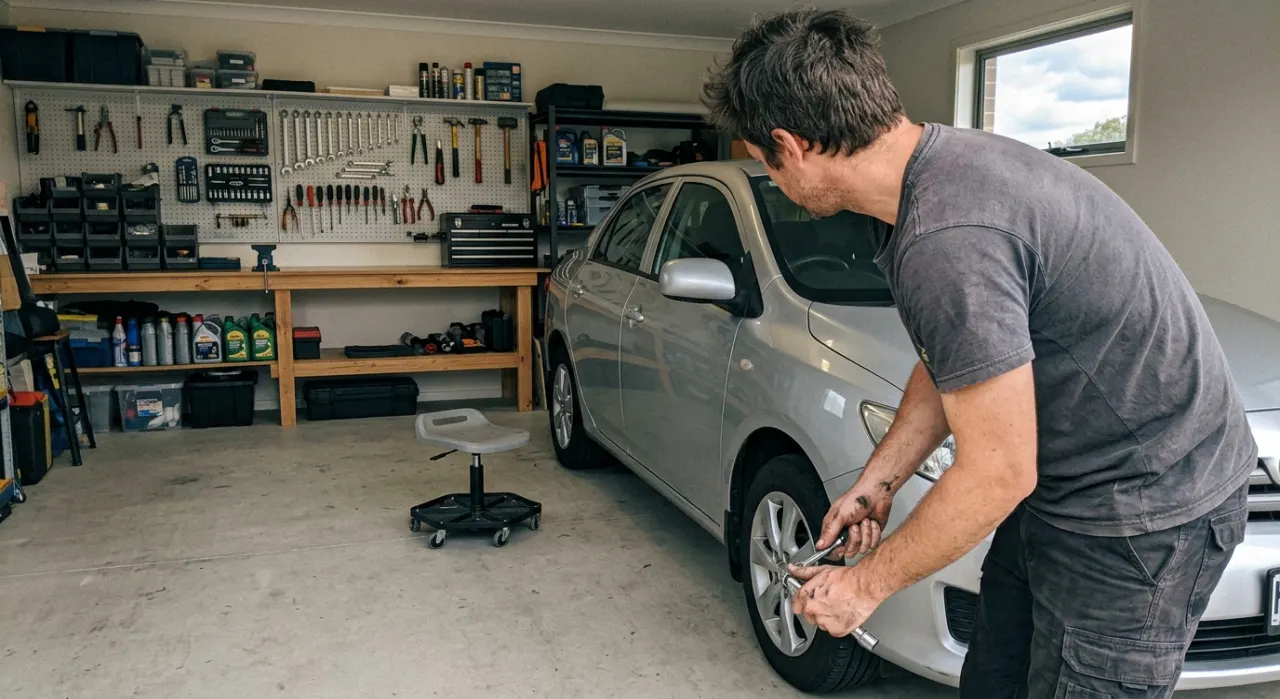
If you turn wrenches at all, a solid workbench is the anchor of the automotive zone — a flat, sturdy surface at a comfortable height with your most-used tools within reach and good light overhead. It does not need to be expensive; a simple sturdy bench beats working off the floor or the trunk lid every time. Keep the pegboard or tool storage right behind it so the whole tighten-loosen-reach cycle happens without walking across the garage.
Keeping it that way
Organizing once is easy; staying organized is the real test. Two habits do most of the work. First, every item has a defined home — a labeled shelf, a shadow-board outline, a specific bin — so putting things away is obvious and automatic. Second, a five-minute reset at the end of every project: everything back to its spot before you walk out. Add a one-in-one-out rule for new gear and a yearly re-purge, and the garage stays a place you want to work rather than a place you avoid.

Where to go next
A clean, lit, zoned garage makes every job faster and every tool easier to find. Kit out the tool zone with the best mechanic tool set, sort the lighting with the garage lighting setup guide, and head back to the garage tools hub for everything that belongs on those freshly cleared walls.
Recommended Products
Best for a rigid metal board hooks will not fall out of
- Heavy-gauge steel, will not sag
- Slotted + round holes for more hooks
- Standoff mounts included
- Accepts standard and slotted hooks
Why buy it: the wall system owners rate highest — rigid steel that never sags, so every hand tool gets a visible home and a missing one is obvious at a glance.

Best for the most storage for the least money
- 5 adjustable shelves, boltless Z-beam
- 1,000 lb per shelf, adjustable every 1.5"
- No-tool assembly
- Silver-vein powder coat
Why buy it: the value standard for the bin-and-supply zone — five adjustable 1,000 lb shelves for around a hundred dollars, which is why it is one of the best-selling garage racks going.

Best for reclaiming ceiling space for seasonal bins
- Ceiling-mounted, 4ft x 8ft
- 750 lb weight capacity
- Adjustable 22"-40" drop-down height
- Frees floor and wall space
Why buy it: the overhead pick — it bolts to the ceiling joists to swallow the bulky, rarely-touched bins, reclaiming the floor and walls a freestanding rack would eat.

Best for sockets and hand tools that roll to the work
- Heavy-duty 21-gauge powder-coated steel
- Ball-bearing drawer slides
- Onboard power + USB charging station
- Locking casters, roomy 42" footprint
Why buy it: the chest owners rate as the sweet spot — a genuinely large cabinet with smooth drawers that rolls to wherever the work is, at a price well below the pro brands.