
Affiliate Disclosure
Some links on this page are affiliate links. As an Amazon Associate, we earn from qualifying purchases — at no extra cost to you. We do not buy, test, or physically handle the products we cover; our rankings come from aggregated owner reviews, ratings and expert consensus. Commissions never change our verdicts. How we rank & full disclosure.
The short version: two things decide the right brake fluid — the DOT spec on your reservoir cap, and whether the fluid is fresh. Most cars want DOT 3 or DOT 4, and you can safely use a higher-rated glycol fluid where a lower one is specified. Our overall pick, ATE TYP 200 DOT 4, is a high-boiling-point street/light-track fluid that gives a firm pedal, but a cheap in-spec DOT 3 that is fresh beats an expensive fluid that has sat in the system for five years absorbing water. The one hard rule: never mix silicone DOT 5 with glycol DOT 3/4/5.1.
Top Picks at a Glance
Our #1 Pick: ATE TYP 200 DOT 4
ATE TYP 200 earns the top spot as the fluid that hits the sweet spot for the widest range of drivers: it meets DOT 4, carries a high dry boiling point around 536°F for strong fade resistance, and delivers the firm, low-compressibility pedal enthusiasts love — yet it is priced and packaged for normal street use. It is a genuine step up from bargain DOT 3 for spirited driving and the occasional track day, while still being perfectly civilized for a commuter whose manual calls for DOT 4. As always, confirm your cap says DOT 4 (or DOT 3, where you can still use this) and, most importantly, that you are replacing tired fluid with fresh.
Best Brake Fluids 2026: The Ranked Field
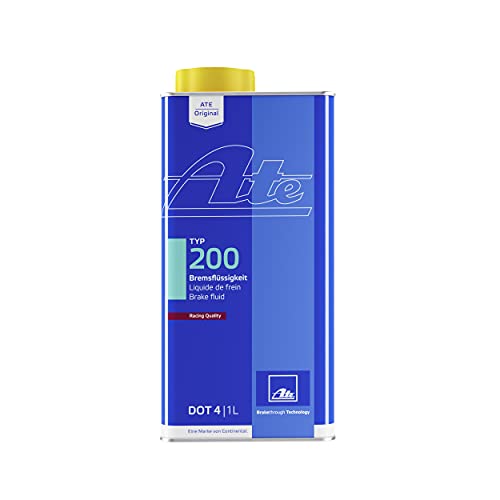
Best for a high-quality DOT 4 for street and spirited driving
- DOT 4 with a high ~536°F dry boiling point
- Excellent street and light-track fluid
- Low compressibility, firm pedal feel
- Trusted OE-grade European fluid
Why buy it: the DOT 4 enthusiasts recommend for a firm pedal and strong fade resistance — the sweet spot for most cars whose manual calls for DOT 4.
Best for an inexpensive, spec-correct DOT 3 top-up or flush
- Meets DOT 3 spec, higher-than-minimum boiling point
- Widely available and cheap
- Fine for DOT 3 street systems
- Sealed for freshness
Why buy it: the cheap, correct DOT 3 owners buy for routine top-ups and flushes — brake fluid’s value is in being fresh and in-spec, and this delivers both.
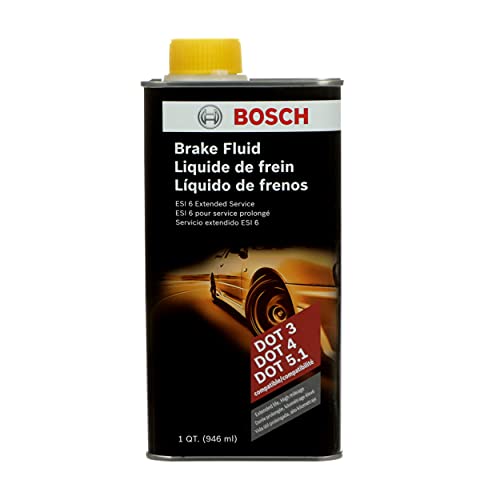
Best for a single fluid compatible with DOT 3, 4 and 5.1 systems
- Compatible with DOT 3, 4 and 5.1
- Low-viscosity, ABS/ESP friendly
- Extended ~3-year change interval
- Quart size for full flushes
Why buy it: the do-most-things fluid owners like for its DOT 3/4/5.1 compatibility and longer service life — handy when you service several different vehicles.

Best for track days and hard braking where fade is the enemy
- Very high ~594°F dry boiling point
- 100% synthetic racing DOT 4
- Resists vapor lock under abuse
- Nitrogen-sealed for shelf life
Why buy it: the fluid track drivers trust to keep a firm pedal when the brakes are glowing — overkill for commuting, exactly right for the circuit.

Best for a value bottle that covers DOT 3 or DOT 4 systems
- Meets both DOT 3 and DOT 4
- High boiling point, corrosion protection
- ABS/disc/drum compatible
- 32 oz — enough for a full flush
Why buy it: the value quart owners grab for a full flush on DOT 3 or DOT 4 systems — one bottle, correct spec, enough to do the whole car.
Best for flushing a DOT 3 system with fluid to spare
- DOT 3 spec, 32 oz size
- Extended-life corrosion protection
- Enough for a complete bleed
- Sealed for freshness
Why buy it: the bulk DOT 3 owners buy when doing a full four-corner bleed — plenty of fresh, in-spec fluid so you never run short mid-job.
DOT Specs: What the Number Means
The DOT rating sets minimum boiling points and other properties. DOT 3 and DOT 4 are the common glycol-based fluids, with DOT 4 having a higher boiling point and slightly different chemistry; DOT 5.1 is a high-performance glycol fluid (not to be confused with DOT 5). All three are chemically compatible and can be mixed in a pinch, and you can use a higher number where a lower is specified. DOT 5 is different — it is silicone-based, does not absorb water, and must never be mixed with the glycol fluids; it is used in specific applications (some classics, certain military vehicles) and is the wrong answer for the vast majority of modern cars. The safe move is to read the cap and match it, stepping up in DOT number only, never sideways into silicone.
Why Fresh Fluid Matters More Than Brand
Glycol brake fluid is hygroscopic: it slowly pulls moisture out of the air, even in a sealed system. That is why every DOT rating lists two numbers — a dry boiling point (fresh fluid) and a lower wet boiling point (fluid that has absorbed the standard test amount of water). As the fluid ages and absorbs water, its boiling point falls. Under hard braking, that absorbed water can flash to compressible vapor and give you a soft, sinking pedal precisely when you need brakes — classic fade. Moisture also corrodes ABS units and calipers from the inside. This is the whole reason a cheap, fresh, in-spec fluid outperforms a premium fluid that has been in the car for years. Buy the right spec, and keep it fresh.
Street vs Track: When to Go High-Boiling
If you tow heavy loads, descend long mountain grades, or run track days, brake temperatures climb and a high-boiling-point fluid like Motul RBF 600 earns its keep by resisting vapor lock when the calipers are glowing. The trade-off is that many high-performance race fluids absorb moisture faster, so they need more frequent changes. For everyday driving, that trade is not worth it — a quality DOT 3/DOT 4 that meets your spec and is bled regularly will never let you down at commuting temperatures. Match the fluid to the heat you actually generate.
Doing the Job Right
A flush is only as good as the bleed. You will want the car safely raised — see the tools you need and the garage tools hub for jack stands and a bleeder kit. If your brake warning light or an ABS code is on, read it first with a scanner from our OBD2 hub — a low-fluid light and a failing ABS sensor call for very different fixes. For the rest of your fluid maintenance, start at the oil change hub.
Brake Fluid for Honda, Toyota and BMW: Choosing the Correct Spec
Manufacturers list a specific DOT rating, and choosing the correct one for your make avoids guesswork. Most Honda and Toyota models call for a standard DOT 3, and a fresh, in-spec DOT 3 (or a compatible DOT 4) is all they need. Many BMW and other European cars specify a low-viscosity DOT 4 for their ABS and stability systems, which is why an OE-grade DOT 4 like our top pick suits them well. The rule of thumb owners follow is simple: read the reservoir cap, then use that rating or step up a number — never sideways into silicone DOT 5. When in doubt, the manual and the cap agree, and choosing by that beats choosing by brand every time.
Castrol, Motul and Motorcycle Brake Fluid
Beyond the ranked field, a few names come up constantly. Castrol makes both an everyday low-moisture DOT 4 (the long-running LMA) and the premium SRF racing fluid; Motul is the track favorite for its very high boiling point. Both are fully synthetic glycol fluids that follow the same DOT-compatibility rules as everything here. Motorcycle brakes use the same glycol DOT 3/4/5.1 fluids as cars, so a quality DOT 4 works on a bike too — riders just tend to flush more often because smaller reservoirs absorb moisture faster. Whether it is a car, a track toy for racing, or a motorcycle, the fundamentals do not change: match the DOT spec and keep the fluid fresh.
Signs Your Brake Fluid Is Due for a Change
Because brake fluid degrades on a clock rather than by mileage, the calendar is your first cue — most makers say every two to three years regardless of how the car is driven. Between services, a few signs tell you it’s overdue. The clearest is color: fresh fluid is clear to light amber, and as it ages and absorbs moisture it darkens toward brown, so a reservoir that looks like weak coffee is well past its best. A pedal that feels soft, spongy or sinks slightly under sustained pressure points to moisture flashing to vapor under heat. A brake or ABS warning light warrants reading the code first, since a low level and a failing sensor need different fixes. If you’ve found any of these, a full flush with fresh, in-spec fluid is cheap insurance — far cheaper than the seized caliper or corroded ABS unit that old fluid eventually causes.
How We Rank
Brake fluid is a safety category, so we rank on aggregated owner ratings, review volume and, above all, spec correctness and freshness value — not marketing. We weigh four things. Spec compliance — a clearly stated DOT rating that matches common reservoir-cap requirements, with compatibility (DOT 3/4/5.1) noted. Boiling point — a genuinely useful dry/wet boiling point for the intended use, from everyday to track. Owner-reported pedal feel and reliability — firm, consistent braking across large review bases. And value for a fresh flush, where sizing and price make it easy to do the whole car. We do not bench-test brakes; we verify specs and read owner consensus. Prices were current at the time of writing — always confirm the required DOT rating on your own vehicle’s reservoir cap.
Quick Comparison
ATE Original TYP 200 DOT 4 Brake Fluid (1 L)
Best for a high-quality DOT 4 for street and spirited driving
Best Long-Life
Bosch ESI6-32N Extended-Life Brake Fluid (DOT 3/4/5.1, 1 qt)
Check Price on Amazon
Best for Track
Motul RBF 600 DOT 4 Racing Brake Fluid (500 ml)
Check Price on Amazon
Best DOT 3/4 All-Rounder
Valvoline DOT 3 & 4 Synthetic Brake Fluid (32 oz)
Check Price on Amazon
Best DOT 3 Bulk
Prestone AS401 DOT 3 Synthetic Brake Fluid (32 oz)
Check Price on Amazon
The Verdict
Read the cap, match the DOT spec, and prioritize fresh fluid over a fancy label. ATE TYP 200 DOT 4 is our overall pick for a firm pedal on the street; a cheap in-spec Prestone DOT 3 is the value flush; and if you generate real heat, Motul RBF 600 is the track answer. Never mix silicone DOT 5 with glycol fluids, and flush every 2–3 years regardless of mileage. Check Price on Amazon →