

Affiliate Disclosure
Some links on this page are affiliate links. As an Amazon Associate, we earn from qualifying purchases — at no extra cost to you. We do not buy, test, or physically handle the products we cover; our rankings come from aggregated owner reviews, ratings and expert consensus. Commissions never change our verdicts. How we rank & full disclosure.
The short version: a good engine degreaser turns a grimy bay clean with almost no technique — spray on a warm engine, let it dwell, rinse gently — but the safety step is what matters: cover the exposed electrical connectors, sensors, alternator and intake first. Our overall pick, Gunk Engine Degreaser, is the proven spray-wait-rinse can; if you would rather buy a concentrate and dilute it for many jobs, Purple Power or Meguiar’s Super Degreaser stretch much further. Whatever you use, keep the rinse moderate around connectors and let the bay dry before you start the engine.
Top Picks at a Glance
Our #1 Pick: Gunk Engine Cleaner & Degreaser
Gunk takes the overall spot for being the degreaser that does exactly what most people need with zero fuss: spray it over the greasy areas of a warm engine, let it work for around ten minutes, and rinse it away. It cuts through the baked-on oil film that collects on valve covers and around leaks, it is safe on most under-hood metals and plastics when used as directed, and it costs next to nothing. It is not the most economical if you clean a lot of engines (a dilutable concentrate wins there), but for the occasional bay clean-up it is the straightforward, trusted choice.
Best Engine Degreasers 2026: The Ranked Field

Best for the classic spray-wait-rinse engine degreaser
- Spray on, wait ~10 min, rinse off
- Cuts baked-on oil and grease
- Safe on most under-hood metals/plastics
- Trusted engine-bay formula
Why buy it: the engine degreaser owners have trusted for generations — spray, dwell, rinse, and a grimy bay comes clean without exotic technique.

Best for a concentrate you can dilute for lots of jobs
- Concentrated — dilute to taste
- Works on engines, tools, floors, more
- Big 40 oz bottle
- Very low cost per use
Why buy it: the do-everything concentrate owners buy by the bottle — dilute it strong for the engine bay or weak for general cleanup and it stretches forever.
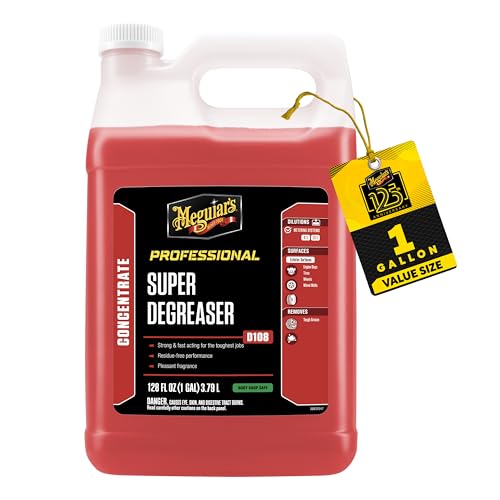
Best for a professional, free-rinsing detailer degreaser
- Pro dilutable formula (4:1 heavy, 10:1 medium)
- Free-rinsing, low white residue
- Gallon lasts a long time diluted
- Detailer-grade results
Why buy it: the degreaser pro detailers dilute for controllable strength and a clean, residue-free rinse — a gallon of concentrate goes a very long way.
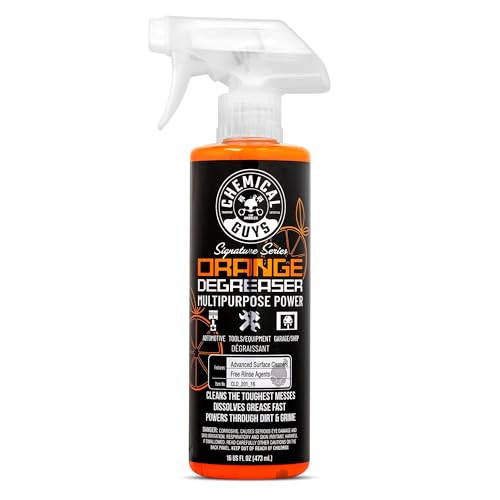
Best for engine bays plus tires, undercarriage and tools
- Citrus-based, dilutable
- Breaks down grease and grime
- Use full-strength or diluted
- Pleasant to work with
Why buy it: the versatile citrus degreaser detailers keep on the cart for engine bays, tires and undercarriages — strong when neat, gentle when diluted.

Best for a safer, non-flammable bio-solvent formula
- Water-based, non-flammable bio-solvent
- Corrosion inhibitors to fight flash rust
- Safe on many sensitive surfaces
- Gallon size
Why buy it: the water-based pick owners choose when they want strong cleaning without harsh solvent fumes — corrosion inhibitors help guard against flash rust.

Best for a gentler, dilutable cleaner for many jobs
- Highly dilutable concentrate
- Non-abrasive, versatile
- Engine, parts, shop and home use
- Household favorite
Why buy it: the gentle-but-effective concentrate owners use for everything from engine bays to parts and shop floors — dilute strong for grease, weak for cleanup.
Prices are pulled from Amazon and were accurate as of Aug 22, 2026, 7:14 PM EDT. Product prices and availability are subject to change — the live price is shown on Amazon.
Clean the Bay Safely: Cover the Electricals
The one rule that saves you a misfire and a bad afternoon: protect the sensitive parts before you spray or rinse. Modern engine bays are full of exposed electrical connectors, sensors, the alternator and the open air-intake, and while degreaser will not dissolve them, forcing water into a connector can cause temporary faults. Cover the alternator, intake and any open connectors with plastic bags, work on a warm — not scorching — engine so the product flows without flashing off, and keep any rinse to a garden hose or gentle pressure rather than a close-range high-pressure jet aimed at connectors. Let everything dry fully before starting. Done this way, degreasing is routine and safe.
The Spray-Dwell-Rinse Method
Good technique beats a stronger chemical. Warm the engine briefly, shut it off, and mask the electricals. Spray degreaser generously over the greasy areas and let it dwell per the label — usually 5–10 minutes, and importantly do not let it dry on the surface. Agitate stubborn, baked-on spots with a soft detailing brush. Rinse gently from the top down, blow or towel water out of crevices, remove your coverings, and let the bay dry before starting. If you want the finished look, a light dressing on hoses and plastics brings back the "new" sheen.
Concentrate vs Ready-to-Use
If you only clean a bay now and then, a ready-to-use spray like Gunk is simplest. If you clean engines, tools and shop floors regularly, a dilutable concentrate (Purple Power, Meguiar’s Super Degreaser, Simple Green) is the better value: mix it strong for a filthy engine and weak for general cleanup, and one bottle lasts far longer. Water-based bio-solvent formulas add the bonus of no harsh fumes and built-in corrosion inhibitors. Match the product — and the dilution — to how much cleaning you actually do.
Heavy-Duty Cleaning for Caked-On Oil
A bay with years of caked-on oil and road grime needs a heavy-duty degreaser and a little patience, not just a light spray. Strong solvent or high-alkaline formulas — Gunk's heavy-duty can, Purple Power at full strength, or a dedicated product like Motor Medic — cut the baked-on film that a mild all-purpose cleaner just smears around. For the worst build-up, spray, let it dwell, agitate the caked areas with a stiff brush, and repeat rather than reaching for a stronger, paint-risking chemical. Owners consistently report that dwell time and a second pass beat brute strength on a truly filthy motor.
Homemade Degreasers: Dawn, and Why They Fall Short
Plenty of owners ask about a homemade degreaser, and the usual answer is Dawn dish soap and hot water. It's fine for light grime and it's gentle, but it lacks the solvents to shift baked-on engine oil, so you'll scrub twice as long for half the result. If you want a greener option, reach for a biodegradable citrus or soy-based degreaser rather than a kitchen mix — they're formulated for grease yet still safe on paint and plastics. The same biodegradable degreaser also lifts oil stains off a concrete garage floor. Dish soap has its place for a quick wipe-down, but for a genuinely greasy bay a real degreaser saves time and elbow grease.
Degreasing Around Valve Cover and Gasket Leaks
Cleaning the bay often reveals where oil is coming from. Degrease around the valve cover and timing area, let it dry, then run the engine briefly — fresh wet oil pinpoints a leaked gasket far better than a grimy bay ever could. A clean surface is also essential before any gasket repair: degreaser strips the old oil film so a new gasket and sealant actually bond. Many engines that "burn oil" are really just weeping a valve-cover or oil-pan gasket onto a hot exhaust; cleaning first turns a mystery smell into a visible, fixable leak. See our burning or leaking oil guide once the bay is clean.
Detailing & Maintenance
Engine-bay cleaning is a natural part of a fuller detail — see how it fits into a complete wash in how to detail a car and the engine bay detailing guide. If you spot a leak while the bay is clean, our burning or leaking oil guide helps you trace it, and the wider oil change hub covers the rest. Brushes, bags and a gentle nozzle from the garage tools hub make the job clean.
How We Rank
Engine degreaser is a results-and-safety category, so we rank on aggregated owner ratings, review volume and the themes owners repeat. We weigh four things. Cleaning power — how well it cuts baked-on oil and grease per owner reports. Surface safety and rinsing — freedom from residue and harm to paint, plastics and finishes when used correctly. Versatility and value — dilutable concentrates that stretch across many jobs. And ease and safety of use — spray-dwell-rinse simplicity and, for the fume-averse, water-based formulas. We do not run a lab grease test; we read what owners report on real engine bays. Prices were current at the time of writing.
Quick Comparison
Gunk Engine Cleaner & Degreaser (EBT32, 32 oz)
Best for the classic spray-wait-rinse engine degreaser
Best Value
Purple Power Industrial Strength Cleaner/Degreaser (4319PS, 40 oz)
$4.99 · Check Price on Amazon
Best Premium
Meguiar’s Super Degreaser (D10801, 1 gal)
$29.53 · Check Price on Amazon
Best for Detailers
Chemical Guys Signature Series Orange Degreaser (16 oz)
$11.99 · Check Price on Amazon
Best Water-Based
WD-40 Specialist Cleaner & Degreaser (1 gal)
Check Price on Amazon
Best All-Purpose
Simple Green Industrial Cleaner/Degreaser (Concentrate)
Check Price on Amazon
The Verdict
Cover the electricals, work on a warm engine, and let the degreaser do the work. Gunk Engine Degreaser is our overall spray-wait-rinse pick; Purple Power is the value concentrate that dilutes for anything; and Meguiar’s Super Degreaser is the detailer-grade upgrade. Rinse before it dries, keep water out of connectors, and dry the bay before you start it. Check Price on Amazon →