
Affiliate Disclosure
Some links on this page are affiliate links. As an Amazon Associate, we earn from qualifying purchases — at no extra cost to you. We do not buy, test, or physically handle the products we cover; our rankings come from aggregated owner reviews, ratings and expert consensus. Commissions never change our verdicts. How we rank & full disclosure.
The short version: a radiator is a vehicle-specific part, so fitment comes first — match the exact number for your year, make, model and engine (trim and options can change it). For most people a complete OE-style replacement like our overall pick, the Spectra Premium, drops in and restores factory cooling; for towing, extreme heat or a modified engine, a performance all-aluminum radiator (Mishimoto) adds headroom. After any radiator job, refill with the correct coolant chemistry and bleed the air out properly, or you will overheat regardless of how good the radiator is.
Top Picks at a Glance
Our #1 Pick: Spectra Premium Complete Radiator
The Spectra Premium takes the top spot as the sensible default for a failed radiator: a complete, ready-to-install OE-style unit with an aluminum core, leak-tested to factory standards, at a fair price and with broad application coverage. For the majority of drivers who just need to restore cooling after a cracked tank or clogged core, that is exactly right — it drops in and works. Like every radiator, it is sold by vehicle-specific part numbers (CU2879 shown), so confirm the number fits your exact vehicle and engine. If you tow or run hot, look at the performance aluminum options; if you want OE-supplier pedigree, the Denso is a step up.
Best Radiators 2026: The Ranked Field

Best for a complete OE-style replacement that just fits
- Complete, ready-to-install radiator
- OE-style aluminum core
- Leak-tested to OE standards
- Broad application coverage
Why buy it: the direct-fit replacement most owners want — a complete, OE-style radiator engineered to drop in, so long as you confirm the number fits your exact vehicle.

Best for OE-supplier quality and fitment
- OE-supplier engineering
- Precise fit and cooling capacity
- Trusted by import owners
- High build quality
Why buy it: the OE-grade radiator import owners trust for factory-matching fit and cooling — buy the exact Denso number for your specific model.
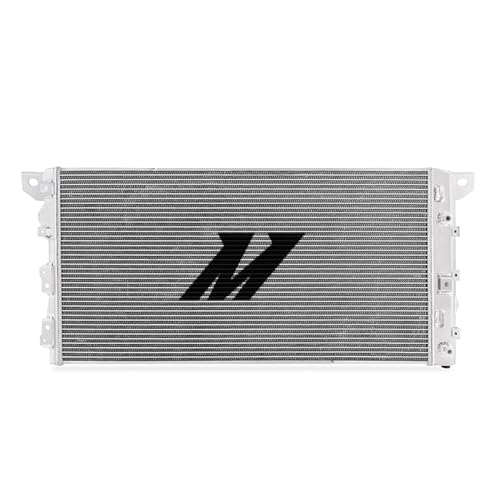
Best for extra cooling for towing, heat or modified engines
- Full-aluminum, TIG-welded end tanks
- Larger core for more cooling
- Great for towing and performance
- Vehicle-specific direct fit
Why buy it: the upgrade owners choose when they need more cooling headroom — a bigger all-aluminum core for towing or modified engines, in a model-specific fit.
Best for a value complete radiator for common imports
- Complete assembly, ready to install
- OE-style construction
- Leak-tested
- Good value
Why buy it: the value complete radiator owners of common imports pick — an OE-style, ready-to-fit unit that saves money, in the correct application number.

Best for enthusiast cars that run hot on track
- Full-aluminum performance core
- Improved heat rejection
- Popular enthusiast upgrade
- Model-specific fit
Why buy it: the enthusiast-favorite radiator for cars that see track heat — better heat rejection than stock, in a direct-fit design for the model.
Best for an affordable complete OE-style replacement
- Complete, ready-to-install unit
- OE-style aluminum core
- Leak-tested
- Budget-friendly
Why buy it: the budget complete radiator owners buy for a straightforward replacement — OE-style cooling and fit for less, in the number matched to your car.
Fitment First: Radiators Are Vehicle-Specific
A radiator has to match your car’s core size, inlet/outlet positions, mounting points, transmission-cooler provisions and fan setup — which is why it is sold by vehicle-specific part numbers, and why trim level and options (like a tow package or a particular engine) can change the correct radiator. Always match the exact number for your year, make, model and engine, and verify details like whether it has a transmission cooler. The numbers shown here fit only certain vehicles and are examples of each line. A radiator that "looks close" but has the wrong outlet positions or is a different size will not install or cool correctly.
OE-Style vs Performance Aluminum
Most modern OE radiators use an aluminum core with plastic end tanks — light, effective and cheap to produce, though the plastic tanks are the part that eventually cracks with age and heat cycling. A quality complete replacement of this type restores factory cooling at a sensible price and is the right call for a stock daily driver. A full-aluminum performance radiator with welded aluminum tanks is more durable and often has a larger, higher-capacity core — worth it if you tow, run in extreme heat, or have a modified engine, and overkill for a stock commuter. Match the radiator type to how you actually use the vehicle.
It’s a System, Not Just a Radiator
A radiator only cools if the rest of the system is healthy. If you are overheating, the culprit may be the water pump, a stuck thermostat, a bad fan, or old, exhausted coolant rather than the radiator itself. After replacing a radiator, always refill with the correct coolant chemistry (IAT/OAT/HOAT as your car specifies) using distilled water for any mixing, and bleed the air out following your vehicle’s procedure — trapped air is a classic cause of post-repair overheating. Read any coolant-temp warning first with a scanner from our OBD2 hub.
Related Cooling Maintenance
Tackle the radiator as part of the cooling system: the best coolant guide covers matching your chemistry, and the best water pump guide covers the other common overheating culprit. The wider service picture is in the oil change hub, and drain pans, a funnel and coolant-recycling containers live in the garage tools hub.
How We Rank
Radiators are a fitment-and-cooling category, so we rank on aggregated owner ratings, review volume and the qualities owners report — fit first. We weigh four things. Fit and completeness — a true direct-fit, ready-to-install unit for the application. Cooling and durability — OE-restoring cooling and leak-free service per owner reports, with performance headroom where needed. Build quality — core and tank construction. And value for the type. We do not run a cooling-load bench test; we read owner consensus and OE specs. Prices were current at the time of writing — confirm every part number against your own vehicle and engine.
When a Larger Core Helps a Car Running Hot
A stock radiator is sized for a stock car. If yours runs hot when towing, sitting in summer traffic, or after engine mods, a larger, higher-capacity core gives the cooling system more headroom to shed heat. That is the whole appeal of the full-aluminum performance radiators here — they move more water and coolant through more surface area, pulling heat out faster than the factory unit. Owners who tow heavy or track their cars consistently report lower temperatures after fitting a larger core. For a healthy stock daily driver that has never run hot, though, a same-size OE-style replacement is plenty; a bigger core is only worth it when you are actually asking more of the engine than the factory did.
Radiator, Heater Core, Water Passages and the Oil Cooler
It helps to see the radiator as one part of a connected cooling circuit. Coolant leaves the engine’s water jackets, flows through the radiator to shed heat, and a branch also feeds the heater core — a small radiator behind the dash that warms the cabin. Many radiators also integrate a transmission oil cooler in one end tank, with its own line fittings. Knowing this matters when you diagnose: cabin heat that blows cold usually points to a heater core or airflow issue, not the main radiator, and a leak at the oil-cooler fitting is different from a core leak. When you replace the radiator, reconnect the oil-cooler lines correctly, check the water passages are clear, and make sure the system is properly filled and bled.
Aftermarket Brands, Warranty and Repair vs Replace
A handful of aftermarket brands cover most cars: Spectra Premium and Denso for OE-style complete units, Mishimoto and Champion for performance aluminum. Some aftermarket radiators carry a lifetime warranty, which is worth having given that plastic end tanks are a known long-term failure point — factor the warranty into your thoughts alongside price and fit. On repair versus replace: older all-metal radiators could be re-cored or soldered, but a modern aluminum-core, plastic-tank unit is rarely economical to repair once a tank cracks. A complete replacement from a reputable brand, backed by a good warranty, is almost always the better-value fix.
Custom Aluminum Radiator Fabrication for Swaps
When a car has an engine swap or a chassis with no off-the-shelf fit, owners turn to custom fabrication. Specialist shops — often trading as a "Labs", "Fabrication" or "LLC" outfit — build one-off aluminum radiators sized to the exact opening, with inlet and outlet positions and mounting hardware made to match the swap. It costs more than a catalogue unit and takes lead time, but for a hot rod, a restomod or an unusual engine-into-chassis combination it is often the only way to get correct cooling and a clean fit. If your build is a common platform, a direct-fit aftermarket radiator is far cheaper; reserve custom fabrication for the genuinely one-off jobs.
OE vs Aftermarket Radiator Brands
Most replacements come down to an OE-supplier unit or an aftermarket radiator from one of the well-known radiator brands. OE-supplier names like Denso match factory fit and cooling exactly and are the safe default for a stock car. Reputable aftermarket lines — Spectra Premium for complete OE-style units, Mishimoto and CSF for performance aluminum radiators — cover the rest, from budget direct-fits to larger-core upgrades. The thing that unites the brands worth buying is honest fitment and leak-tested cores; the units to avoid are the unbranded bargains whose plastic tanks and seams fail early. Pick the brand tier that matches whether you want stock cooling restored or extra headroom.
Filling and Bleeding the System After Install
A new radiator only cools once the system is properly filled and free of air. Refill with the correct coolant chemistry mixed with distilled water, then follow your car's bleed procedure — open the bleeder valve or run the engine with the cap off until the thermostat opens and the level drops, topping up as trapped air escapes. Squeezing the upper hose helps burp pockets out. Trapped air is the classic cause of a car that overheats right after a radiator job, even with a perfect part. Take the time to bleed it fully, then recheck the level cold the next morning.
Replace the Cap, Hoses and Mounting Hardware
While the system is open, renew the wear hardware around the radiator. The pressure cap holds the system at its rated psi and is cheap to replace — a weak cap lets coolant boil early. Old radiator hoses that have gone soft or swollen are worth swapping at the same time, along with their clamps, since a fresh radiator deserves fresh connections. Check the rubber mounting bushings and any brackets so the new unit sits without stress. Doing this small hardware refresh together means the cooling system is genuinely renewed, not just the core, and you are far less likely to be back under the hood chasing a leak.
Quick Comparison
Spectra Premium Complete Radiator (CU2879 shown)
Best for a complete OE-style replacement that just fits
Best OE-Grade
Denso Radiator (221-3400 shown)
Check Price on Amazon
Best Performance
Mishimoto Performance Aluminum Radiator (F-150 shown)
Check Price on Amazon
Best Direct-Fit (Import)
Spectra Premium Complete Radiator (CU1889 shown)
Check Price on Amazon
Best for Enthusiasts
Mishimoto Performance Aluminum Radiator (WRX/STI shown)
Check Price on Amazon
Best Value
Spectra Premium Complete Radiator (CU1687 shown)
Check Price on Amazon
The Verdict
Match the exact radiator number to your vehicle first, then choose the type. A complete OE-style Spectra Premium is our overall pick for restoring factory cooling, Denso the OE-supplier upgrade, and Mishimoto the performance aluminum choice for towing and heat. Whatever you fit, refill with the correct coolant and bleed the air — a great radiator still overheats with trapped air. Check Price on Amazon →