
Affiliate Disclosure
Some links on this page are affiliate links. As an Amazon Associate, we earn from qualifying purchases — at no extra cost to you. We do not buy, test, or physically handle the products we cover; our rankings come from aggregated owner reviews, ratings and expert consensus. Commissions never change our verdicts. How we rank & full disclosure.
The short version: white lithium grease is the everyday, water-resistant grease for metal-to-metal contact points — hinges, latches, seat and garage-door tracks, linkages and light gears. Our overall pick, the WD-40 Specialist White Lithium Spray, sprays into tight spots and sets to a clingy, washout-resistant film. The key accuracy point is knowing where not to use it: it is not for wheel bearings or CV joints (use bearing/CV grease), not for brake caliper slides (use high-temp brake grease), and not ideal in dusty environments (use a dry PTFE lube). Match the grease to the job and white lithium covers the moderate-duty majority.
Top Picks at a Glance
Our #1 Pick: WD-40 Specialist White Lithium Spray
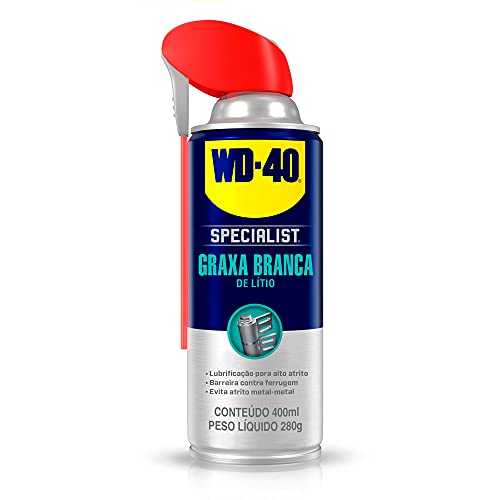
The WD-40 Specialist White Lithium spray earns the top spot for doing the everyday job so well: it sprays on thin enough to reach into a hinge or track, then sets to a thick, clingy film that shrugs off water and stays put where thinner lubricants would fling off or wash away. The two-way Smart Straw lets you place a precise stream or a broad coat, and it handles the moderate temperatures (to around 300°F) that hinges, latches and linkages see. It is the versatile single can most people should own — just remember it is the moderate-duty generalist, not the grease for bearings, CV joints or brake hardware.
Best White Lithium Greases 2026: The Ranked Field
Best for the all-round metal-to-metal grease most people should own
- Sprays on wet, sets to a thick film
- Water- and heat-resistant (to ~300°F)
- Two-way Smart Straw for precise aim
- Great on hinges, latches, tracks, gears
Why buy it: the white lithium owners reach for on hinges, latches and tracks — sprays into tight spots, then sets to a clingy film that resists water and washout.

Best for a strong, cheap general-purpose lithium spray
- High-viscosity, clingy film
- Good heat and water resistance
- General-purpose lubricant and rust inhibitor
- Low cost
Why buy it: the value can owners keep for everyday lubrication — a tough, clingy lithium film for latches, gears and open mechanisms without the premium price.

Best for a cleaner synthetic grease that resists dust pickup
- Synthetic base with PTFE (Syncolon)
- Wide temperature range, non-melting
- Cleaner alternative where dust is a concern
- Excellent friction and wear protection
Why buy it: the premium synthetic-with-PTFE grease owners choose where cleanliness matters — it protects like a heavy grease but attracts less grime than plain lithium.

Best for hand-packing and precise application
- Squeeze tube for controlled application
- Thick, water-resistant lithium grease
- No overspray, no propellant
- Good for packing and dabbing
Why buy it: the tube owners use when they want to place grease exactly — no overspray, ideal for packing a fitting or dabbing a specific pivot.
Best for a small tube for the glovebox or toolbox
- Handy 1.5 oz tube
- Metal-to-metal and metal-to-plastic use
- Rust protection, heat and moisture resistant
- Cheap and portable
Why buy it: the pocket-size tube owners keep in the toolbox for quick jobs — enough clean, protective grease for a hinge or latch without hauling a big can.

Best for frequent users who want more per can
- Larger 13.3 oz aerosol
- Same clingy, water-resistant film
- Two-way Smart Straw
- Better value for heavy users
Why buy it: the bigger can owners buy when they grease things often — the same trusted WD-40 lithium film with more product for the money.
Where White Lithium Grease Shines
White lithium is the right tool for the dozens of small, moderate-duty contact points around a car and home: door, hood and trunk hinges; latches and strikers; seat tracks and window regulators; garage-door rollers and tracks; throttle, shift and hood-release linkages; and light gears. It clings, resists water washout, and inhibits rust, so it lasts on parts exposed to weather far better than a thin oil. Spray or spread a light film, work the part to distribute it, and wipe the excess. For these jobs it is hard to beat on value and convenience.
Where NOT to Use It (This Is the Value)
Knowing the limits keeps you out of trouble. Wheel bearings and CV joints generate high heat and load and need a proper high-temperature bearing grease (often moly) or a CV-specific grease — white lithium will break down there. Brake caliper slides and hardware need a high-temp, rubber-safe brake grease; ordinary lithium can harm rubber boots and will not survive brake temperatures. In very dusty or gritty environments, white lithium’s tackiness collects abrasive grit that turns into a grinding paste — a dry PTFE lube is the better choice for locks and exposed mechanisms there. And for anything that is primarily rubber (weatherstripping, bushings), reach for a silicone lubricant that conditions rather than attacks it.
Lithium vs Bearing Grease vs Silicone vs Dry Lube
Think of it as a small toolkit. White lithium handles moderate-duty metal pivots and sliders. Bearing/moly grease handles high load and heat — bearings, U-joints, chassis fittings. Silicone spray is clean, rubber-safe and ideal for weatherstripping. Dry PTFE lube leaves a slick, non-tacky film that does not attract dust, perfect for locks and dirty mechanisms. Owning one of each covers almost everything, and using the right one is what makes lubrication last. White lithium is simply the one you will reach for most.
Related Maintenance
Grease often comes out after you have freed a stuck part — see our best penetrating oil guide for breaking rust bonds first, then lubricate. For the wider service picture, start at the oil change hub, and keep a small grease kit alongside the essentials in the garage tools hub. If a sticky linkage is throwing a drivability code, read it first with a scanner from our OBD2 hub.
Best Applications: Door Hinges, Garage Tracks and Metal Sliders
White lithium grease covers a long list of moderate-duty applications around a car, home and shop. On a vehicle it goes on door, hood and trunk hinges, latches and strikers, seat tracks, window regulators, and throttle and shift linkages. Around the house it keeps garage-door rollers and tracks running smoothly and quiets squeaky metal gate hinges. Anywhere two metal parts rub or pivot under light-to-moderate load and see some weather, a clingy lithium film works well and lasts. Spray or dab a thin coat, work the part to spread it, and wipe the excess so it does not sling off.
Spray Can vs Tube — and How Long a Grease Job Lasts
Both formats have a place. A spray (aerosol) can reaches into tight spots, coats tracks and hinges, and goes where a finger cannot — the propellant carries it thin, then it sets to a thicker film. A squeeze tube places grease exactly with no overspray, which is better for packing a fitting or working near paint. How long a job lasts depends on exposure: a sheltered indoor hinge can go a year or more, while a weather-exposed track wants a refresh each season. Many owners keep both a can and a tube, and simply re-grease when a part starts to feel notchy or squeak again.
High-Grade Brands: WD-40, CRC, B’laster and AGS
The high-grade, trusted names deliver a cleaner, more consistent film than bargain cans. WD-40 Specialist and CRC lead our picks; B’laster White Lithium is another respected performance option, and AGS makes quality lubricants for specific jobs. A quality lithium grease goes on clean, clings without dripping, and resists water so the protection actually stays where you sprayed it. The cheapest unbranded cans tend to run thin and wash off, so the small premium for a name-brand can is worth it for a film that performs and lasts on parts you would rather not keep re-doing.
How We Rank
White lithium grease is a moderate-duty utility product, so we rank on aggregated owner ratings, review volume and fitness for its intended jobs. We weigh four things. Film quality — how well it clings and resists water washout per owner reports. Application — spray control (straws), tube precision, and coverage. Appropriate use — clear positioning as a moderate-duty grease, with cleaner PTFE options where dust is a concern. And value — cost per ounce and portability. We do not run a lab wear test; we read what owners report on real hinges, tracks and linkages. Prices were current at the time of writing.
Quick Comparison
WD-40 Specialist White Lithium Grease Spray (10 oz)
Best for the all-round metal-to-metal grease most people should own
Best Value
CRC White Lithium Grease (03080, 10 oz)
Check Price on Amazon
Best Premium
Super Lube Synthetic Multi-Purpose Grease with PTFE (21030)
Check Price on Amazon
Best Brush-On
Lucas Oil White Lithium Grease (10533, 8 oz Tube)
Check Price on Amazon
Best Compact
Permatex White Lithium Grease (80345, 1.5 oz)
Check Price on Amazon
Best Big Can
WD-40 Specialist White Lithium Grease Spray (13.3 oz)
Check Price on Amazon
The Verdict
For hinges, latches, tracks and linkages, the WD-40 Specialist White Lithium Spray is our overall pick, with CRC the value can and Super Lube PTFE the cleaner premium for dusty jobs. Just keep it in its lane: bearings, CV joints and brake slides need their own greases, and dusty spots want a dry PTFE lube. Check Price on Amazon →