
Affiliate Disclosure
Some links on this page are affiliate links. As an Amazon Associate, we earn from qualifying purchases — at no extra cost to you. We do not buy, test, or physically handle the products we cover; our rankings come from aggregated owner reviews, ratings and expert consensus. Commissions never change our verdicts. How we rank & full disclosure.
The short version: a motorcycle is a genuinely hostile environment for a radar detector, and almost every product in the category was designed for a windshield in a dry cabin. Riders face three problems no car driver has — weather, vibration, and the fact that you cannot hear anything at speed. Ranked across aggregated owner ratings and rider-community consensus, our top pick is the Adaptiv TPX Pro, which is the only mainstream detector built from scratch for handlebars. If your bike has a fairing pocket or a dry top box, a car detector like the Uniden R7 will hear more — as long as you route the audio to a helmet headset.
The law is the same as it is for cars. Detectors are legal in passenger vehicles in almost every state, but not in Virginia and not in Washington, DC, and federal rules prohibit them in commercial vehicles over 10,000 lbs — irrelevant on a bike, relevant if you also drive a work truck. Details in radar detector legal states, and the wider category sits in the radar detectors hub.
Top Picks at a Glance
Why the Adaptiv TPX Pro Is Our #1
The TPX Pro wins this category by being the only serious entrant that treats a motorcycle as the primary use case rather than an afterthought. The housing is weatherproof, the mount is designed for handlebar vibration, the display is legible in direct sunlight through a visor, and the buttons can be operated with winter gloves on. None of those are performance specs, and all of them are the difference between a detector that lasts three seasons and one that dies in the first heavy rain.
It also solves the audio problem properly. Adaptiv designs around a wired feed into a helmet communication system, which is the only reliable way a rider actually receives an alert above about 45 mph. Combined with visual LEDs positioned for peripheral vision, you get a two-channel warning that works whether or not your headset is connected. The GPS datapoints for fixed cameras are a genuine bonus on unfamiliar routes.
Now the honest part: on pure detection, it does not compete with a good car detector. Owners and the rider community consistently report that a Uniden R3 or R7 hears Ka earlier and filters false alerts better. The TPX Pro is also expensive for what it detects — around $400 buys a flagship car unit. And the review base is small, because this is a niche product, which means less aggregate evidence to lean on than we would like. You are paying for survivability and ergonomics, not sensitivity. That is a legitimate trade for a rider, but it should be a conscious one.
Best Motorcycle Radar Detectors 2026: The Ranked Field
Best for the only genuinely purpose-built bike detector
- Weatherproof, handlebar-mounted housing
- Glove-friendly buttons and a sunlight-readable display
- GPS red light and speed camera datapoints
- Wired audio out to a helmet headset
Why buy it: built from the ground up for a bike — waterproof, vibration-tolerant and readable in direct sun, which is the whole problem no car detector solves.
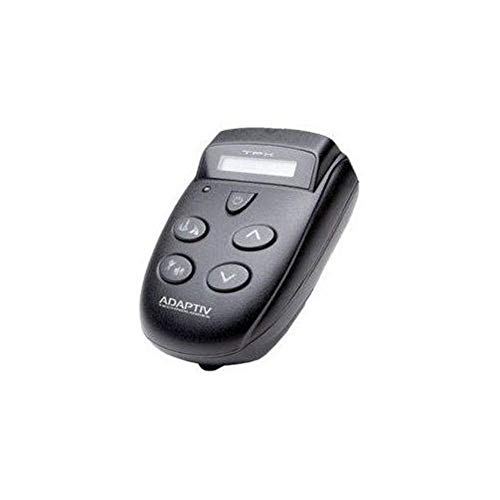
Best for the cheaper way into a motorcycle-specific unit
- Weatherproof bar-mount housing
- X, K, Ka and laser detection
- Visual alert LEDs plus headset audio
- Simple three-button operation with gloves on
Why buy it: the older Adaptiv platform at a meaningfully lower price — less capable than the Pro, but still designed for weather and handlebars rather than a windshield.

Best for baggers and tourers with a weather-protected fairing pocket
- Dual antennas with directional arrows
- Flagship Ka sensitivity
- GPS lockouts and camera database
- Per-band sensitivity control
Why buy it: far more detection ability than any bike-specific unit — but it is not weatherproof, so it only makes sense in a fairing pocket or a dry top box with an audio feed.

Best for riders who do not want to wire anything
- Runs on AA batteries — no wiring needed
- False-alert filtering with AutoMute
- OLED display and voice alerts
- Small enough for a tank bag window
Why buy it: the only serious detector that needs no power source at all, which makes it the least invasive option on a bike you do not want to modify.

Best for tank-bag and top-box mounting on a budget
- Built-in GPS with mute memory
- Strong K and Ka filtering
- Compact body, low profile
- Color OLED with voice alerts
Why buy it: small, cheap and quiet, with GPS lockouts — a sensible unit to keep in a tank bag window with the audio routed to a headset.

Best for a first setup you are willing to experiment with
- LaserEye front and rear detection
- IVT filtering for in-vehicle radar
- Bluetooth to the Cobra app
- Very compact housing
Why buy it: cheap enough that a rider can work out their own mounting and audio setup without risking much money on the experiment.
Prices are pulled from Amazon and were accurate as of Aug 22, 2026, 6:54 PM EDT. Product prices and availability are subject to change — the live price is shown on Amazon.
How to Choose: Start With Your Bike
Naked bikes, supermotos, anything with exposed bars. You need a weatherproof, bar-mounted unit. This is Adaptiv territory and there is not much competition — a car detector clamped to your bars will not survive a wet season, no matter how well you wrap it.
Tourers and baggers with a fairing. A fairing pocket or glove box is a genuinely dry, vibration-damped place to put a car detector, and if your bike has one you should take advantage of it. A Uniden R7 or R3 in a fairing pocket with audio piped to a headset outperforms every bike-specific unit on detection. This is the setup experienced touring riders most often end up with.
Adventure and commuter bikes with luggage. A top box or tank bag with a clear window can work, but be realistic about how waterproof yours actually is under pressure at 70 mph in rain. If you are not confident, buy weatherproof. A cordless unit like the Escort Solo S4 is worth considering here because it needs no wiring, which makes moving it between bike and car trivial.
The Specs That Matter Differently on a Bike
Ingress protection. The most important spec in this category and the one car buyers never think about. If a manufacturer does not describe the unit as weatherproof, assume it is not.
Audio output. A speaker is useless above about 45 mph. What matters is whether the unit can feed a headset — wired, or over Bluetooth into a comm system. Verify this specifically for your headset, because compatibility in this space is patchy.
Display legibility. Direct sun through a tinted visor destroys most OLED displays. Bike-specific units use high-contrast displays and large LEDs for exactly this reason.
Power. A wired install off the bike's accessory circuit is cleanest, but it is a job. Battery-powered units skip it entirely. Whatever you choose, do not run a detector directly off an unfused source.
Filtering and GPS lockouts still matter, just less — you are exposed to fewer minutes of dense suburban traffic per mile than a commuter car. The band basics are in K band vs Ka band, and quieting a noisy unit is covered in reducing false alerts.
Mistakes Riders Make
Clamping a windshield detector to the bars and hoping. It will read fine on a dry day and it will be dead by autumn. The suction mount is also not designed for the shock loads a bar mount sees.
Relying on the speaker. Riders who skip the headset feed almost always report they miss alerts. Plan the audio before you plan the mount.
Mounting it where it blocks instruments. A detector in front of the tach is a detector that makes you a worse rider. Peripheral, not central.
Treating an alert as a reason to accelerate away. On a bike more than anywhere else, the only sane response to any alert is to look at the speedometer and settle down. A detector is an awareness device.
How We Rank
We do not run a lab, we do not own a radar gun, and we do not ride test bikes for this site. This ranking aggregates owner reviews and star ratings, reads the themes riders repeat across those reviews, and weighs the result against published specifications and the consensus of the motorcycle and radar-detector communities.
For motorcycles we deliberately weight the criteria differently than we do on car pages. Survivability comes first — weather sealing, vibration tolerance and how many owners report a failure inside two years. Alert delivery comes second, because an alert a rider cannot perceive is not an alert. Detection performance comes third, which is unusual for us and reflects the reality that the best receiver in the category is useless if it drowns. Value rounds it out, with an honest note where a cheaper car detector in a dry pocket would serve a rider better. Prices quoted were current at the time of writing, and review bases in this niche are small enough that we treat them with more caution than usual.
The Verdict
If your bars are exposed to the weather, buy the Adaptiv TPX Pro — it is the only mainstream unit engineered for the job, and the ergonomics are worth the detection compromise. If you want the same idea for less, the Adaptiv TPX 2.0 is the older, cheaper platform. If your bike has a fairing pocket or a genuinely dry top box, put a Uniden R7 in it and route the audio to your headset — you will hear far more, and the full car field is ranked in best radar detector. Not wanting to wire anything at all? The Escort Solo S4 runs on AA batteries and moves between vehicles in seconds. On a tight budget, start at best budget radar detector. And riders considering the other kind of countermeasure should read best laser jammer for the legal picture first.
Quick Comparison
Adaptiv Technologies TPX Pro Motorcycle Radar/Laser Detector
Best for the only genuinely purpose-built bike detector
Best Value
Adaptiv Technologies TPX 2.0 Radar/Laser Detector
$299.99 · Check Price on Amazon
Best Premium
Uniden R7 Extreme Long-Range Laser/Radar Detector
$549.99 · Check Price on Amazon
Best Cordless
Escort Solo S4 Cordless Radar Detector
Check Price on Amazon
Best Compact
Uniden DFR7 Super Long Range Laser/Radar Detector
$224.99 · Check Price on Amazon
Best Starter
Cobra RAD 480i Laser Radar Detector
$119.99 · Check Price on Amazon
Prices are pulled from Amazon and were accurate as of Aug 22, 2026, 6:54 PM EDT. Product prices and availability are subject to change — the live price is shown on Amazon.