

Affiliate Disclosure
Some links on this page are affiliate links. As an Amazon Associate, we earn from qualifying purchases — at no extra cost to you. We do not buy, test, or physically handle the products we cover; our rankings come from aggregated owner reviews, ratings and expert consensus. Commissions never change our verdicts. How we rank & full disclosure.
The short version: a brake controller is what lets your tow vehicle stop a loaded trailer safely instead of relying on your truck’s brakes alone — and if your trailer has electric brakes, it is required, not optional. The big choice is proportional vs time-delayed: proportional controllers match trailer braking to how hard you are stopping, and they are smoother and safer. Our #1 pick, the Tekonsha Prodigy P3, is the proportional benchmark owners recommend most, with the Primus IQ as the value version and the hidden-install REDARC Tow-Pro Elite as the premium truck choice. Below is the full ranked field, why axle count matters, and how to choose.
A controller is one piece of a safe towing setup — pair it with correctly load-rated ST trailer tires, working trailer lights, and a secure hitch pin lock. See the full roadside emergency & safety hub for the rest of the towing kit.
Top Picks at a Glance
Our #1 Pick: The Tekonsha Prodigy P3
The Prodigy P3 is the controller shops and tow owners recommend first, and for good reason. Its proportional accelerometer matches trailer braking to how hard you are actually stopping, so the trailer never surges or drags, and the clear display makes setup and monitoring simple. It stores up to five trailer profiles for people who tow different trailers, adds selectable boost for heavier loads, and is rated for 1 to 4 axles, which covers everything from a single-axle utility trailer to a heavy triple-axle fifth wheel. Owners cite years of dependable service. Confirm your vehicle’s tow-package connector and order the matching harness, and installation is a plug-in job.
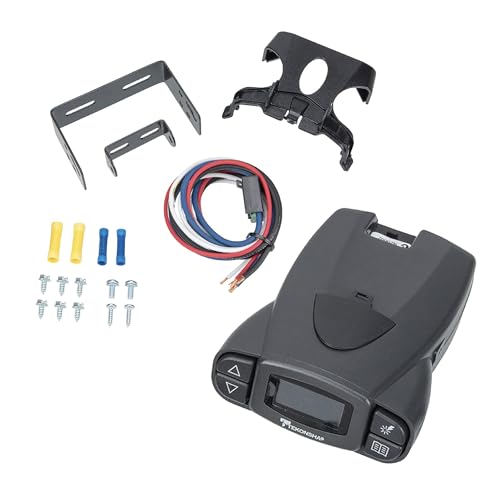
Best for the proportional controller most tow owners recommend
- Proportional (accelerometer) braking
- For 1–4 axles / 2–8 trailer brakes
- Stores up to 5 trailer profiles
- Boost levels for heavier loads
Why buy it: the benchmark proportional controller — owners praise its smooth, load-matched braking, clear display and multi-trailer memory, and it is the unit shops recommend first for 1–4 axle trailers.

Best for proportional braking without the P3 price
- Proportional, self-leveling
- For 1–3 axles / up to 6 brakes
- Boost for heavier trailers
- Simple, reliable interface
Why buy it: the value proportional pick — the same primary sensor technology as the P3 in a simpler package, giving smooth load-matched braking for less on trailers up to three axles.
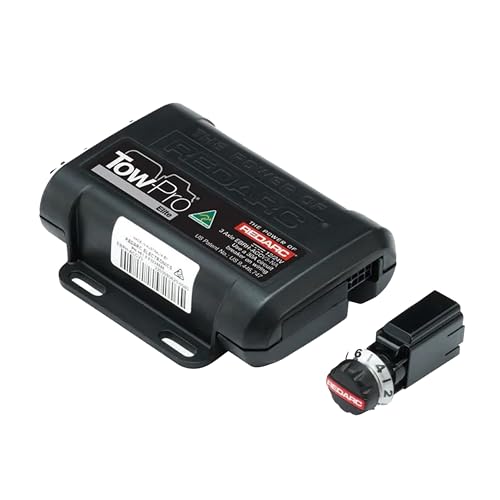
Best for a clean, dash-flush install for trucks and off-road
- Dual modes: proportional + user-set
- Compact knob mounts flush in the dash
- Rugged, sealed remote head unit
- For 1–3 axle trucks, SUVs, campers
Why buy it: the premium overlander choice — a hidden main unit with only a small dash knob showing, dual braking modes for on- and off-road, and a build reputation owners trust for hard use.

Best for no-wiring installs and swapping between vehicles
- Plugs between the 7-way connectors
- Proportional via triple-axis sensor
- Controlled by a phone app, no dash unit
- Moves between tow vehicles in seconds
Why buy it: the plug-and-go controller — it sits between the truck and trailer 7-way plugs with zero wiring and works through your phone, so owners who tow with more than one vehicle love it.

Best for a factory-look dash knob with a hidden module
- Proportional, hidden main module
- Clean rotary knob with LED readout
- Quick plug-in harness install
- For 1–3 axles
Why buy it: the tidy-install pick — the electronics hide behind the dash and only a small OEM-style rotary knob shows, giving proportional braking without a bulky box on the dashboard.
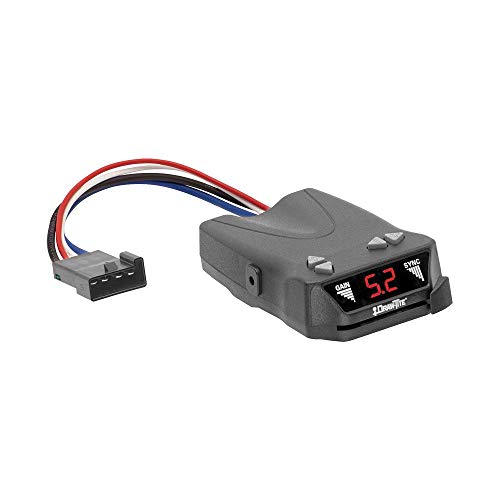
Best for light, occasional towing on a tight budget
- Time-delayed (not proportional) braking
- Simple, low-cost, easy to install
- For 1–2 axle / up to 4 brakes
- Fine for light, flat-road towing
Why buy it: the budget option — a time-delayed controller that applies a preset braking level rather than matching deceleration, which owners find perfectly adequate for light, occasional towing.
Proportional vs Time-Delayed — Choose Proportional for Real Towing
This is the decision that shapes how your rig feels on the road. A proportional controller (the P3, Primus IQ, Tow-Pro Elite, Echo, Spectrum) senses your tow vehicle’s deceleration with an accelerometer and applies the trailer brakes in proportion — brake gently and the trailer brakes gently, stop hard and it stops hard with you. The result is smooth, balanced braking that is easier on both vehicles and much safer in an emergency stop. A time-delayed controller (the budget Draw-Tite Activator) applies a fixed preset level of braking on a ramp, regardless of how hard you are stopping. It is cheaper and adequate for light, flat-road, occasional towing, but for regular or heavy towing, proportional is the safer, smoother choice and worth the extra cost.
Match the Controller to Your Axle Count
Controllers are rated by how many trailer brakes they can drive, expressed in axles. Count your trailer’s braked axles, double it for the number of electric brakes, and buy a controller rated to match or exceed it. A "1 to 3 axle" unit handles up to six brakes; a "1 to 4 axle" unit handles up to eight. A single-axle utility trailer is happy on any controller here; a heavy triple-axle fifth wheel needs one rated for at least three axles. Never fit a controller rated for fewer brakes than your trailer has — it can be overloaded and give weak, inconsistent braking exactly when you need it most.
Installation: Harness, Wireless, or Hidden
How the controller mounts is worth thinking about before you buy. Most units wire in behind the dash, and if your truck or SUV has a factory tow package, a vehicle-specific harness turns that into a plug-in job — check for the connector and order the right harness for your make and model. If you would rather not wire anything, the CURT Echo plugs between the vehicle and trailer 7-way connectors and runs from a phone app, moving between vehicles in seconds. If you want a clean dash, the REDARC Tow-Pro Elite and CURT Spectrum hide the electronics and leave only a small knob showing.
Electric vs Electric-Over-Hydraulic Trailer Brakes
Know what your trailer uses, because it changes the controller. Standard electric drum brakes are the common type on most utility, boat and travel trailers, and every controller here drives them. Electric-over-hydraulic systems — found on heavier and some off-road trailers — use the controller's signal to trigger a hydraulic actuator, and they need a controller rated to work with that actuator's current draw. Check your trailer's standard before buying, and confirm the controller's output range covers your setup. Match the controller to the brake type and you get consistent braking every stop.
The Manual Override Lever
One feature every proportional controller shares is worth knowing: a manual slide lever that applies the trailer brakes on their own, without touching the tow vehicle's brake pedal. It is invaluable for braking a trailer that starts to sway — a light drag on the trailer brakes alone pulls the rig straight where hitting your own brakes would make it worse. It also lets you test that the trailer brakes are working before you set off. Learn where the lever is on your controller and how firm a nudge it takes, so it is second nature if a sway ever starts.
Reading the Wiring Diagram
Even a plug-in install rewards a look at the wiring diagram. Every brake controller connects four things: battery power, ground, the brake-light switch (so it knows when you brake), and the output wire to the trailer's 7-way. On a truck with a factory tow package these land in one connector; without it, you follow the diagram to tap each wire. The manual's diagram also shows how to set gain and verify the output, so the controllers brake at the right level. Follow it step by step and even a hard-wired controller is a manageable afternoon job.
Tekonsha, CURT and REDARC: The Brake Controller Brands
A few names cover almost every quality controller. Tekonsha brake controllers — the Prodigy and Primus series — are the benchmark for proportional braking and what most shops fit first. CURT covers the wireless Echo and the hidden-module Spectrum, a strong line for clean or no-wiring installs. REDARC, with the Tow-Pro Elite, is the rugged premium offering favoured by overlanders. Draw-Tite rounds out the budget end with a time-delayed unit. Each brand's range spans axle counts and install types, so start with the brand whose strength — proven proportional feel, easy install, or hard-use durability — matches how you tow.
Setting the Gain: Read the Manual First
A controller only brakes well once its gain is set for your trailer. Every unit ships with a user manual — usually a printed sheet and a downloadable PDF — that walks through the one adjustment that matters most: gain, the strength of the trailer braking. Set it by towing at low speed on a clear road and raising the gain until the trailer brakes just start to lock, then backing off a notch. Redo this whenever the load changes, because an empty trailer needs far less than a loaded one. Keeping this standard setup routine in mind means smooth, balanced stops rather than a trailer that grabs or drags.
Boost Levels and Braking for Heavier Trailers
Better proportional controllers add boost, a setting that applies more initial trailer braking the moment you hit the pedal — useful the next step up from a light load, when you tow a heavy travel trailer or fifth wheel. A low boost suits medium loads; the higher settings match the heaviest trailers in the controller's range. It works alongside gain, not instead of it: gain sets the overall standard strength, boost shapes how aggressively the braking comes on. Leave boost off for a light utility trailer, and step it up only when a heavy load makes the rig feel like it is pushing you at stops.
How We Rank
A brake controller earns trust by braking smoothly every time and holding up for years, so we rank by aggregated owner ratings, review volume and the themes owners repeat rather than a single test tow. We weigh four things. Braking feel — whether owners report smooth, proportional stops without surge or lurch. Reliability — long-term durability and consistent sensor behavior. Install experience — plug-in harness availability, wireless options and clean mounting. And value — features and braking quality against price, which is where the proportional value picks stand out. We favor proportional controllers for real towing and are clear about which are time-delayed. Prices were current at the time of writing.
Quick Comparison
Tekonsha 90195 Prodigy P3 Proportional Brake Controller
Best for the proportional controller most tow owners recommend
Best Value
Tekonsha 90160 Primus IQ Proportional Brake Controller
Check Price on Amazon
Best Premium
REDARC Tow-Pro Elite Electric Brake Controller
Check Price on Amazon
Best Wireless / Portable
CURT 51180 Echo Mobile Bluetooth Brake Controller
Check Price on Amazon
Best OEM-Style Fit
CURT 51170 Spectrum Proportional Brake Controller
Check Price on Amazon
Best Budget / Time-Delayed
Draw-Tite 5504 Activator Time-Delayed Brake Controller
Check Price on Amazon
The Verdict
For most tow vehicles, the Tekonsha Prodigy P3 is the proportional controller owners recommend above the rest — smooth, load-matched braking, multi-trailer memory and a 1-to-4-axle rating. Want the same feel for less? The Primus IQ is the value pick. Want a hidden, rugged install for a truck or overland rig? The REDARC Tow-Pro Elite. Match whichever you choose to your trailer’s axle count. Check Price on Amazon →