
Affiliate Disclosure
Some links on this page are affiliate links. As an Amazon Associate, we earn from qualifying purchases — at no extra cost to you. We do not buy, test, or physically handle the products we cover; our rankings come from aggregated owner reviews, ratings and expert consensus. Commissions never change our verdicts. How we rank & full disclosure.
The short version: a winch is what gets you out when you are truly stuck against an obstacle and no one is around to pull you — and sizing it right is a safety issue, not a preference. The rule is to rate the winch at at least 1.5 times your truck’s gross vehicle weight. Our #1 pick, the WARN VR EVO 10, pairs 10,000 lb of pull with WARN’s durability and parts support; the Smittybilt X2O is the synthetic-rope value pick; and the Superwinch Tiger Shark 15000 covers heavy trucks. Below is the full ranked field, the 1.5x rule, synthetic vs steel line, and how to use one safely.
A winch is the heavy end of recovery — for softer ground start with recovery boards, and for a vehicle-to-vehicle pull use a rated tow and recovery strap and the safe recovery method. See the full roadside emergency & safety hub for the rest of the kit.
Top Picks at a Glance
Our #1 Pick: The WARN VR EVO 10
The VR EVO 10 earns the top spot on the strength of the WARN name and the things it actually buys you: IP68 waterproof sealing so it survives water crossings, a relocatable control pack for a clean install, and — crucially — WARN’s long track record of parts support, so a winch you buy today can be serviced years from now. Its 10,000 lb rated pull suits most 1/2-ton trucks and Jeeps under the 1.5x rule. It ships with steel cable; many owners swap to synthetic later. If you want a winch you can rely on and support for the long haul, this is the safe, do-it-right choice.

Best for proven WARN reliability at a reasonable price
- 10,000 lb rated line pull
- IP68 waterproof sealing
- 90 ft steel cable, roller fairlead
- Relocatable control pack
Why buy it: the trusted all-rounder — WARN’s reputation for parts support and durability in a 10,000 lb winch that owners of 1/2-ton trucks and Jeeps rate as the safe, do-it-right choice.

Best for synthetic-rope performance for less money
- 10,000 lb pull, synthetic rope
- Waterproof, wired + wireless remote
- 6.6 HP motor, planetary gears
- Lifetime mechanical warranty
Why buy it: the value pick — a 10,000 lb winch with lighter, safer synthetic rope and both wired and wireless remotes for far less than premium brands, backed by a lifetime mechanical warranty.

Best for maximum capacity for heavy trucks and rigs
- 15,000 lb rated line pull
- Heavy-duty motor and gear train
- Steel rope, roller fairlead
- For heavy 3/4- and 1-ton trucks
Why buy it: the heavy hauler — a 15,000 lb winch for big trucks and loaded rigs where a 10,000 lb unit is marginal, giving the margin heavy vehicles need for safe single-line pulls.
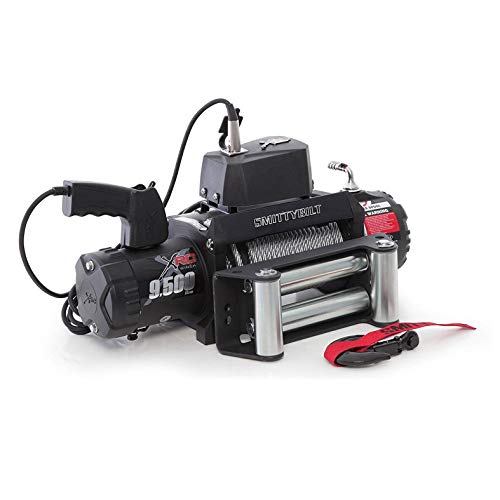
Best for a capable winch on a tight budget
- 9,500 lb rated line pull
- Steel cable, waterproof build
- Wired and wireless remotes
- Strong owner value record
Why buy it: the budget choice — 9,500 lb of pull with steel cable and dual remotes at an entry price, the winch owners buy to get real recovery capability without overspending.

Best for a lighter synthetic-rope winch for SUVs and Jeeps
- 9,500 lb pull, synthetic rope
- Aluminum hawse fairlead
- Lighter than steel-cable rivals
- Sealed for weather
Why buy it: the SUV pick — a 9,500 lb winch with lighter synthetic rope and an aluminum hawse, a good match for Jeeps and mid-size trucks that do not need maximum capacity.

Best for full-size trucks needing extra margin
- 11,500 lb rated line pull
- Synthetic rope, aluminum hawse
- Sealed, heavy-duty build
- For heavier full-size trucks
Why buy it: the full-size-truck pick — 11,500 lb of pull that gives heavier trucks the safety margin over their weight that a 9,500 lb winch would not, with lighter synthetic rope.
The 1.5x Rule — Rate the Winch to Your Truck
This is the number that keeps you safe. Size the winch to at least 1.5 times your vehicle’s gross vehicle weight (GVW), and round up. A 6,000 lb truck wants at least a 9,000 lb winch, and most people fit a 10,000 lb unit for margin. The multiplier exists because pulling a stuck vehicle out of mud, sand or an incline takes far more force than the vehicle’s weight — suction and gravity pile on resistance. A winch worked near its maximum runs hot, pulls slowly and wears out, so extra capacity is both safer and easier on the winch. Never buy a winch rated below your GVW hoping it will be enough.
Synthetic Rope vs Steel Cable
The line matters as much as the motor. Synthetic rope is much lighter, easier and safer to handle, and if it fails under load it drops instead of whipping like steel can — which is why many owners prefer it for recreational recovery. Its downsides are vulnerability to abrasion, UV and drum heat, and it needs more care. Steel cable is cheaper, tougher against rocks and heat, but heavy, prone to sharp burrs, and dangerous if it snaps under tension. For most trucks, synthetic rope is the safer choice; steel cable suits abrasive, rocky, high-heat use. Whichever you run, a damper laid over the line is essential.
Single vs Double Line, and Safe Use
You can multiply a winch’s power with rigging. A single-line pull runs the rope straight to the anchor at the rated capacity; a double line — out to a snatch block and back — roughly doubles the force while halving speed, turning a marginal winch into a capable one and letting you change the pull angle. To use any winch safely you also need a solid anchor (a tree with a wide tree-saver, or a rated recovery point — never a tow ball), gloves, a damper over the line, rated shackles, and everyone clear of the danger zone. Recovery is dangerous done carelessly; learn the technique before you need it.
Electric Winch Brands: WARN, Smittybilt and Badland
The winch market has a clear hierarchy of brands. WARN is the premium standard — its Zeon and VR lines set the benchmark for durability and parts support. Smittybilt and Superwinch sit in the strong mid-tier, offering synthetic-rope models for less. At the budget end, Harbor Freight's Badland winches have earned a following for surprising capability per dollar, and Smittybilt's Platinum series adds features higher up. Across every brand, the electric winch bolted to a front bumper is what most truck owners run — buy the best-supported unit your budget allows.
Heavy Duty Off Road Truck Winch Capacity
Serious off road and overlanding use is where capacity matters most. A heavy duty truck winch with margin over your truck's weight pulls a bogged rig out of deep mud or up a loose incline without straining, where a marginal unit overheats and stalls. A loaded F-150 or 3/4-ton hauling gear off road wants a winch rated well above its curb weight in lbs — the 1.5x rule is the floor, not the target. When the recovery is heavy, a winch with reserve capacity finishes the pull cool instead of stalling half-buried. If you regularly leave pavement, size up: the extra pulling capacity is cheap next to being stuck on a trail at dusk.
Portable Winches and Value for the Money
Not every recovery calls for a bumper-mounted winch. A portable electric winch that mounts to a hitch receiver moves between vehicles and stows in the bed, which is genuine value for the money if you tow or run more than one truck. The trade is a less rigid mount and slower setup than a permanent install. For most people who go off-road often, a fixed winch is worth it; for occasional need across several vehicles, a portable unit is the sensible spend.
WARN Zeon vs VR: Which WARN to Choose
WARN itself splits into tiers, and the choice confuses first-time buyers. The WARN Zeon is the flagship — a sealed, award-winning line with the smoothest control and the longest durability record, priced accordingly. The VR EVO range is the value WARN: the same parts-support reputation and IP68 sealing for far less, which is why it tops our ranking. Owners who pull often and hard lean toward the Zeon; those who want WARN reliability at a fair price pick the VR. Either earns the brand's award-winning reputation — the difference is how much refinement and capacity you are paying for.
Fitting a Winch to an F-150 and Popular Trucks
Mounting is model-specific. An F-150 and most half-ton trucks need a winch-capable bumper or a hidden mount plate rated for the pull in lbs, plus clearance for the winch body behind the fascia. For heavy-duty three-quarter- and one-ton rigs the plate and fasteners must handle the higher loads of serious off-road work. The overlanding community shares detailed fitment guides for popular trucks, so confirm the bumper, mount and fairlead suit your exact model before ordering — a winch that will not bolt up cleanly is the most common install headache.
How We Rank
A winch earns trust by pulling reliably under load, surviving water and mud, and being supportable for years, so we rank by aggregated owner ratings, review volume and the themes owners repeat rather than a single pull test. We weigh four things. Reliability — sealed motors and gear trains owners report lasting through hard use. Pulling power — rated capacity matched to real trucks under the 1.5x rule. Support and features — parts availability, remotes and rope options. And value — capability against price, where the synthetic-rope value picks stand out. We state line pull and rope type plainly because sizing and line choice are safety decisions. Prices were current at the time of writing.
Quick Comparison
WARN VR EVO 10 Winch (10,000 lb, Steel Cable)
Best for proven WARN reliability at a reasonable price
Best Value
Smittybilt X2O Gen2 Winch (10,000 lb, Synthetic Rope)
Check Price on Amazon
Best Premium
Superwinch Tiger Shark 15000 (15,000 lb)
Check Price on Amazon
Best Budget
Smittybilt XRC Gen2 Winch (9,500 lb, Steel Cable)
Check Price on Amazon
Best Mid-Size / Synthetic
Superwinch Tiger Shark 9500 (Synthetic Rope)
Check Price on Amazon
Best for Heavy Trucks
Superwinch Tiger Shark 11500 (11,500 lb)
Check Price on Amazon
The Verdict
For most trucks, the WARN VR EVO 10 is the winch owners rate above the rest — reliable, waterproof and supportable for the long haul. Want lighter synthetic rope for less? The Smittybilt X2O is the value pick. Driving a heavy 3/4- or 1-ton? The Superwinch Tiger Shark 15000. Whatever you choose, rate it to at least 1.5x your truck’s weight and learn to use it safely. Check Price on Amazon →