
Affiliate Disclosure
Some links on this page are affiliate links. As an Amazon Associate, we earn from qualifying purchases — at no extra cost to you. We do not buy, test, or physically handle the products we cover; our rankings come from aggregated owner reviews, ratings and expert consensus. Commissions never change our verdicts. How we rank & full disclosure.
The short version: a headache rack shields your rear window and the cab from cargo that lunges forward under braking — a genuine safety item for anyone who hauls heavy loads — and most double as a ladder and lumber rack. The main decision is aluminum vs steel: aluminum is lighter and rust-free, steel is cheaper and takes brute abuse. Also check the mounting (no-drill stake-pocket or clamp designs keep the truck unmodified). Ranked across aggregated owner reviews, our #1 pick is the AA-Racks APX25-WG aluminum rack. Below is the full field and how to choose.
A headache rack pairs with the rest of your hauling setup. See our guides to the best truck tool box and the best truck bed mat. The full tonneau & truck bed covers hub has more.
Top Picks at a Glance
Our #1 Pick: AA-Racks APX25-WG
Our top pick is the AA-Racks APX25-WG aluminum headache rack. Aluminum means it never rusts and stays light, and the 3-bar design shields the rear window and cab from shifting cargo while doubling as a ladder and lumber rack up top. It is a universal fit, adjustable from 47 to 70 inches, so it suits a wide range of full-size beds, and it mounts without heavy modification. Owners rate it highly for the combination of protection, hauling utility, and rust-free longevity. Confirm the adjustment range covers your bed width, and if you regularly carry very long loads, look at the cantilever-extension version below.
Best Headache Racks 2026: The Ranked Field

Best for a rust-free rack that also carries ladders
- Aluminum — light and rust-free
- 3 cross bars shield the rear window
- Universal fit, adjustable 47" to 70"
- Doubles as a ladder/lumber rack
Why buy it: the rack owners rate highest — aluminum so it never rusts, a 3-bar guard that protects the cab and rear glass, and cross bars strong enough to haul ladders and lumber up top.

Best for a cheap no-drill steel cab guard
- Heavy-duty steel construction
- Adjusts 64" to 74" bed width
- No-drill install via stake pockets
- Welded wire screen protects the glass
Why buy it: the value pick — a sturdy steel cab guard that mounts in the stake pockets without drilling, with upright extensions for hauling ladders and pipes, at a budget price.

Best for long loads that overhang the cab
- Aluminum rack + cantilever extension
- 38" of extra over-cab carrying length
- 3-bar rear window guard
- Adjustable universal fit
Why buy it: the premium pick — the cantilever adds 38 inches of over-cab length so owners can carry very long ladders and lumber safely, on the same rust-free aluminum rack.

Best for a cleaner look with no-drill mounting
- Single-bar aluminum design
- Four C-clamps, no drilling
- Window guard protects the glass
- Lighter, lower-profile look
Why buy it: the low-profile pick — a cleaner single-bar aluminum rack that clamps on without drilling, for owners who want cab protection without a heavy over-built look.

Best for maximum strength and tie-down points
- Heavy steel, 500 lb capacity
- Extendable to fit most beds
- Mesh window protector
- Multiple anchor/tie-down points
Why buy it: the heavy-duty pick — thick steel rated to 500 lb with built-in anchor points, for owners who lean cargo hard against the rack and want the extra tie-downs.
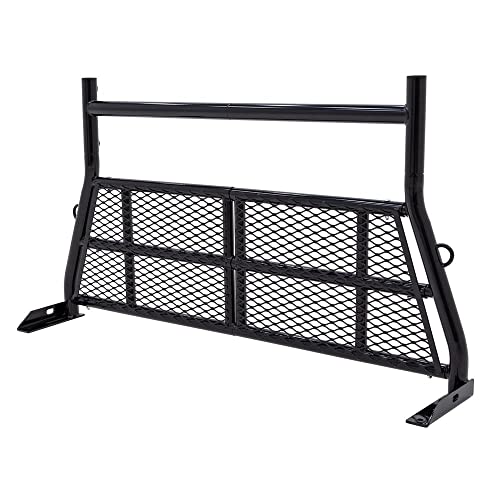
Best for the cheapest way to protect the cab
- Heavy-duty steel, adjustable 53"-71"
- Wire window guard
- Universal stake-pocket mount
- Simple, functional design
Why buy it: the budget pick — a no-frills adjustable steel guard that shields the rear window from shifting cargo for the lowest price, if looks and ladder-hauling are not priorities.
Aluminum vs Steel — Pick for Your Priorities
The core choice is material. Aluminum racks are lighter, never rust, and look clean — the better long-term buy if the truck lives outside, you care about weight and economy, or you lift the rack on and off. Steel racks are usually cheaper and shrug off brute impacts, but they add weight and rust where the coating chips. For most owners wanting a rack that looks good for years without much weight penalty, aluminum wins; for maximum strength on a budget or heavy commercial abuse, steel is sensible. Both protect the cab and rear glass effectively — the difference is longevity, weight and cost.
How to Choose a Headache Rack
Decide material first (aluminum vs steel, above). Match the fit — universal adjustable racks span a range of bed widths, so confirm yours falls in it. Choose the mounting you want: no-drill stake-pocket or C-clamp designs keep the truck unmodified and let you remove the rack, while bolt-through mounts are more rigid but permanent. Consider hauling needs — a multi-bar or cantilever rack carries ladders and long lumber, while a single-bar or window-guard rack just protects the cab. Check the load rating if you will carry weight up top, and confirm tonneau compatibility if you run a cover.
Mounting and Loading
Most racks mount in minutes: no-drill designs drop into the stake pockets or clamp to the bed rail, while heavier racks bolt through the bed for a more rigid feel. Set the rack square and tighten evenly so it sits solid against the cab. If you carry loads on the cross bars, stay within the rated capacity, strap everything down, and use a cantilever or over-cab extension for anything that overhangs far forward. Recheck the mounting hardware after the first few loaded trips, since fasteners settle. A properly mounted rack does its real job invisibly — until the day a load shifts and it stops your cargo instead of your rear window.
How We Rank
Headache racks are a safety-and-utility part, so we rank by aggregated owner ratings, review volume, and the themes owners repeat rather than a bench test. We weigh four things. Protection — a guard that genuinely shields the rear window and cab from shifting cargo. Build and longevity — rust-free aluminum or strong steel that stays solid under load. Utility and mounting — ladder-carrying cross bars and a secure, ideally no-drill, mount. And value — what you pay for that protection and utility. Prices were current at the time of writing.
Headache Rack Brands: BackRack, Magnum and Highway Products
Beyond the value picks ranked here, several premium brands dominate the headache rack world. BackRack is the best-known name — the "BackRack headache rack" is almost a generic term — with a frame that bolts to custom no-drill hardware for each pickup. Magnum, Highway Products and Ranch Hand build heavier, often American-made welded racks aimed at work trucks, and several offer custom, model-specific fit rather than a universal adjust. These products cost more than the universal aluminum and steel racks above, but they deliver a tighter fit and a more finished look. If you want a rack tailored to your exact pickup rather than adjusted to it, these are the brands to shortlist.
Mounting Lights and Guarding Against Shifting Cargo
A headache rack does double duty as a mounting platform. The flat top bar is the natural place to bolt work lights or an LED light bar, aiming rearward over the bed for loading in the dark or forward for the trail. Route the wiring down a corner post and the lights sit high and protected. The rack’s primary job, though, is guarding the cab against shifting cargo: under hard braking a loose load lunges forward, and the window guard is what stops it reaching the rear glass and the people in the cab. Strap loads down and let the rack be the backstop, not the first line of defense.
Heavy-Duty, Well-Built Racks for Pickup, Flatbed and Semi Trucks
Work and commercial users need more than a light window guard. A heavy-duty, well-built steel rack rated to several hundred pounds is what stands up to a pickup, flatbed or even a semi truck load leaning hard against it. These racks are built to take the brute force of shifting freight and to carry ladders, pipe and lumber up top day after day. If you haul for a living, prioritize a high load rating and thick, welded construction over a light, good-looking aluminum unit — the heavier rack is the one that survives commercial abuse.
Low-Profile vs High Full Guard
A low-profile single-bar rack protects the cab with a cleaner look; a high, full-mesh guard shields the entire rear window and blocks more of a shifting load. Choose the height by how much cargo protection you actually need.
Quick Comparison
AA-Racks APX25-WG Aluminum Headache Rack (Universal, 3-Bar Window Guard)
Best for a rust-free rack that also carries ladders
Best Value
MaxxHaul 70234 Adjustable Steel Headache Rack (No-Drill)
Check Price on Amazon
Best Premium
AA-Racks APX25-WG-E Aluminum Headache Rack with Cantilever Extension
Check Price on Amazon
Best Low-Profile
AA-Racks APX25-A-WG Aluminum Headache Rack (Single-Bar, No-Drill C-Clamps)
Check Price on Amazon
Best Heavy-Duty Steel
Peforway Extendable Steel Headache Rack (500 lb, Anchor Points)
Check Price on Amazon
Best Budget Steel
Apex Adjustable Steel Headache Rack (53"-71" Window Guard)
Check Price on Amazon
The Verdict
For most trucks, the aluminum AA-Racks APX25-WG is the headache rack owners rate highest — rust-free, protective, and able to haul ladders. On a budget, the no-drill steel MaxxHaul 70234 protects the cab for less, and for very long loads the AA-Racks cantilever version adds over-cab length. Decide aluminum vs steel and confirm your bed width, then Check Price on Amazon →