
Affiliate Disclosure
Some links on this page are affiliate links. As an Amazon Associate, we earn from qualifying purchases — at no extra cost to you. We do not buy, test, or physically handle the products we cover; our rankings come from aggregated owner reviews, ratings and expert consensus. Commissions never change our verdicts. How we rank & full disclosure.
The short version: snow socks are a textile traction device you pull over the drive tires — far easier and faster than chains, quieter, gentler on the road, and accepted as a chain alternative in many places. They are a genuine help for getting through a snowy stretch at low speed, but they are not a substitute for winter tires and they cap out around 30 mph. Ranked across aggregated owner reviews, our #1 pick is the AutoSock HP698, the USDOT-recognized textile standard. The catch that trips people up is sizing — you must match the sock to your exact tire size. Below is the full field and how to choose.
Socks are one winter tool among several. If your roads see real, sustained winter, proper winter tires do far more, and for deep snow or ice consider tire chains. The full wheels & tires hub has more.
Top Picks at a Glance
Our #1 Pick: AutoSock HP698
Our top pick is the AutoSock HP698. AutoSock is the original textile traction device and is USDOT-recognized where chain laws apply, which matters when you meet a chain-control checkpoint. Owners rate it highly for how quickly it fits — over the tire, roll forward, pull the rest over, done in minutes without jacking — and for working cleanly with ABS and stability control. It comes as a pack of two for the drive axle. The one thing to get right is the size: AutoSock sells several fitments (the HP number), so match it to your tire size before buying. Bigger tires want the HP870; smaller cars the HP645.
Best Snow Socks 2026: The Ranked Field

Best for the USDOT-recognized textile traction standard
- High-performance textile weave
- USDOT-recognized where chain laws apply
- Installs in minutes, no jacking
- ABS/ESC/TCS compatible
Why buy it: the sock owners trust — the original USDOT-recognized textile traction device, easy to fit in a storm and accepted in most places chains are required.
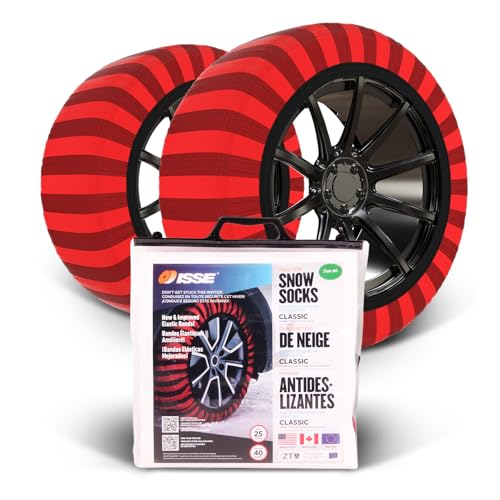
Best for a cheaper textile sock that still passes chain laws
- Woven textile traction fabric
- Easy pull-on install
- Reusable and machine-foldable
- Works with electronic aids
Why buy it: the value pick — a proven textile sock that grips snow and ice for noticeably less than the premium sets, with a big base of satisfied owners.

Best for larger SUV and light-truck tire sizes
- Larger fitment for SUVs/pickups
- Same USDOT-recognized textile
- Snow-shedding outer webbing
- Compact storage when folded
Why buy it: the pick for bigger tires — the same USDOT-recognized textile in a larger size range, so SUV and pickup owners get the easy-install benefit chains cannot match.

Best for smaller passenger-car tire sizes
- Sized for smaller passenger tires
- USDOT-recognized textile
- Minutes to install, no tools
- Reusable, folds flat
Why buy it: the small-car fitment of our top pick — check the size chart against your tire, and compact cars get the same fast textile traction.
Best for mid-size passenger tire fitments
- Mid-range passenger fitment
- USDOT-recognized textile
- Electronic-aid friendly
- Folds for glovebox storage
Why buy it: another passenger fitment in the AutoSock line — match the size number to your tire and it delivers the same easy, chain-law-legal traction.

Best for a broader fit range across tire sizes
- Adjustable textile cover
- Anti-slip winter traction
- Fits most car/SUV/truck tires
- Set of 2 covers
Why buy it: the flexible-fit pick — an adjustable textile cover that spans a wider size range, handy if you run different tire sizes across vehicles.
Sizing Is Everything — Match Your Exact Tire
Snow socks are sold by fitment, not one-size-fits-all. Read your tire sidewall (e.g. 225/65R17) and match it to the maker size chart — an AutoSock HP number or an ISSE size — before you order. A sock that is too small will not stretch over the tire; too large and it will not stay centered. Fit them on the drive wheels: the fronts on a front-drive car, the rears on rear-drive, and per the maker guidance for all-wheel drive. Buy in autumn and check the fit in your driveway once, because a snowstorm is a bad time to discover you bought the wrong size.
How to Choose Snow Socks
Start with your tire size and vehicle, then confirm legality for the roads you drive — many places accept USDOT-recognized socks as a chain alternative, but some severe chain-control zones require metal chains, so socks may not cover every trip. Choose a recognized brand (AutoSock, ISSE) so you have documented approval if you are stopped. Consider how much winter you face: for occasional snowy patches, socks are the easy everyday tool; for regular deep snow and ice, keep chains as well. And store a pair in the car before winter — the whole point is having them when the surprise storm hits.
Know the Limits
Socks are a low-speed aid. Keep to the maker cap (around 30 mph) and slower on ice; fit them only on snow-covered sections and remove them on clear pavement, because textile socks wear fast on bare asphalt. They will not out-grip chains on ice or hard-pack, and they do nothing for stopping distance the way winter tires do across a whole season. Think of them as a get-through-this-stretch tool: easy to deploy, easy to stow, and a smart backup — but not a replacement for the right tires when winter is your normal.
How We Rank
Snow socks are an occasional-use safety item, so we rank by aggregated owner ratings, review volume, and the experiences owners repeat. We weigh four things. Traction — how well the textile bites on snow and ice, judged by owner reports across real storms. Legality and recognition — USDOT or equivalent approval so they count as a chain alternative. Ease and fit — quick install and an accurate size range for common tires. And durability and value — how many uses owners get. Prices were current at the time of writing.
Snow Socks vs Chains and Cables as a Winter Alternative
Snow socks are one of three common winter traction alternatives, and it helps to see where they sit. Metal chains give the most outright grip and last the longest, but they are heavy, slow to fit, and rough on the ride. Tire cables are a lighter metal option — easier than chains, but still metal on the road. Snow socks are the textile alternative: the easiest and quietest of the three, accepted as a chain substitute in many places, and gentle on both the road and your tires. For most passenger cars and light trucks meeting the occasional snowy stretch, the sock is the practical alternative; for severe, sustained ice, chains still win.
Easy Install and Textile Traction on Snow and Ice
The appeal of socks comes down to two things: easy install and real traction. Fitting is genuinely simple — pull the sock over the top of the tire, roll the car forward, and pull the rest over, a couple of minutes per wheel with no jacking or tools. Once on, the woven textile bites into the thin water film on snow and ice, and owners consistently report significantly improved grip on a slippery surface. Some also note a modest shortening of stopping distance on packed snow compared with a bare tire. Just keep expectations realistic: the traction is a low-speed aid, not a match for chains on sheet ice.
ISSE and AutoSock Sizing for Truck and Car Tires
Two brands dominate the category, and both are sold by fitment. AutoSock uses HP numbers for each tire-size range, while ISSE lists numbered sizes — either way you match the sock to the size printed on your tire sidewall. Larger SUV and pickup tires need the bigger fitments (AutoSock HP870, ISSE’s larger sizes or its adjustable cover), and small cars take the smaller ones. Because trucks and SUVs run taller, wider tires, sizing up is essential — a sock too small simply will not stretch on. Read your sidewall, pick the matching size in a recognized brand, and test the fit at home before the first storm.
Quick Comparison
AutoSock HP698 Snow Socks for Tires (Passenger Vehicles, Pack of 2)
Best for the USDOT-recognized textile traction standard
Best Value
ISSE Classic Isse Snow Socks (Textile Traction, Set of 2)
Check Price on Amazon
Best Premium
AutoSock HP870 Snow Socks (Cars, SUVs & Pickups, Pack of 2)
Check Price on Amazon
Best for Small Cars
AutoSock HP645 Snow Socks (Passenger Vehicles, Pack of 2)
Check Price on Amazon
Best for Sedans
AutoSock HP697 Snow Socks (Passenger Vehicles, Pack of 2)
Check Price on Amazon
Best Adjustable Fit
ISSE Adjustable Snow Socks (Car/SUV/Truck, 2 Covers)
Check Price on Amazon
The Verdict
For an easy, chain-law-recognized way through a snowy stretch, the AutoSock HP698 is the sock owners rate highest — just match the size to your tire. The ISSE Classic is the value alternative, and SUVs and pickups should size up to the AutoSock HP870. Remember they are a low-speed backup, not winter tires — then Check Price on Amazon →