
Affiliate Disclosure
Some links on this page are affiliate links. As an Amazon Associate, we earn from qualifying purchases — at no extra cost to you. We do not buy, test, or physically handle the products we cover; our rankings come from aggregated owner reviews, ratings and expert consensus. Commissions never change our verdicts. How we rank & full disclosure.
9H Ceramic Coating
A SiO2-based coating marketed with a "9H" rating, borrowed from the pencil-hardness scale (ASTM D3363 / JIS K5600-5-4). 9H is the hardest pencil on that scale, so it is the highest number the test can legitimately produce.
Best for: Anyone shopping by real specs — durability, solids content, contact angle — and treating the 9H number as background noise
Roughly $20–$80 for a 30–50 ml consumer kit; $70–$150 for pro-tier bottles
- The number at least references a real, published standardized test that exists
- 9H is the honest ceiling of the pencil scale, so the claim is not mathematically impossible
- Sold by essentially every consumer brand, so competition keeps DIY kit prices low
- The properties that actually matter — hydrophobicity, chemical resistance, UV stability, gloss — are unaffected by the label
- Widely available with real user-review volume behind the well-known SKUs
- The rating is self-declared — almost no brand publishes the test report, substrate or load used
- A pencil-hardness figure measured on a rigid test panel says little about a 2-micron layer over soft clearcoat
- It has become a meaningless badge, printed on everything from $18 spray sealants to $150 pro coatings
- Distracts buyers from durability and solids content, which are the specs that predict real performance
10H Ceramic Coating
A coating marketed as "10H" — a rating that does not exist on the pencil-hardness scale, which stops at 9H. On the Mohs mineral scale, 10 is diamond. Neither reading is achievable by a silica coating on automotive clearcoat.
Best for: Nothing that 9H does not already cover — the extra digit is a marketing decision, not a formulation one
Roughly $25–$90 for a consumer kit — usually priced above 9H products with no measurable difference
- Often bundled with more generous kits — extra applicators, suede cloths, prep spray, a topper
- Some 10H-labeled products are genuinely good coatings that simply chose an inflated marketing number
- The label pressure has pushed some brands to publish real figures alongside it, such as contact angle
- Sold under the same 2–5 year durability claims as 9H products from the same manufacturers
- The scale it cites does not go to 10 — the rating is an invention, not a measurement
- No third-party verification exists for any 10H claim currently on the market
- Typically carries a price premium for an identical or near-identical chemistry
- Consensus among professional detailers is that a 10H claim is a reason for more scrutiny, not less
How they score, side by side
Scores reflect aggregated owner reviews and expert consensus — not our own bench testing.
- Honesty of the claim62
- Real scratch resistance delivered44
- Chemical & UV protection88
- Hydrophobic performance88
- Value for money75
- Usefulness as a buying signal31
Spec-by-spec comparison chart
| Factor | 9H Ceramic Coating | 10H Ceramic Coating |
|---|---|---|
| What the rating references | Pencil hardness scale (ASTM D3363 / JIS K5600-5-4) | No recognized scale — pencil hardness stops at 9H |
| Is the number achievable | Yes — 9H is the top of the pencil scale | No — the scale has no 10H grade |
| Third-party verification | Rare; almost always a self-declared claim | None available on any consumer product |
| Actual cured film thickness | Typically 1–3 microns | Typically 1–3 microns |
| Clearcoat underneath | ~40–50 microns, roughly 2H–4H on the same scale | ~40–50 microns, roughly 2H–4H on the same scale |
| Protection against wash swirls | Minimal — technique matters far more | Minimal — technique matters far more |
| Chemical & UV resistance | Genuinely good — this is the real benefit | Genuinely good — this is the real benefit |
| Typical water contact angle | 100–115° when fresh | 100–115° when fresh |
| Claimed durability | 2–5 years depending on product | 2–5 years depending on product |
| Typical DIY kit price | $20–$80 | $25–$90 |
| Spec worth buying on | Durability, solids %, contact angle, cure window | Durability, solids %, contact angle, cure window |
Our Top 3 Picks
The three highest-rated options in this category, if you'd rather skip straight to a proven pick.

Best for the best DIY durability and gloss
- Graphene-infused hardness
- 2–5 year durability
- Slick, high-gloss finish
- Beginner-friendly kit
Why buy it: the best all-round DIY kit — long life and an easy application.

Best for maximum longevity
- Pro-grade hardness
- 2+ year protection
- Deep, warm gloss
Why buy it: a detailer favorite that survives years with proper prep.

Best for fast spray-on protection
- Spray-on / wipe-off
- SiO2 hydrophobic layer
- Great for beginners
Why buy it: spray-on ceramic protection in minutes with no cure fuss.
Prices are pulled from Amazon and were accurate as of Aug 22, 2026, 6:54 PM EDT. Product prices and availability are subject to change — the live price is shown on Amazon.
What the H rating actually measures
Start with the test itself, because almost nobody selling coatings explains it. The "H" comes from the pencil hardness test, standardized as ASTM D3363 in the United States and JIS K5600-5-4 in Japan. A graphite pencil of a known grade is sharpened flat, held at a 45-degree angle, loaded with about 750 grams of force, and pushed across the cured coating. You work down the grades until you find the hardest pencil that does not scratch the surface. That grade is the rating.
The scale runs from 6B at the soft end through HB and F in the middle to 9H at the hard end. 9H is the last grade on the scale. There is no 10H pencil, which means there is no 10H reading. A product marketed as 10H is not reporting a result from this test, because the test cannot produce that answer.
The alternative reading — that 10H means a 10 on the Mohs mineral hardness scale — is worse. Mohs 10 is diamond. A silica-based coating measures somewhere in the 6–7 range at absolute best, and that is for bulk quartz, not a thin cured film. No consumer paint coating is anywhere near diamond, and no manufacturer has ever published data suggesting otherwise.
So the honest starting position is that the two numbers on the bottle are not comparable measurements at all. One references a real test with a real ceiling. The other references nothing. We break the test down further in our guide to what 9H hardness actually means.
Why the number is meaningless on a real car
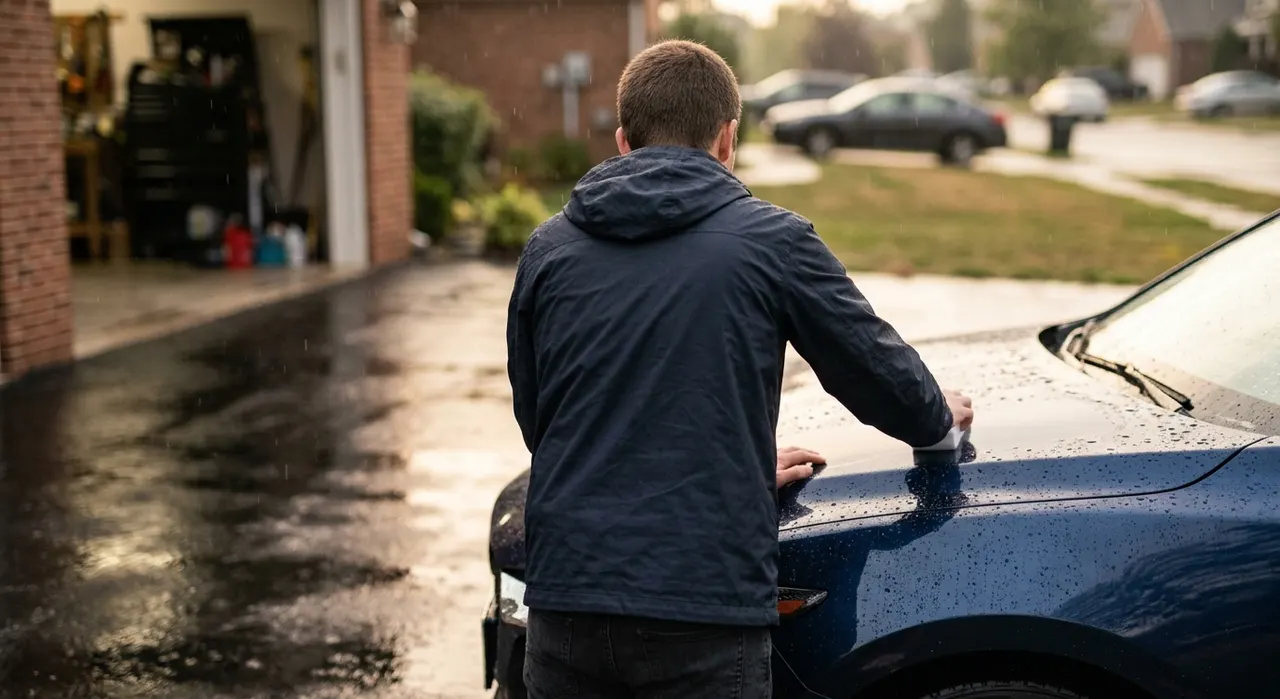
Even taking a 9H claim at face value, it does not transfer to your paint the way the marketing implies — and this is the part that matters more than the 9 versus 10 argument.
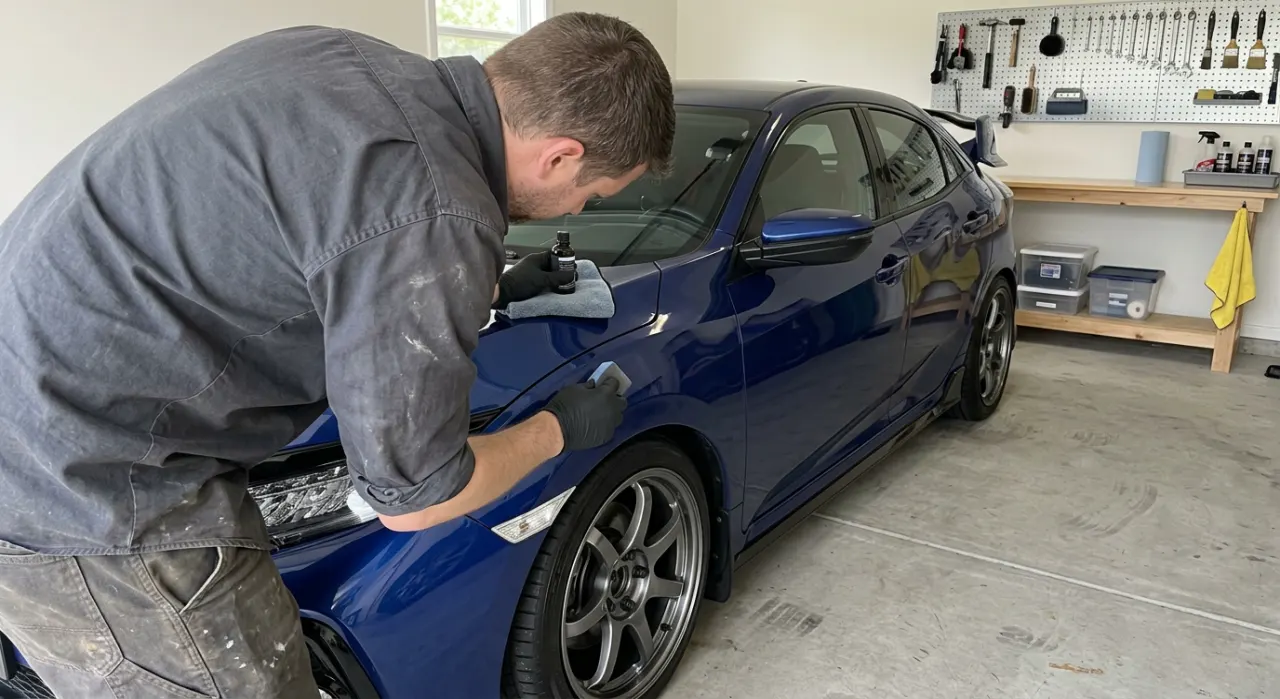
Pencil hardness is measured on a cured film applied to a rigid, controlled test panel. Your car is not a rigid test panel. A modern factory paint system stacks e-coat, primer, basecoat and roughly 40–50 microns of clearcoat, and that clearcoat sits somewhere around 2H to 4H on the same pencil scale. On top of that stack you apply a ceramic coating that cures to approximately 1–3 microns — thinner than a strand of spider silk.
When something presses into that surface, the thin hard layer deflects into the softer clearcoat beneath it. The composite behaves far closer to the substrate than to the coating. This is elementary coatings physics, and it is why the consensus among professional detailers is blunt: a ceramic coating does not stop swirl marks. It never has.
What actually causes swirls is grit dragged across paint by a dirty mitt, a rough towel, a gas-station brush or an automatic wash. No 1-micron layer prevents that. Wash technique prevents that — which is why our two-bucket wash guide does more for your paint than any number printed on a coating box.
Owners who coat a car and then run it through a brush wash consistently report swirls anyway, and that experience is entirely predictable from the physics. The coating was never the defense against mechanical abrasion.
What ceramic coatings genuinely do well
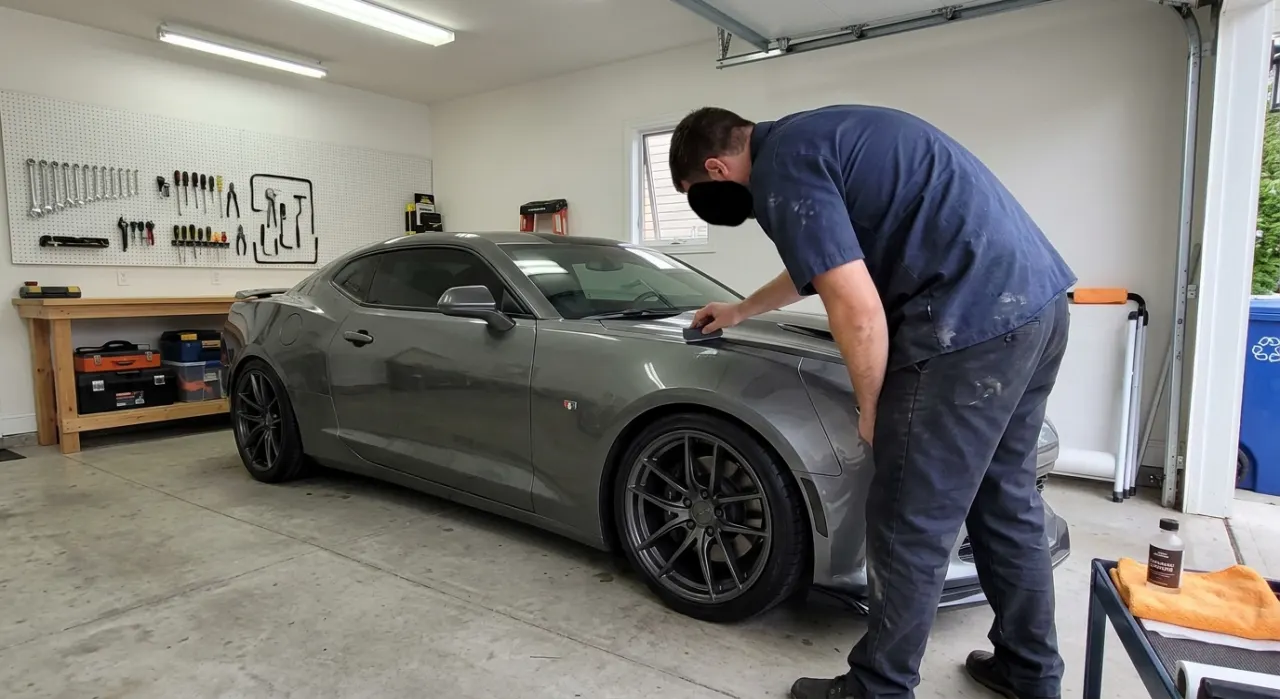
None of this means ceramic coatings are a scam. They are excellent products sold with a bad headline number. Here is what they actually deliver, and all of it is real:
- Chemical resistance. Bird droppings, bug guts, tree sap and industrial fallout are acidic and will etch clearcoat given time and heat. A cured SiO2 layer is far more chemically inert and buys you a meaningful window to remove contamination before it bites.
- Hydrophobicity. Fresh coatings typically show water contact angles in the 100–115 degree range, which produces the tight beading and self-sheeting owners buy them for. Water leaves faster, carrying dirt with it.
- Ease of cleaning. This is the benefit owners rate highest in aggregated reviews. Contamination struggles to key into the slick surface, so washes get shorter and safer — and a shorter, gentler wash genuinely does reduce swirling, just indirectly.
- UV stability. The layer takes UV exposure that would otherwise degrade the clearcoat, which helps most on red and dark single-stage-sensitive finishes.
- Gloss and depth. A correctly prepped and coated panel reads deeper and wetter than a waxed one, and it holds that look for years rather than weeks.
- Longevity. Real coatings last 2–5 years where a carnauba wax lasts 6–10 weeks. That durability gap is the honest reason to buy one, and we cover the realistic numbers in our ceramic coating durability guide.
Notice that scratch resistance is not on that list. A coating adds marginal resistance to the very lightest marring, and that is all any credible detailer will claim for it.
The specs you should actually compare
If the H number is noise, what should you read instead? These are the figures that separate a serious coating from a repackaged sealant:
- Published durability in months or years, ideally with a maintenance schedule attached. A brand that says "2 years with an annual topper" is being more honest than one that says "lifetime."
- Solids content. Higher-solids formulations lay down more material per pass and generally last longer. Professional-only lines usually run higher solids than the consumer version of the same name.
- Water contact angle, stated as a number rather than a photo of beads.
- Flash time and cure window. A coating with a 30-second flash in a hot garage is unforgiving for a first-timer; one with a 2–5 minute window is far more manageable.
- Required prep. Every real coating demands decontamination and paint correction first. If a product claims it works on a dirty car, it is a spray sealant wearing a ceramic costume.
- Rain and wash timing after application. Most need 12–24 hours dry and 7 days before the first wash.
It is worth noting which brands lead with hardness claims and which do not. The professional lines that detailers actually reach for tend to publish durability, solids and application windows, and rarely put an H number on the front label at all. Consumer bottles competing on Amazon search results are where 9H and 10H badges cluster.
What you are paying for, and what it is worth
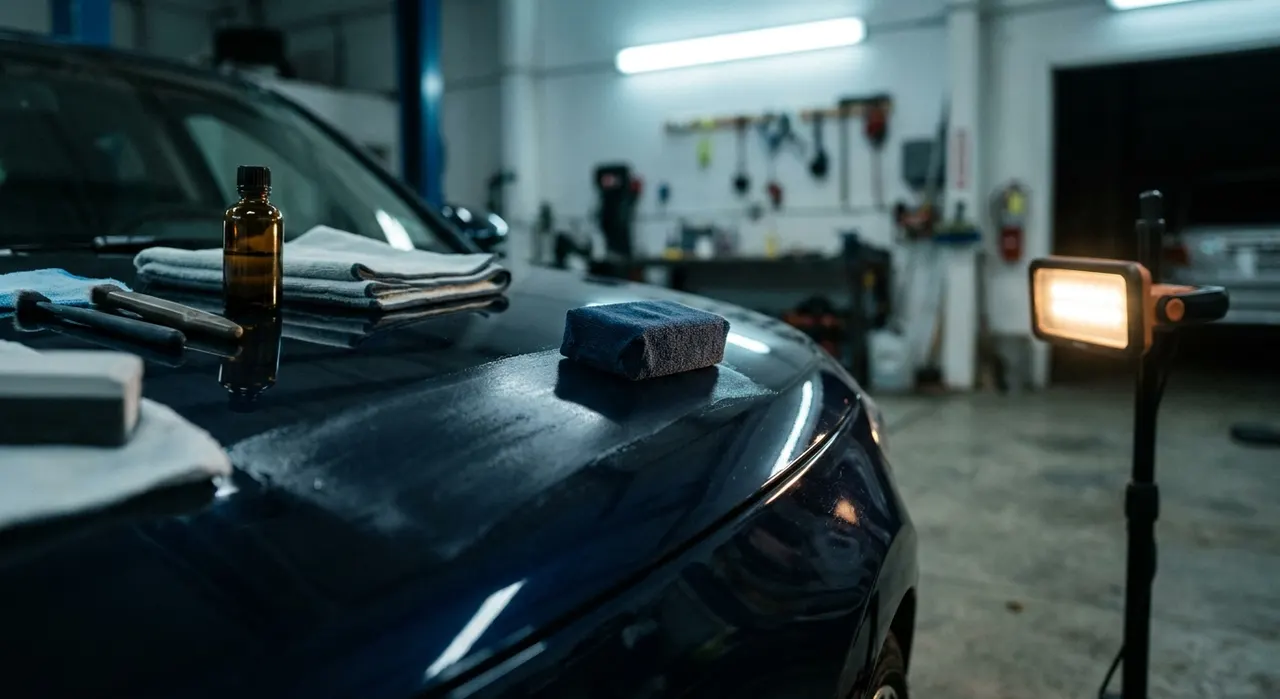
A 30–50 ml consumer ceramic kit typically runs $20–$80. Pro-tier bottles that require correction and controlled conditions run $70–$150 and up. Products branded 10H usually sit at the higher end of the consumer band — often $10–$25 above a comparable 9H product from a similar manufacturer.
That premium buys you a digit. In aggregated owner reviews there is no consistent performance separation between 9H-labeled and 10H-labeled coatings at the same price point; the spread within each category is far wider than the spread between them. Where 10H kits do offer value, it is usually in the bundle — extra suede applicators, a prep spray, a maintenance topper — not the coating chemistry.
The far bigger cost variable is what you do before the bottle opens. Proper decontamination and a one-step polish, whether you do it yourself or pay a shop $300–$800, determines how the coating looks for its entire life. A coating locks in the paint condition underneath it, flaws included. Spending an extra $20 on a bigger number while skipping correction is exactly backwards.
Common myths and mistakes
"10H is harder than 9H." There is nothing above 9H on the pencil scale to be harder than. The claim is outside the measurement system it borrows from.
"A 9H coating makes my paint scratch-proof." No. A 1–3 micron layer over 40–50 microns of softer clearcoat deflects with the substrate. Coatings resist chemicals and UV; they do not stop a gas-station brush.
"Higher H means longer durability." Unrelated. Durability comes from solids content, crosslink density and how well the surface was prepped — not from a scratch-resistance figure.
"If the number is fake, the whole product is fake." Also wrong, and worth saying plainly. Plenty of good coatings carry silly hardness badges because the market rewards them. Judge the chemistry and the reviews, not the sticker.
"I can skip polishing because the coating fills defects." Coatings are optically clear and sit microns thick — they magnify swirls rather than hiding them. Correction first, always.
Which should you buy — and how to decide
Neither number should influence your purchase, which is why this comparison has no winner. A 9H claim is at least anchored to a real test; a 10H claim is anchored to nothing. But treating either as a performance spec will lead you to the wrong product.
Buy on durability and prep requirements. Decide how long you want the coating to last, whether you are willing to do the correction work or pay for it, and how forgiving an application window you need as a first-timer. Those three answers narrow the field faster than any marketing figure.
Weight owner reviews heavily, particularly reports from owners 12 and 24 months in. Beading after a week tells you almost nothing; beading after two winters tells you everything.
And if you are still deciding whether a coating is the right product for you at all, start one step earlier with our ceramic coating vs wax comparison — the choice between a multi-year coating and a six-week wax matters far more than the number printed on the box.
Recommended Products
Our top picks in this category, ranked on aggregated owner reviews.
Best for the best DIY durability and gloss
- Graphene-infused hardness
- 2–5 year durability
- Slick, high-gloss finish
- Beginner-friendly kit
Why buy it: the best all-round DIY kit — long life and an easy application.
Best for maximum longevity
- Pro-grade hardness
- 2+ year protection
- Deep, warm gloss
Why buy it: a detailer favorite that survives years with proper prep.
Best for fast spray-on protection
- Spray-on / wipe-off
- SiO2 hydrophobic layer
- Great for beginners
Why buy it: spray-on ceramic protection in minutes with no cure fuss.

Best for the closest thing to a pro coating
- Near-professional hardness
- 5+ year durability
- Superb chemical resistance
Why buy it: pro-tier protection you can still apply at home.
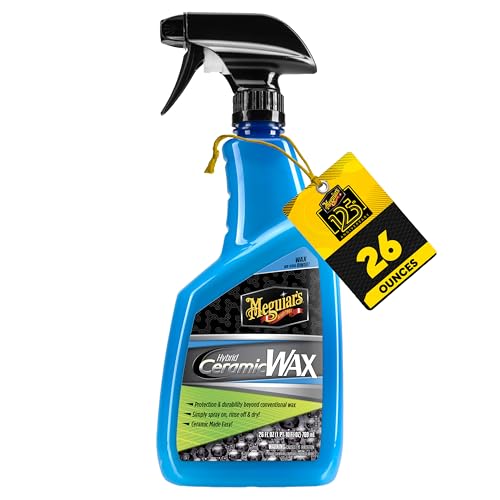
Best for cheap ceramic beading
- Spray on wet or dry
- Strong water beading
- Cheapest per use
Why buy it: the cheapest way to get ceramic-style beading fast.

Best for a complete beginner bundle
- Coating + applicators included
- Simple instructions
- Widely available
Why buy it: an all-in-one beginner bundle with everything you need.
Prices are pulled from Amazon and were accurate as of Aug 22, 2026, 6:54 PM EDT. Product prices and availability are subject to change — the live price is shown on Amazon.