
Affiliate Disclosure
Some links on this page are affiliate links. As an Amazon Associate, we earn from qualifying purchases — at no extra cost to you. We do not buy, test, or physically handle the products we cover; our rankings come from aggregated owner reviews, ratings and expert consensus. Commissions never change our verdicts. How we rank & full disclosure.
The short version: a detailing vacuum is not the same purchase as a general household vacuum. It has to move enough air to lift grit out of carpet pile, run for forty-five minutes without a battery dying, and reach into places designed by people who never thought about cleaning them. Ranked across thousands of owner reviews, our #1 pick is the RIDGID WD4070 — 5 peak HP in a body you can carry with one hand. Want the machine that lives in professional bays? The MetroVac Vac N Blo. Want the cheapest thing that works? The Armor All AA255.
This page is about the powerful corded machines detailers actually reach for. If you want the general all-purpose ranking, that is best car vacuum. If you want battery convenience instead, see best cordless car vacuum, and the wider field is in the car vacuums hub.
Top Picks at a Glance
Why the RIDGID WD4070 Is Our #1 Detailing Vacuum
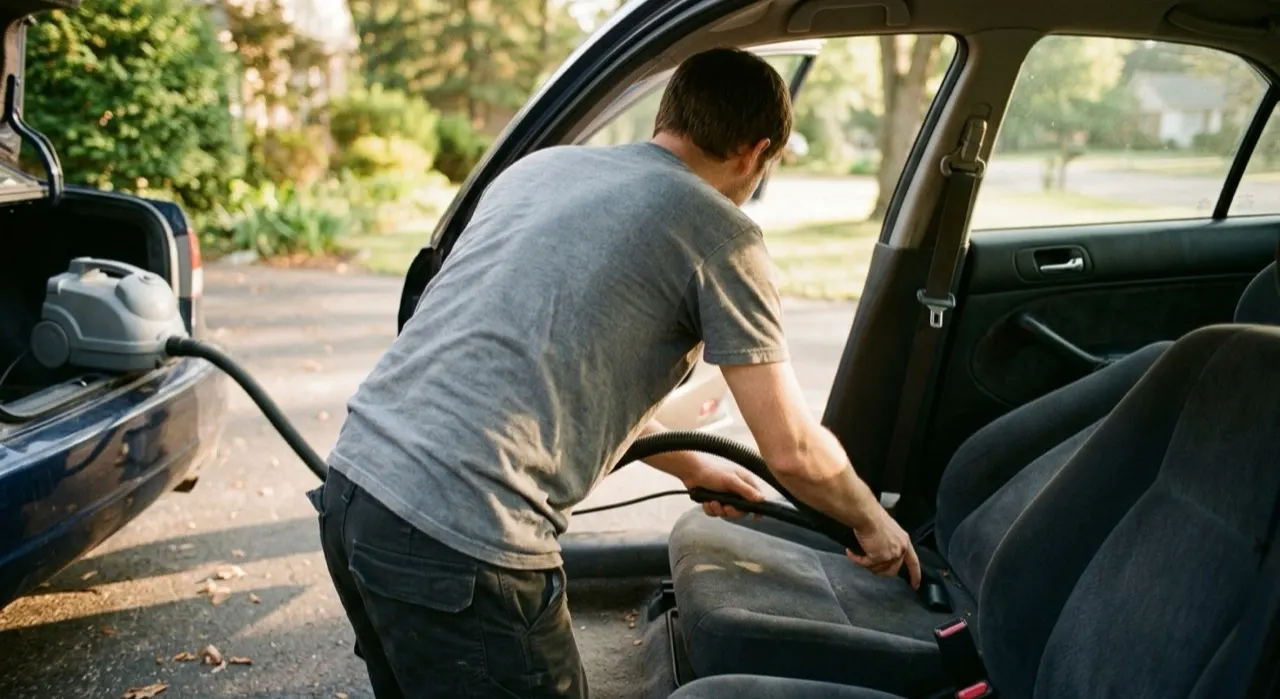
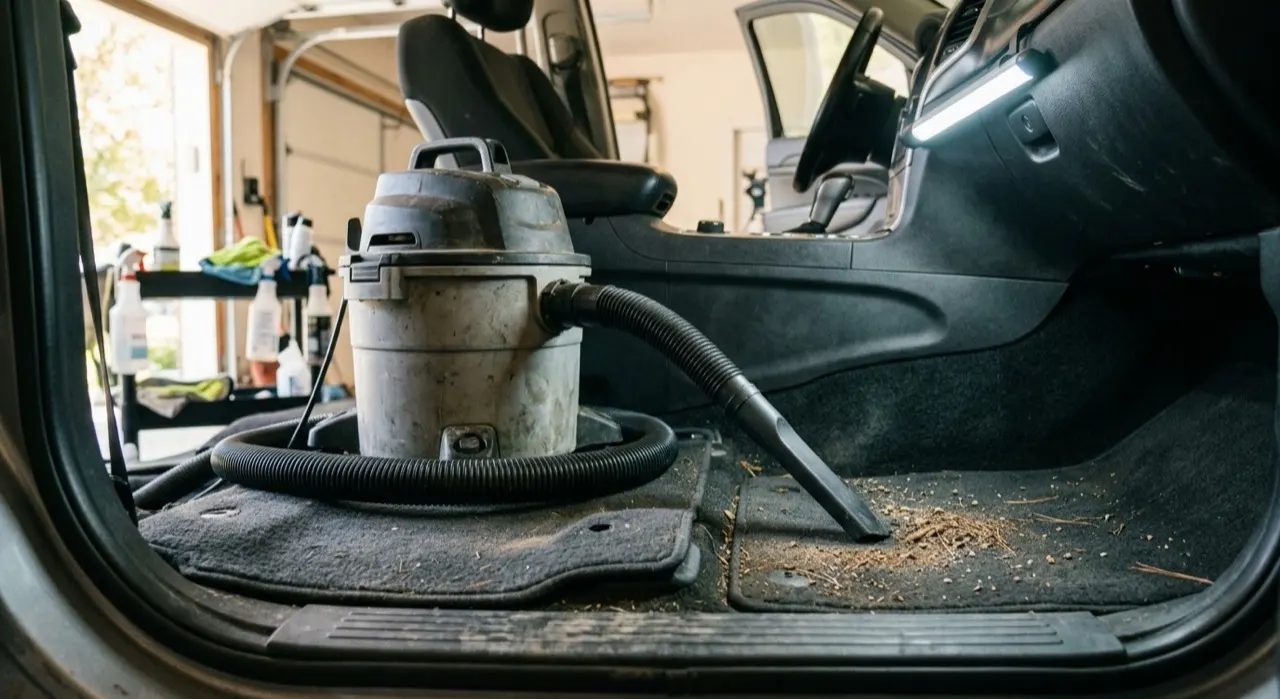
The WD4070 wins on a boring virtue: it is the smallest body that still moves serious air. Five peak horsepower is more than a car interior ever needs, and packing it into an 18-pound, 4-gallon canister means you can set the machine inside the car — on the rear floor, on the trunk lip — instead of dragging seven feet of hose in from a corner of the garage. That one difference changes how thoroughly people actually clean, because the nozzle stops fighting the hose for slack.
Owners consistently praise three things. The three-layer fine dust filter handles the powdery brake-dust-and-road-grit mix that clogs cheaper cartridge filters within a couple of cars. The Tug-A-Long locking hose stays attached when you yank it around a seat, which sounds trivial until you have re-seated a friction-fit hose twenty times in one session. And the 20-foot cord reaches a driveway from a garage outlet without an extension.
The honest criticisms: it is loud, like every shop vac in this class, and the stock nozzles are jobsite tools rather than detailing tools. Budget another $20 for a small-diameter car detailing attachment kit with a proper crevice tool and a soft brush — that upgrade matters more than the difference between any two vacuums on this list. Do that, and the WD4070 becomes a machine that will still be working in ten years.
The Best Car Detailing Vacuums, Ranked

Best for the most usable airflow per dollar in a detailing-size canister
- 5.0 peak HP in an 18 lb, one-hand-carry body
- 3-layer fine dust filter for carpet grit
- 20 ft cord + 7 ft locking hose
- Rear port converts it to a blower
Why buy it: it hits the sweet spot detailers keep coming back to — enough airflow to lift grit out of carpet pile, small enough to swing into a back seat, and cheap enough that the money goes into attachments instead.

Best for a car-first canister that already ships with the right nozzles
- 2 peak HP, 2.5-gallon tank sized for a trunk
- Car detailing nozzle set included
- Wet pickup + blower port
- Reusable cloth filter, washable
Why buy it: the most-owned car vacuum in this class for a reason — it arrives with the small crevice and detail nozzles most shop vacs make you buy separately.

Best for a career-length machine that vacuums and dries the car
- All-steel body, made in the USA
- 4.0 peak HP twin-fan motor, 130 CFM
- Doubles as a high-velocity car dryer
- Full detailing attachment set + 4-wheel dolly
Why buy it: the machine that keeps turning up in professional detail bays — owners routinely report a decade of service, and the blower side dries door jambs and mirror gaps after a wash.

Best for shampoo extraction, spills and soaked carpets
- 3 peak HP, 6-gallon stainless tank
- Wet pickup with no filter swap drama
- On-board accessory storage
- 7 ft hose + two extension wands
Why buy it: the pick for anyone who actually shampoos carpets — the stainless drum rinses clean and the capacity means you are not emptying it mid-job.

Best for a tight garage or a shared apartment parking space
- 2.5 peak HP in a genuinely small footprint
- 1-1/4 in hose sized for footwells
- On-board tool and cord storage
- Blower port for drying and leaf blasting
Why buy it: the small canister owners buy when floor space is the constraint — the narrow hose is closer to a detailing tool than the fat 2.5 in hoses on bigger vacs.

Best for quick between-detail upkeep with no cord to route
- Converts stick to handheld in one click
- Whole-machine filtration, washable
- Roughly 40 min on low, far less on boost
- Combination and crevice tools included
Why buy it: the cordless most detailers keep alongside a canister — not for the deep clean, but because a two-minute touch-up with no cord actually gets done.
Prices are pulled from Amazon and were accurate as of Aug 22, 2026, 6:44 PM EDT. Product prices and availability are subject to change — the live price is shown on Amazon.
Shop Vac vs Cordless Handheld: Which Powerful Vacuum for Detailing?
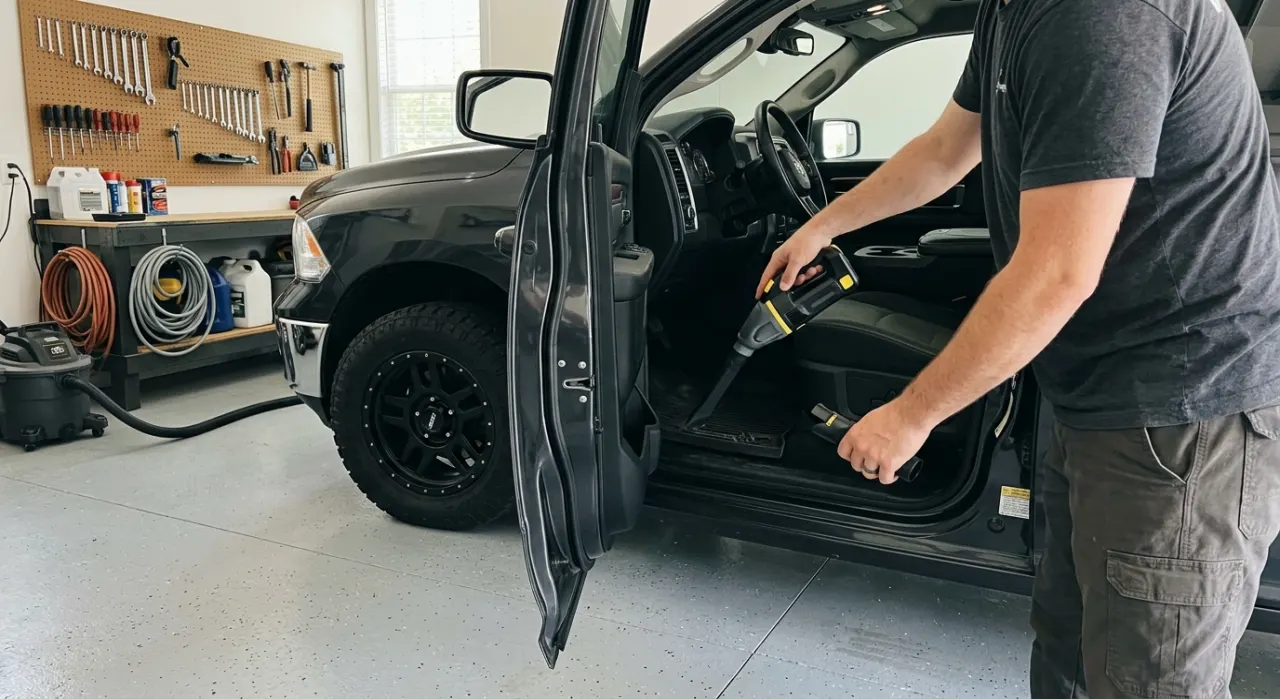
The first real decision is a corded shop vac versus a cordless handheld vacuum. Owners consistently report that a corded shop vac delivers the sustained, powerful airflow that lifts embedded grit — the reason detailers keep one in the bay. A handheld vacuum wins on convenience for quick interior touch-ups at home but fades on deep carpet and runs down mid-job. If you detail seriously, buy the powerful corded machine and keep a small cordless for glovebox-and-cupholder duty. Our separate cordless car vacuum pick covers that side of the choice.
How These Compare to Bissell, Dyson and Home Vacuum Cleaners
Buyers cross-shop the RIDGID against a Bissell wet/dry unit, a Dyson handheld and whatever home vacuum cleaner is already in the closet. A household Dyson is superb on floors, but its narrow tools and sealed bin were never meant for sand and brake dust, and owners report clogging. Bissell’s wet/dry models are a genuine option and turn up in many owner and Consumer Reports comparisons, though owners who have tested both still rate a true shop vac higher for raw power on car work. None of the general-purpose home machines quite match a dedicated wet/dry vac for pulling grit out of carpet pile.
How to Choose a Detailing Vacuum
Start with where the machine will sit. A canister you can lift into the car with one hand gets used differently than a 14-gallon drum parked in a corner. For car work, 2.5 to 6 gallons is the useful range — smaller than that and you are emptying it constantly, larger and the hose becomes the limiting factor. Weight under about 20 pounds is the practical ceiling for one-hand carry.
Next, hose diameter. This is the spec nobody advertises and everybody should. A 2.5-inch jobsite hose is built to swallow drywall chunks; a 1-1/4-inch hose is far easier to steer around a center console and loses almost nothing in usable airflow on fine debris. If your chosen vacuum ships with the fat hose, check that a reducer and detailing kit exist for it.
Then filtration. Car dirt is fine — road dust, brake dust, sand, fabric fiber — and it blinds a coarse filter fast. A fine-dust cartridge or a HEPA-rated filter keeps suction up through a whole car instead of fading halfway. Whatever you buy, plan on tapping the filter out mid-job on a dirty car; that alone recovers more suction than upgrading motors.
Finally, the blower port. Nearly every canister here reverses into a blower, and it is genuinely useful in detailing: blasting water out of mirror housings, badges, grille slats and door jambs after a wash prevents the drip lines that ruin an otherwise perfect finish. Pair that with a good drying towel and the post-wash routine gets much faster.
Specs Decoded: What Actually Predicts Performance
Peak horsepower is a marketing figure measured at motor stall, not during use. It is useful only for comparing units within one brand's own lineup. CFM (cubic feet per minute) is airflow and is the number that correlates best with pulling debris off a surface. Water lift (sealed suction) measures how hard the machine pulls through a restriction — high water lift matters for wet pickup and for working through a narrow crevice tool. Good detailing vacuums have a reasonable balance of both; a machine with huge water lift and low CFM feels strong at the nozzle tip and struggles to move volume.
Tank material is a durability and cleanup question, not a performance one. Stainless rinses clean after shampoo extraction and does not stain; poly is lighter and cheaper. Cord length quietly determines whether you need an extension every single time. And noise, rarely published, is the spec owners complain about most — hearing protection is a genuinely reasonable purchase alongside any of these.
Common Mistakes That Waste a Good Vacuum
Vacuuming before agitating. Grit is trapped below the surface of carpet pile. Suction alone skims the top. Work a stiff brush or a drill brush over the carpet first to break the grit loose, then vacuum — this single change makes more visible difference than any machine upgrade. The full sequence is in how to clean car carpet.
Cleaning bottom-up. Dust falls. Do the headliner, dash, vents and door cards before the seats, and the seats before the floor, or you will be vacuuming the same footwell twice.
Ignoring the filter. A blinded filter can cut usable suction dramatically, and most owners never check it mid-job. Tap it out over a trash can between the front and rear of the car on anything genuinely dirty.
Using the wrong nozzle everywhere. The wide floor tool is for open carpet only. Seat seams, rails, the console gap and the trunk hinges all want the narrow crevice tool, and vents want a soft brush — see how to clean car vents.
Skipping the wet rating. Running a dry-only machine over a damp carpet after shampooing is how motors die. If there is any chance of moisture, use a wet/dry unit with the filter configured correctly for wet pickup.
How We Rank
We do not have a lab, a test vehicle or a bench — and we say so plainly. We rank by aggregating owner ratings and review volume across thousands of buyers, then reading for the themes owners repeat once the novelty wears off. Four things carry the most weight. Sustained suction — whether owners report the machine still pulling hard after a year, and whether the filter design supports that. Reach and attachments — how well the stock hose and nozzles get into footwells, seat rails and consoles, and whether a detailing kit exists. Durability — motor and hose failures are the most common complaints in this category, so long-run reports matter more than first-week enthusiasm. And value — what you pay against what comparable airflow costs elsewhere. We cross-check all of it against published specs and the consensus among professional detailers. Prices were current at the time of writing.
The Verdict
For the best combination of airflow, size and price, the RIDGID WD4070 is the detailing vacuum owners rate above the rest — small enough to work from inside the car, powerful enough to pull grit out of the pile. If you want a machine that will outlive the car and dry it after a wash, step up to the MetroVac Vac N Blo. If you want to spend as little as possible and still get real suction plus the right nozzles in the box, the Armor All AA255 is the value answer. Add a proper attachment kit whichever you choose, then work through the technique in how to detail a car interior and finish with the tools in the car detailing kit hub.
Quick Comparison
RIDGID WD4070 4-Gallon NXT Wet/Dry Vac (5.0 Peak HP)
Best for the most usable airflow per dollar in a detailing-size canister
Best Value
Armor All AA255 2.5-Gallon Wet/Dry Utility Vacuum
$72.40 · Check Price on Amazon
Best Premium
MetroVac Vac N Blo VNB-94BD (4.0 Peak HP, All Steel)
Check Price on Amazon
Best for Wet Cleanup
Vacmaster VQ607SFD 6-Gallon Stainless Wet/Dry Vacuum
$79.99 · Check Price on Amazon
Best Compact
CRAFTSMAN CMXEVBE17250 2.5-Gallon Wet/Dry Shop Vacuum
$49.99 · Check Price on Amazon
Best Cordless for Detailers
Dyson V8 Cordless Vacuum (Stick + Handheld)
Check Price on Amazon