
Affiliate Disclosure
Some links on this page are affiliate links. As an Amazon Associate, we earn from qualifying purchases — at no extra cost to you. We do not buy, test, or physically handle the products we cover; our rankings come from aggregated owner reviews, ratings and expert consensus. Commissions never change our verdicts. How we rank & full disclosure.
Short version: Paint protection film — PPF, also called clear bra — is a thick, clear, self-healing urethane film applied over your paint to physically absorb rock chips, scratches and abrasion. It's the only product that actually stops chips rather than just making cleanup easier. It's not cheap, and it's not for every car, but on the front end of a car you plan to keep, it can be the best money you spend. Here's how it works and where it pays off.
What PPF actually is
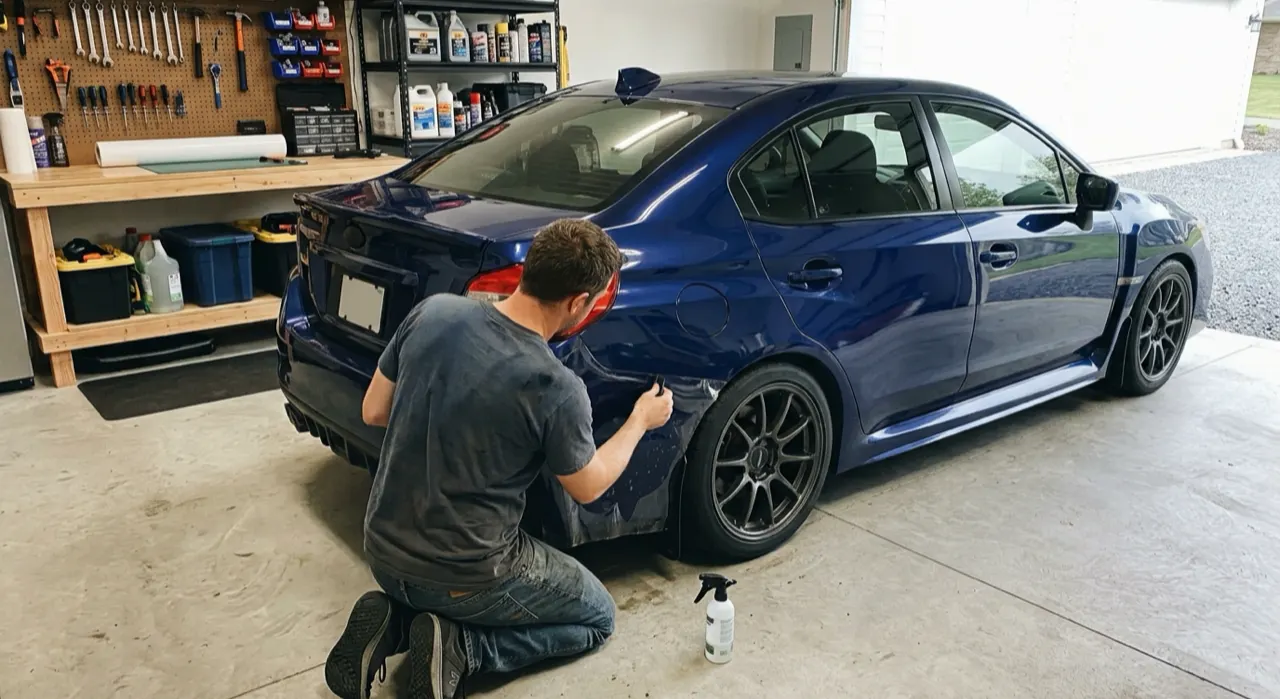
PPF is a transparent thermoplastic urethane film, usually several times thicker than window tint, that bonds over your clear coat. When a stone flies off a truck tire and hits your hood at highway speed, the film takes the hit — it deforms, absorbs the energy, and your paint underneath stays untouched. That's the entire point. Everything else it does is secondary to that impact protection.
Modern PPF is also self-healing. The top layer is engineered to flow back into shape when it gets warm, so light swirl marks and fine scratches on the film literally vanish with heat — a sunny day, a warm-water rinse, or a heat gun. Run your fingernail lightly across a scuff, come back after it's been in the sun, and it's gone. It feels like magic the first time you see it.
PPF vs ceramic coating — a common mix-up
People constantly conflate these two, and they do completely different jobs. A ceramic coating is a thin liquid layer that cures hard, adds gloss, and makes water and dirt slide off. It's fantastic for keeping a car clean and glossy — but it offers essentially zero protection against a rock chip. PPF is a thick physical film that stops that rock chip cold, but on its own it's slightly less slick than a coating.
Which is why the enthusiast move is both: PPF on the high-impact areas for physical protection, then a ceramic coating over the top for slickness and easy cleaning. We break the whole decision down in PPF vs Ceramic Coating — start there if you're choosing between them, and if you want the wider protection comparison, sealant vs wax vs ceramic maps out the softer options too.
Where PPF actually pays off
Full-car PPF is a serious expense, and for most drivers it's overkill. The smart money goes on the areas that take the abuse:
- Full front end ("partial front" or "clear bra"). Hood, front bumper, front fenders and mirrors. This is where highway rock chips land, and covering it catches the vast majority of damage for a fraction of full-car cost. If you do nothing else, do this.
- Door edges and handle cups. Where fingernails and rings scratch, and where doors ding parking-lot neighbors.
- Rocker panels and lower doors. Road debris and gravel spray.
- Rear loading area / trunk lip. If you load luggage, bikes or gear, this is your scuff zone.
The logic is simple: protect where damage actually happens. A partial front covers the statistical hot zone. Full-car coverage is for supercars, garage queens and people who genuinely never want to see a mark.
What it costs and why
PPF is priced by coverage and by install skill. A partial front runs into the low-to-mid hundreds; full-front packages more; full-car coverage runs into the thousands. That sounds steep until you price a professional respray of a chipped hood — PPF often costs less than the paint repair it prevents, and it protects resale value on a car you keep.
The cost is mostly labor. Wrapping film cleanly around a curved bumper, tucking edges, and getting a bubble-free finish on a hood is genuinely skilled work. This is not a DIY-friendly category the way a spray sealant is. A bad install — lifted edges, trapped dirt, visible seams — looks worse than no film at all, so the installer matters as much as the film brand.
Who should actually get PPF
It's worth it if you tick these boxes:
- You drive a lot of highway miles where rock chips are inevitable.
- You bought the car new or nearly new and want to keep it that way.
- You plan to own it for years, so resale and long-term finish matter.
- The car has a premium or hard-to-match paint that's expensive to repair.
It's probably not worth it if you drive an older daily you'll replace soon, or if your paint is already chipped and weathered — at that point a good paint sealant gives you gloss and easy maintenance for far less. PPF protects good paint; it doesn't restore bad paint.
Living with PPF
PPF is low-maintenance but not no-maintenance. Wash it like normal paint — two buckets, gentle shampoo — and it'll be fine. Keep bug guts and bird droppings from sitting for days, because they can stain even good film. A ceramic coating on top makes all of this easier by keeping contaminants from gripping the surface. Avoid harsh solvents and aggressive pressure-washing right at the film edges, where a direct blast can lift a corner over time.
A couple of habits keep film looking its best for the long haul. Dry the car properly after washing so water doesn't pool and mineralize on the film's edges. If you spot a tiny lifted corner early, a warm heat-gun pass and gentle pressure often re-seats it before dirt gets under and turns it into a peel. And resist the urge to attack a stubborn bug splat with an abrasive — a dedicated bug remover and a soft cloth won't scratch the top coat. Treat the film like the investment it is and a quality install will outlast several rounds of wax or sealant on the panels around it.
See our top picks: for the everyday protection gear reviewers rate highly, browse our exterior protection roundup.
The bottom line
PPF is the only product that physically stops rock chips — everything else just manages gloss and cleaning. On the front end of a car you plan to keep, a partial clear bra is one of the highest-value protection decisions you can make, and self-healing film means light marring erases itself in the sun. It's an investment, and the installer matters as much as the film, but for the right car it pays for itself the first time a stone bounces off your hood and leaves nothing behind. For the full protection stack, head back to our exterior protection hub.
Recommended Products

Best for DIY clear-bra protection for the door edges and handle cups this guide flags first
- Clear urethane protection film — the same material family as full PPF
- Yellowing- and stain-resistant
- No tools required, trims to length
- Blends invisibly with paint
Why buy it: the easiest way to put real paint protection film on the high-touch edges yourself — a clear 3M urethane film that wraps a door edge invisibly while a shop handles the full front end.

Best for a clean, no-measure clear-film install on all four doors
- Precut 0.5 x 36 in clear strips
- Low-profile self-healing-style film
- No cutting or measuring
- Near-invisible once applied
Why buy it: the precut option for a tidy DIY job — four ready-sized clear strips that protect each door edge from chips without the measuring a bulk roll needs.

Best for cutting your own clear film to any edge or high-impact spot
- 1/2 in x 50 ft clear PPF
- Cut to any length
- Invisible protection
- Enough for the whole car
Why buy it: the flexible roll for DIYers — fifty feet of genuine clear PPF you cut to fit door edges, loading lips and other spots the shop bra does not cover.

Best for a precut 3M-material kit for a peel-and-apply install
- Made with 3M protection film
- Precut for 4 doors
- Clear, universal fit
- Simple peel-and-apply
Why buy it: the convenient kit — 3M-based clear guards sized for four doors, so you protect the most chip-prone edges without a roll to measure and cut.

Best for the slick ceramic layer enthusiasts run over PPF
- SiO2 spray-on / wipe-off coating
- Adds gloss and water beading
- Makes film easier to keep clean
- Cheap enough to reapply often
Why buy it: the finishing step this guide recommends — a ceramic spray over the film and the surrounding paint adds slickness and beading so contaminants wipe off the PPF instead of gripping it.
Prices are pulled from Amazon and were accurate as of Aug 22, 2026, 6:54 PM EDT. Product prices and availability are subject to change — the live price is shown on Amazon.