
Affiliate Disclosure
Some links on this page are affiliate links. As an Amazon Associate, we earn from qualifying purchases — at no extra cost to you. We do not buy, test, or physically handle the products we cover; our rankings come from aggregated owner reviews, ratings and expert consensus. Commissions never change our verdicts. How we rank & full disclosure.
The short version: this is the one category in the additive aisle with genuinely solid chemistry behind it. A concentrated PEA detergent really does dissolve the deposits that build on injector tips, intake valves and piston crowns, and owners of higher-mileage port-injected cars report the most consistent improvement of anything in this hub — smoother idle, less hesitation, better throttle response. Ranked across aggregated owner reviews, our #1 pick is Chevron Techron Concentrate Plus, which pairs real PEA chemistry with a price that makes it easy to run at every oil change.
The caveats are just as important. A fuel system cleaner cannot fix a mechanical fault, cannot reach the intake valves on a direct-injected engine, and will not do much for a newer car that has only ever seen detergent gasoline. Below is the full ranked field, how to choose between them, and how to run one so it actually has a chance to work. For the wider picture, start at the fuel system cleaners & additives hub.
Top Picks at a Glance
Our #1 Pick: Chevron Techron Concentrate Plus
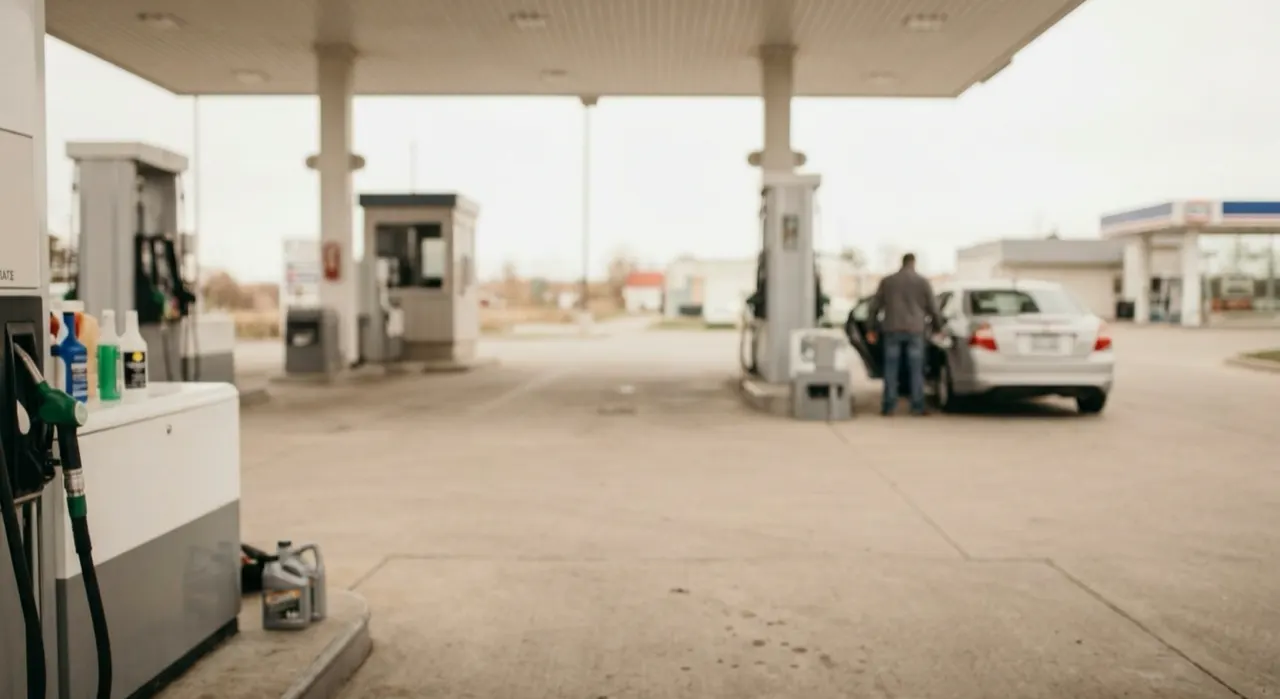
Techron is the default answer for a reason that has nothing to do with marketing: it is one of the few widely available bottles built around a genuine polyether amine concentrate, the detergent class that actually survives combustion temperatures long enough to clean the hot end of the fuel system. Cheaper products often lean on solvents that evaporate before they reach the deposits that matter. Techron does not, which is why it turns up in automaker service recommendations rather than only on parts store endcaps.
Across tens of thousands of owner reviews the reported pattern is remarkably steady. On cars past roughly 60,000 miles, owners describe a settled idle, a cleaner throttle tip-in and, occasionally, a modest economy improvement in the tank after treatment. On newer cars run exclusively on Top Tier gas, most owners honestly report feeling nothing — which is exactly what you would expect, and a good reminder that this is maintenance chemistry rather than a performance part. One 20 oz bottle treats up to 20 gallons and costs about the same as lunch, which makes it easy to add to the routine at every oil change rather than saving it for when something already feels wrong.
Best Fuel System Cleaners 2026: The Ranked Field

Best for the PEA cleaner most owners and automakers keep coming back to
- Patented polyether amine (PEA) detergent
- Cleans injectors, intake valves and chamber
- Safe with all ethanol blends including E85
- One 20 oz bottle treats up to 20 gallons
Why buy it: the most consistently recommended fuel system cleaner there is — a genuine PEA concentrate at a supermarket price, and the one owners report the most noticeable idle and throttle improvement from.
Best for a tired, high-mileage engine on a budget
- PEA detergent in a compact 6 oz dose
- Adds upper-cylinder friction reduction
- Conditions fuel against ethanol and water
- Aimed at engines past 75,000 miles
Why buy it: the cheapest bottle here that still uses real PEA chemistry — owners of older, higher-mileage cars rate it highly for smoothing out idle without a premium price.
Best for European cars and owners who want the strongest concentrate
- 300 ml treats up to ~18 gallons
- Strongly concentrated injector detergent
- Designed around converter-equipped engines
- Long-standing favorite in European forums
Why buy it: the enthusiast pick, especially on German cars. Owners consistently describe it as the bottle that actually changes how a car idles rather than one that just smells like solvent.

Best for neglected engines that need the strongest single treatment
- High PEA concentration, one bottle per tank
- Blend of high-temp and low-temp detergents
- Adds upper-cylinder lubrication
- Works on GDI as well as port injection
Why buy it: the heavy artillery. Owners who bought a neglected used car and want one aggressive cleanout before settling into maintenance doses rate this the most effective single bottle.

Best for fuel, crankcase and storage duty from one can
- 100% pure petroleum, no harsh solvents
- Safe in fuel, oil, or as a fuel stabilizer
- Treats up to 16 gallons of fuel
- Safe for converters and oxygen sensors
Why buy it: the most-reviewed treatment in the country and the most versatile can in the garage — a gentler cleaner than the PEA concentrates, but one that does three jobs instead of one.

Best for gas or diesel, plus stabilizer duty in one bottle
- Works in gasoline and diesel engines
- Compatible with all ethanol blends and biofuel
- Cleans injectors, carbs, valves and chamber
- One 20 oz bottle treats 20 gallons
Why buy it: the one bottle that covers both a gas commuter and a diesel truck in the same garage, with published economy and emissions figures behind the claim.
Prices are pulled from Amazon and were accurate as of Aug 22, 2026, 6:54 PM EDT. Product prices and availability are subject to change — the live price is shown on Amazon.
PEA: The Only Ingredient That Really Matters
If you learn one thing from this page, make it this. The active ingredient that separates a real fuel system cleaner from an expensive bottle of solvent is polyether amine, or PEA. Deposits form in the hottest parts of the fuel system — injector tips, valve stems, combustion chamber — and most cleaning chemistry simply cannot survive there. PEA can. It stays intact through the heat of combustion and lifts carbon and varnish out of exactly the places that matter.
The alternatives you will see on the shelf are mostly polyisobutylene amine (PIBA) and polyisobutylene (PIB), which are cheaper and do clean injectors reasonably well, but which are far less effective on combustion-chamber and valve deposits — and PIB in particular can contribute to chamber deposits of its own. Then there are the true budget bottles, which are largely naphtha, mineral spirits or kerosene with a fragrance. Those will thin your fuel and do very little else.
Concentration matters as much as the ingredient. A 6 oz bottle of a strong PEA concentrate can outperform a 32 oz jug of a weak one. Read the treat rate: if one bottle treats 20 gallons, it is a concentrate; if it treats 100 gallons, you are buying a maintenance dose, not a cleanout.
How to Choose the Right One for Your Car
If your car is under 60,000 miles and has lived on Top Tier gas, you probably do not need anything. A bottle every oil change is cheap insurance, but expect to feel nothing. That is a good sign.
If your car is high-mileage and feels tired, this is the sweet spot for the whole category. A PEA concentrate — Techron, Gumout Regane High Mileage, or Red Line SI-1 for a harder cleanout — is the highest-probability improvement per dollar in this hub.
If you just bought a used car with unknown history, run a strong concentrate on two or three consecutive tanks, then settle into maintenance doses. Red Line SI-1 is the most aggressive single treatment here.
If you drive a direct-injected turbo, a PEA cleaner still protects the injectors, which is worth doing, but it cannot reach the intake valves. Do not let a bottle talk you out of the intake-cleaning service the engine actually needs.
If you own both a gas car and a diesel truck, Royal Purple Max-Clean covers both. Diesels have their own, stronger case for treatment, ranked separately in best diesel fuel additive.
Getting the Most Out of a Bottle
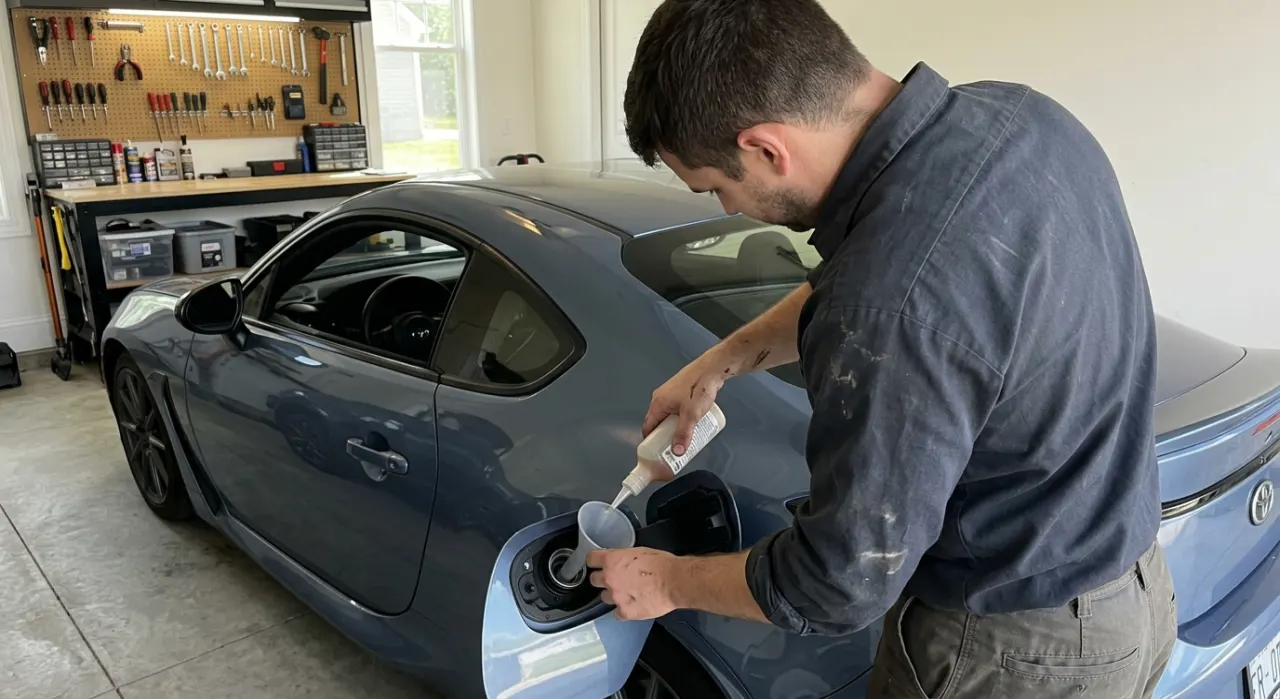
The technique is simple and almost everyone gets one part of it wrong. Add the bottle to a low tank, ideally a quarter full or less, then refuel immediately so the cleaner mixes as the tank fills. Concentration is the mechanism — pouring a treat-20-gallons bottle into a nearly full 20-gallon tank halves the dose you paid for. Then drive the car normally for the whole tank, including some sustained highway running. Deposits come off with heat and flow, not with idling.
Do not stack products. Running a fuel system cleaner and a separate injector cleaner in the same tank is not additive, and mixing a strong solvent-based product with a PEA concentrate can simply dilute both. One bottle, one tank, then judge the result. If nothing changes across two treatments on a car that clearly runs badly, stop buying bottles and start diagnosing — pull the codes with our reading OBD2 codes guide, because a misfire, a vacuum leak or a failing sensor is not a chemistry problem.
Common Mistakes
Expecting a power gain. A clean fuel system restores what the engine had when it was new. It does not add anything. If you want more power, that is a different conversation entirely — see performance mods.
Using a cleaner to chase an emissions failure. Cleaning the fuel side can help at the margins, but a converter code with a real mechanical cause is not going to be fixed by a bottle. We wrote the blunt version of that in best catalytic converter cleaner.
Buying by bottle size. The large jugs of thin, cheap chemistry sitting next to the register are almost always a worse deal than a small bottle of a real concentrate. Compare treat rates, not volumes.
Dosing every tank. There is no evidence it helps and it quietly triples your cost of ownership on additives. Once every oil change is the sensible ceiling for most cars.

How We Rank
We do not run a lab, and we have not pulled cylinder heads to photograph valves. We rank by aggregating owner ratings and review volume across tens of thousands of buyers, then weighing four things. Active chemistry — whether it is a genuine PEA concentrate or a solvent wearing a detergent label. Treat rate and cost per gallon — the honest measure of value in this category, because bottle size means nothing. Compatibility — ethanol blends, GDI, turbos, converters and oxygen sensors. And consistency of reported outcomes — what owners say after a year of use, not what they say in the first tank. Prices were current at the time of writing.
The Verdict
For most drivers, Chevron Techron Concentrate Plus is the fuel system cleaner to buy: real PEA chemistry, automaker recognition, safe with every fuel blend you can pump, and cheap enough to run at every oil change without thinking about it. If your engine has been neglected and needs one hard cleanout, Red Line SI-1 is the stronger single dose. European car owners should look at Liqui Moly Jectron, and anyone who wants one can that can also treat oil or stabilize stored fuel is well served by Sea Foam. If your car is new, well maintained and running on good gas, the honest recommendation is to keep the money and keep buying Top Tier fuel — you can find the rest of the maintenance picture in the oil change hub.
Quick Comparison
Chevron Techron Concentrate Plus Fuel System Cleaner (20 oz)
Best for the PEA cleaner most owners and automakers keep coming back to
Best for Heavy Deposits
Red Line 60103 SI-1 Complete Fuel System Cleaner (15 oz)
$17.99 · Check Price on Amazon
Best Multi-Purpose
Sea Foam SF-16 Motor Treatment (16 oz)
Check Price on Amazon
Best for Fuel Economy Claims
Royal Purple Max-Clean Fuel System Cleaner and Stabilizer (20 oz)
Check Price on Amazon
Prices are pulled from Amazon and were accurate as of Aug 22, 2026, 6:54 PM EDT. Product prices and availability are subject to change — the live price is shown on Amazon.