
Affiliate Disclosure
Some links on this page are affiliate links. As an Amazon Associate, we earn from qualifying purchases — at no extra cost to you. We do not buy, test, or physically handle the products we cover; our rankings come from aggregated owner reviews, ratings and expert consensus. Commissions never change our verdicts. How we rank & full disclosure.
Start here, before you buy anything. An octane booster does not add meaningful power to an engine that is not knock-limited. Octane measures a fuel’s resistance to detonation, not the energy it carries — 93 does not hold more energy than 87. Power only appears if your engine is currently retarding its ignition timing to protect itself from knock, and higher octane lets it stop doing that. On a healthy stock commuter running the grade its manual specifies, a bottle of booster will do precisely nothing you can feel, and we would rather tell you that than sell you six of them.
There are real users, though. Tuned and boosted cars stuck with 87. Track days and towing in hot weather. Older high-compression and air-cooled engines that ping audibly on modern pump gas. A tank of bad fuel you need to survive. For those cases the chemistry genuinely works, and the differences between bottles are enormous. Ranked across aggregated owner reviews, our #1 pick is BOOSTane Professional — largely because it is the one that tells you exactly what dose produces what octane. The full field, and the honest math, follows. The wider category lives in the fuel system cleaners & additives hub.
Top Picks at a Glance
Our #1 Pick: BOOSTane Professional
What earns BOOSTane Professional the top spot is not a bigger promise — it is a specific one. Almost every bottle in this aisle advertises a vague "up to" figure with no mention of dose, which lets a product claim a headline number achievable only at a concentration nobody actually uses. BOOSTane prints a mixing chart directly on the bottle: this much product in this many gallons produces this octane. That single decision makes it the only product here you can plan around instead of hope about.
The chemistry backs it up. At meaningful dose ratios owners report lifting 91 or 93 pump gas into the high 90s and beyond, which is the difference between a tuned car pulling timing on a hot afternoon and one running its full calibration. Track-day drivers, drag racers and owners of aggressively tuned turbo cars make up most of the review base, and the reported outcomes are consistent: less knock retard logged, more stable power when everything is heat-soaked.
Two honest caveats. It is expensive at around $45 for 32 oz, and at high dosing a bottle does not go far — this is a per-event product, not a per-tank habit. And BOOSTane Professional is not street legal in its strongest form; the Premium version is the road-going sibling. If you are not running a tune, boost, or a track schedule, this is more product than your car can use.
Best Octane Boosters 2026: The Ranked Field

Best for genuinely large, dose-controlled octane gains
- Mixing chart printed on the bottle
- Can lift pump gas into race-fuel territory
- Includes a detergent and stabilizer package
- Not street legal in its strongest dosing
Why buy it: the one booster that publishes an honest dose-to-octane chart instead of a vague "up to" claim — which is exactly why tuners and track-day owners rate it highest.
Best for quieting a mild ping on a stock engine
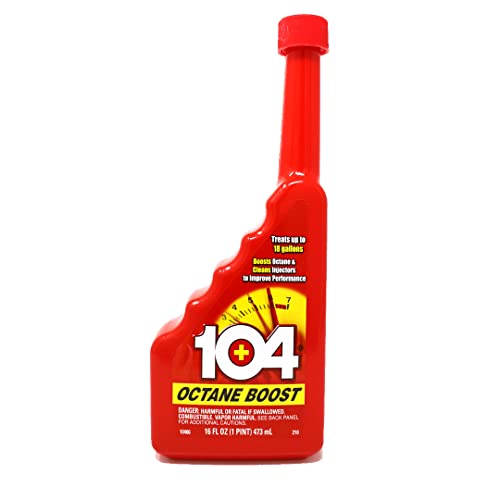
- One 16 oz bottle treats up to 18 gallons
- Adds injector detergent as well
- Widely stocked at every parts store
- Modest octane gain, honest price
Why buy it: the cheap, everywhere bottle. The gain is small — a fraction of a point in a full tank — but for an older engine that pings on 87 it is the least expensive thing that helps.

Best for race, drag and heavily boosted applications
- Lifts 91 octane substantially at race dosing
- Safe for O2 sensors and converters
- Used in autos, bikes, ATVs and watercraft
- Concentration determines the final octane
Why buy it: a long-standing motorsport staple. At heavy dosing it genuinely turns premium pump gas into something closer to race fuel, which is a claim very few boosters can make.

Best for bikes, mowers, karts and high-compression small engines
- One 15 oz bottle treats up to 25 gallons
- Safe for turbos, O2 sensors and converters
- Long-running best seller in the category
- Aimed at stopping knock in high-compression engines
Why buy it: the small-engine favorite. Owners of motorcycles, karts and high-compression air-cooled engines — where knock is a genuine daily problem — rate it highest.
Best for turbo, supercharged and nitrous engines on pump gas
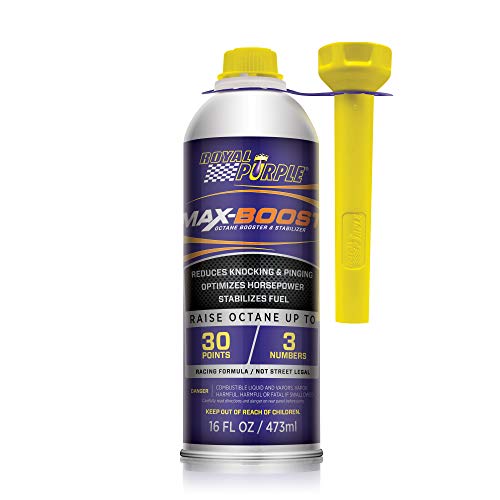
- MMT-based octane chemistry
- Formulated for carb, port and direct injection
- Safe with leaded, unleaded and ethanol blends
- Stabilizes fuel and cleans as it treats
Why buy it: the sensible middle ground for a boosted street car that is pulling timing on hot days — a real gain without race-fuel pricing or race-fuel dosing.

Best for one tank of bad gas, once
- One bottle treats up to 15 gallons
- MMT plus synthetic detergent package
- Compatible with capless fuel systems
- Cheapest way to try the category
Why buy it: the grab-it-at-the-register option. Small gain, small price — genuinely useful when you have filled up with poor fuel and the engine is complaining about it.
Prices are pulled from Amazon and were accurate as of Aug 22, 2026, 6:54 PM EDT. Product prices and availability are subject to change — the live price is shown on Amazon.
The Honest Math on "Points"
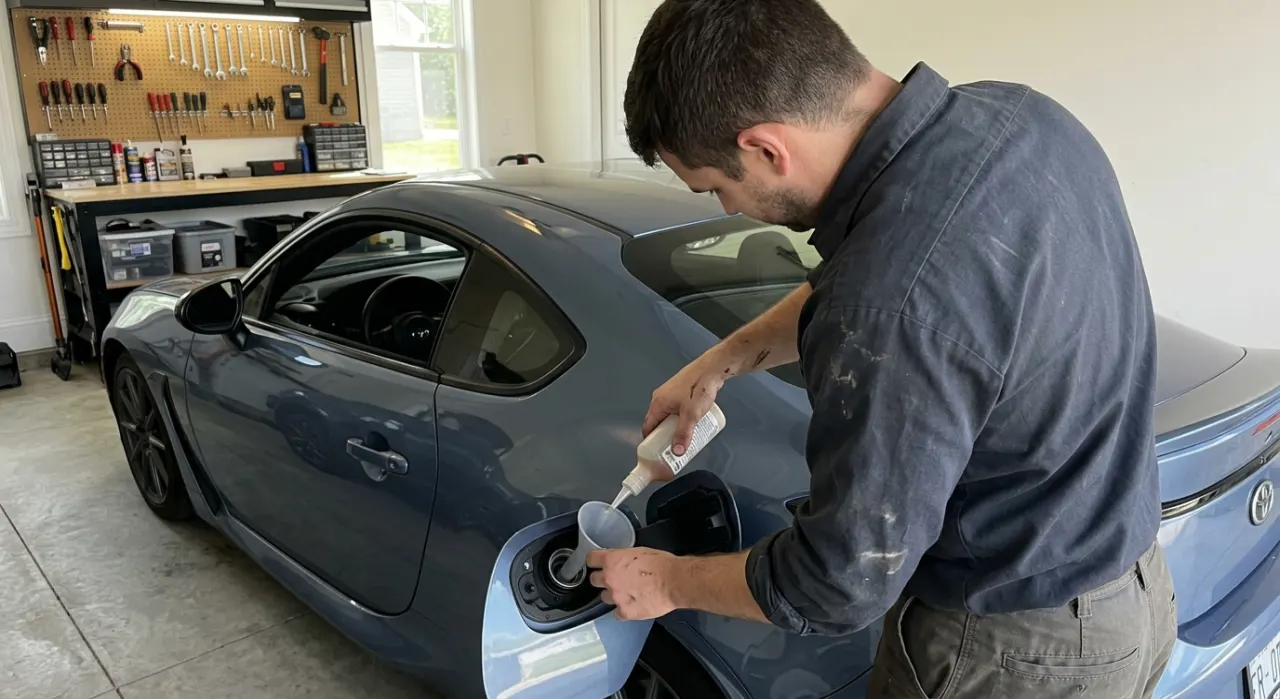
This is the part the packaging depends on you not reading. When a bottle claims it raises octane "up to 6 points," it almost always means six tenths of an octane number — 87 becomes 87.6. It does not mean 87 becomes 93. That is not necessarily a scam; a fraction of a point is genuinely enough to quiet a mild ping in an older engine, and the cheap bottles are priced accordingly. But it is a very long way from the impression the label creates.
Whole-number gains require dramatically more chemistry per gallon. Race-oriented products get there by using a large fraction of a bottle per tank, which is why a 32 oz bottle of BOOSTane or Torco treats only a handful of gallons at maximum dose while a $6 bottle of a supermarket booster claims to treat 15 gallons. Once you compare on cost per treated gallon at the dose that actually produces the claimed gain, the price gap between the cheap and the serious products narrows sharply — and the cheap ones stop looking like bargains and start looking like what they are, which is mild anti-knock insurance.
One useful reference point: in many parts of the country, simply buying a tank of 93 instead of 87 costs less than a bottle of booster and delivers a far larger, guaranteed octane increase. If premium is available and your engine wants it, the pump is the cheapest octane booster there is.
Who Actually Needs One
Tuned and boosted cars on low-grade fuel. A calibration written for 93 running on 87 will pull timing constantly. This is the clearest case in the category, and a booster is a genuine fix when premium is not available.
Track days, autocross and towing in heat. Sustained load plus high intake temperatures pushes engines into knock they never see commuting. Owners routinely report cleaner logs with a treated tank on a hot session day.
Older high-compression and air-cooled engines. Motorcycles, classics, karts and small engines designed around a different fuel era genuinely ping on modern pump gas. Lucas Octane Booster has its large following for exactly this reason.
A tank of bad fuel. Old gas, a suspect station, or fuel that has been sitting — a small booster plus a fill of fresh premium is a reasonable rescue.
Everyone else. If your car runs 87 happily, does not ping, and shows no knock activity, a booster gives you nothing. Spend the money on a fuel system cleaner instead, which will actually change how the engine runs. If you want real power, the honest paths are in performance mods.
Common Mistakes
Treating a ping as a fuel problem. Persistent knock on the correct grade is a symptom, not a fuel quality issue — carbon buildup raising effective compression, a lean condition, over-advanced timing, a failing knock sensor or an overheating engine all cause it. Pull the codes before you pour, using our reading OBD2 codes guide.
Dosing every tank forever. MMT-based boosters are fine occasionally, but continuous heavy use can leave manganese deposits on plugs and oxygen sensors. These are event products, not maintenance products.
Believing the bottle rather than the chart. If a product does not publish a dose-to-octane relationship, assume the gain is a fraction of a point.
Mixing boosters. Two different chemistries in one tank is not additive and can be worse than either alone. One product, one tank.
How We Rank
We do not operate a fuel laboratory and we have not put a single one of these bottles on a dyno or through a research-octane test. We rank by aggregating owner ratings and review volume, then weighing four things. Claim transparency — does the maker publish a dose-to-octane chart, or hide behind "up to"? Cost per treated gallon at the effective dose, which reorders this category dramatically compared with sticker price. Emissions-equipment safety, since anything leaded destroys a converter and heavy MMT use has its own downside. And the consensus among tuners, racers and small-engine owners, the people who use these products where knock genuinely costs power. Prices were current at the time of writing.
The Verdict
If you are tuned, boosted, or heading to a track day and you want a predictable, planned octane increase, BOOSTane Professional is the one to buy — it is the only bottle here that tells you exactly what you are getting for what dose. For race and drag use, Torco Accelerator is the long-standing motorsport alternative. Owners of bikes, karts and older high-compression engines that ping should reach for Lucas Octane Booster, and a boosted street car that only misbehaves on hot days is well served by Royal Purple Max Boost. And if you drive a stock car that runs fine on regular, the honest recommendation is the one we would give a friend: skip this category entirely, buy the correct grade at the pump, and put the money into keeping the fuel system clean.
Quick Comparison
BOOSTane Professional Octane Booster (32 oz)
Best for genuinely large, dose-controlled octane gains
Best Value
104+ Performance Octane Boost (16 oz)
$8.99 · Check Price on Amazon
Best Premium
Torco F500010TE Unleaded Fuel Accelerator (32 oz)
$34.00 · Check Price on Amazon
Best for Small Engines
Lucas Oil 10026 Octane Booster (15 oz)
$8.84 · Check Price on Amazon
Best for Forced Induction
Royal Purple Max Boost Octane Booster (16 oz)
$14.98 · Check Price on Amazon
Best Single-Tank Fix
STP Octane Booster (5.25 oz)
$4.48 · Check Price on Amazon
Prices are pulled from Amazon and were accurate as of Aug 22, 2026, 6:54 PM EDT. Product prices and availability are subject to change — the live price is shown on Amazon.