
Affiliate Disclosure
Some links on this page are affiliate links. As an Amazon Associate, we earn from qualifying purchases — at no extra cost to you. We do not buy, test, or physically handle the products we cover; our rankings come from aggregated owner reviews, ratings and expert consensus. Commissions never change our verdicts. How we rank & full disclosure.
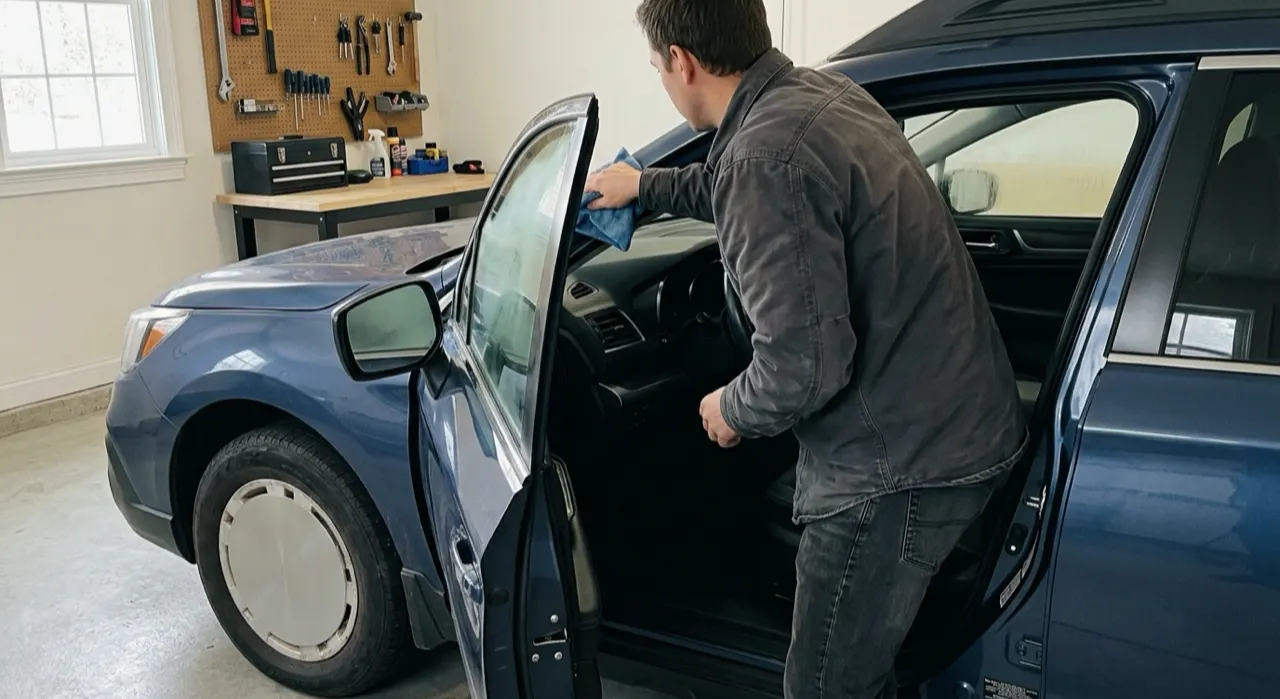
Short version: The greasy haze on the inside of your windshield is not condensation you can wipe away it is a real oily film, mostly from your dashboard off-gassing in the heat. Your breath and the defroster then make it visible. The only real fix is to actually degrease the glass, not just smear it around, and then keep the source under control. Here is what is happening and how to clear it for good.
What that film actually is
Most people assume the inside fog is just their breath or moisture. It is more than that. The real culprit is off-gassing: the plastics, vinyl, and adhesives in your dashboard and trim slowly release volatile oily compounds, especially when the car heats up in the sun. That is literally what the new-car smell is. Those vapors rise, hit the relatively cool windshield, and condense into a thin, greasy film.
Once that oily base layer exists, everything else sticks to it and makes it worse: the moisture from your breath, skin oils from touching the glass, dust, and any silicone sling from interior dressings. The result is a film that scatters light beautifully right into your eyes when you are driving toward a low sun or oncoming headlights. It is a genuine safety issue, not just an annoyance.
Why the defroster makes it worse
Here is the frustrating part. When you hit the defroster to clear it, the warm, humid air blows across that oily film and condenses on it, smearing the grease into an even hazier layer. The heat is not the problem the film is. Until you physically remove the oily residue, the defroster is just redistributing it. This is why so many people scrub at the glass, watch it clear for a day, then find the fog right back the next warm morning: they smeared the film instead of removing it.
The real fix: degrease, do not smear
Clearing inside fog for good comes down to actually cutting the grease. A standard quick wipe with a general glass cleaner often just moves the oil around. The routine that works:
- Use a proper glass cleaner, and do a first cutting pass. The first pass is to break down and lift the oily film, not to finish. Expect the towel to come away visibly grimy that is the film leaving the glass.
- Two-towel method, always. Clean with one towel, buff dry immediately with a second dry towel so you are lifting the dissolved film off, not letting it re-dry. This is the same technique as our streak-free windshield routine and it is essential here.
- Do a second finishing pass. With clean towel faces, go over the glass again to buff to a genuinely clear, oil-free finish. Inside glass almost always needs two passes because the film is so greasy.
- Check for the reach problem. The deep corner where the glass meets the dash is the hardest to reach and the spot most people miss, leaving a band of film. We cover the tool trick for it in our clean the inside of a windshield guide.
Keeping it from coming back
Cleaning is half the job. Controlling the source keeps it clear:
- Vent the heat. Off-gassing spikes when the interior bakes. Crack the windows when parked in the sun, or use a sunshade to keep the dashboard cooler. Less heat, less off-gassing, less film.
- Go easy on dressings. Glossy, oily dashboard dressings add to the film and sling onto the glass. Switch to a matte, low-sling interior cleaner and wipe it on with a cloth rather than spraying near the windshield.
- Don't touch the glass. Skin oils are surprisingly persistent. Keep fingers off the inside of the windshield.
- Clean it more often when the car is new. Off-gassing is heaviest in the first year or two, then tapers. A newer car simply needs the inside glass done more regularly.
The payoff
Once the film is truly gone, the difference is night and day. The defroster clears fog instantly the way it is supposed to, the glare from low sun and oncoming lights drops dramatically, and the glass stays clear far longer between cleans. It is one of those jobs that costs nothing but a bit of technique and pays off every single drive, especially at dawn, dusk, and at night.
If you want to go deeper on the technique for reaching every corner, our how to clean the inside of a windshield guide has the tool trick, and the whole approach starts from the fundamentals in our streak-free windshield routine. For the ammonia-free cleaners we trust on tinted and interior glass, see our ranked picks in the best car glass cleaner guide, and browse the full glass and visibility hub for more.
Recommended Products

Best for anyone who wants streak-free glass with zero fuss
- Ammonia-free and tint-safe
- No dyes, scents, or soapy residue
- Fine mist covers evenly
- Works on glass and mirrors
Why buy it: an ammonia-free formula with no dyes or fragrance, so it wipes to a genuinely clear finish — the closest thing to foolproof, film-free inside glass in a bottle.

Best for detailers who want a little more cleaning muscle
- Ammonia-free formula
- Cuts through baked-on film
- Clings well to vertical glass
- Trusted detailing brand
Why buy it: more cleaning bite than most for the oily haze that fogs the inside of a windshield, while staying tint-safe.

Best for stocking the garage without spending much
- Leaves a light water-repellent trace
- Cheap and widely available
- Good all-round cleaner
- Big-bottle value
Why buy it: solid cleaning at a rock-bottom price, with a faint water-shedding bonus from the Rain-X chemistry.
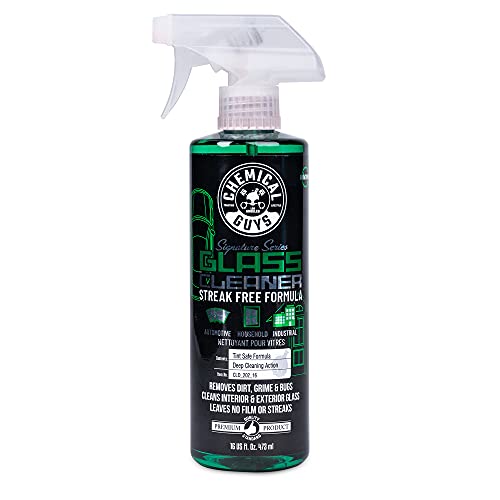
Best for tinted cars and enthusiasts who want a safe, premium formula
- 100% ammonia-free, tint-safe
- Pleasant light scent
- No streak, no haze finish
- Enthusiast favorite
Why buy it: a proudly ammonia-free formula built to be safe on window film and mirrors — the one to grab if protecting your tint is the priority.

Best for heavy tint jobs and pro detailers
- Ammonia and streak-free
- Safe on ceramic and dyed film
- Concentrated, goes far
- Pro-grade formula
Why buy it: a pro-shop formula engineered to be safe on even ceramic and premium tint — the safest pick for expensive aftermarket film.

Best for inside windshields and vertical glass
- Clinging foam, no drips
- Great for inside glass
- Fast-wiping formula
- Cult-favorite value
Why buy it: a thick foam that clings to the inside of a windshield instead of running down the dash — unbeatable for reaching that raked glass. Note: contains ammonia, so keep it off tint.
Prices are pulled from Amazon and were accurate as of Aug 22, 2026, 6:54 PM EDT. Product prices and availability are subject to change — the live price is shown on Amazon.