
Affiliate Disclosure
Some links on this page are affiliate links. As an Amazon Associate, we earn from qualifying purchases — at no extra cost to you. We do not buy, test, or physically handle the products we cover; our rankings come from aggregated owner reviews, ratings and expert consensus. Commissions never change our verdicts. How we rank & full disclosure.
A trolley jack is the single most-used tool in most home garages — every oil change, every rotation, every pad swap. Get the wrong one and it's too heavy to drag out, too tall to fit a lowered car, or not rated for what you're putting on it. This guide cuts the marketing noise and tells you exactly what to look for. It's part of our jacking up a car hub.
Top Picks at a Glance
Best Trolley Jacks, Ranked
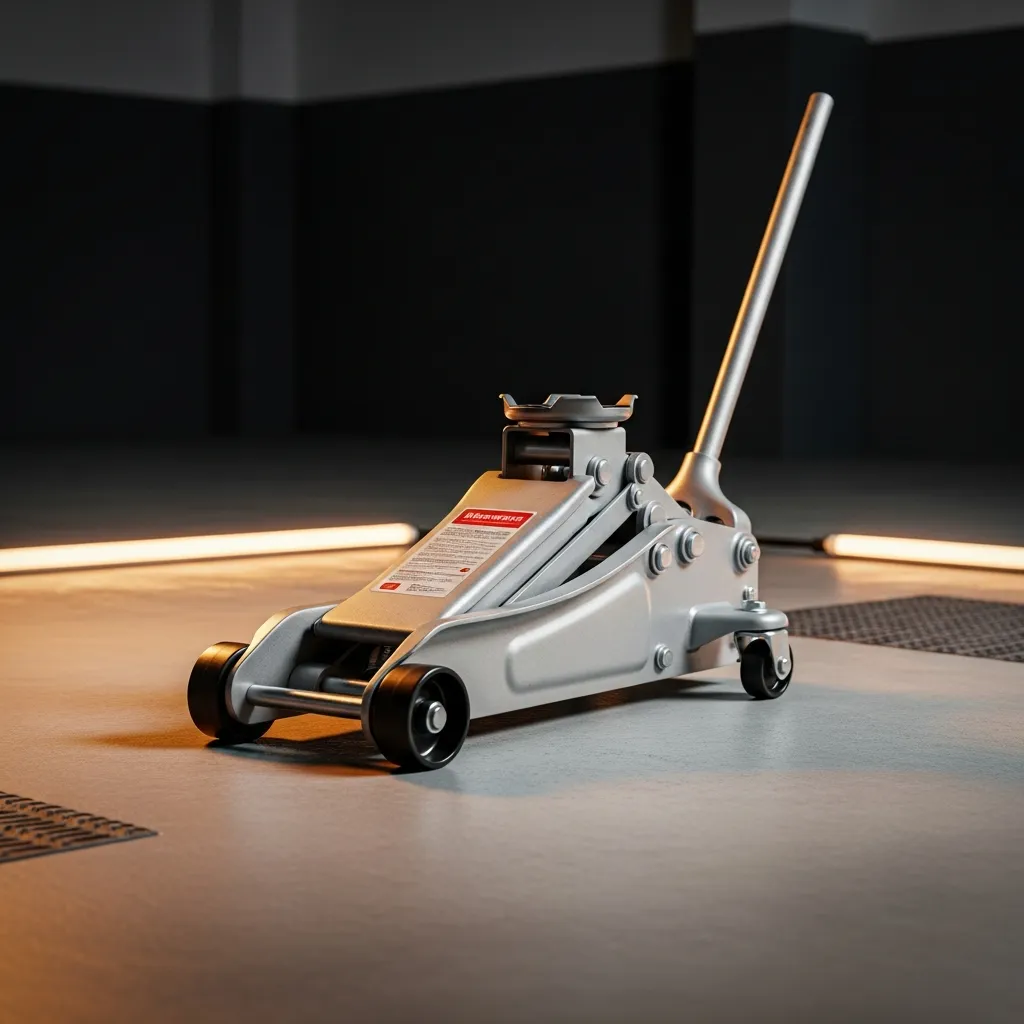
Best for a light, fast, reliable jack
- Lightweight aluminum
- Dual-piston fast lift
- Low 3.6" saddle
- Wide, stable stance
Why buy it: the best balance of light weight, speed and reliability.

Best for cheap, capable home use
- Cheap and dependable
- Compact and light
- Good for most cars
Why buy it: a proven budget jack that just works for home use.

Best for heavy steel on a budget
- 3-ton steel capacity
- Widely available
- Solid for the price
Why buy it: a lot of lifting capacity for very little money.

Best for lowered and sports cars
- Ultra-low 3" entry
- Fast rapid-pump lift
- Pro-grade build
Why buy it: slides under lowered cars where others can't reach.
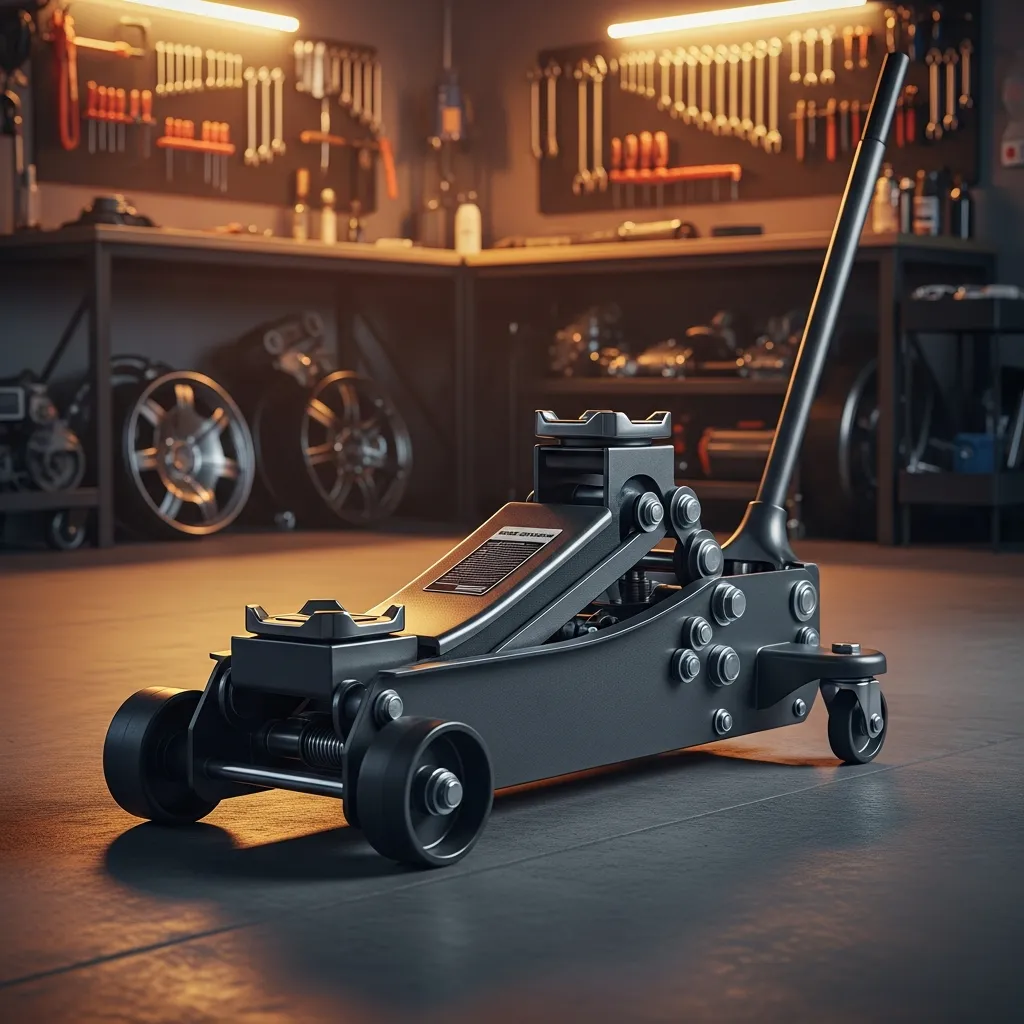
Best for heavy daily workshop use
- Heavy-duty service build
- Fast lift, high reach
- Workshop durability
Why buy it: a service-grade jack built for constant use.

Best for an occasional-use spare
- Compact footprint
- Simple and cheap
- Fine for light jobs
Why buy it: a compact, cheap jack for occasional driveway jobs.
Prices are pulled from Amazon and were accurate as of Aug 22, 2026, 6:54 PM EDT. Product prices and availability are subject to change — the live price is shown on Amazon.
Matching a Jack to Your Vehicle: Cars, SUVs and Trucks
The right jack depends on what you drive. For most cars a 2-ton trolley jack has the capacity and reach you need. Heavier SUVs, pickup trucks and 4WDs are where a 3-ton jack earns its place — not because you lift the whole vehicle at once, but because the extra rating gives real headroom and the taller lift range clears bigger wheels and ride heights. Trucks also sit higher, so check the maximum lift height reaches your jack stands at full extension. Lowered and sports cars swing the other way, where minimum saddle height is the spec that decides whether the jack fits at all.
Floor Jack vs Portable Trunk Jack
A full-size floor jack lives in the garage; it is not something you carry. For roadside tire changes many owners keep a portable jack — a compact bottle or scissor unit — in the trunk alongside the OEM tools. It trades speed and stability for space and weight, which is a fair deal for occasional emergency use but a poor one for regular work at home. If you only ever change tires in the driveway, one good floor jack is enough. If you road-trip or track the car, a small portable jack in the trunk is cheap insurance. Reputable makers here include ESCO and Blackhawk alongside the brands ranked above.
Quick Comparison
Arcan 3-Ton Aluminum Jack
Best for a light, fast, reliable jack
Best Value
Pro-Lift F-767 2-Ton
$137.99 · Check Price on Amazon
Best Budget Steel
Big Red Torin 3-Ton
$193.98 · Check Price on Amazon
Best Low-Profile
Daytona 3-Ton Low-Profile
$234.00 · Check Price on Amazon
Best for Pros
Sunex 66037 3-Ton
Check Price on Amazon
Cheapest
Powerbuilt 3-Ton
$199.97 · Check Price on Amazon
Prices are pulled from Amazon and were accurate as of Aug 22, 2026, 6:54 PM EDT. Product prices and availability are subject to change — the live price is shown on Amazon.
What Actually Matters When Buying
Tonnage Rating: 2T vs 3T
The number on the jack is its maximum rated capacity — treat it as a ceiling, not a target. Since you lift one corner or axle at a time (roughly 25–50% of curb weight), a 2T jack handles most passenger cars comfortably, even heavier ones like a Camry or Outback. Step up to 3T for large SUVs, pickups and 4WDs, vans, or whenever you want genuine headroom. Always confirm your curb weight and add at least 25% buffer — working at the very limit degrades seals faster and is a needless risk.
Lift Range: Minimum and Maximum Height
Minimum saddle height is how low the jack sits retracted — standard units are ~130–150 mm. Fine for stock cars, but a lowered car may clear 90–110 mm or less, so a standard jack won't fit. Maximum lift height sets your working room — a jack topping out at 380 mm gets the tires off but leaves little room; for suspension or exhaust work you want 480–520 mm or more. Check both against your specific car.
Low-Profile (Low-Entry) Jacks for Lowered Cars
Running a slammed JDM car — S-chassis, EK/EG Civic, DC2, AE86 — means a standard jack simply won't fit. Low-profile jacks have a reduced closed height of 85–100 mm (some to 70 mm), often with a dual-pump to compensate for the shorter stroke. The trade-off is usually a lower max height (~380 mm), so check it lifts high enough to reach your stands. More on this in lifting a lowered car, and the formats are compared in types of jacks.
Steel vs Aluminum
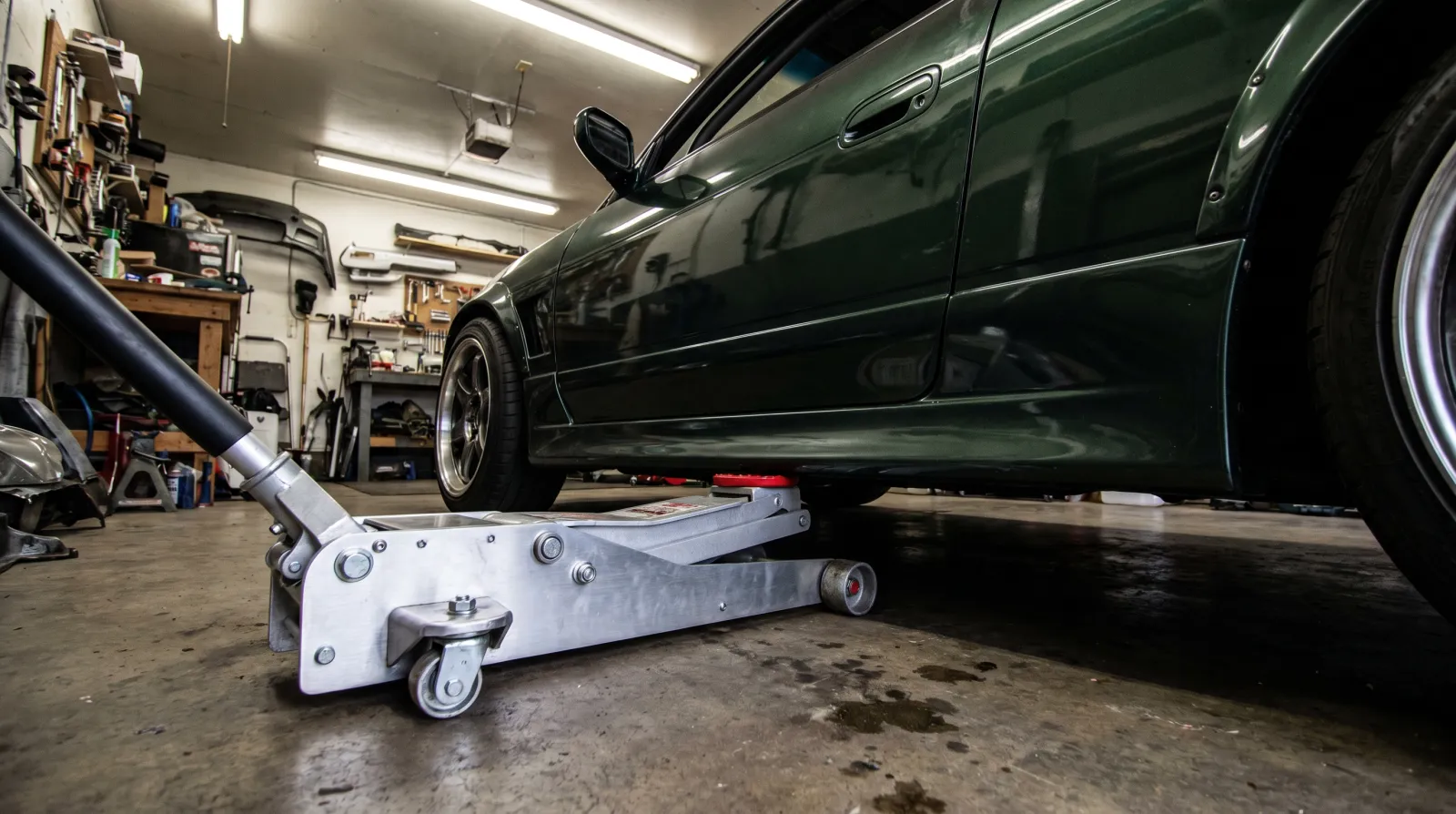
Steel jacks are heavier (a 3T unit is 55–70 lb), more durable under hard use, and cheaper per ton — best for permanent workshop use. Aluminum cuts that to 24–31 lb — great for track days, portability and small garages, but watch for lower max heights on budget units. Avoid thin cast-iron sold as "steel," and avoid thin budget aluminum — spend more or stick with steel.
Quick-Lift & Saddle Pads
A dual-pump mechanism roughly halves the handle strokes — a quality-of-life win for frequent use. And most budget jacks ship with a bare metal saddle that marks pinch welds; add a rubber saddle pad or slotted puck — for narrow JDM/euro pinch welds it's almost mandatory, and it costs next to nothing.
Reputable Brands Worth Looking At
Not a scored ranking — brand types and what they're known for; verify current specs before buying. Arcan — strong U.S. reputation, especially their aluminum units, frequently recommended for seal longevity; a reliable default. Daytona (Harbor Freight) — house-brand low-profile jacks with a surprisingly solid build; popular with lowered-car owners. Pro-Lift — dependable mid-range value that just works for home use. Sunex — professional workshop steel, essentially bulletproof, overkill for most. Powerbuilt — good reputation for all-in-one jack/stand units if space is tight. Whatever the brand, read the spec sheet for that specific model, not the brand's general reputation.
Comparing Options
Before committing, see how the shortlist stacks up on the specs that matter for your car. Our trolley jack comparison lets you filter by minimum height, max lift, tonnage and material to narrow the field, and the single-product review walks through owner-reported real-world reliability and long-term durability on our top pick.
How to Choose Between a Traditional and Low-Profile Design
Once you know your car’s weight and clearance, the choice comes down to how you work. The traditional steel floor jack is the design most home garages default to — cheap per ton, durable, and tall enough for stock cars and taller SUVs. Owners who choose aluminum are usually buying portability: a lighter jack that’s easy to drag out day to day or throw in the boot for track use. And anyone running a lowered car should choose a low-profile design first and treat every other spec as secondary, because a jack that won’t slide under the sill is useless no matter how good it is. Heavy-duty specialists like ESCO sit at the top for those who lift trucks constantly, but they’re overkill for the once-a-fortnight oil change most people actually do.
Safety: The Non-Negotiables
- A trolley jack is a lifting device, not a support — never work under a car on the jack alone; use rated jack stands every time.
- Always jack on flat, solid ground — not asphalt in heat, not grass or gravel.
- Use the manufacturer's jack points — not floor pans or random subframe sections.
- Chock the wheels on the opposite end before lifting. Every time.
- Inspect the jack before use — a unit that drifts down under load needs servicing first.
Bottom Line
For most home mechanics on stock-height cars, a 2T or 3T steel trolley jack from a reputable brand covers every use case — add a rubber puck and pair it with rated stands. If your car is lowered, minimum saddle height is your single most important spec; measure your clearance before buying anything. Back to the jacking up a car hub for the full series.