
Affiliate Disclosure
Some links on this page are affiliate links. As an Amazon Associate, we earn from qualifying purchases — at no extra cost to you. We do not buy, test, or physically handle the products we cover; our rankings come from aggregated owner reviews, ratings and expert consensus. Commissions never change our verdicts. How we rank & full disclosure.
You pump the handle. Nothing happens — or worse, the car rises an inch and then slowly sinks back down. Before you panic and order a new jack, know this: the most common causes are simple to diagnose and cheap (or free) to fix. But one or two faults genuinely do mean the jack needs to be retired, and you need to know which is which before you put any part of your body near a lifted vehicle.
This guide walks you through every likely cause in order of probability, from a thirty-second fix to a proper fluid service. If you want background on how hydraulic jacks work before diving in, start with our Jacking Up a Car hub.
Start Here: Safety Before You Touch Anything
A hydraulic jack is a safety-critical tool. The iron rule before any troubleshooting is this: never diagnose a jack while it is supporting a vehicle. Lower the car onto axle stands first, or if the jack will not lift at all, work on it on a flat surface with no load on the saddle. Keep bystanders clear. If at any point you suspect the jack has been overloaded or structurally damaged, skip the diagnostics and replace it.
Fault 1: The Release Valve Is Not Fully Closed (Most Common)
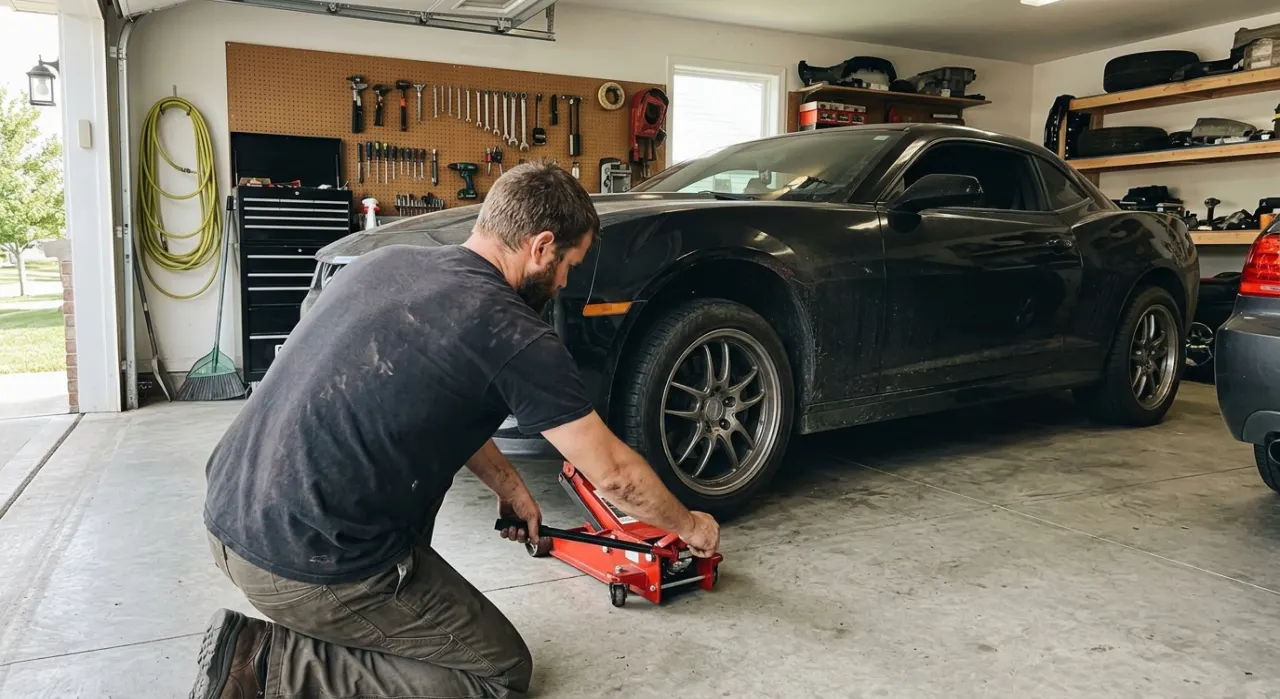
This is the cause of at least half of all “jack won’t lift” calls. The release valve — the slotted screw or T-bar at the base of the pump cylinder — controls whether hydraulic fluid is locked in the ram or allowed to bleed back to the reservoir. If it is even slightly open, the fluid bypasses the ram and the jack pumps air instead of building pressure.
Fix: Turn the release valve clockwise until it is firmly seated. Do not overtighten; snug is enough. Then try pumping. In most cases the jack lifts immediately. If the valve spins freely with no resistance, the valve stem or its O-ring is worn and the jack will need a rebuild kit or replacement.
Jack release valve stuck? A valve that is seized open or cannot be turned at all usually has a corroded stem. A small amount of penetrating fluid and gentle persuasion often frees it. If it will not move or will not seat properly after freeing, do not use the jack.
Fault 2: Trapped Air in the Hydraulic System
Air is compressible; oil is not. When air enters the hydraulic circuit — through a low fluid level, a loose filler plug, or infrequent use — the pump compresses the air instead of moving fluid, and the ram barely moves or moves erratically. Bleeding the system purges that air.
How to Bleed Air from a Hydraulic Jack — Step by Step
- Work safely on the ground. No vehicle load on the saddle.
- Fully lower the ram. Open the release valve and pump the handle slowly to push the ram all the way down.
- Locate the filler plug. It is usually a rubber bung or a hex bolt on the reservoir body, often marked with an oil-can symbol.
- Remove the filler plug. Place a rag underneath to catch any drips.
- Open the release valve one full turn.
- Pump the handle 6–8 times slowly with the release valve open and the filler plug out. You may hear or see bubbles in the reservoir — that is air escaping. This is the core of the bleeding process.
- Close the release valve. Pump the handle again 6–8 times. The ram should begin to extend. If it does, continue to the next step. If not, repeat step 6 once more.
- Fully lower the ram again via the release valve.
- Top up fluid if needed (see Fault 3 below), then reinstall the filler plug.
- Test under a light load — jack up one corner of your car with axle stands on standby and confirm the ram holds.
Bleeding takes under ten minutes and fixes the majority of “pumps but won’t lift” complaints.
Fault 3: Low or Degraded Hydraulic Fluid
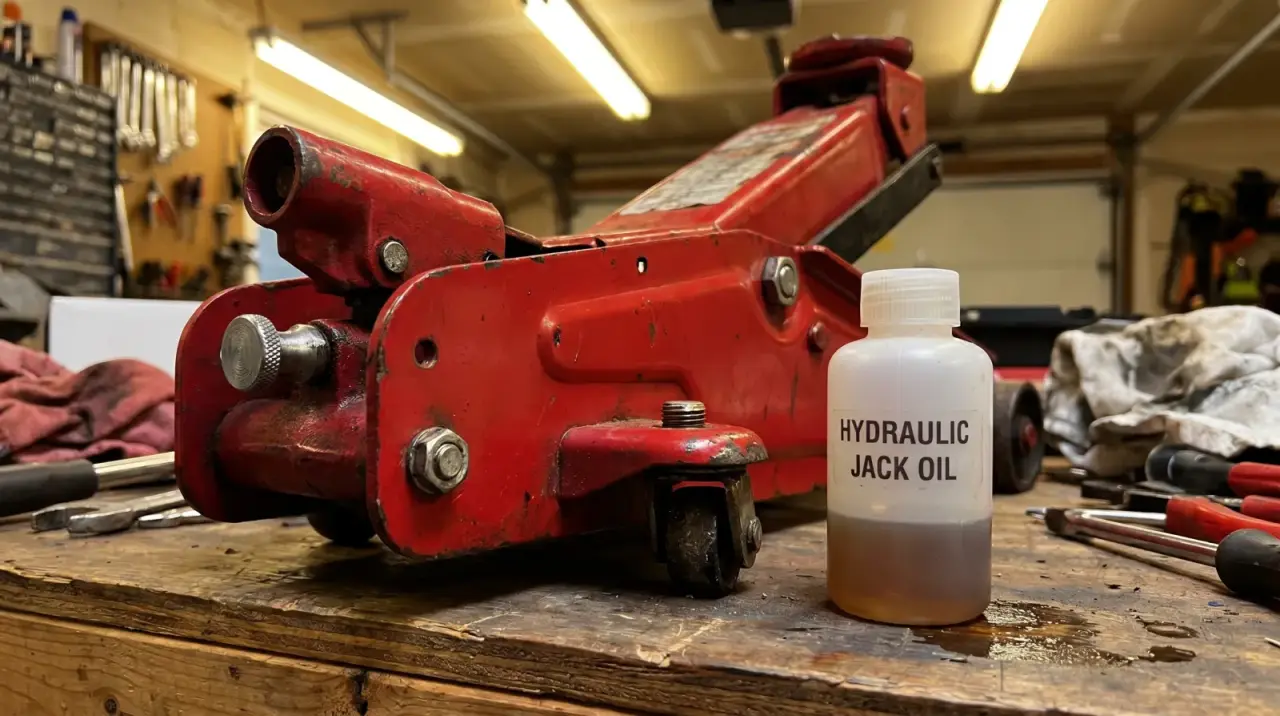
Hydraulic jacks use a lightweight mineral oil, sometimes called jack oil or hydraulic jack fluid. Over years of use the fluid level drops (usually through small seal weeps) and the oil itself degrades, thickening in cold weather and losing its anti-wear additives over time. A jack that works fine in summer but struggles in winter is almost always low on fluid or using old fluid.
Checking and Topping Up
- Lower the ram fully.
- Remove the filler plug.
- The fluid level should sit within 6–12 mm of the opening (check your jack’s manual for the exact spec).
- Top up with fresh jack oil or ISO 32 hydraulic oil. Do not use brake fluid, motor oil, or ATF — these will damage seals.
- Reinstall the plug, bleed as above, and test.
If you are topping up more than once a year, there is a slow seal leak somewhere. Monitor it, but know that slow seepage from the ram seal is common in older jacks and does not always require immediate action — frequent drops in level do.
Fault 4: The Jack Lifts Then Drops (Bypassing Seals or Overload Damage)
A floor jack that lifts then drops is exhibiting “bypassing” — fluid is leaking past the main piston seal back into the reservoir under load. You will see the car rise, hold for a few seconds, then slowly descend while the pump is not being operated. This is distinct from a release valve issue because the valve is correctly closed.
Causes:
- Worn or damaged piston seals. Seals degrade with age and exposure to contaminated or incorrect fluid.
- Overload. A jack that has been used beyond its rated capacity — even briefly — can score the cylinder walls or crush the seals, causing permanent bypass.
- Contaminated fluid. Water, dirt, or the wrong oil type destroy seals faster than anything else.
Fix options: Seal rebuild kits exist for most quality jacks and cost $15–$40. If you are comfortable with the mechanical process (it involves disassembling the cylinder, replacing all O-rings and seals, and reassembling in the correct order), a rebuild is economical. Budget jacks are often not worth rebuilding — replacement parts are hard to source and the labor cost exceeds a new unit.
If the cylinder walls are visibly scored or the jack has been significantly overloaded, no seal kit will fix it permanently. Replace the jack.
Fault 5: The Saddle Is Not Rising
If you can hear the pump working and feel resistance in the handle but the saddle does not move, the likely causes are a blocked internal check valve, a kinked or collapsed hydraulic line on a long-reach jack, or a seized ram. Try the bleed procedure first. If that does not resolve it, and especially if the ram shows visible corrosion or the jack has been stored outdoors, this is usually a replacement scenario rather than a repair.
When to Replace Rather Than Repair
A hydraulic floor jack holds up tons of metal above your body. The threshold for repair versus replacement should be conservative. Replace your jack if:
- The ram or cylinder shows visible cracks, bends, or weld failures.
- The jack has been overloaded beyond its rated capacity.
- The release valve cannot be fully closed or seated.
- The jack lifts then drops immediately after a full seal rebuild.
- You cannot trace the source of a hydraulic leak after inspection.
- The lifting arm or frame shows deformation.
- You bought it from a discount bin and it has no legible rated capacity marking.
A quality replacement does not have to be expensive. Our guide to the best trolley jacks for home use covers reliable options at every price point, including what the ratings actually mean and which brands hold up to regular use.
Quick-Reference Fault Table
| Symptom | Most Likely Cause | First Fix |
|---|---|---|
| Pumps freely, no lift | Release valve open | Close valve clockwise |
| Pumps, minimal or jerky lift | Trapped air | Bleed the system |
| Slow or weak lift | Low/old fluid | Top up with jack oil |
| Lifts then slowly drops | Worn seals / bypassing | Seal kit or replace |
| Handle hard, saddle immobile | Blocked valve or seized ram | Bleed; if no result, replace |
| Release valve won’t turn | Corrosion | Penetrating oil; if no seal, replace |
Preventing These Faults
Most hydraulic jack problems are maintenance failures, not manufacturing defects. Store your jack indoors or under cover (moisture is the enemy of seals), keep the ram retracted when not in use, check the fluid level once a year, and never exceed the rated capacity. A quality jack that is serviced occasionally will outlast several cheap ones left to corrode in the corner of a garage.
If you are still deciding which type of jack suits your setup — bottle jack, trolley jack, scissors jack — our types of jacks comparison breaks down the trade-offs honestly so you buy the right tool once rather than twice.
Recommended Products
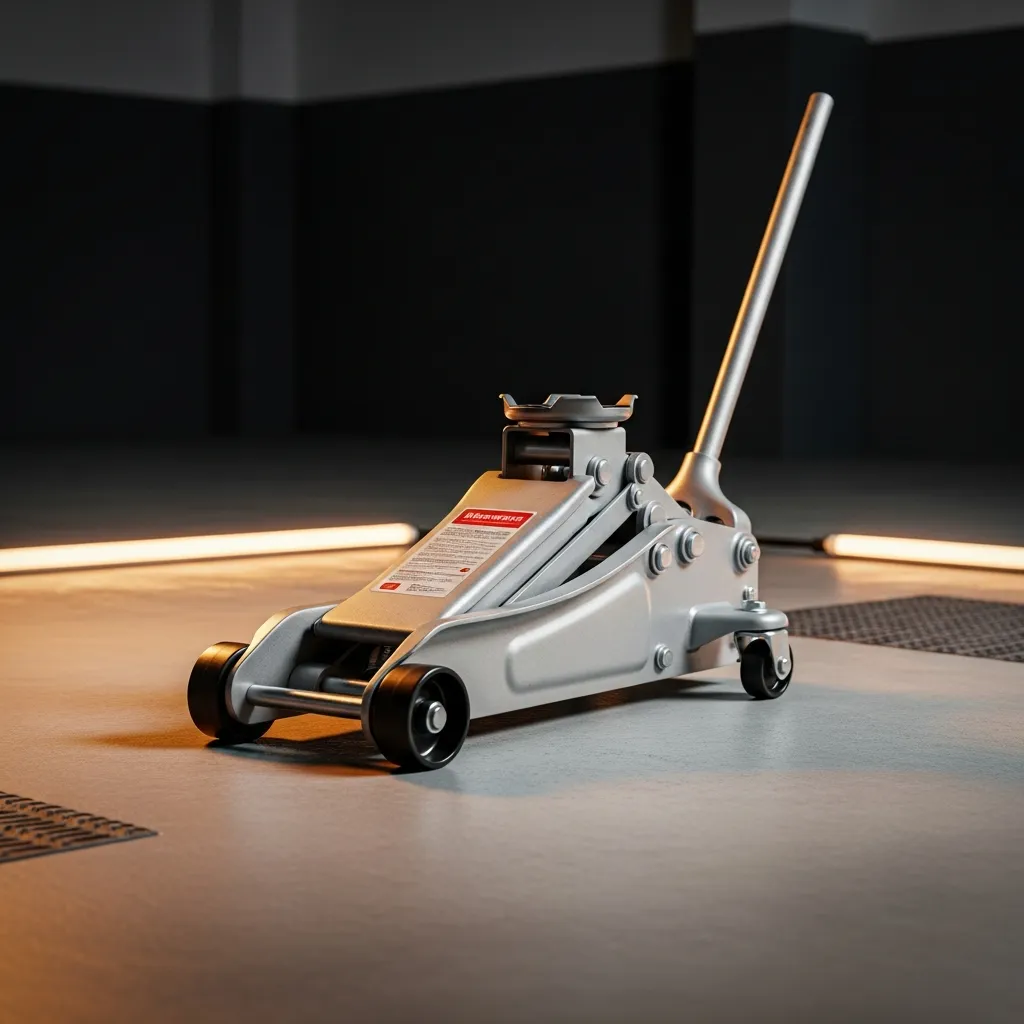
Best for a light, fast, reliable replacement jack
- Lightweight aluminum
- Dual-piston fast lift
- Low 3.6-inch saddle
- Wide, stable stance
Why buy it: the best balance of light weight, speed and reliability — the jack to buy when a worn-out one is beyond a seal kit.

Best for cheap, capable home use
- Cheap and dependable
- Compact and light
- Good for most cars
Why buy it: a proven budget jack that just works for home use.

Best for heavy steel on a budget
- 3-ton steel capacity
- Widely available
- Solid for the price
Why buy it: a lot of lifting capacity for very little money.

Best for lowered and sports cars
- Ultra-low 3-inch entry
- Fast rapid-pump lift
- Pro-grade build
Why buy it: slides under lowered cars where others can't reach.
Best for heavy daily workshop use
- Heavy-duty service build
- Fast lift, high reach
- Workshop durability
Why buy it: a service-grade jack built for constant use, if you're replacing a jack you lean on hard.
Prices are pulled from Amazon and were accurate as of Aug 22, 2026, 6:54 PM EDT. Product prices and availability are subject to change — the live price is shown on Amazon.