
Affiliate Disclosure
Some links on this page are affiliate links. As an Amazon Associate, we earn from qualifying purchases — at no extra cost to you. We do not buy, test, or physically handle the products we cover; our rankings come from aggregated owner reviews, ratings and expert consensus. Commissions never change our verdicts. How we rank & full disclosure.
Short version: modern microfiber wins for drying a car. A plush twist-loop microfiber towel holds more water, drags less, and — most importantly — is far more forgiving if a stray bit of grit shows up. A chamois squeegees water fast and has old-school appeal, but it presses grit against the paint instead of lifting it away. For the drying stage, where scratch risk is the whole concern, microfiber is the safer call.
This is one of those detailing debates where tradition faces off against technology, a bit like carbureted purists versus modern injection. The chamois has been drying cars for generations and plenty of people swear by that classic squeegee feel. But the drying stage is exactly where you can put swirls back into a freshly washed car, so I judge these two on one question above all: which is less likely to scratch. Let me walk through the head-to-head.
The chamois: what it does well
A chamois — whether natural leather or a synthetic PVA version — works by squeegeeing. You drag it flat across a wet panel and it sheets the water off in one pass. On big flat surfaces like a hood or roof, that feels fast and satisfying. Chamois also wring out easily and take up little space. For a clean car dried by a careful hand, a chamois genuinely works.
Its weaknesses show up in two places. First, it has almost no cushioning pile, so any grit on the surface gets pressed into the clear coat rather than lifted safely into the towel. Second, natural chamois needs care — kept slightly damp, stored right, or it dries hard and cracks.
Microfiber: what it does well
A plush microfiber drying towel — especially a twist-loop design — works differently. Instead of squeegeeing, it drinks the water up into its long looped fibers and holds it. That gives you two big advantages:
- Huge capacity. A good twist-loop towel soaks up a lot of water before it needs wringing, so you make fewer stops.
- Grit forgiveness. The plush pile lifts stray particles up and away from the paint instead of grinding them in. That is the safety margin that matters.
Microfiber is also low-maintenance: no keeping it damp, no cracking. Wash it right and it stays soft for years. The trade-off is that a soaked plush towel gets heavy, and you do need to launder it properly to keep it working.
The deciding factor: scratch risk
Here is why I come down on microfiber. The entire danger of the drying stage is dragging something across the paint that has grit in it. A chamois has no pile to trap that grit, so it presses it against the surface. A plush microfiber towel's fibers pull the grit up and hold it away from the clear coat. Neither is a license to be careless — you still wash the car properly first — but microfiber gives you a wider safety margin, and margin is exactly what you want at the stage where mistakes leave permanent marks.
Speed and technique
People assume the chamois is faster because it squeegees. In practice a big twist-loop towel finishes a whole car with less fuss because it holds so much water between wrings. Either way, technique matters more than the tool: dry top-down, glide rather than scrub, and keep the towel off the ground. Our full drying method — including the blotting trick for big flat panels — is in best drying towel, and it applies whichever tool you choose.
Cost and upkeep
Both are affordable. A synthetic chamois is cheap; a natural leather one costs more. A quality microfiber drying towel sits in the modest-to-mid range. The bigger difference is upkeep: a natural chamois demands careful storage or it hardens, while microfiber just needs a correct wash. If you dislike babysitting your gear, microfiber is the lower-effort option. Keep it plush by following how to wash microfiber — no fabric softener, low heat — and it will outlast several chamois.
The verdict
If you want the safest, most forgiving, lowest-maintenance way to dry a car, buy a big plush microfiber drying towel. If you love the classic squeegee feel and you are meticulous about washing your car first, a chamois still works — just respect its lower grit tolerance. For nearly everyone, though, microfiber is the answer, and adding a water repellent to your glass so it sheets off means you have less to dry in the first place. It all ties back to the same principle behind our which towel for which task map: pick the tool with the biggest safety margin for the job, and drying stops being risky.
Our top picks
Whichever camp you land in, the towel you actually buy matters. We keep an up-to-date ranking of the plush and waffle dryers that lead on absorption, drag and streak performance in owner reviews — see our top picks on the best microfiber towels roundup. Buy one good drying towel, look after it, and you will never miss the chamois.
Recommended Products
Our verdict lands on plush microfiber over a chamois for the drying stage, so these are the microfiber drying towels owners rate highest — the tool with the bigger safety margin against grit.

Best for most people — huge capacity, low drag, safe on paint
- Deep twist-loop pile holds a lot of water
- Glides with low drag across the panel
- Plush fibers lift grit away from the clear coat
- Cheap enough to keep several on rotation
Why buy it: the high-consensus drying towel — the safety margin microfiber is bought for, at a price nothing here beats.
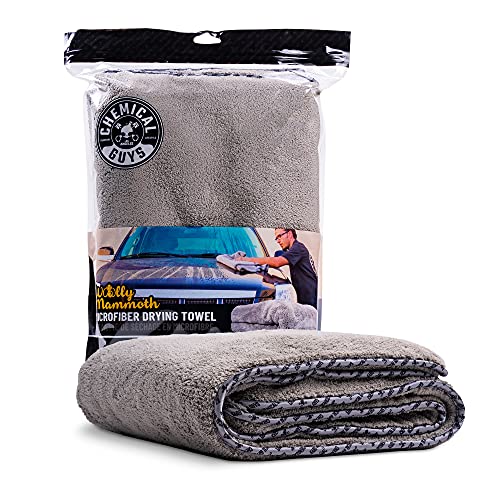
Best for big flat panels and tall vehicles
- Extra-large plush drying area
- Soaks up a whole panel before wringing
- Silk-banded edges to protect trim and paint
- Fewer passes on a big roof or bonnet
Why buy it: the big-vehicle pick — the surface area to dry a truck or SUV in a handful of glides, still with plush grit forgiveness.

Best for a coated show car and final wipes
- Ultra-plush, very high fiber density
- Minimal drag on delicate finishes
- Gentle enough for a ceramic-coated car
- Edgeless-soft feel for streak-free wipes
Why buy it: the finish-first choice — the plushest, lowest-risk option for paint you fuss over, where margin matters most.
Best for a cheap bulk stack for everyday wiping
- 24 towels for the price of one plush dryer
- Fine for glass, interior and dirty jobs
- Keeps your good drying towel for paint only
- Wash and rotate without precious feelings
Why buy it: the workhorse stack — pennies each, so the plush dryer stays reserved for paint and these handle everything else.
Prices are pulled from Amazon and were accurate as of Aug 22, 2026, 6:54 PM EDT. Product prices and availability are subject to change — the live price is shown on Amazon.