
Affiliate Disclosure
Some links on this page are affiliate links. As an Amazon Associate, we earn from qualifying purchases — at no extra cost to you. We do not buy, test, or physically handle the products we cover; our rankings come from aggregated owner reviews, ratings and expert consensus. Commissions never change our verdicts. How we rank & full disclosure.
The short version: an engine air filter’s real job is to protect your engine from abrasive dirt — clean air is the bonus. The two decisions are disposable vs reusable, and (always) the correct part number for your vehicle. Our overall pick is the FRAM Extra Guard, a quality disposable that filters well and costs little; if you would rather clean than replace, the reusable K&N High-Flow is the long-term choice. One honest note: reusable filters add only a token amount of airflow on a stock engine, so buy them for reusability and value, not a horsepower bump you will never feel.
Top Picks at a Glance
Our #1 Pick: FRAM Extra Guard
The FRAM Extra Guard takes the overall spot because it is the sensible default for the most people: engineered paper media that traps fine dirt well, a secure fit, an easy drop-in install, and a low price with a 12-month/12,000-mile service life. For routine maintenance on a normal car, that is exactly what you want — excellent filtration with no fuss. Like every filter here, it is sold by a specific part number that fits particular vehicles (CA10755 shown), so confirm the correct FRAM number for your engine before ordering. If you would rather clean a filter than replace it, jump to the reusable K&N below.
Best Engine Air Filters 2026: The Ranked Field
Best for a quality disposable filter for routine replacement
- Engineered paper media traps fine dirt
- Up to 12 months / 12,000 miles
- Easy drop-in replacement
- Secure, well-fitting seal
Why buy it: the disposable filter owners buy on repeat — good filtration, easy install and a fair price, in the specific part number that fits your vehicle.

Best for a washable filter you clean instead of replace
- Washable, reusable oiled-cotton media
- Increased airflow vs paper
- Million-Mile limited warranty
- Clean and re-oil rather than replace
Why buy it: the lifetime filter owners choose to stop buying paper — a modest airflow gain and a washable design, though the horsepower claims are small on a stock engine.
Best for higher-capacity media for cleaner intake air
- Advanced high-capacity media
- Strong dust and dirt capture
- OE-quality fit
- Good for dusty conditions
Why buy it: the premium disposable owners pick for extra dust capacity — a step up in filtration, in the number matched to your engine.
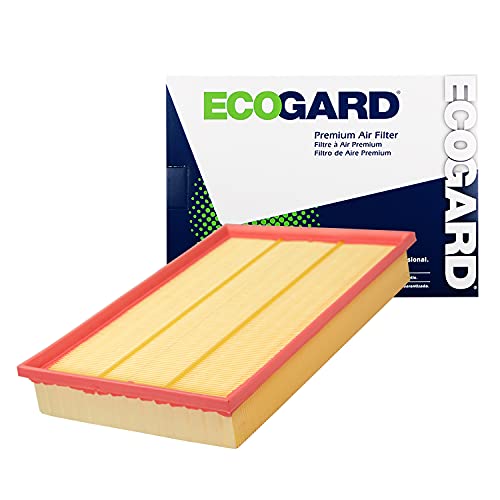
Best for solid filtration at a budget price
- Premium multi-layer media
- Good filtration for the price
- Easy drop-in fit
- Broad vehicle coverage
Why buy it: the value filter owners grab for routine changes — dependable filtration without the premium markup, in the correct fitment.

Best for OE-quality filtration, common on European cars
- OE-supplier build quality
- Precise fit and sealing
- Common European OEM filter
- Trusted by import owners
Why buy it: the OE-supplier filter import owners trust for factory-quality fit and filtration — buy the exact MANN number for your European model.

Best for longer service life between changes
- Holds up to 50% more dirt vs paper
- Longer interval between changes
- Drop-in replacement
- K&N-engineered media
Why buy it: the longer-life disposable owners pick to change filters less often — more dirt capacity than standard paper, in the number that fits your car.
Reusable vs Disposable: The Real Trade-Off
This is the main choice. Disposable paper filters are cheap, filter excellently, and you simply swap them at the interval — the low-hassle, high-filtration pick for most drivers. Reusable oiled-cotton filters (K&N, Spectre) cost more upfront but you clean and re-oil them rather than replacing, which saves money and waste over years and flows slightly more air. The one caution with reusables: over-oiling after a cleaning can, in rare cases, contaminate the mass airflow (MAF) sensor, so follow the oiling instructions carefully. Choose disposable for simplicity and pure filtration; choose reusable for long-term value and reuse.
The Horsepower Truth
Here is the claim worth calibrating. Washable performance filters do flow a bit more air than paper, but on an otherwise stock engine independent testing typically shows only about a 1–2% improvement in airflow or throttle response — nothing you will feel, and not meaningful horsepower. Where they actually help is on modified engines with other airflow upgrades, and in the money and waste you save by reusing them. So by all means buy a reusable filter — just buy it for the reusability and long-term value, not for a dyno gain that is not there on a stock car.
Buy the Right Part Number
As with oil filters, fitment governs. Every air filter is shaped for a specific airbox, so use the maker’s lookup — enter your year, make, model and engine — to get the exact part number (the numbers shown here fit only certain vehicles). A filter that does not seal properly is worse than a dirty one, because it lets unfiltered, abrasive dirt straight into the engine. Confirm the fit, then pick disposable or reusable.
Related Maintenance
The air filter is an easy win during routine service — pair it with the right oil and oil filter, and don’t forget the cabin air filter that cleans the air you breathe. The wider service picture is in the oil change hub, and if a reusable filter’s over-oiling has triggered a MAF or lean code, read it first with a scanner from our OBD2 hub. Cleaning supplies live in the garage tools hub.
Filtration Efficiency and Independent Tests
What separates a good engine air filter from a cheap one is efficiency — the share of abrasive dust the media captures before it reaches the cylinders. Independent tests and consumer reports generally show quality paper filters capturing the vast majority of harmful particles, with premium high-capacity media edging ahead in dusty conditions. Raw airflow performance is a secondary number: a slightly freer-flowing filter means little on a stock engine. Note this is the engine intake filter, not your home HVAC filter or a cabin air purifier — different parts entirely. Judge an engine filter on capture efficiency first, airflow second.
Brands Compared: FRAM, K&N, WIX and Purolator
A few brands dominate this category, and each leans a different way. FRAM and ECOGARD are the value disposables owners buy on repeat; Purolator ONE pushes higher dust capacity; WIX and MANN are the OE-grade names import owners trust for fit and sealing; and K&N is the washable, reusable brand you clean rather than replace. There is no single best brand — the right one is whichever offers the correct part number for your engine in the maintenance style you prefer. Filtration quality across the major names is closer than the marketing suggests.
Replacement Intervals and How to Check
A common guideline is replacement every 12,000 to 15,000 miles or once a year, but your environment rules — dusty or dirt-road driving clogs a filter far faster. The easiest check needs no tools: pull the filter and hold it to a light. If light passes through, it has life left; if it is packed and dark, replace it. A clogged filter restricts airflow and makes the engine work harder to breathe. For a reusable filter, clean and re-oil on the maker's schedule instead of replacing. Inspecting it at every oil change is the simplest habit to keep on top of it.
Filters for Dusty, Farm and Off-Road Driving
Where you drive changes how you select a filter and how often you swap it. On dirt roads, farm tracks and dusty trails the intake pulls in far more grit, so a higher-capacity media — or simply a shorter change interval — protects the engine better than a standard paper element run to its full mileage. In independent tests and consumer reports, quality brands such as Bosch, FRAM and Purolator rank well for capture, and a filter that ranks high for dust capacity earns its keep where raw airflow performance matters far less. The same logic applies to a hard-working off-road project truck: in grit, capacity is everything, so inspect often and change on condition, not the calendar.
Not a Home HVAC or Air Purifier Filter
A quick disambiguation, since search results blur these together. This guide covers the engine air filter that cleans the air your motor breathes — not a home HVAC furnace filter, and not the replaceable pad in a room air purifier. Those household filters are rated by MERV for trapping pollen and fine dust in the air you breathe indoors, which is a completely different job from an automotive intake filter. If you want cleaner air inside the cabin instead, that belongs to the cabin air filter, not the engine filter. Make sure you are shopping the right part before you buy.
How We Rank
Engine air filters are a fitment-and-purpose category, so we rank on aggregated owner ratings, review volume and the qualities owners report — with fit always first. We weigh four things. Filtration and seal — how well the media and gasket keep dirt out per owner reports. Maintenance model — disposable simplicity vs reusable long-term value. Honest performance — realistic airflow benefit, not inflated horsepower claims. And value for the tier and interval. We do not run a dyno; we read owner consensus and independent airflow data. Prices were current at the time of writing — confirm every part number against your own vehicle.
Quick Comparison
FRAM Extra Guard Engine Air Filter (CA10755 shown)
Best for a quality disposable filter for routine replacement
Best Reusable
K&N High-Flow Reusable Engine Air Filter (33-2304 shown)
Check Price on Amazon
Best Premium
Purolator ONE Advanced Engine Air Filter (A34838 shown)
Check Price on Amazon
Best Value
ECOGARD Premium Engine Air Filter (XA5626 shown)
Check Price on Amazon
Best OE-Grade (Euro)
MANN-FILTER Engine Air Filter (C 25 114 shown)
Check Price on Amazon
Best Extended-Life
Spectre Essentials Engine Air Filter by K&N (SPA-2260 shown)
Check Price on Amazon
The Verdict
Match the part number to your car, then choose your maintenance style. The FRAM Extra Guard is our overall pick for cheap, excellent disposable filtration; the reusable K&N High-Flow is the long-term, clean-and-reuse choice; and for extra dust capacity the Purolator ONE steps up. Buy reusables for value, not horsepower — and keep the filter clean to protect the engine. Check Price on Amazon →