
Affiliate Disclosure
Some links on this page are affiliate links. As an Amazon Associate, we earn from qualifying purchases — at no extra cost to you. We do not buy, test, or physically handle the products we cover; our rankings come from aggregated owner reviews, ratings and expert consensus. Commissions never change our verdicts. How we rank & full disclosure.
The short version: an ignition coil is an engine-specific, OE-grade part where quality matters — cheap no-name coils fail early and cause the very misfires you are trying to fix. Match the exact part number for your engine, and buy a quality brand; our overall pick is the Denso, an OE supplier and often the factory part on imports. Before you buy, read the misfire code to identify the exact cylinder (P0301 = cylinder 1, and so on) so you replace the right coil — and replace the spark plugs at the same time if they are due, since a worn plug makes a coil work harder.
Top Picks at a Glance
Our #1 Pick: Denso Direct Ignition Coil
The Denso coil takes the top spot because it is OE-grade in the truest sense — Denso is a factory ignition supplier, and its coils are frequently the original part on Toyota, Lexus, Scion and other engines. That means a high-energy, consistent spark and the long life you want from a part you would rather not replace twice. Owners consistently report it cures a misfire and stays cured. It earns the pick on that reliability, with the usual caveat: coils are engine-specific, so confirm the exact Denso number for your engine (673-1309 shown fits particular models). NGK and Bosch are equally trustworthy OE-grade choices for other makes.
Best Ignition Coils 2026: The Ranked Field
Best for OE-grade reliability on many imports
- OE-supplier coil-on-plug design
- High-energy, consistent spark
- Common Toyota/Lexus/Scion fitment
- Long service life
Why buy it: the OE-grade coil import owners trust to end a misfire for good — Denso is a factory supplier, so match the exact number for your engine.

Best for premium aftermarket build quality
- Premium thermoplastic housing
- Laminated steel core for output
- Stainless spring with dielectric grease
- Replaces many OE coils
Why buy it: the premium aftermarket coil owners choose for robust construction — high output and quality materials, in the number that fits your engine.
Best for many BMW and European applications
- Bosch Original Equipment
- Reliable high ignition energy
- Common BMW fitment
- Smooth starts and running
Why buy it: the OE coil European owners rely on — Bosch is a factory supplier for many BMWs, so buy the specific number your engine needs.

Best for a quality coil at a lower price
- OE-supplier engineering
- Good spark reliability
- Broad application coverage
- Strong value
Why buy it: the value coil owners buy to fix a misfire without overspending — OE-supplier quality for less, in the correct fitment for your car.
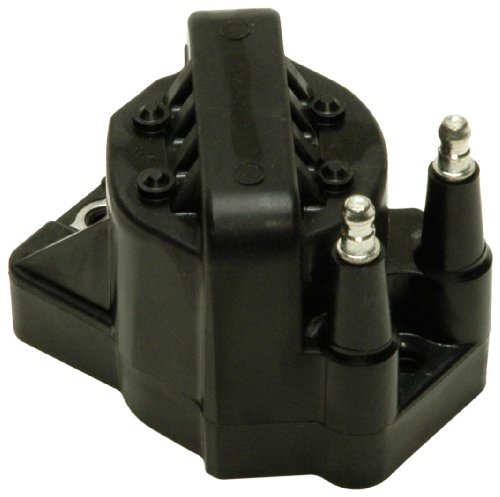
Best for many General Motors applications
- OE-supplier design (Delphi is ex-GM)
- Reliable spark for GM engines
- Precise fit
- Good value
Why buy it: the coil GM owners often pick — Delphi’s GM heritage means a precise fit and reliable spark, in the specific number for your engine.

Best for a dependable budget replacement
- OE-supplier build
- Reliable ignition output
- Broad coverage
- Low cost
Why buy it: the budget coil owners grab for a straightforward replacement — dependable OE-supplier construction at a low price, in the correct application.
Read the Code — Replace the Right Coil
Do not guess which coil is bad — read the misfire code. A failing coil throws a cylinder-specific code: P0301 is a cylinder-1 misfire, P0304 is cylinder 4, and so on, while a generic P0300 means random or multiple-cylinder misfire. Pull the code and freeze-frame data with a scanner (see our OBD2 hub), and you know exactly which coil to target. A reliable trick to confirm: swap the suspected coil with an adjacent cylinder’s coil, clear the code, and drive — if the misfire follows the coil to the new cylinder, the coil is the culprit, not the plug or injector. That five-minute test saves you from replacing the wrong part.
Fitment and Quality
Coils are matched to your specific engine and ignition design, so match the exact part number for your year, make, model and engine (the numbers shown here fit only certain vehicles). This is also a category where quality matters: coils live in a hot, vibrating environment, and the cheapest no-name units fail early — sometimes causing the exact misfire you were trying to fix. Stick to OE-grade brands (Denso, NGK, Bosch, Delphi), which are frequently the factory part. A quality coil costs a little more and lasts far longer, which matters on a part you would rather not revisit.
Replace the Set? And Do the Plugs
Two smart-money decisions. First, on a high-mileage engine with original coils, when one fails the others are the same age and may be close behind — many owners replace the full set to avoid a string of roadside failures and repeat labor; on a lower-mileage car, replacing just the failed coil is reasonable. Second, replace the spark plugs at the same time if they are due (see our best spark plugs guide) — a worn plug makes a coil work harder and can contribute to failure, and you are already in there. Coil-on-plug engines make both jobs straightforward.
Don’t Drive on a Misfire
A misfiring cylinder dumps unburned fuel into the exhaust, which can overheat and damage the catalytic converter — a far pricier part than a coil. A flashing check-engine light specifically warns of an active, damaging misfire: reduce power and fix it promptly. What starts as a rough-running annoyance can become a catalytic-converter bill if ignored, so diagnose and replace a failed coil sooner rather than later.
Related Ignition Maintenance
Coils and spark plugs are the two prime misfire suspects, so read the code first with a scanner from our OBD2 hub to pinpoint the cylinder. The wider service picture is in the oil change hub, and the sockets and dielectric grease you need live in the garage tools hub.
NGK, Motorcraft and Delphi: Coil Brands to Buy and the Bad Ones to Avoid
Stick to the OE-supplier names and you rarely go wrong. Denso and NGK lead for imports, Bosch for European engines, Motorcraft is the Ford OE brand, and Delphi is the affordable OE-grade choice with GM heritage. What to avoid is the bottomless supply of unbranded coils: a bad, cheap coil fails early in the heat and vibration under the hood, often causing the very misfire you set out to fix. Performance-branded coils rarely add real power on a stock engine — a healthy OE-grade coil already delivers a full spark. Buy the trusted brand; the small saving on a no-name coil is not worth a repeat repair.
Fitment by Make: Toyota, BMW and Ford Coil Replacement
The OE supplier often tracks the make. Many Toyota and Lexus engines run Denso coils from the factory; a lot of BMW engines — the E46 3-series is a classic example — use Bosch, and owners replacing an aged set report a smoother idle afterward; and Ford engines commonly take Motorcraft coil packs or coil-on-plug units. Whether your engine uses individual coils or coil packs, buy the exact application for your year, model and engine. A coil-on-plug replacement is a per-cylinder job; coil-pack systems fire several cylinders per unit, so confirm which design your car uses before ordering.
Genuine OEM vs OE-Grade Aftermarket Coils
There are three tiers worth understanding. A genuine OEM coil carries the automaker's own box and part number; an OE-grade aftermarket coil comes from the same supplier (Denso, Bosch, NGK, Delphi) that makes the factory part, often identical hardware in different packaging for less money; and a no-name coil is the gamble. For most owners the OE-grade aftermarket route is the sweet spot — genuine supplier quality at an affordable price. The one real trap is counterfeit coils sold as "genuine" through third-party listings, so buy from a reputable seller. Whether you run individual coils or coil packs, matching the correct application still matters more than the label.
Coil Suppliers to Know: Denso, Eldor and the OE Names
The ignition-coil world is smaller than the badge count suggests — a handful of suppliers make most of the coils on the road. Denso and NGK supply much of the Japanese fleet, Bosch many European engines, Delphi a lot of GM, and Eldor is the factory coil on several modern systems including the Ram Hemi and some Ford and GM applications. When you buy a Denso ignition coil for a Toyota or an Eldor for a Hemi, you are frequently buying the exact part the factory fitted. That is why identifying the OE supplier for your engine is the shortcut to a coil that lasts.
Do Performance Coils Add Power?
Short answer: not on a stock engine. "High-performance" or "hot" coils promise a fatter spark, but a healthy OE-grade coil already fires the plug completely — there is no unburned mixture left for a stronger spark to ignite. Where aftermarket performance coils can genuinely help is on heavily modified, boosted or high-compression engines making big power with wide plug gaps, where the ignition systems are asked to fire under real cylinder pressure. For a normal daily driver fixing a misfire, spend on the correct OE-grade coil and fresh plugs, not on a performance-branded upgrade that adds cost without adding power.
How We Rank
Ignition coils are a fitment-and-quality category, so we rank on aggregated owner ratings, review volume and the qualities owners report — fit first, quality close behind. We weigh four things. OE-grade reliability — consistent spark and long life per owner reports, ideally from a factory supplier. Fitment — a true application match for your engine and ignition type. Build for the environment — quality housing, core and connectors that survive heat and vibration. And value for the quality. We do not run an ignition bench test; we read owner consensus and OE reputation. Prices were current at the time of writing — confirm every part number against your own vehicle and engine.
Quick Comparison
Denso Direct Ignition Coil (673-1309 shown)
Best for OE-grade reliability on many imports
Best Premium Aftermarket
NGK Ignition Coil (U5055 shown)
Check Price on Amazon
Best OE for European
Bosch OE Ignition Coil (0221504470 shown)
Check Price on Amazon
Best Value
Delphi Ignition Coil (GN10726 shown)
Check Price on Amazon
Best for GM
Delphi Direct Ignition Coil (GN10123 shown)
Check Price on Amazon
Best Budget
Delphi Ignition Coil (value line)
Check Price on Amazon
The Verdict
Read the misfire code to find the exact cylinder, then buy an OE-grade coil in the correct fit — skip the cheap no-names that cause the problem. The Denso is our overall pick (often the factory part on imports), with NGK and Bosch equally trustworthy and Delphi the value. Replace the plugs while you are there, and never drive long on a flashing-light misfire. Check Price on Amazon →