

Affiliate Disclosure
Some links on this page are affiliate links. As an Amazon Associate, we earn from qualifying purchases — at no extra cost to you. We do not buy, test, or physically handle the products we cover; our rankings come from aggregated owner reviews, ratings and expert consensus. Commissions never change our verdicts. How we rank & full disclosure.
The short version: the best spark plug is the exact part number, heat range and gap your engine specifies — spark plugs are matched to your combustion chamber, so fitment comes first. Our overall pick is the NGK Iridium IX for its long life and reliable spark, but the plug shown fits specific cars; look up the right NGK number for your engine and buy the correct quantity (4, 6 or 8). The one upgrade rule: you can move to a longer-life material (copper → iridium) where your engine allows, but never downgrade a modern coil-on-plug engine designed for iridium to cheap copper.
Top Picks at a Glance
Our #1 Pick: NGK Iridium IX
The NGK Iridium IX takes the top spot as the plug enthusiasts reach for: a fine-wire iridium center electrode that resists wear, delivers a stable, focused spark, and lasts a long time (commonly 60,000–100,000 miles depending on the engine). Owners across a huge review base credit it with smooth idle, easy starts and dependable performance. As with every plug, it is sold by specific part numbers matched to specific engines (LFR6AIX-11 shown), so confirm the correct NGK number and heat range for your car and buy the right quantity. If your engine specifies platinum or copper, choose accordingly from the field below.
Best Spark Plugs 2026: The Ranked Field
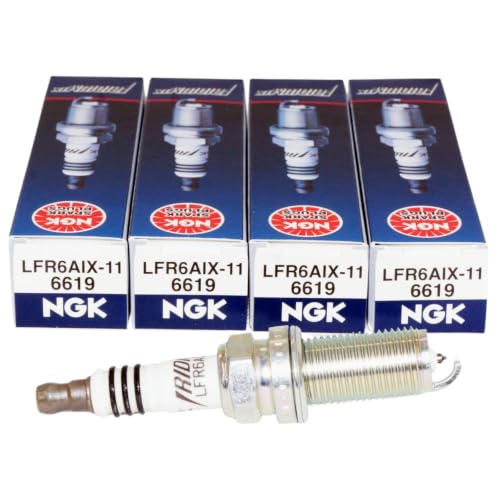
Best for long-life iridium performance for modern engines
- Fine-wire iridium center electrode
- Long service life (often 60k–100k mi)
- Stable spark, strong ignitability
- Pre-gapped for its application
Why buy it: the iridium plug enthusiasts trust for durability and a stable spark — match the exact NGK number and heat range for your engine, since the one shown fits specific cars.
Best for quick-firing iridium with a fine center wire
- 0.4mm fine iridium center electrode
- Fast, efficient combustion
- OE fitment on many imports
- Long-life iridium tip
Why buy it: the iridium plug owners of many Toyotas and imports choose — a fine-wire tip for quick firing, in the exact number your engine specifies.
Best for iridium longevity at a lower price
- 0.6mm fine-wire iridium tip
- Rated up to ~100,000 miles
- Good performance for the price
- Laser-welded iridium
Why buy it: the value iridium plug owners buy to get long life for less — solid, long-lasting performance, in the number matched to your engine.

Best for a platinum upgrade over standard copper plugs
- Single platinum tip, fine center wire
- 98% pure copper core
- Longer life than copper
- Quick starts, smooth idle
Why buy it: the platinum plug owners choose when their engine specifies platinum — longer life than copper and a focused spark, in the correct part number.
Best for engines that specify copper/nickel plugs
- V-groove nickel center electrode
- Excellent ignitability
- Cheapest to replace
- Shorter interval than iridium
Why buy it: the copper plug owners of older engines pick for cheap, frequent changes — great ignitability, but replace it more often than iridium; match your plug number.

Best for affordable iridium for a wide range of engines
- Fine-wire iridium center electrode
- Long service life
- Broad application coverage
- Strong value
Why buy it: another affordable iridium option owners like for long life on a budget — confirm the exact number and heat range for your specific engine.
Iridium vs Platinum vs Copper
The center-electrode material is the main difference, and it drives longevity and cost. Copper (nickel-tipped) plugs fire beautifully and cost the least, but wear fastest — typically every 20,000–30,000 miles — and are what some older engines specify. Platinum uses a harder tip for roughly 60,000-mile life. Iridium uses an even harder, finer tip for the longest life (often 100,000 miles) and an efficient, focused spark. Modern coil-on-plug engines are usually designed for platinum or iridium. The rule: match what your manual specifies, and you may upgrade to a longer-lasting material where allowed — but never downgrade an iridium engine to copper.
Fitment: Heat Range, Reach and Gap
Three engine-specific properties must match, which is why you cannot just grab "a spark plug." The heat range is how quickly the plug sheds heat — too hot risks pre-ignition, too cold risks fouling — and it is matched to your engine. The reach (thread length) must seat the electrode in the right spot. And the gap must be correct for your ignition system. Use the maker’s lookup to get the exact number for your year, make, model and engine, and buy the right quantity. The plug numbers shown here fit only certain vehicles and are examples of each line, not universal picks.
Handle Iridium Plugs With Care
Most iridium and platinum plugs come pre-gapped to a common spec, and their delicate fine-wire electrodes are easily bent or broken by aggressive gapping tools. Check the gap against your engine’s spec with a proper gauge, but if it is correct out of the box — it usually is — leave it alone. If a tiny adjustment is truly needed, do it gently and never pry against the fine center electrode. Copper plugs have sturdier electrodes and tolerate routine gapping. And always replace plugs as a complete set, never one at a time.
Ignition System Health
Spark plugs work with your ignition coils — if you have a misfire, worn plugs and a failing coil are the two prime suspects, so read the misfire code first with a scanner from our OBD2 hub to pinpoint the cylinder. A worn set of plugs left too long can trigger misfires that damage the catalytic converter, so replace on schedule. The full service picture is in the oil change hub, and the sockets and gap gauge you need live in the garage tools hub.
Single, Double and Multi-Electrode Plug Types
Beyond the tip material, plugs differ in electrode design, and the marketing here gets loud. A single ground electrode is the standard and what most engines want. A double-platinum plug puts precious metal on both the center and ground electrode, which matters in waste-spark ignition systems that fire the plug in both directions. Some budget types add triple or even quadruple ground electrodes and claim an advantage, but more electrodes is not automatically better — the design your manufacturer specifies already suits your engine. Match the specified plug rather than chasing an electrode count.
Do Performance Spark Plugs Add Power?
Here is the honest answer owners deserve: "performance" spark plugs rarely add measurable power on a healthy stock engine. NGK, Denso and Bosch all offer high-quality plugs, and any of them fires a well-tuned engine cleanly — the superior claims on fancy packaging mostly buy longevity, not horsepower. What a fresh, correct plug does deliver is a smooth idle, easy starts and no misfires, which can feel like more power if your old plugs were worn. Save the money you would spend on gimmick plugs and put a correctly specified set in on schedule instead.
Reliable Iridium for Toyota and Import Engines
Toyota and many other imports rolled off the line with Denso or NGK iridium plugs, so matching that reliable iridium spark is the safe call — a Corolla, Camry or similar keeps its smooth running when you fit the same material the factory chose. Owners on enthusiast forums and sites like AskMechanics consistently point newcomers back to the OE-specified iridium number rather than a cheaper substitute. The material and heat range were chosen for that engine; sticking with them protects the coil-on-plug ignition and keeps long service intervals intact.
How We Rank
Spark plugs are a fitment-and-material category, so we rank on aggregated owner ratings, review volume and the qualities owners report — with fitment first. We weigh four things. Material and longevity — iridium, platinum or copper matched to the intended life. Spark reliability — smooth idle, easy starts and no misfires per owner reports. Fit for the engine — clear part numbers and heat ranges so you can match your car. And value for the material and interval. We do not run an ignition bench test; we read owner consensus and manufacturer specs. Prices were current at the time of writing — confirm every part number and heat range against your own vehicle.
Quick Comparison
NGK Iridium IX Spark Plug (6619 / LFR6AIX-11 shown)
Best for long-life iridium performance for modern engines
Best Platinum
NGK G-Power Platinum Spark Plug (7092 / BKR6EGP shown)
Check Price on Amazon
Best Copper (Budget)
NGK V-Power Copper Spark Plug (BKR5EY shown)
Check Price on Amazon
Best Budget Iridium
Autolite Iridium XP Spark Plug (XP5224 shown)
Check Price on Amazon
The Verdict
Look up the exact plug number, heat range and gap for your engine first, then choose the material. For long-life performance, the NGK Iridium IX is our overall pick, with Denso Iridium Power and the value Autolite Iridium XP excellent alternatives; platinum and copper options cover engines that specify them. Replace the full set on schedule, and never downgrade an iridium engine to copper. Check Price on Amazon →