
Affiliate Disclosure
Some links on this page are affiliate links. As an Amazon Associate, we earn from qualifying purchases — at no extra cost to you. We do not buy, test, or physically handle the products we cover; our rankings come from aggregated owner reviews, ratings and expert consensus. Commissions never change our verdicts. How we rank & full disclosure.
Short answer: it depends entirely on whether that light is steady or flashing, and what your car is telling you through its behavior right now. This is not a situation where one answer fits every driver. Ignore the wrong kind of check engine light and you can turn a $200 sensor fix into a $2,000 catalytic converter replacement inside a single highway run. We have seen it happen. A lot.
This guide cuts through the noise and gives you a decision framework you can actually use standing next to your car in a car park at 7am. No jargon walls. No "consult a professional" cop-outs without context. Real guidance on when to keep driving, when to drive gently to a shop, and when to pull over immediately and call a tow.
This page is part of our Reading OBD2 Codes hub. If you want to pull the actual code yourself before making a decision, start at how to read a code step by step — a $20 Bluetooth scanner is all you need.
Steady Check Engine Light: What It Actually Means
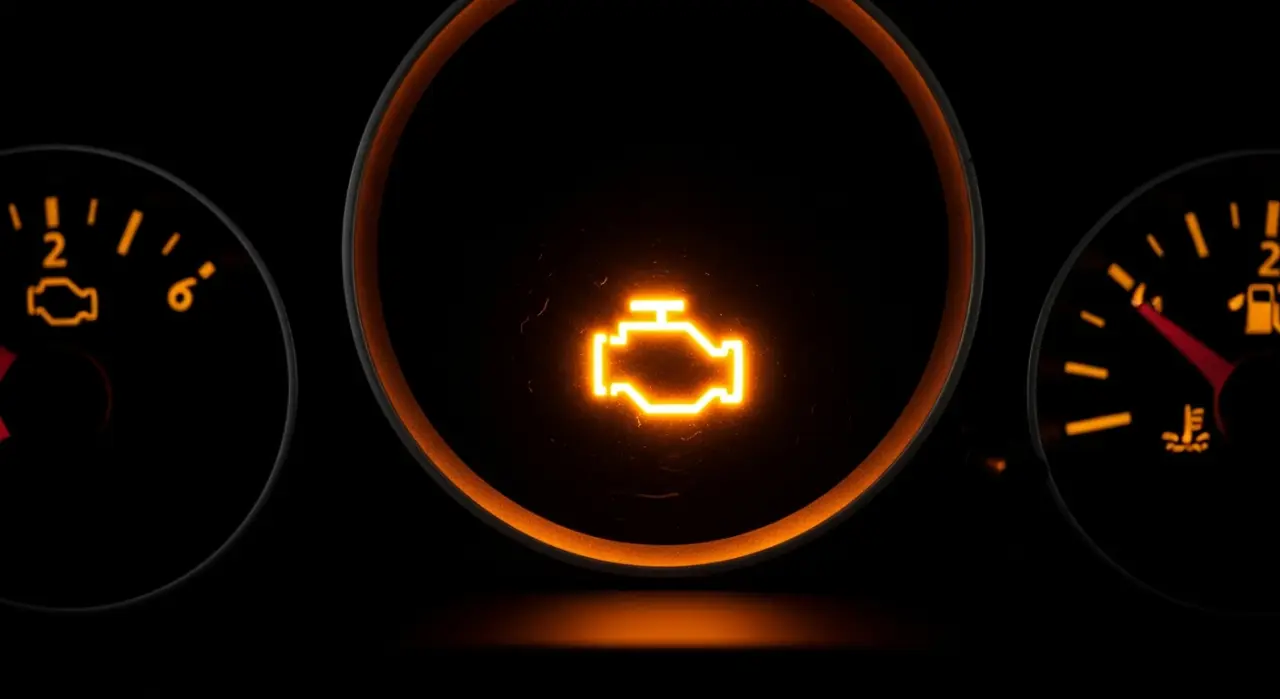
A steady, non-flashing check engine light means your car’s engine management system has logged a fault code. Something is outside the parameters the ECU expects. The fault has been captured, stored, and flagged — but the system considers the situation stable enough that it is not throwing the emergency alarm.
In most cases, a steady light means you can drive the vehicle cautiously to get the code scanned in the near future. “Near future” means today or tomorrow, not next week after the school run, footy training, and three trips to Bunnings. The longer you ignore a stored fault, the more opportunity there is for a minor issue to escalate, and the more likely you are to lose the freeze-frame data that tells a mechanic exactly what conditions triggered the fault.
A steady light does not mean you can forget about it. It means the urgency is measured in days, not minutes — provided your car is driving normally. The moment drivability changes, reassess everything.
Flashing Check Engine Light: Stop. Seriously.
A flashing check engine light is a different beast entirely. It is the system telling you there is an active engine misfire happening right now, and raw, unburned fuel is being pushed into your exhaust stream and into the catalytic converter.
Here is why that matters: your catalytic converter operates at extreme temperatures. When raw fuel soaks into the catalyst substrate and ignites, temperatures spike well beyond design limits. The converter can melt internally, destroying the substrate. What was a relatively cheap ignition coil or spark plug problem can become a catalytic converter replacement that runs anywhere from $800 to well over $2,500 depending on the vehicle.
What to do when you see a flashing check engine light:
- Reduce your speed immediately. Do not accelerate.
- Turn off any non-essential electrical loads (A/C, heated seats).
- Pull off the road safely as soon as you can do so without creating a hazard.
- Do not continue driving to the next suburb. Do not “just get home.”
- Arrange a tow or have someone pick you up.
The Flashing-Then-Steady Scenario
Sometimes drivers report that the light was flashing, then went steady, and ask if it is now safe to drive. The answer is: the flashing has stopped, which means the active misfire has stopped — but the damage may already be done. The catalytic converter may have taken heat damage during the misfire event. The root cause (a failing coil, worn plug, cracked plug wire) is still present and will likely trigger the misfire again. Treat a flashing-then-steady light as a serious warning, not a clearance to continue. Get it scanned and inspected before your next trip.
The Symptom Test: What Is Your Car Actually Doing?
Before you decide anything, take 30 seconds to answer these questions honestly:
- Is the car running roughly, misfiring, or surging? Stop driving. Get it scanned.
- Has power dropped noticeably or is the car in limp mode? Stop. The ECU is actively protecting the engine.
- Is the temperature gauge climbing higher than normal or sitting in the red? Pull over now. Overheating kills engines fast.
- Do you smell burning oil, coolant, or fuel? Pull over immediately.
- Are you hearing knocking, tapping, or rattling that wasn’t there before? Stop. Internal damage is possible.
- Is the car driving completely normally — same power, same feel, no smells? Steady light only? You can likely drive cautiously to get it scanned soon.
Your senses are additional sensors. If something feels wrong, trust it. The check engine light is the system’s vote. Your observations are yours.
Code-by-Code Risk: What the Code Itself Tells You
Once you have the code — and you can pull it yourself in under five minutes using any basic OBD2 scanner, as we explain in our guide to the most common OBD2 codes and what they mean — you can make a much more informed decision about risk level.
Low-Risk Codes: Drive to a Shop Soon
- P0420 / P0430 — Catalyst System Efficiency Below Threshold: The cat is under-performing but the car is not in immediate danger. Drive gently to a shop, but do not leave it more than a week or two. An underlying misfire may be the real cause.
- P0440, P0441, P0442, P0455 — EVAP System Faults: These are emissions-related codes. Often triggered by a loose or cracked fuel cap. Check the cap first. No immediate safety risk in most cases.
- P0171 / P0174 — System Too Lean: Can be a vacuum leak or dirty MAF sensor. Monitor for drivability changes. Safe to drive to a shop but do not delay if symptoms develop.
Medium-Risk Codes: Drive With Caution, Prioritize the Scan
- P0300 — Random/Multiple Cylinder Misfire: Multiple cylinders misfiring is concerning. If the light is steady and the car runs reasonably well, you can get it to a shop, but go directly. Do not run errands. If the light is flashing, stop.
- P0301 through P0308 — Specific Cylinder Misfire: A single-cylinder misfire. Same logic as P0300. Steady light with no drivability issues = get it to a shop today. Flashing light = stop now.
- P0113 — Intake Air Temperature Sensor High: Usually a sensor, not a structural problem. Monitor and scan soon.
High-Risk Codes: Stop Driving Now
- P0217 — Engine Coolant Temperature Over-Temperature: This is an overheating code. An overheating engine can warp cylinder heads, crack blocks, and cause catastrophic failure within minutes. Pull over. Do not drive on.
- P0520 / P0521 / P0524 — Oil Pressure Sensor / Low Oil Pressure: Low oil pressure means inadequate lubrication to critical engine components. Continued driving can cause irreversible bearing and journal damage in very short order. Stop immediately.
- P0562 — System Voltage Low: If your charging system is failing, you may lose power to critical systems including ABS and power steering. Stop safely and investigate.
- Any transmission fault code paired with drivability changes: Stop and assess. Continuing to drive through hard shifts or slipping gears accelerates transmission damage significantly.
The Gas Cap Rule
Before you stress: if the check engine light came on within a day or two of filling up at a servo, the very first thing to do is check your fuel cap. A loose, cracked, or missing fuel cap breaks the seal on the evaporative emissions system and will trigger a P0440-series EVAP fault reliably. Remove the cap, check the condition of the rubber seal, reinstall it firmly until you hear it click. Drive for two to three days. On many vehicles the light will clear itself once the system runs through its diagnostic cycles and confirms the seal is intact. Low risk. Often free to fix.
Scan It Before You Decide Anything
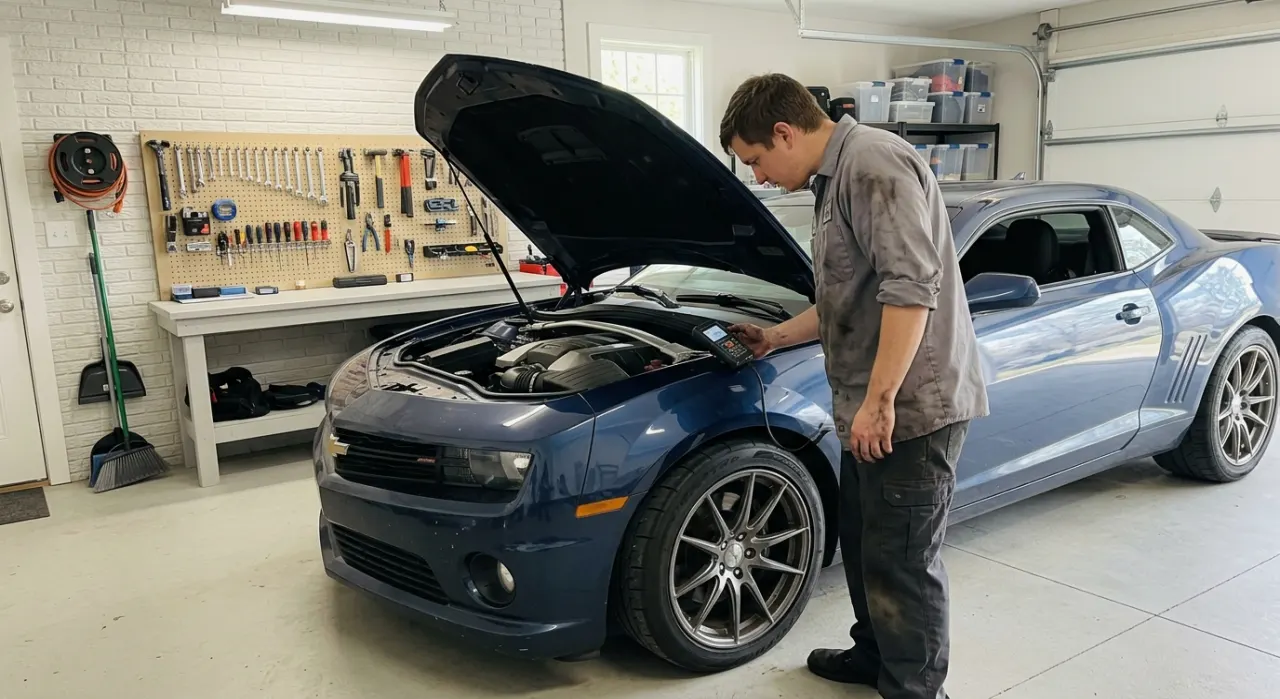
The single most useful thing you can do — even before calling a mechanic, even before searching the code online — is get the code pulled. You cannot make an informed decision without knowing what the system is actually flagging. A Bluetooth OBD2 adapter costs $20 to $40 and pairs with free apps on your phone. Many auto-parts retailers will also pull the code at no charge.
Knowing the code does not replace a mechanic’s diagnosis, but it gives you the information you need to judge urgency, avoid being caught off-guard, and have an intelligent conversation with whoever is doing the repair. It also tells you whether you are dealing with a P0455 loose gas cap situation or a P0217 overheating situation — and those two outcomes require completely different responses in the next ten minutes.
Quick-Reference Decision Guide
Stop Driving Now
- Check engine light is flashing
- Temperature gauge is elevated or in the red
- Oil pressure warning light is on simultaneously
- You smell burning oil or coolant
- You hear knocking or serious mechanical noise
- The car has entered limp mode or lost significant power suddenly
- Code is P0217, P0524, or any oil pressure / overheating fault
Drive Cautiously and Get It Scanned Today
- Steady light only, car driving completely normally
- Single cylinder misfire code (P030X) with steady light and no rough idle
- P0420 / P0430 catalyst efficiency codes with no drivability symptoms
- Lean codes (P0171 / P0174) with no symptoms
Low Urgency — Monitor and Address Within a Week
- EVAP codes (P044X, P045X) after recent fuel-up — check the cap first
- Sensor codes (O2 sensor, MAF, IAT) with no drivability impact and steady light
- Light appeared once and has not returned — still worth scanning for stored codes
One Thing That Catches People Out
A check engine light that disappears on its own does not necessarily mean the problem is resolved. Most ECUs will clear a fault from the active status if the triggering conditions do not recur across a set number of drive cycles — but the code remains stored in memory. A scanner will still read it. This is why “the light went off by itself” is not a reason to stop investigating. Pull the stored codes and understand what triggered the fault in the first place.
The check engine light is not your enemy. It is the only way your car has of telling you something needs attention. Treat a steady light as useful information and act on it within a day or two. Treat a flashing light as the serious warning it is and stop immediately. Scan before you decide, and you will make the right call every time.
Recommended OBD2 Scanners
We aggregate owner ratings rather than testing in a lab. You cannot judge the urgency of a light without the code behind it — these are the well-reviewed scanners that pull it, including the freeze-frame data a mechanic needs.

Best for reading the code and getting repair guidance on your phone
- Full code read plus freeze-frame and live data
- Repair reports point you toward likely fixes
- Pairs with a clean, well-supported app
Why buy it: the tool that turns a mystery light into a decision — pull the code, see the freeze-frame, judge the urgency.

Best for a standalone reader with no phone or app needed
- Colour screen with live data and freeze-frame
- Reads and clears codes on its own
- Keep it in the glovebox for roadside checks
Why buy it: a self-contained scanner for the moment the light comes on — plug in, read the code, decide right there.

Best for fast, reliable wireless scanning with deep data access
- Quick, stable Bluetooth connection
- Reads more than generic codes on many makes
- Works across iPhone, Android and Windows
Why buy it: the enthusiast pick for wireless diagnostics — quick to connect and capable enough to see what a basic reader misses.

Best for a cheap dongle that still shows live data
- 2-in-1 dongle plus small display
- Reads and clears common fault codes
- Affordable way to always have a scanner handy
Why buy it: the low-cost option that still answers the one question that matters: what code is behind this light?
Prices are pulled from Amazon and were accurate as of Aug 22, 2026, 6:54 PM EDT. Product prices and availability are subject to change — the live price is shown on Amazon.