
Affiliate Disclosure
Some links on this page are affiliate links. As an Amazon Associate, we earn from qualifying purchases — at no extra cost to you. We do not buy, test, or physically handle the products we cover; our rankings come from aggregated owner reviews, ratings and expert consensus. Commissions never change our verdicts. How we rank & full disclosure.
The short version: a dent puller lifts shallow, paint-intact dents from the surface — think door dings and small hail dents — using either a glue-pulled tab or a slide hammer. Ranked across aggregated owner reviews, our #1 pick is the GLISTON slide-hammer glue-pull kit: owners consistently report it popping out simple dings without disturbing the factory paint. The honest catch: glue-pulling only works while the paint is unbroken, and sharp creases still beat DIY tools.
Dent pulling sits alongside scratch and paint work — see the full picture in our scratch & paint repair hub. If your dent also broke the paint down to metal, you will need to deal with that too; our rock chip repair and touch-up paint guides cover it.
Top Picks at a Glance
Our #1 Pick: GLISTON Slide-Hammer Glue-Pull Kit
The GLISTON kit tops the list because it nails the most common DIY dent job — a shallow ding with intact paint — without risk to the finish. You glue a tab to the low spot, snap it onto the stainless slide hammer, and a few controlled pulls lift the metal back toward flush. Owners use it on parking-lot door dents and hail damage and report clean results within the tool's lane. It will not fix a crease or stretched metal, but for the dents most people actually get, it is the puller the reviews back most consistently.
Best Dent Pullers 2026: The Ranked Field

Best for glue-pulling shallow dents without touching the paint
- Stainless slide-hammer glue puller
- Thickened black tabs included
- Works on hail and door dings
- No drilling, paint stays intact
Why buy it: the do-most kit owners reach for first — glue a tab, pop the dent with the slide hammer, and shallow door and hail dings lift out without disturbing the factory paint.

Best for the cheapest capable glue-pull bridge setup
- Double-pole bridge puller
- Glue tabs, gun and shovel included
- Precise pull with thumb screws
- Great first dent-pull kit
Why buy it: the budget bridge kit owners recommend to beginners — the twin-screw bridge lets you draw a dent up slowly and controllably, and it costs little enough to try on a stubborn ding.

Best for heavier body panels and drilled/welded pulls
- Heavy 13 lb drop-forged slide hammer
- Multiple hooks and attachments
- For serious body panel work
- Carrying case included
Why buy it: the heavy-duty puller owners choose for real bodywork — the 13 lb hammer and forged attachments move metal that a glue tab cannot, ideal once paint is already coming off.

Best for larger creases with an adjustable lifter
- Adjustable-width golden lifter
- Soft silicone base, paint-safe
- Handles bigger dents and creases
- Leverage-based, controllable pull
Why buy it: the adjustable lifter owners like for bigger dents — the widening base spans a crease and the lever gives a strong, controllable pull without the harshness of a slide hammer.

Best for a durable slide hammer that doubles for bearings and seals
- Jaw pullers plus dent attachment
- Removes seals and bearings too
- Solid tool-steel construction
- Lifetime warranty
Why buy it: the multi-purpose slide hammer owners keep for years — it pulls dents but also handles seals and bearings, so it earns its place in the toolbox beyond one job.
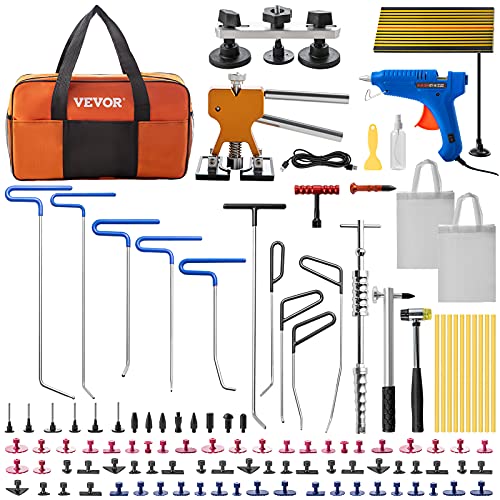
Best for a full glue-pull kit with every tab and accessory
- 89 pieces: lifter, bridge, tabs, gun
- Covers small dings to larger dents
- Everything to start in one box
- Good value per piece
Why buy it: the everything-in-one-box option owners pick to get started — the golden lifter, bridge, glue gun and a full range of tabs mean you can tackle most dent shapes out of the gate.
Suction Cup Pullers and Hand Tools for Dent Removal
Not every dent needs a slide hammer. A simple suction cup puller — the kind that grips with a hand-pump vacuum or a squeeze lever — is a cheap hand tool that can pop a large, shallow, rounded dent straight out, and it is the first thing worth trying on a soft door or fender ding. Suction cups shine on broad, gentle dents in flexible panels; they do nothing for sharp creases or small deep dents. Many owners keep one alongside their glue-pull kit as the no-glue, thirty-second option for dent removal. On aluminum panels especially, a suction cup is a gentle first attempt before you commit to gluing tabs and pulling harder.
Paintless Dent Repair (PDR) vs Body Repair
It helps to know where a puller sits in the repair world. Paintless dent repair (PDR) — glue-pulling and pushing dents from behind — keeps the factory finish and is what all the tools here aim at; it works only while the paint is intact. Traditional body repair, by contrast, accepts that the paint is broken: you pull or hammer the metal roughly straight, fill the low spot with body filler, then sand and repaint. PDR is cheaper, faster and invisible when it applies; body repair is the route for creased, stretched or paint-cracked damage. Deciding which camp your dent falls into — paintless or body — before you buy tools saves money and disappointment.
Budget Kits and Tools for Large Dents
You do not need to spend much to start. Budget dent tools from Harbor Freight and brands like SureBilt or a "Dent Champ" style puller cost little and handle smallish dings perfectly well — owners often grab one in desperation over a fresh parking-lot ding and are pleasantly surprised. The catch is the same as with any glue-pull tool: a large, sharp or creased dent will outrun a cheap kit, and a bigger adjustable lifter or a trip to a PDR pro is the honest answer. For small, shallow dents a $30 tool is genuine value; for large or complex repair work, buy up or hand it to a specialist.
Quick Comparison
GLISTON Paintless Dent Puller (Slide Hammer Kit)
Best for glue-pulling shallow dents without touching the paint
Best Value
Manelord Auto Body Dent Puller (Bridge Kit)
Check Price on Amazon
Best Premium
XtremepowerUS 13 lb Slide Hammer Dent Puller Kit
Check Price on Amazon
Best Glue-Pull Lifter
ARISD Golden Dent Lifter Kit
Check Price on Amazon
Best Pro Slide Hammer
Powerbuilt Slide Hammer Puller Tool Kit (940369)
Check Price on Amazon
Best Complete Kit
VEVOR 89-Piece Dent Puller Kit
Check Price on Amazon
How We Rank
We do not run a dent-repair bay — we rank by aggregated owner ratings, review volume, and the themes owners repeat across real pulls. We weigh four things. Pulling power and control — whether owners can draw a dent up smoothly without creating high spots. Paint safety — glue-pull tabs and release that leave the finish untouched. Versatility — how many dent shapes and sizes the kit handles. And value and durability — what you pay and whether the tabs, glue and hardware hold up. Prices were current at the time of writing.
When Glue-Pulling Works — and When It Doesn't
This is the part that decides your result before you buy anything. Glue-pull dent removal works on shallow, rounded dents where the paint is intact and unbroken — the classic door ding and soft hail dent. The adhesive grips the clear coat, you pull the metal out, and the surface returns close to flush. It does not work when the paint is cracked or chipped (there is nothing sound to glue to, and the crack means the metal is likely stretched), on sharp creases, on body lines, or on dents where the metal has been stretched so it springs back. Those are jobs for professional PDR or a repaint. Match the tool to the dent and a $30 kit looks like magic; ignore the limits and it just adds a high spot.
Glue-Pull vs Slide Hammer vs Lifter
Three approaches, three jobs. A glue-pull slide hammer sticks a tab to the paint and uses inertia to snap the dent up — fast and paint-safe for small dings. A bridge or lever lifter also glue-pulls but draws the metal up slowly with a screw, giving finer control on larger dents and creases. A heavy slide hammer that drills or welds to the panel moves serious metal but marks the surface, so it is for repairs headed for filler and paint, not paintless work. Most DIYers want glue-pull tools; keep the drilled-type slide hammer for panels you are going to refinish anyway.
How to Choose a Dent Puller
Pick by the dents you actually have. For small door dings and hail, a glue-pull slide-hammer kit (GLISTON) or a budget bridge (Manelord) is all you need and keeps the paint safe. For larger dents and shallow creases, an adjustable lifter (ARISD) spans wider and pulls harder with more control. If you are doing bodywork that will be refinished — pulling out a caved panel before filler — a heavy slide hammer (XtremepowerUS, Powerbuilt) earns its keep. Want to be ready for anything? A complete kit (VEVOR) bundles the lifter, bridge, glue gun and a full range of tabs. Whatever you buy, work in warmth so the glue grips, and pull gently and repeatedly rather than yanking.
If the Paint Is Broken
Pulling a dent only addresses the shape — if the paint cracked or the metal needs smoothing afterward, you have more to do. A pick from our best body filler guide smooths any residual low spot, and our touch-up paint roundup handles color. For a complete kit that works dents from behind as well, see our best paintless dent repair kit comparison. Keep the repaired panel protected afterward with a good wax, and if it is a truck bed or body you want to shield, our tonneau cover guide is worth a look.
The Verdict
For popping shallow, paint-intact dings without risking the finish, the GLISTON slide-hammer glue-pull kit is the puller owners rate above the rest. On a budget, the Manelord bridge does the same job for less; for refinish-bound bodywork, the XtremepowerUS 13 lb slide hammer moves the metal. Just remember the rule that beats any tool: glue-pulling works on intact paint — a cracked or creased dent belongs to filler or a body shop. Check Price on Amazon →