
Affiliate Disclosure
Some links on this page are affiliate links. As an Amazon Associate, we earn from qualifying purchases — at no extra cost to you. We do not buy, test, or physically handle the products we cover; our rankings come from aggregated owner reviews, ratings and expert consensus. Commissions never change our verdicts. How we rank & full disclosure.
The short version: a rust converter is a chemical treatment that turns orange surface rust into a stable, paintable primer — it does not grind rust away or rebuild metal that has rotted through. Ranked across aggregated owner reviews, our #1 pick is FDC Rust Converter Ultra: owners consistently report it laying down a hard black primer over stable rust that topcoats cleanly. But before you buy anything, understand this — surface prep is about 80 percent of the result, and no converter fixes rot.
Rust repair is where a lot of DIY jobs go wrong, so start with the honest picture in our scratch & paint repair hub, and if the damage is a fresh stone chip down to bare metal, our rock chip repair guide shows how to stop rust before it starts.
Top Picks at a Glance
Our #1 Pick: FDC Rust Converter Ultra
FDC Rust Converter Ultra earns the top spot because it does the one job a converter should do, reliably: brushed or sprayed over stable surface rust, it converts the iron oxide to a hard black film that accepts paint. Owners restoring frames, floor pans and trailer beds report it grabbing well as long as the metal was prepped, and the gallon size makes it genuinely affordable per square foot. It is not magic — apply it over loose scale and it will flake — but on sound, wire-wheeled metal it is the converter the reviews back most consistently.
Best Rust Converters 2026: The Ranked Field
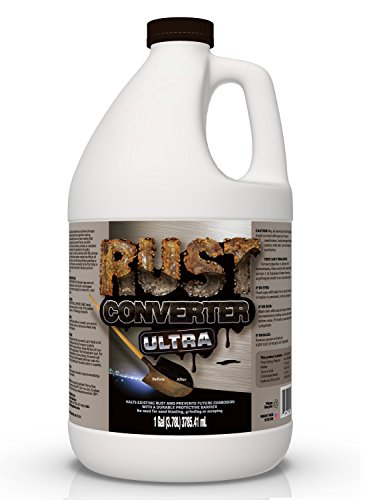
Best for converting light-to-moderate surface rust into a paintable primer
- Water-based, one-coat conversion
- Dries to a paintable black primer
- Covers ~500 sq ft per gallon
- Works on frames, panels and floor pans
Why buy it: the converter owners reach for most — brushed or sprayed over stable surface rust, it turns orange scale into a hard black primer you can paint, and the gallon size makes it cheap per panel.

Best for small rust spots and touch-ups without mixing
- Aerosol — no brush, no mixing
- Converts rust to a flat-black paintable surface
- Any-angle comfort tip
- Ready to topcoat in ~24 hours
Why buy it: the grab-and-go can owners keep on the shelf for chips and small scabs — spray it on stable rust and it flashes to a paintable black in minutes for the price of a sandwich.

Best for a converter and primer in one trusted marine-grade formula
- Converts rust and primes in one step
- Water-based, low-odor, industrial pedigree
- Brush, roll or spray
- Marine and heavy-equipment favorite
Why buy it: the converter restorers name first — its water-based tannic formula both neutralizes rust and lays down a primer, and owners on trailers and boat trailers praise how long it holds.
Best for brushing a durable black polymer coat over treated rust
- Replaces rust with a black polymer coat
- Brush-on control for detail areas
- Paintable primer once cured
- Good for undercarriage touch-ups
Why buy it: the brush bottle owners like for precise work — it destroys old rust and leaves a paintable black polymer film, which is exactly what you want on a rusted bracket or seam.

Best for sealing treated metal against future moisture
- Non-porous, moisture-cured barrier
- Rock-hard finish over prepped rust
- Legendary on frames and floor pans
- Topcoat for a converter, not a converter itself
Why buy it: the coating restorers swear by as the final seal — it is a rust-preventive barrier rather than a converter, so owners pair it over prepped or converted metal for a finish that shrugs off moisture for years.
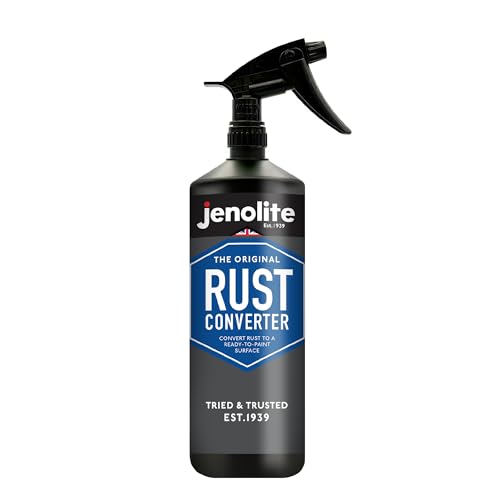
Best for covering big panels and floor pans fast
- All-in-one converter, primer and inhibitor
- Trigger-spray bottle for wide coverage
- Water-based, paint-ready finish
- Handy for quarter panels and pans
Why buy it: the trigger bottle owners grab for square footage — it converts, primes and inhibits in one pass, so a rusty floor pan or bed goes from orange to paint-ready without a brush.
Quick Comparison
FDC Rust Converter Ultra (1 Gallon)
Best for converting light-to-moderate surface rust into a paintable primer
Best Value
Rust-Oleum Stops Rust Rust Reformer Spray (10.25 oz)
Check Price on Amazon
Best Premium
Corroseal Water-Based Rust Converter Metal Primer (1 Qt)
Check Price on Amazon
Best Brush-On
Permatex 81773 Rust Treatment (16 oz)
Check Price on Amazon
Best Sealing Topcoat
POR-15 Rust Preventive Coating (32 oz, Gloss Black)
Check Price on Amazon
Best for Large Areas
Jenolite Rust Converter Trigger Spray (33.8 oz)
Check Price on Amazon
How We Rank
We do not bench-test rust converters ourselves — we rank by aggregated owner ratings, review volume, and the themes owners repeat over months of real use. We weigh four things. Conversion quality — whether owners report it actually turning rust to a stable, paintable surface rather than just staining it. Adhesion and durability — does the coating stay put once topcoated, especially on undercar areas. Ease of use — brush, aerosol or trigger, and how forgiving it is about weather and prep. And value — coverage per dollar, since rust jobs eat product. Prices were current at the time of writing and move around.
Rust Converter vs a Sealing Coating: POR-15 and Eastwood on a Frame
A converter and a sealing coating do different jobs, and the best frame and floor-pan results use both. A converter chemically treats and eliminates active surface rust, leaving a paintable primer. A preventive coating — POR-15 is the one restorers name most, with Eastwood offering a comparable rust-encapsulator line — then seals the treated metal under a hard, non-porous barrier that keeps moisture out for years. On an undercar area that sees road spray, owners consistently recommend converting the rust first and sealing it after, to preserve the repair far longer than a converter alone. Prep both over metal that is still in solid shape — cleaned back with a wire wheel or belt sander — because neither product rebuilds steel that has rotted through.
Rust-Oleum’s Aerosol Version and Painting Over It
For small spots, the aerosol version is the easy route. Rust-Oleum’s Rust Reformer sprays on with no mixing, flashes to a flat black in minutes, and is ready to paint over in about a day — ideal for a chip or a small scab where a gallon would be overkill. That affordability and convenience are why it earns so many owner recommendations for touch-ups. Once cured, topcoat it with your color or a primer for UV protection, because a converter left bare will wear away. If you are unsure how much rust you are dealing with, figure out the area first — an aerosol suits spots, a brush or trigger bottle suits whole panels.
What a Rust Converter Actually Does
This is the part that saves you a wasted afternoon. A converter contains tannic acid (and usually a polymer) that reacts with iron oxide and turns it into a stable, inert, paintable compound — locking down surface rust so it stops spreading and giving you a primer to paint over. That is a genuinely useful chemical trick on light-to-moderate surface rust over metal that is still solid. What it is not: a rust remover, a metal filler, or a fix for rot. If the steel is pitted deep, flaking in layers, or perforated, converter will not bring it back — that panel needs cutting and welding or a patch. Being honest with yourself about which situation you are in is the single most important decision here.
Prep Is 80 Percent of the Result
Every converter on this list lives or dies on prep, and it is the step people skip. Hit the rust with a wire wheel, flap disc or wire brush and take off everything loose — flaking rust, blistered paint, scale — until you are down to firmly-attached metal, bright bare steel where the rust was worst. Then degrease to kill grease and wax so the converter can bond, and let it dry completely. Converter has to reach and react with the rust; anything loose sitting on top just becomes a weak layer that peels later and takes your paint with it. If you do nothing else right, do the prep.
How to Choose a Rust Converter
Match the format to the job. For small spots and touch-ups, an aerosol like Rust-Oleum Rust Reformer means no mixing and no brush to clean — spray, wait, topcoat. For brackets, seams and detail work, a brush-on such as Permatex gives you control. For whole panels, floor pans and trailer beds, a gallon you can brush, roll or spray (FDC, Corroseal) is far cheaper per square foot, and a trigger sprayer like Jenolite covers area fast. If the area sees water and road spray — frames, pans, undercar — convert the rust first, then seal it with a moisture-cured coating like POR-15 before your color coat for the longest life. Whatever you choose, buy enough to do the whole area in one session; a half-treated seam just rusts from the edge.
Rust Converter on a Classic Truck Restoration
Nowhere does rust converter get more use than on classic-truck projects — a Chevy C10, an old Ford or a vintage trailer where surface rust has crept across floor pans, cab corners and the bed. Used right, a converter helps preserve the original sheet metal that is still in solid shape, locking down light rust before it spreads so you keep the panel you have rather than fabricating a new one. The honest limit is the same as always: converter buys time on sound metal, but a C10 floor pan that flexes or flakes in layers has moved past treatment and needs a patch panel welded in. Treat the good metal, cut out the rotten, and a converter becomes one tool in a proper restoration rather than a shortcut around bodywork.
Converter vs Remover vs Encapsulator: The Terms Untangled
The product names get confusing, so here is the difference. A rust converter chemically changes iron oxide into a stable, paintable compound and eliminates active surface rust — it treats and primes in place. A rust remover (usually an acid or chelating soak) strips rust off entirely to bare metal, which suits small parts you can dunk but not a whole frame. A rust encapsulator — Eastwood's line is the best known — is a paint-like coating that seals over treated or tightly-adhered rust to preserve the metal under a barrier. Most car jobs use a converter to treat, then an encapsulator or sealing coat to protect. Knowing which is which stops you buying a soak when you needed a brush-on primer.
Cost, Coverage and Affordability
Part of a converter's appeal is affordability, but the cheapest can per ounce is not always the cheapest job. An aerosol like Rust-Oleum Rust Reformer is inexpensive up front and perfect for a spot, yet works out dear per square foot on a big area. A gallon of a brush-or-spray converter such as FDC costs more at the register but covers hundreds of square feet, making it far cheaper for whole floor pans, frames or a truck bed. Figure out your area first, then buy the format that covers it in one session — running short mid-panel and grabbing a second, mismatched product costs more than sizing it right the first time.
Finish the Job Right
Once rust is converted and sealed, protect the surrounding paint so you are not back here next year. Our best touch-up paint guide covers color-matching the repaired spot, and for the panel around it a good wax or ceramic coating keeps moisture off bare edges. If the rust started at a bed or undercar area on a truck, a tonneau cover and our exterior protection hub are worth a look to keep water out in the first place. And if you also need to lock down a rusted underbody, see our best undercoating spray roundup.
The Verdict
For turning stable surface rust into a paintable primer without breaking the bank, FDC Rust Converter Ultra is the converter owners rate above the rest. Want no mixing for a small spot? Reach for the Rust-Oleum Rust Reformer aerosol. Restoring a trailer or marine metal? The Corroseal converter-plus-primer is the premium pick. Just remember the two rules that decide everything: prep to stable metal, and converter treats surface rust — it never fixes rot. Check Price on Amazon →