
Affiliate Disclosure
Some links on this page are affiliate links. As an Amazon Associate, we earn from qualifying purchases — at no extra cost to you. We do not buy, test, or physically handle the products we cover; our rankings come from aggregated owner reviews, ratings and expert consensus. Commissions never change our verdicts. How we rank & full disclosure.
The short version: undercoating spray is a barrier that keeps moisture and road salt off your underbody — it prevents new rust, it does not treat rust already there. Ranked across aggregated owner reviews, our #1 pick is 3M Professional Grade Rubberized Undercoating: owners rate it for a tough, chip-resistant, noise-deadening film at a low price per can. The catch that decides everything: undercoat clean, dry, rust-free metal — spray it over dirt or active rust and you seal the problem in.
Protecting the underbody is the flip side of fixing rust up top — see the whole approach in our scratch & paint repair hub, and if your metal already shows surface rust, treat it first with a pick from our best rust converter guide before you coat over it.
Top Picks at a Glance
Our #1 Pick: 3M Professional Grade Rubberized
3M's Professional Grade Rubberized Undercoating tops the list because it does two useful jobs at once for very little money: it lays a thick, textured rubberized film that resists stone chips and road-spray abrasion, and that same film noticeably quiets the cabin. Owners spray it in wheel wells, along rockers and across floor pans and report it holding up well — as long as the metal was clean and dry first. It is the classic set-and-forget barrier, and for most drivers who want durable underbody protection without a lanolin re-coat every year, it is the pick the reviews back most.
Best Undercoating Sprays 2026: The Ranked Field
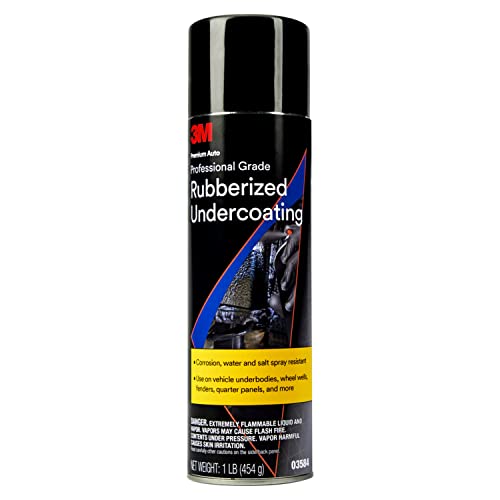
Best for a tough rubberized barrier that also deadens road noise
- Textured, chip- and abrasion-resistant
- Sound-deadening as well as rust-proofing
- Sprayable on wheel wells and floor pans
- Widely trusted pro-grade formula
Why buy it: the undercoating owners reach for most — it lays a thick rubberized film that resists chips and road spray while quieting the cabin, and the pro-grade formula sprays cleanly from the can.
Best for more product per can for larger areas
- Larger 19.7 oz can
- Textured anti-corrosive finish
- One-coat build, no runs
- Good coverage per dollar
Why buy it: the bigger can owners buy to cover more metal for less — the same textured rubberized protection as the pro-grade, with extra volume so you finish a wheel well without swapping cans.
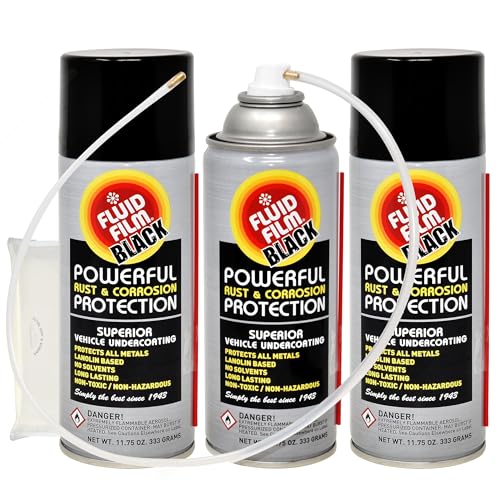
Best for a lanolin coating that creeps into seams and never fully hardens
- Lanolin-based, self-healing film
- Creeps into seams and crevices
- Non-drying, re-apply each season
- Salt-belt favorite for good reason
Why buy it: the coating northern owners swear by — the lanolin never fully cures, so it creeps into seams and self-heals stone chips, but it stays soft and needs re-applying each year.

Best for a durable rubberized seal over prepped or treated metal
- Thick rubberized protective film
- Pairs with POR-15 rust system
- Stops moisture, salt and chips
- Long-lasting on floor pans
Why buy it: the rubberized coat owners pick to seal a restored underbody — it lays a tough film over prepped or rust-treated metal and holds up to years of moisture and road spray.

Best for a thicker, longer-clinging lanolin coating
- Lanolin-based, extra cling
- Extension wand for inside rails
- Creeps and self-heals
- Straw or black finish options
Why buy it: the lanolin coating owners choose when they want more cling — it stays put a little better than thinner films and the wand reaches inside frame rails where rust really starts.

Best for undercoating you can topcoat with color
- Rubberized film that accepts paint
- Textured, chip-resistant
- For visible undercar areas
- Blends into a finished look
Why buy it: the paintable option owners use where the undercoating shows — it protects like a rubberized coat but takes a color topcoat, so rockers and visible pans can match the car.
Quick Comparison
3M Professional Grade Rubberized Undercoating (16 oz)
Best for a tough rubberized barrier that also deadens road noise
Best for the Salt Belt
Fluid Film Undercoating Aerosol (11.75 oz, 3-Pack)
Check Price on Amazon
Best Rubberized Barrier
POR-15 Rubberized Undercoating (22 oz)
Check Price on Amazon
Best Lanolin Alternative
Woolwax Undercoating Aerosol (12 oz, 3-Pack)
Check Price on Amazon
Best Paintable
POR-15 Paintable Rubberized Under Coating (17 oz)
Check Price on Amazon
How We Rank
We do not run our own rust-proofing bay — we rank by aggregated owner ratings, review volume, and the themes owners repeat across seasons of real use. We weigh four things. Protection — whether owners report it actually keeping rust and road spray off the metal. Durability — how well the film resists chips and cracking (rubberized) or how long the coating clings (lanolin). Application — how cleanly it sprays, reaches seams, and whether a wand is included. And value — coverage per dollar, since underbodies eat product. Prices were current at the time of writing.
Rubberized vs Lanolin: Pick Your Strategy
These are two philosophies, and choosing right matters more than the brand. Rubberized coatings (3M, POR-15) dry to a hard, textured shell — great chip resistance, real noise reduction, and a permanent look, but if that shell ever cracks or gets sprayed over existing rust, it can trap moisture and corrode from underneath. Lanolin coatings (Fluid Film, Woolwax) never fully harden — they stay slick, creep into seams and folded metal where rust actually starts, self-heal minor damage, and displace moisture, but they attract dirt and wash away, so you re-coat every year. Salt-belt drivers who want maximum crevice protection often choose lanolin; drier-climate or noise-focused owners lean rubberized.
Prep Is What Makes It Last
Every coating on this list depends on the surface underneath. Pressure-wash the underbody to remove caked mud, road salt and grease, then let it dry completely — sealing moisture or salt under a hard coat is how a rust-proofing job backfires. Knock off any loose flaking rust, and if the metal is already corroding, treat the stable surface rust with a converter before coating. Mask off brakes, exhaust, the driveline and anything that gets hot or moves. Undercoating over clean, dry, sound metal bonds and protects for years; over dirt or active rust, even the best product just hides a growing problem.
How to Choose an Undercoating Spray
Start with climate and intent. If you want a durable, low-maintenance barrier and some cabin quiet, a rubberized spray (3M for value, POR-15 to seal a restored underbody) is the pick. If you live where road salt is heavy and want a coating that creeps into every seam and renews easily, choose a lanolin coating (Fluid Film, Woolwax) and plan to re-apply each fall — get one with an extension wand to reach inside frame rails, which is where rust begins. If the undercoating will be visible, a paintable rubberized option lets you topcoat it to match. Buy enough to do the whole underbody in one session; a half-coated seam rusts from the gap.
Fluid Film and Woolwax: Wax-Based Coatings
The enthusiast favourites in cold, salty states are the lanolin, wax-based coatings — chiefly Fluid Film and Woolwax. Both lay down a soft, wax-like film that never fully hardens, so it creeps into seams and self-heals a stone chip that a hard coat would leave exposed. Owners in the salt belt appreciate the longevity these give folded metal, even though the coating itself washes away and must be renewed yearly. Fluid Film is the thinner, deeper creeper; Woolwax clings a little thicker. If you're considering a wax-based coating, both are proven — the choice between them is mostly cling versus creep.
Coating Frame Rails and the Whole Underbody
Rust usually starts where you can't see it — inside the frame rails and boxed sections, not on the flat underbody panels. To actually prevent it, you need a coating and an extension wand that reach in through the factory drain holes and fog the inside of the rails, not just the surfaces near the outside. This is exactly where the creeping wax-based coatings earn their keep, since they wick along the metal. Whichever product you choose, spraying only the visible underbody and skipping the frame's insides leaves the most rust-prone cavities unprotected — an important step that owners who care about longevity never skip.
Undercoating Trucks and Coating Types
Trucks are prime undercoating candidates — big steel frames, exposed underbodies and years of salt exposure make rust-proofing a genuinely worthwhile upgrade. Beyond rubberized and lanolin, you'll see polyurethane-based and asphalt/black tar-style coatings; polyurethane cures to a tough, paintable shell, while the black tar coats are cheap but can crack and trap moisture with age. For a truck you keep long-term, most owners' opinions land on either a well-prepped rubberized or polyurethane shell or an annually renewed wax coating, and steer clear of thick tar that hides rust. Match the coating type to how long you'll own the truck and how much re-coating you'll actually do.
Round Out the Rust Defense
Undercoating guards the metal you cannot see; keep the visible paint protected too. Treat any surface rust up top with a pick from our rust converter guide, smooth rusted-out repairs with our body filler roundup, and seal the paintwork with a good wax or ceramic coating. Truck owners protecting a bed should also see our best bedliner spray comparison and tonneau cover guide. The full rust-prevention picture is in the scratch & paint repair hub.
The Verdict
For a tough, chip-resistant, noise-deadening barrier at a low price, 3M Professional Grade Rubberized Undercoating is the pick owners rate above the rest. Salt-belt driver who wants a creeping, self-healing coat? Choose lanolin-based Fluid Film and re-apply each fall. And whichever you pick, remember: undercoating prevents rust on clean, dry metal — it never treats rust that is already there. Check Price on Amazon →