
Affiliate Disclosure
Some links on this page are affiliate links. As an Amazon Associate, we earn from qualifying purchases — at no extra cost to you. We do not buy, test, or physically handle the products we cover; our rankings come from aggregated owner reviews, ratings and expert consensus. Commissions never change our verdicts. How we rank & full disclosure.
The short version: for car paint you want waterproof wet/dry silicon-carbide sandpaper across a range of grits — coarse to shape, ultra-fine to color-sand before polishing. Ranked across aggregated owner reviews, our #1 pick is the Miady 120–3000 grit assortment: owners rate it for covering every stage in one pack on paper that cuts evenly without stray deep scratches. Ordinary hardware-store paper is not built for wet use and will let you down on clear coat.
Sanding is one careful step in a paint repair — see how it fits the sequence in our scratch & paint repair hub. If you are chasing a light scratch, polishing may be safer than sanding; our swirl and scratch removal guide covers when to reach for a compound instead.
Top Picks at a Glance
Our #1 Pick: Miady 120–3000 Grit Assortment
The Miady set tops the list because it puts the whole job in one box. Twelve grits from 120 to 3000 mean you can shape a repair, level primer, and color-sand fresh clear coat with the same pack, and the waterproof silicon-carbide paper cuts evenly — owners specifically praise the consistent grit that avoids the stray deep scratch a bargain sheet can leave. It is cheap, it is complete, and it is the right kind of paper for automotive work. For anyone doing occasional paint and body repairs, it is the assortment the reviews back most.
Best Sandpaper for Car Paint 2026: The Ranked Field

Best for a full grit range for shaping through to color sanding
- 12 grits, 120 up to 3000
- Waterproof silicon carbide
- Wet or dry sanding
- Even grit for scratch-free results
Why buy it: the assortment owners keep on the bench — every grit from shaping to color-sanding in one pack, on waterproof silicon-carbide paper that cuts evenly instead of leaving stray deep scratches.

Best for trusted 3M quality in a small assorted pack
- 3M automotive pedigree
- Assorted grits, 3-2/3 x 9 in sheets
- Flexible waterproof backing
- Conforms to body curves
Why buy it: the name bodyworkers trust in a starter-size pack — 3M silicon carbide that self-fractures for long life, on flexible paper that hugs a contour without gouging.
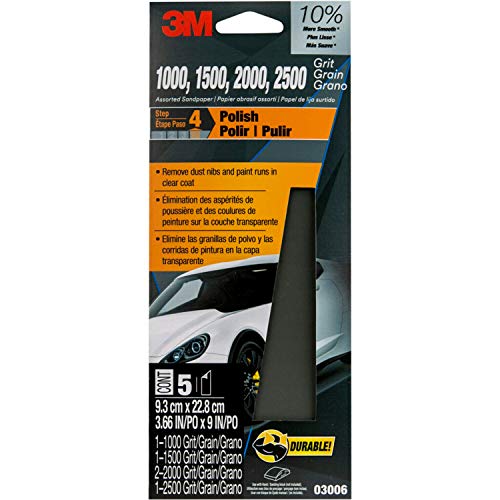
Best for fine finishing and pre-polish color sanding
- Fine grits: 1000/1500/2000/2500
- For final leveling before polish
- Premium 3M silicon carbide
- Consistent, scratch-free cut
Why buy it: the fine-grit set detailers use before the buffer — 1000 through 2500 to level clear coat and orange peel, leaving a haze that polishes out to a mirror.
Best for plenty of sheets across every grit
- 42 sheets, 120 to 3000 grit
- Waterproof abrasive paper
- Automotive, wood and metal
- More sheets per grit
Why buy it: the big-sheet-count option owners buy for bigger jobs — the same wide grit range with extra sheets, so you are not running out of 800 halfway through a panel.
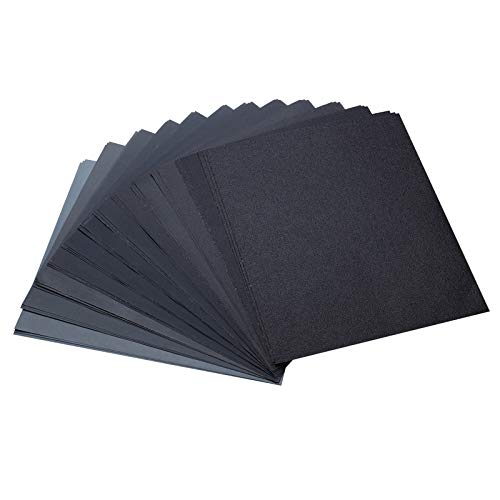
Best for the finest polishing prep up to 5000 grit
- Extends to ultra-fine 5000 grit
- 9 x 11 in sheets
- Wet or dry use
- For near-mirror pre-polish
Why buy it: the pack for the fussiest finish — going all the way to 5000 grit leaves almost nothing for the polish to remove, ideal on a show-quality clear coat.

Best for skipping the coarse grits for finish work only
- Finer 400–3000 range
- No wasted coarse sheets
- Waterproof silicon carbide
- Great for paint prep and blending
Why buy it: the finish-focused assortment for people who only do fine work — starts at 400 so you are not paying for coarse grits you will not use on delicate paint.
Quick Comparison
Miady Wet Dry Sandpaper 120–3000 Grit (36-Sheet)
Best for a full grit range for shaping through to color sanding
Best Value
3M Wetordry Sandpaper (03024, Assorted Grits)
Check Price on Amazon
Best Premium Finish
3M Wetordry Sandpaper (03006, 1000–2500 Grit)
Check Price on Amazon
Best Variety
Wet Dry Sandpaper 120–3000 Grit (42-Piece)
Check Price on Amazon
Best Ultra-Fine
Wet Dry Sandpaper 120–5000 Grit Assortment
Check Price on Amazon
Best for Finishing
Wet Dry Sandpaper 400–3000 Grit (36-Sheet)
Check Price on Amazon
How We Rank
We do not run our own paint booth — we rank by aggregated owner ratings, review volume, and the themes owners repeat across real jobs. We weigh four things. Cut consistency — whether the grit is even, so you get a uniform finish without random deep scratches. Grit range — how much of the shaping-to-finishing spread a pack covers. Durability — waterproof backing that survives wet-sanding and paper that lasts. And value — sheets per dollar across the grits you will actually use. Prices were current at the time of writing.
Which Grit for Which Job
Think of grit as a ladder you climb without skipping rungs. 80–180 shapes body filler. 320–400 levels primer and knocks down high spots. 600 preps for paint. 1000–1500 starts color-sanding fresh clear coat to remove orange peel or a run. 2000–3000 (and finer) refines that surface to a haze that polishes to a mirror. Each grit erases the scratches of the previous one, so jumping too far leaves marks the next grit cannot remove. And the golden rule for finished paint you want to keep: nothing below about 1500 unless you are prepared to repaint — coarse grit cuts through thin clear coat fast.
Sandpaper Grit Chart: Prep, Primer and Before Painting
A simple grit chart keeps you on track. For prep and shaping, start coarse; move to 320–400 to level primer; use 600 as the last step before painting the base coat. After color, wet-sand the clear with 1500 and up. Print a sandpaper grit chart (autopaint suppliers publish good ones) and tape it to the wall so you never guess a grit. The one mistake to avoid is laying paint or primer before the previous grit’s scratches are sanded out — each stage must be smooth and even before the next goes on.
Sanding Body Filler and Clear-Coat Scratches
Two very different jobs use very different grits. Sanding body filler on a dented door or fender is coarse, aggressive work — body sandpaper in the 80–180 range shapes the filler before primer. Sanding clear-coat scratches is the opposite: fine, patient wet-sanding that should barely cut. A light scratch on a BMW’s clear coat (or cloudy headlights, which many owners have and which sand and polish the same way) needs 2000–3000, not 400. Know which you are doing before you pick a sheet — coarse paper on finished paint is how a small scratch becomes a repaint.
How Wet-Sanding Works
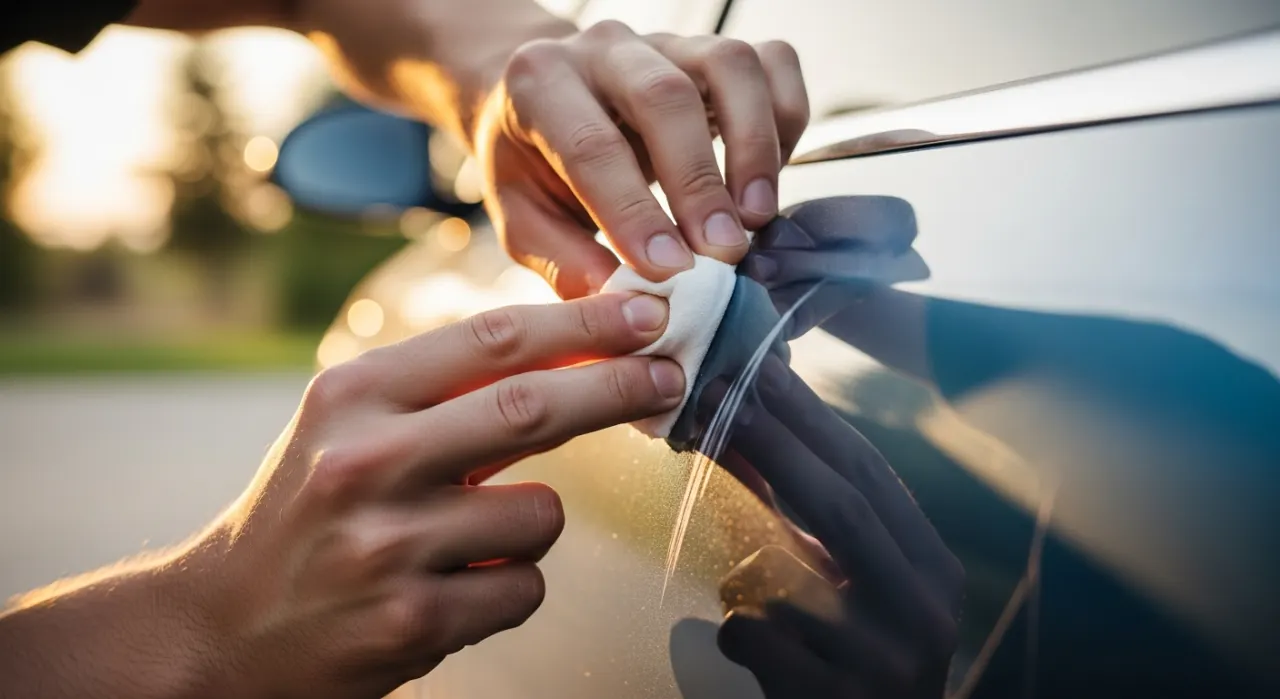
Wet-sanding is the technique that makes fine paint work possible. You flood the surface with water (a drop of dish soap helps it glide), and the water floats away the removed clear coat so it cannot clog the paper or drag a scratch across the panel — the result is a far more even, finer cut than dry sanding, plus less heat. Keep the surface wet the whole time, use a block to stay flat, sand in overlapping passes, and check often by wiping and looking at the reflection. Clear coat is only a few thousandths thick, so light pressure and frequent checks are how you level a run without burning through to color.
How to Choose Sandpaper for Paint
First, make sure it is wet/dry silicon-carbide — that is the paper made for automotive paint; skip ordinary aluminum-oxide hardware paper. Then pick your range. If you do full repairs (filler to finish), a 120–3000 assortment (Miady, or a 42-sheet pack for more volume) covers everything. If you only do fine finishing and color sanding, buy a fine-grit set (3M 1000–2500, or a 400–3000 assortment) and don't pay for coarse sheets you won't use. Chasing a show finish? An assortment that reaches 5000 grit leaves almost nothing for the polish to do. And add a block or foam pad if your pack doesn't include one — it keeps the cut flat and even.
After You Sand
Wet-sanded clear coat comes off the paper hazy — polishing is what brings back the gloss. Our car polish guide covers cutting and finishing compounds to buff the haze to a mirror, and our swirl removal guide handles the finer marks. Sanding filler instead? Match color afterward with our touch-up paint picks, and once the panel is finished, lock it in with a good wax or ceramic coating. The full repair path is in the scratch & paint repair hub.
The Verdict
For a complete wet/dry grit range that shapes, levels and color-sands on evenly-cutting paper, the Miady 120–3000 assortment is the pack owners rate above the rest. Only doing fine finishing? The 3M Wetordry 1000–2500 set is the pro-grade choice. Whatever you buy, climb the grits without skipping, wet-sand with a block, and remember clear coat is thinner than it looks. Check Price on Amazon →