
Affiliate Disclosure
Some links on this page are affiliate links. As an Amazon Associate, we earn from qualifying purchases — at no extra cost to you. We do not buy, test, or physically handle the products we cover; our rankings come from aggregated owner reviews, ratings and expert consensus. Commissions never change our verdicts. How we rank & full disclosure.
Short version: swirl marks aren't real scratches, they're thousands of tiny clear-coat marks left by bad washing, and they only show up in direct light. You remove them by polishing a microscopic layer of clear coat to level them, ideally with a dual-action polisher and a fine polish. But polishing is only half the fix. If you keep washing the way that caused them, they'll be back in a month. The real win is correcting them once, then never inducing them again.
What Swirl Marks Actually Are
Pull your car into direct sunlight and look at the hood at an angle. Those faint circular spider-web patterns radiating out? That's swirl marring, and it lives entirely in the clear coat, that hard, colorless top layer of your paint. It's not one scratch, it's thousands of shallow micro-scratches, and your eye reads the collective pattern as swirls when light hits them from the right angle.
Because they're clear-coat only, they're on the easy end of the scratch severity scale, no color match, no touch-up paint. You fix them the same way you'd handle a light clear-coat scratch: level a tiny amount of clear to erase the marring, then polish the gloss back. The catch is that they cover the whole car, so it's a bigger job than a single scratch even though each mark is tiny.
Why You Have Them
Almost every swirl mark is self-inflicted through washing and drying. The usual suspects: wiping with a sponge (which traps grit and drags it across the paint), using a single wash bucket (so you keep dipping dirt back onto your mitt), drying with a rough or dirty towel, and automatic car washes with those stiff spinning brushes that have scrubbed a thousand gritty cars before yours. Every one of those grinds fine dirt across the clear coat in circular motions, and there's your swirl pattern.
This matters because there's no point correcting swirls if you're going to re-create them next weekend. The fix and the prevention are two halves of the same job. Get the correction done, then change the habits, or you're just polishing your clear coat away on a monthly cycle for nothing.
Prep: Wash and Decontaminate First
Never polish a dirty car, you'll just grind whatever's on the surface into the paint and add more marring. Give the car a proper wash, and ideally a clay bar afterward to pull off bonded contaminants that a wash leaves behind. Skipping decontamination is how people put fresh scratches in while trying to remove old ones. A clean, decontaminated, dry panel is the only surface you should ever bring a polish to.
Work in the shade, not direct sun, polish dries too fast and streaks in the heat. And work one small section at a time, roughly two feet square, so you can see exactly what you're correcting and check your progress in a handheld light.
Removing Swirls by Hand
You can absolutely reduce swirls by hand, it's just slower and more tiring than a machine. Put a small amount of fine polish (a 'swirl remover') on a clean foam or microfiber applicator, and work it into the panel with firm pressure in overlapping straight passes, back and forth, then up and down. Keep at each section until the polish starts to go clear, then buff off the residue with a clean microfiber towel.
By hand you'll get a real, visible improvement, especially on lighter swirls, and for one or two panels it's completely doable. Where hand polishing struggles is evenness and stamina across a whole car, your arm gives out and the finish varies panel to panel. If you're only tackling a swirled hood or a door someone leaned on, by hand is fine. For the whole car, read on.
Removing Swirls by Machine
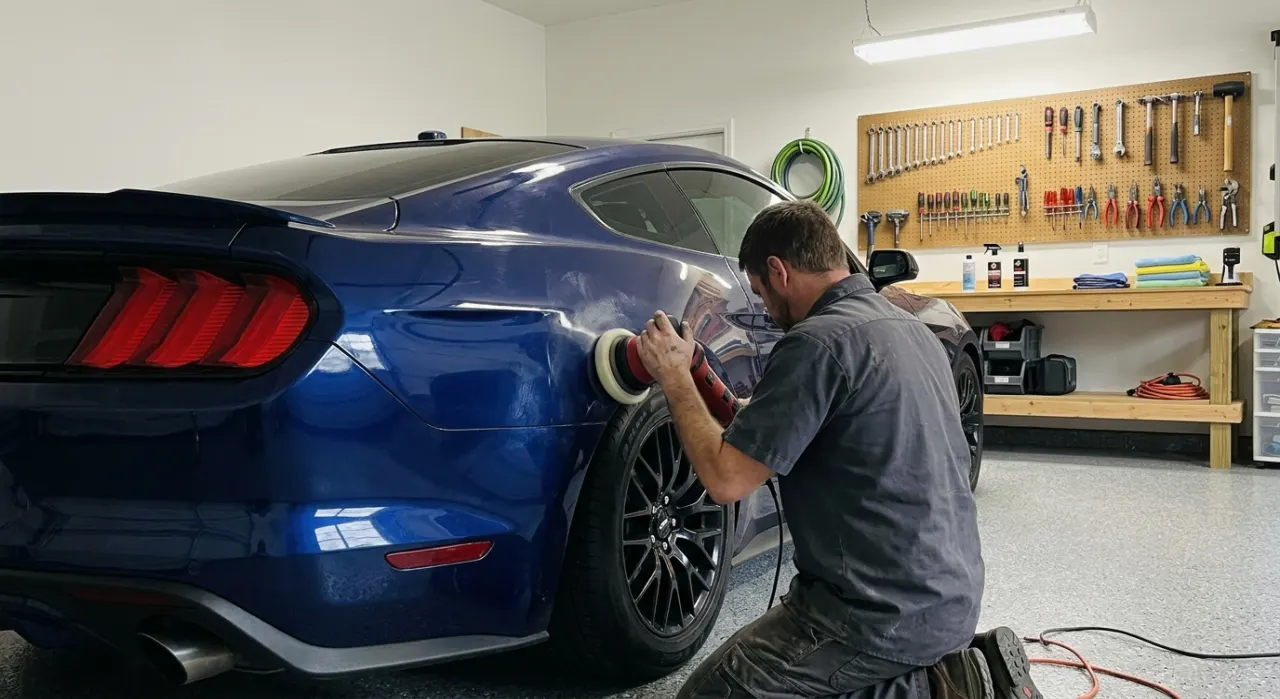
A dual-action (DA) polisher is the tool that makes swirl removal genuinely easy and even. The DA action oscillates as it spins, which keeps it safe for beginners, it's very hard to burn the paint the way an old rotary buffer can. You apply a few dots of polish to a soft finishing pad, spread it at low speed, then work each section at a moderate speed with slow, overlapping passes until the polish breaks down and clears.
The machine does two things your hand can't: it delivers consistent pressure and motion across every panel, and it does the whole car in a fraction of the time without wearing you out. For a full swirl correction, a DA polisher and a fine polishing pad are the setup I'd recommend. Start with the least aggressive pad-and-polish combo that clears the swirls, you can always step up, but you can't put clear coat back.
When You Need a Compound First
Most swirls come out with a fine polish alone. But if the marring is heavy, or there are deeper scratches mixed in, a fine polish may not fully cut them. In that case you do a two-step: a compound first to cut the deeper defects, then a fine polish to remove the haze the compound leaves and bring back full gloss. The order matters, compound cuts, polish refines. Don't reach for a compound by default though; on ordinary swirls it's more aggression than you need and just removes extra clear coat.
Lock It In and Stop It Coming Back
Freshly polished clear coat is bare and unprotected, so seal it immediately. A coat of quality wax or sealant adds a sacrificial layer that takes the daily abuse instead of your clear coat, and makes future washes glide easier. But protection is only half of prevention. The other half is fixing the wash habits that caused the swirls: switch to a two-bucket wash (one for soap, one to rinse your mitt), use a soft microfiber wash mitt instead of a sponge, dry with a plush microfiber or a blower, and skip the automatic brush car washes for good. Do that, and the correction you just did will actually last.
The Verdict
Swirl marks are clear-coat marring from bad washing, and they polish out, by hand for a panel or two, by dual-action machine for the whole car. Start with a fine polish, step up to a compound only if you must, then seal the paint and, crucially, fix the wash technique that caused them. Skip that last part and you'll be back here in a month. If your marks turn out to be deeper than swirls, catching your nail and showing color, check the severity guide, that's a different fix. For the polishes and protectants reviewers rate highest, see our top picks in the scratch remover roundup.
Recommended Swirl Removers & Polishes

Best for a one-step polish aimed squarely at swirl marring
- Cuts light swirls and finishes glossy in one step
- Works by hand or on a dual-action polisher
- No separate follow-up polish needed for light marring
- Purpose-made for swirl removal
Why buy it: the on-topic pick — a single-step swirl remover that levels the marring and refines the gloss without a two-stage compound-then-polish job.

Best for heavier swirls and deeper defects that a fine polish leaves behind
- Cuts faster than a fine polish for stubborn marring
- Finishes clean enough to skip a separate polish on most paint
- Works by hand or by machine
- The most recommended all-rounder in the category
Why buy it: the workhorse — reach for it when swirls are heavy or mixed with deeper scratches, then seal the paint once it clears.

Best for light swirls on a budget, by hand
- Inexpensive and widely stocked
- Handles light swirl marring by hand
- Simple rub-on, buff-off use
- A cheap way to test the waters before a DA polisher
Why buy it: the budget buy — enough to knock back light swirls on a panel or two without committing to a machine and pads.

Best for a first-timer working a small area by hand
- Comes as a beginner-friendly kit with an applicator
- Forgiving on light swirls and marring
- No machine required to see an improvement
- Very large owner base
Why buy it: the starter kit — a gentle, foolproof way to try correction on a door or hood before stepping up to a polisher.
Prices are pulled from Amazon and were accurate as of Aug 22, 2026, 6:54 PM EDT. Product prices and availability are subject to change — the live price is shown on Amazon.