
Affiliate Disclosure
Some links on this page are affiliate links. As an Amazon Associate, we earn from qualifying purchases — at no extra cost to you. We do not buy, test, or physically handle the products we cover; our rankings come from aggregated owner reviews, ratings and expert consensus. Commissions never change our verdicts. How we rank & full disclosure.
DIY Ceramic Coating
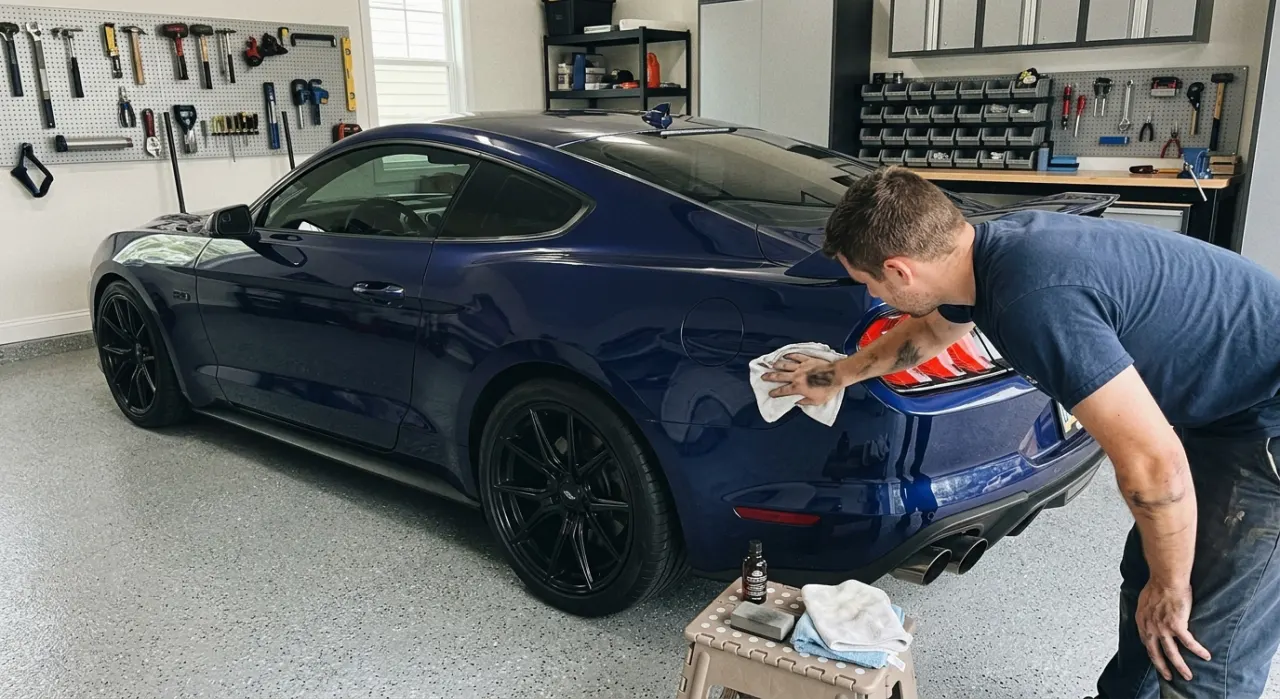
A consumer-grade SiO2 or SiC coating you buy in a 30–50 ml bottle and apply yourself over paint you have corrected and prepped. The chemistry is real; the outcome depends entirely on your prep.
Best for: Daily drivers, enthusiasts who already own a polisher, and anyone who values the money over the weekend
$50–$150 for the coating kit; $150–$300 more if you still need a polisher and pads
- A tenth to a fifth the cost of a professional install on the same car
- Consumer coatings have closed most of the durability gap — 1 to 3 years is realistic
- You control the standard, and can spend as long on prep as the paint deserves
- The polisher and pads carry over to every future car you own
- Re-coating in two years costs another $80, not another $1,200
- Realistically 8–20 hours of work spread across a weekend
- High spots cure hard and can only be removed by machine polishing that panel
- Needs a garage at 60–75°F with decent lighting — a driveway in July will not work
- No warranty, and no one to call if it fails in six months
Professional Coating
A trained installer performs multi-stage paint correction in a controlled booth and applies an installer-only coating, usually backed by a written warranty. You are buying the correction as much as the coating.
Best for: New cars, high-value vehicles, and owners who want a corrected finish preserved without doing it themselves
$800–$2,500 for a typical sedan; $2,500–$5,000+ for multi-stage correction or top-tier products
- Multi-stage correction is included — this is most of what you are actually paying for
- Access to installer-only coatings that consumers simply cannot buy
- Controlled temperature, humidity and lighting produce a consistent, high-spot-free layer
- Written warranties of 3–7 years with documented maintenance
- Realistically hits 3–5 years of durability, the top of the range
- Ten to twenty times the material cost of a DIY bottle
- Quality varies enormously between shops — the same price buys very different work
- Warranties usually require paid annual inspections to stay valid
- Car is off the road for one to three days
How they score, side by side
Scores reflect aggregated owner reviews and expert consensus — not our own bench testing.
- Upfront cost103
- Cost per year over 5 years95
- Finish quality achieved610
- Durability achieved69
- Convenience310
- Risk of a bad outcome58
- Value on a daily driver95
Spec-by-spec comparison chart
| Factor | DIY Ceramic Coating | Professional Coating |
|---|---|---|
| Total first-time cost | $200–$450 including polisher and pads | $800–$2,500 typical sedan |
| Cost to re-coat in 2–3 years | $50–$150 (bottle only) | $800–$2,500 again |
| Your time | 8–20 hours | 0 hours (1–3 days at the shop) |
| Paint correction included | Only what you do yourself | Yes — usually 1–3 stage |
| Coatings available to you | Consumer tier only | Installer-only tiers plus consumer |
| Realistic durability achieved | 1–3 years | 3–5 years |
| Application environment | Your garage, 60–75°F | Controlled booth with proper lighting |
| Warranty | None | 3–7 years, conditional on paid inspections |
| Risk of high spots | Real — the main DIY failure mode | Low — experienced hands, controlled flash time |
| If it fails | You polish and re-coat at your own cost | Covered, if you kept up the maintenance schedule |
| Skill curve | Moderate to hard first time | None required |
Our Top 3 Picks
The three highest-rated options in this category, if you'd rather skip straight to a proven pick.

Best for the best DIY durability and gloss
- Graphene-infused hardness
- 2–5 year durability
- Slick, high-gloss finish
- Beginner-friendly kit
Why buy it: the best all-round DIY kit — long life and an easy application.

Best for maximum longevity
- Pro-grade hardness
- 2+ year protection
- Deep, warm gloss
Why buy it: a detailer favorite that survives years with proper prep.

Best for fast spray-on protection
- Spray-on / wipe-off
- SiO2 hydrophobic layer
- Great for beginners
Why buy it: spray-on ceramic protection in minutes with no cure fuss.
Prices are pulled from Amazon and were accurate as of Aug 22, 2026, 6:54 PM EDT. Product prices and availability are subject to change — the live price is shown on Amazon.
What you are actually paying for
A $1,500 professional coating quote is not $1,500 of ceramic. The coating itself — even a premium installer-only product — represents perhaps $80 to $250 of that number. The rest is labor, and specifically it is paint correction labor: the multi-stage machine polishing that removes swirls, oxidation and wash marring before anything gets sealed on top.
That reframing matters, because it tells you exactly what a DIY job has to replicate. Buying the same coating chemistry is easy. Reproducing 10 to 15 hours of skilled correction in a properly lit booth is the hard part, and it is what separates a DIY result that looks stunning from one that looks like a shiny version of the swirls you already had.
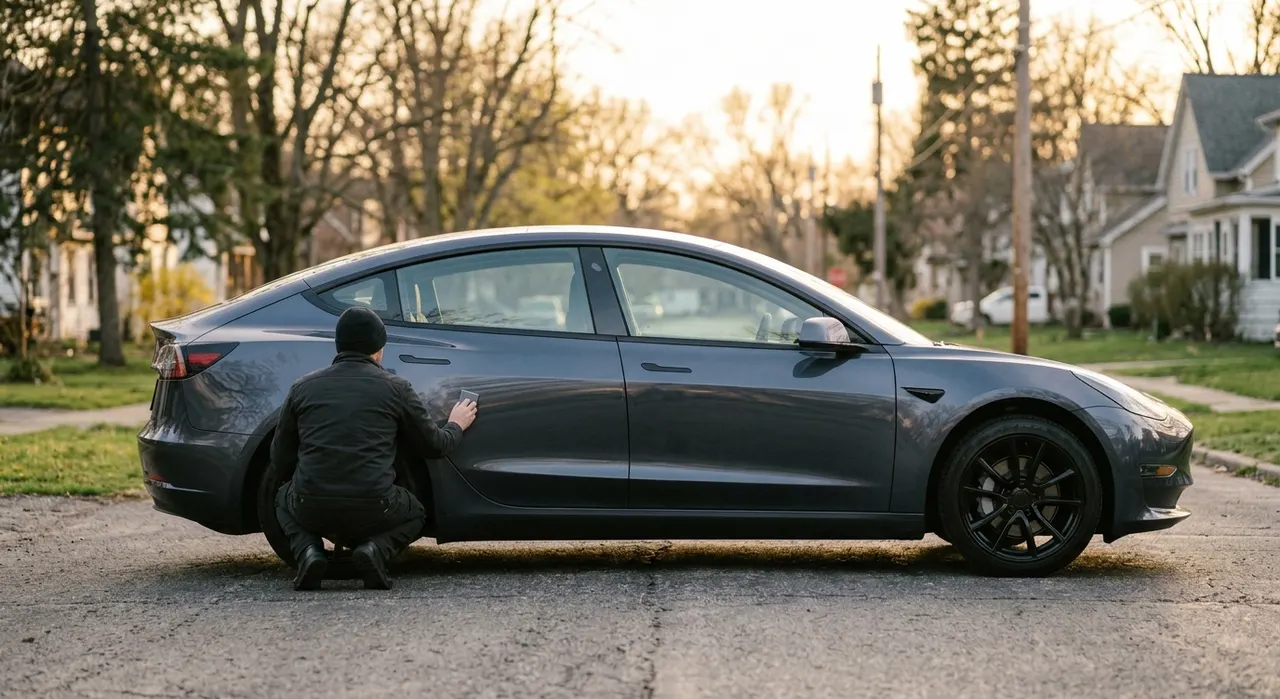
Coatings are optically transparent and bond for years, so whatever is under the coating is what you are locking in. This is the single fact that decides the entire comparison. If your paint is genuinely defect-free — a new car, or one you have already corrected — a DIY coating gets you very close to a professional result for a fraction of the money. If your paint is swirled and you skip the polishing, no coating on the market will save the outcome, and you will have paid to preserve the problem. Our ceramic coating guide covers the prep sequence in full.
How big is the product gap, really?
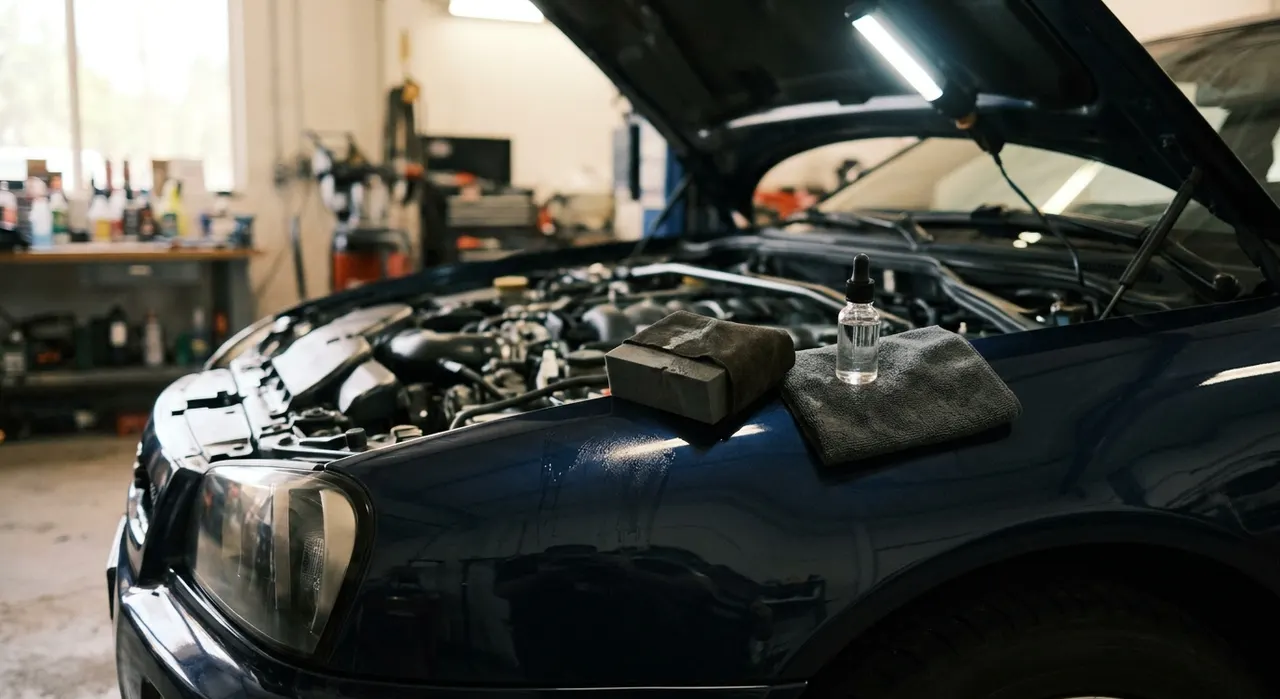
There is a genuine tier system, and it is smaller than the price difference implies. Consumer coatings sold in 30 to 50 ml bottles typically carry 60 to 75 percent SiO2 solids and are formulated with a longer flash window — deliberately more forgiving, because the manufacturer knows a first-timer is applying it in a garage. Installer-only products often run higher solids, sometimes silicon carbide rather than silica chemistry, and cure into a harder, thicker film. Some require an infrared cure that no home garage has.
What that translates to in practice, based on aggregated owner and installer reports:
- Consumer coatings reliably deliver 1 to 3 years of strong performance, with prep quality accounting for most of the variance.
- Installer-only coatings reliably deliver 3 to 5 years, and the very top tier stretches further with documented maintenance.
- Both produce essentially the same beading, gloss and easy-wash behavior in the first year. The gap opens in years two through four.
So the honest summary is that the product gap is real but modest — maybe a factor of two on durability. The labor gap is much larger, and it is the one that shows up in the finished car. This is a different question from whether you need a full coating at all; if you are still weighing that, our ceramic spray vs ceramic coating comparison covers the lighter-commitment route.
Correction is the difference — not the coating
A professional multi-stage correction typically means a compounding pass to remove the bulk of the defects, a polishing pass to refine the haze that compounding leaves, and sometimes a finishing pass on dark paint. Each stage is done panel by panel under focused lighting that reveals defects a garage fluorescent will not show. On a swirled black car that is easily 12 to 20 hours of work, which is why quotes climb steeply with paint condition.
A realistic DIY equivalent is a one-step correction: a single pass with a medium polish on a dual-action polisher, removing perhaps 60 to 80 percent of the visible defects. That is genuinely achievable for a first-timer in a weekend, and on a daily driver it produces a result most owners are delighted with. Our car polish guide walks through pad and abrasive pairings that get you there.
Where DIY correction goes wrong is not usually the polishing — dual-action machines are difficult to damage paint with — it is the steps around it. Skipping decontamination means polishing grit into the finish. Skipping the isopropyl alcohol panel wipe leaves polishing oils behind that stop the coating bonding, which is the most common cause of a DIY coating failing at six months. And applying too thick, then not leveling it before it flashes, produces high spots that cure hard and require polishing the panel to remove.
Real cost over five years, both ways
Run it out over five years on a typical sedan and the numbers are stark.
DIY route. First year: a dual-action polisher, pad set and polish at $150 to $300, plus a coating kit at $50 to $150, plus panel wipe, applicators and microfiber at maybe $40. Call it $240 to $490 all in. Re-coat at year two or three for another $50 to $150. Five-year total: roughly $300 to $650, or $60 to $130 a year — and you still own the polisher, which now costs you nothing on the next car.
Professional route. A $1,200 install lasting four years, plus two annual inspections at $150 to $300 each to keep the warranty valid, comes to roughly $1,500 to $1,800 over five years, or $300 to $360 a year. A top-tier install with multi-stage correction on a premium vehicle can double that.
The DIY route is unambiguously cheaper — three to five times so. What the professional route buys is the correction quality and the removal of your weekend from the equation, and for a lot of owners that is a perfectly rational trade. What it does not buy is a proportionally better coating.
What a coating warranty actually covers
Warranties are one of the strongest arguments for going professional, and also one of the most misread. A typical 3 to 7 year coating warranty covers failure of the coating itself — loss of hydrophobicity, delamination, or the coating breaking down early. It does not cover swirl marks, rock chips, scratches, or damage from an automatic car wash, and it usually voids if you run the car through a brush wash at all.
Almost all of them are conditional on documented maintenance: an annual or semi-annual inspection at the installing shop, typically $150 to $300, where they decontaminate, check the coating and often apply a maintenance topper. Skip those and the warranty lapses. Factor that recurring cost into any quote — a "7-year warranty" with six mandatory inspections is a meaningfully more expensive product than the headline number.
Also worth knowing: the warranty is generally with the installer, not the coating brand, and it is only as durable as the business. Ask how long the shop has been operating, ask to see corrected cars in their lighting, and ask specifically how many correction stages are included at your quoted price. A $900 quote with a one-step polish and a $1,900 quote with three-stage correction are not the same product, and the price difference is entirely legitimate.
Common myths and mistakes
"Professional coatings are a different technology." Mostly no. Both are silica or silicon-carbide chemistry. Installer tiers run higher solids and sometimes need an infrared cure, but the gap on durability is roughly a factor of two, not a factor of ten.
"I'll coat it myself and skip the polishing to save time." This is the mistake that ruins DIY coating outcomes. You are sealing the swirls under a transparent layer for two years. Correct first or do not coat at all — a ceramic spray is a much better choice for uncorrected paint since it comes off easily.
"A pro coating means the car is scratch-proof." It is not. Coatings resist chemical etching and make dirt release far easier, but the "9H" figure comes from a pencil hardness test that has nothing to do with wash-induced swirls. Coated cars still get swirled by bad technique and automatic brushes.
"A coating protects against rock chips." No — the film is one to three microns thick. Only paint protection film stops impact damage, and it is a genuinely different product solving a genuinely different problem.
Which should you choose — and how to decide
Most enthusiasts should go DIY. If you are willing to spend a weekend, a careful one-step correction plus a good consumer coating gets you 80 to 90 percent of the professional result for 20 to 30 percent of the cost, and leaves you owning a polisher that pays for itself again on the next car. On a daily driver with average paint, that is clearly the better value, and aggregated owner reviews of consumer coatings back it up.
Pay a professional if the car is new or high-value enough that a mistake is expensive; the paint needs genuine multi-stage correction that you are not equipped to do; you want a warranty and documentation for resale; or you know honestly that the weekend is not going to happen. Under any of those conditions the money is buying something real.
Do neither if your paint is heavily swirled and you are not going to correct it. Coating over defects locks them in for years. In that situation a ceramic spray sealant is the smarter product — the same beading and gloss, far less money, and it comes off whenever you finally get around to polishing. Our exterior protection guide lays out the full ladder of options.
Recommended Products
Our top picks in this category, ranked on aggregated owner reviews.
Best for the best DIY durability and gloss
- Graphene-infused hardness
- 2–5 year durability
- Slick, high-gloss finish
- Beginner-friendly kit
Why buy it: the best all-round DIY kit — long life and an easy application.
Best for maximum longevity
- Pro-grade hardness
- 2+ year protection
- Deep, warm gloss
Why buy it: a detailer favorite that survives years with proper prep.
Best for fast spray-on protection
- Spray-on / wipe-off
- SiO2 hydrophobic layer
- Great for beginners
Why buy it: spray-on ceramic protection in minutes with no cure fuss.

Best for the closest thing to a pro coating
- Near-professional hardness
- 5+ year durability
- Superb chemical resistance
Why buy it: pro-tier protection you can still apply at home.
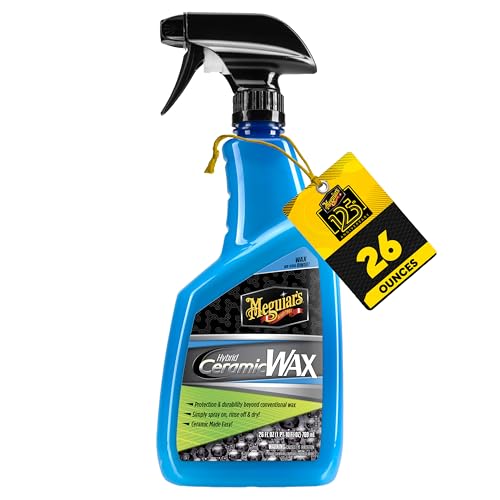
Best for cheap ceramic beading
- Spray on wet or dry
- Strong water beading
- Cheapest per use
Why buy it: the cheapest way to get ceramic-style beading fast.

Best for a complete beginner bundle
- Coating + applicators included
- Simple instructions
- Widely available
Why buy it: an all-in-one beginner bundle with everything you need.
Prices are pulled from Amazon and were accurate as of Aug 22, 2026, 6:54 PM EDT. Product prices and availability are subject to change — the live price is shown on Amazon.