
Affiliate Disclosure
Some links on this page are affiliate links. As an Amazon Associate, we earn from qualifying purchases — at no extra cost to you. We do not buy, test, or physically handle the products we cover; our rankings come from aggregated owner reviews, ratings and expert consensus. Commissions never change our verdicts. How we rank & full disclosure.
Torque Wrench
A calibrated hand tool that applies a measured amount of torque and signals — by click, beam deflection or digital readout — when you reach the target. It is the reference tool the whole system is measured against.
Best for: Anyone who needs a fastener to be right, from wheel lugs to head bolts to caliper brackets
Typically $40–$120 for a decent 1/2-inch click wrench, $150–$300 for digital or premium
- Applies a specific, adjustable value — you set 100 ft-lb and you get roughly 100 ft-lb
- Quality click wrenches are commonly rated to ±4% accuracy, and beam types are essentially drift-free
- One tool covers a whole range, typically 20–150 ft-lb on a 1/2-inch drive
- Works on every fastener, not just wheel lugs — brakes, suspension, driveline, engine internals
- The only tool that satisfies a factory torque spec, which is the standard your service manual is written to
- Slow — you still have to run each fastener down first with another tool
- Click wrenches drift out of calibration over time and need periodic checking or service
- Easy to misuse: wrong technique, a dirty thread or a greased stud all change the clamp load you actually get
- Cheap units can be well outside their claimed accuracy straight out of the box
Torque Stick
A torque-limiting extension used between an impact wrench and the socket. The bar is engineered to flex and absorb the gun’s hammer blows once a target value is reached, so the fastener stops advancing.
Best for: Shops and enthusiasts running lots of wheels off and on quickly with an impact wrench
Typically $12–$25 each, or $30–$90 for a color-coded set of 5–8
- Extremely fast — the whole point is torquing wheels with an impact gun instead of by hand
- Prevents the gross over-torquing that warps rotors and seizes lug nuts
- Color-coded sets make picking the right value near-instant on a busy day
- Cheap, effectively indestructible, and nothing inside to fall out of calibration
- Each stick is one fixed value — no adjustment, so you need a whole set
- Accuracy depends on the impact gun, air pressure, socket and trigger time, not just the stick
- Real-world spread is commonly reported around ±10–20%, far looser than a torque wrench
- Only ever limits torque — it will happily leave a lug under-torqued and give you no warning
How they score, side by side
Scores reflect aggregated owner reviews and expert consensus — not our own bench testing.
- Accuracy95
- Speed410
- Versatility across fasteners102
- Safety on critical fasteners104
- Value for a home garage96
- Ease of correct use78
Spec-by-spec comparison chart
| Factor | Torque Wrench | Torque Stick |
|---|---|---|
| What it does | Applies and measures a set torque value | Limits how much an impact gun can apply |
| Adjustable | Yes — one wrench covers a range | No — one fixed value per stick |
| Typical accuracy | ±3–4% on quality click wrenches | Commonly ±10–20% in real-world use |
| Depends on other equipment | No — self-contained | Yes — gun, air pressure, socket, trigger time |
| Can under-torque without warning | No — it will not click | Yes — this is the main risk |
| Speed per wheel | Slow — final pass only | Fast — run-down and limit in one action |
| Suitable as a final check | Yes — it is the reference | No |
| Works on non-wheel fasteners | Yes — brakes, suspension, engine, driveline | Practically no — built around lug values |
| Needs calibration | Yes — periodic check or service | No moving parts to drift |
| Typical price | $40–$120 (1/2-inch click), $150–$300 digital | $12–$25 each, $30–$90 per set |
| Range covered | Commonly 20–150 ft-lb on one 1/2-inch tool | Fixed values, usually 65–140 ft-lb |
Our Top 3 Picks
The three highest-rated options in this category, if you'd rather skip straight to a proven pick.

Best for the best mix of brand pedigree, warranty and price
- 72-tooth ratchets for a 5° swing arc
- Polished chrome-vanadium, anti-slip sockets
- DEWALT full lifetime warranty
- Compact SAE + metric set in a blow-mould case
Why buy it: a name-brand kit that owners rate at the very top of the budget class — the lifetime warranty and fine-tooth ratchets punch well above the price, which is why it keeps getting recommended to first-time wrenchers.
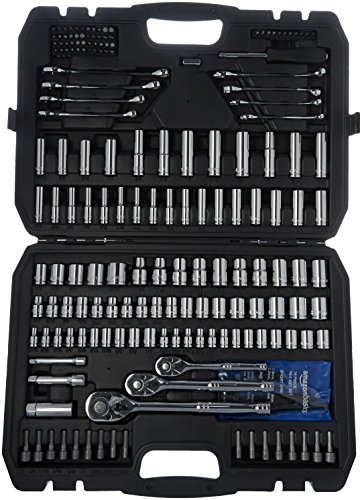
Best for the most sockets and bits per dollar
- 201 pieces across 1/4", 3/8" and 1/2" drives
- Chrome-vanadium forged, polished-chrome finish
- Full SAE + metric coverage
- Molded case keeps every socket in its slot
Why buy it: a socket-heavy kit that owners repeatedly call the best money-for-metal buy on Amazon — if your jobs are mostly nuts and bolts, nothing here gives you more drive tools for the outlay.

Best for trusted-brand tools with a lifetime guarantee
- 72-tooth reversible ratchets
- Alloy-steel sockets, off-corner loading grip
- Crescent lifetime warranty
- Closed, latching blow-mould case
Why buy it: an Apex Tool Group set that owners rate for genuine fit and finish — the off-corner grip protects rounded fasteners, and the lifetime backing means a cracked socket is a free swap.
Prices are pulled from Amazon and were accurate as of Aug 22, 2026, 6:54 PM EDT. Product prices and availability are subject to change — the live price is shown on Amazon.
How each one actually works
The mechanisms are completely different, and once you understand them the correct roles become obvious.
A torque wrench measures. In a click type, a calibrated spring holds a pivoting cam in place; you dial in the value by compressing that spring, and when the applied torque overcomes it the cam slips with an audible click. A beam type deflects a long lever against a fixed pointer, which is why beam wrenches essentially cannot go out of calibration. A digital wrench uses a strain gauge and beeps at target. In every case, the tool is telling you a number.
A torque stick does not measure anything. It is a hardened, deliberately springy extension of a specific diameter and length, sized so that its torsional flex absorbs the energy of an impact wrench's hammer blows once the fastener reaches a certain resistance. Keep the trigger down and the gun keeps hammering, but the stick winds up and unwinds instead of transmitting that energy to the nut. Practically speaking it works as a ceiling: the fastener stops advancing somewhere near the stick's rated value.
That word "somewhere" is the whole story. A torque wrench gives you a value; a torque stick gives you only a limit. It can stop you going over. It has no way of ensuring you got there. If your gun is weak, your air pressure is low, or you released the trigger after two hammer blows instead of five, the stick will not complain and the lug will be loose.
How accurate is a torque stick, really?
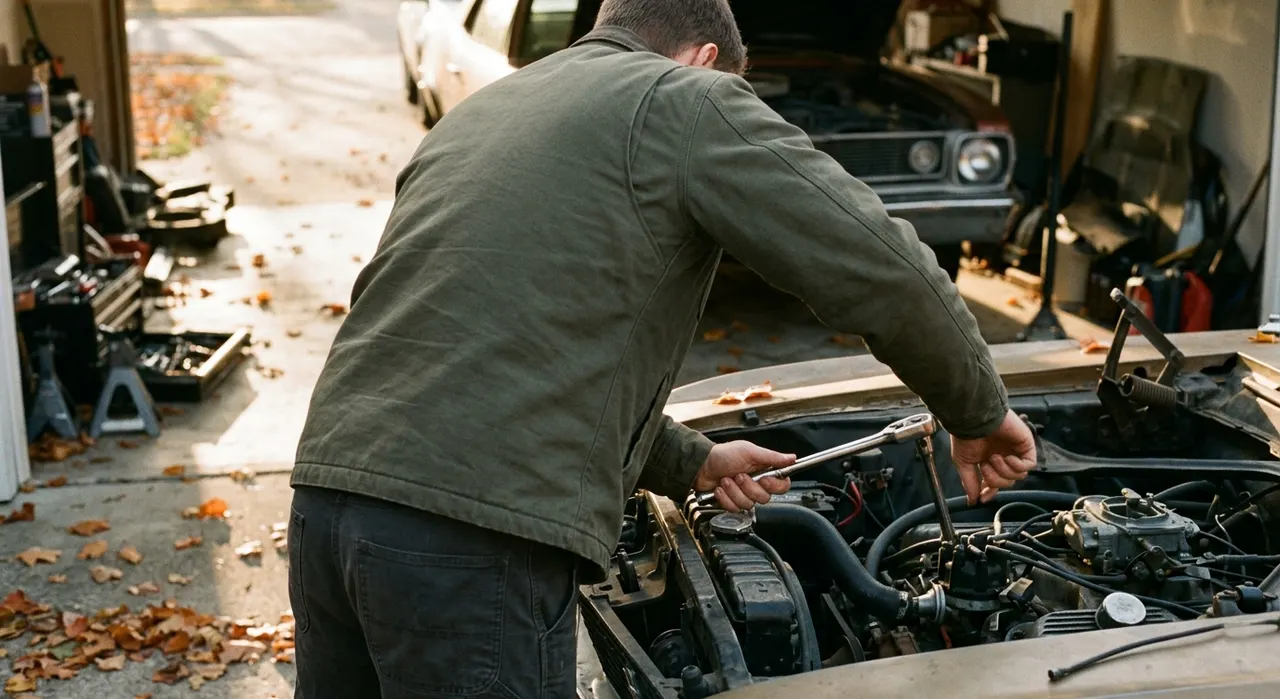
This is the question the packaging tends to dodge. A quality click torque wrench is typically specified at ±4% of reading in the upper 80% of its range, and premium units hold that for thousands of cycles. Beam wrenches are effectively as accurate as your ability to read a pointer.
A torque stick has no such simple number, because the stick is only one part of the system. The result you get depends on:
- The impact gun. A 1,200 ft-lb cordless gun and a tired 300 ft-lb air gun will not deliver the same result through the same stick.
- Air pressure and CFM if you are running pneumatic. A sagging compressor changes the answer mid-job.
- Trigger time. Sticks need several hammer blows to reach their limiting behavior. Two quick blows lands you well short. Manufacturer guidance is usually to hold until the gun clearly stops advancing the nut, around three to five seconds.
- Socket and any extra extension in the chain, which adds its own flex.
- Thread condition. Rust, dirt or thread locker changes the relationship between torque and the clamp load you actually generate — and clamp load, not torque, is what holds the wheel on.
Aggregated shop reports consistently put real-world torque-stick spread in the region of ±10–20% — roughly 80 to 120 ft-lb on a 100 ft-lb spec. The error skews low, which is by design: a stick rarely lets a gun go far over. The problem is that "80 ft-lb on a 100 ft-lb spec" is a loose wheel nut waiting to back off.
The safety line you should not cross
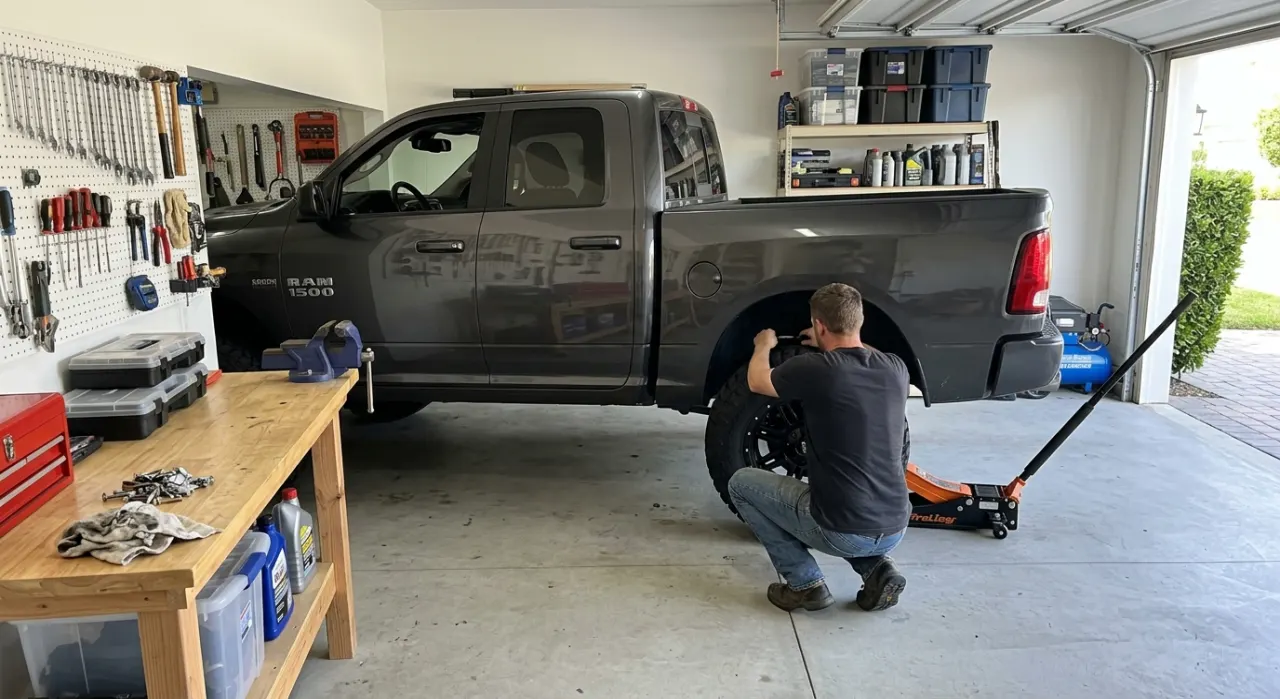
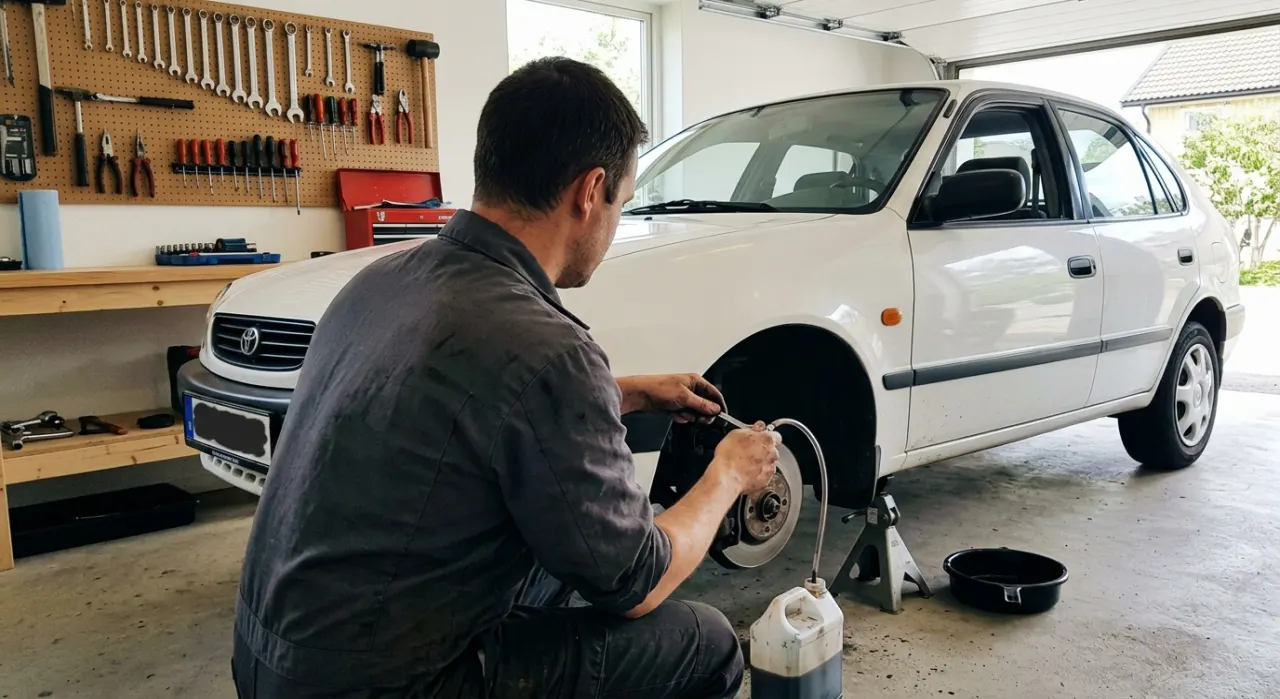
Be blunt about this, because it is the part that actually matters. A torque stick is not a substitute for a final torque check on any critical fastener. Wheel lugs are the obvious case, but the same applies to brake caliper bracket bolts, suspension pivot bolts, driveshaft flange bolts, axle nuts and anything the service manual gives a spec for.
The correct professional procedure — the one most tire shops are supposed to follow and the one every tool maker publishes — is a two-stage process:
- Stage one: run the lugs down with the impact gun and the correct torque stick, in a star or crisscross pattern, to seat the wheel evenly without over-tightening.
- Stage two: take a calibrated torque wrench, set it to the vehicle's actual spec, and do a final pass on every lug in the same star pattern. This is not optional. It is the step that turns "roughly right" into "right."
Two more rules that come straight from the consensus and from repeated failure reports. First, re-torque after 50–100 miles whenever a wheel has been off — especially on alloy wheels, which settle slightly against the hub. Second, never put anti-seize, oil or grease on wheel studs unless the manufacturer specifically calls for it; lubrication dramatically increases the clamp load for a given torque reading and is a well-documented cause of stretched studs and cracked wheels. If you are working on brakes at the same time, our brake pad refresh guide lists the caliper and bracket specs that also need a real wrench rather than a gun.
The failure mode people underestimate is not the over-tightened lug — it is the under-tightened one. An over-torqued lug warps a rotor and ruins your day at the next brake job. An under-torqued lug backs off progressively as the wheel loads and unloads, and eventually the wheel separates from the car. A torque stick can produce the second one silently.
Calibration, storage and click-wrench drift
Torque sticks have nothing inside them to go out of adjustment — barring a bent bar, one bought a decade ago behaves the same today. Click torque wrenches are the opposite: they contain a preloaded spring, and springs relax. The published guidance from most manufacturers is recalibration every 5,000 cycles or roughly annually for professional use, with home users generally fine on a longer interval. Two habits extend that considerably:
- Wind the wrench back down to its lowest setting after every use — not to zero on tools that specify otherwise, but off the working load. Storing a click wrench dialed to 120 ft-lb keeps the spring compressed and is the fastest way to send it out of spec.
- Do not use a torque wrench to break fasteners loose. It is a setting tool, not a breaker bar. Use a proper breaker bar or an impact wrench for removal — see our impact wrench vs impact driver comparison for which gun actually suits lug work.
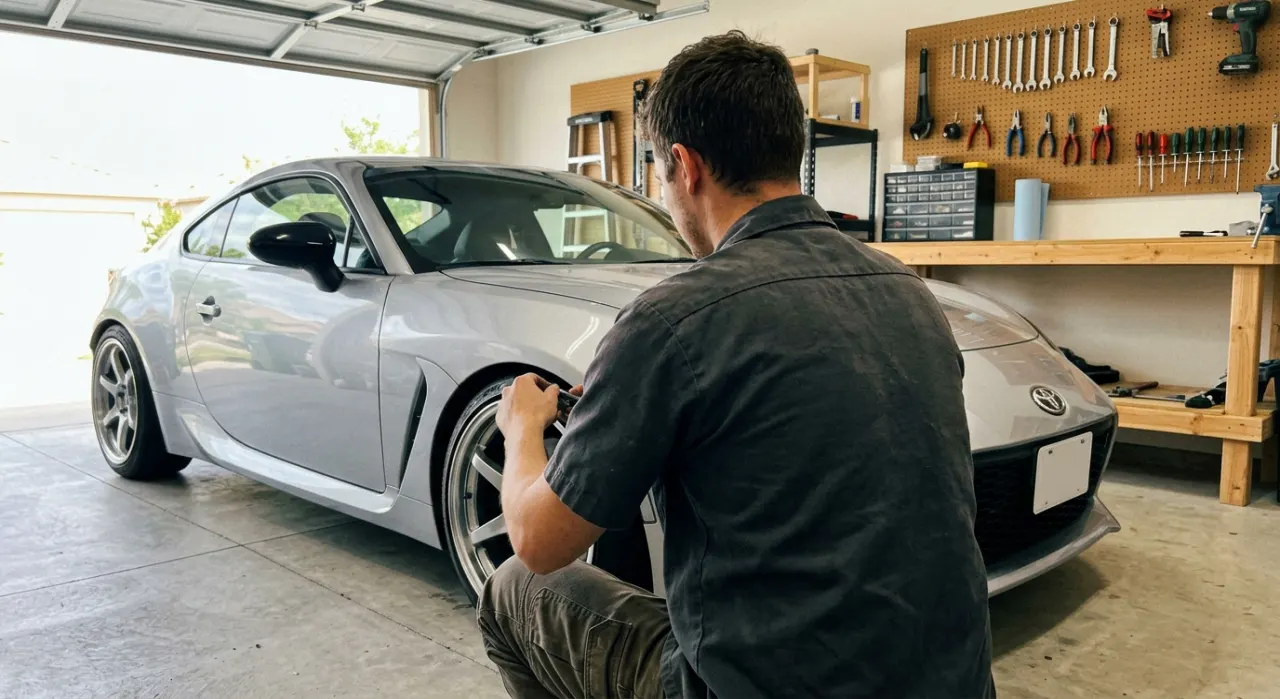
Technique matters as much as calibration. Pull smoothly through the last part of the travel, keep your hand centered on the grip (the calibration assumes force applied there), pull perpendicular to the wrench, and stop the instant it clicks. The most common error owners report is "double-clicking" — hearing the click and pulling again, which adds torque the tool cannot account for.
Real cost and what a home garage actually needs
A serviceable 1/2-inch click torque wrench covering roughly 20–150 ft-lb runs $40–$120 and handles lugs, brakes, suspension and most chassis work. Add a 3/8-inch wrench in the 10–80 ft-lb range for smaller fasteners for another $40–$80. Digital wrenches with angle measurement start around $150 and earn their keep on head bolts.
A torque-stick set is $30–$90 — but it is only useful if you already own an impact wrench, and it only makes economic sense if you are doing wheels often. For someone rotating tires twice a year on one car, the sticks save maybe ten minutes annually. For a household with four vehicles and a seasonal winter tire swap, they meaningfully change how long a Saturday takes. Both tools sit comfortably in the same core kit outlined in our garage tools guide — but the value case is lopsided. The wrench gets used on nearly every job; the sticks are a convenience for one.
Common myths and mistakes
"Torque sticks are accurate enough, the pros use them." Professionals use them for the run-down stage, then finish with a torque wrench. The stick is half of a procedure, not a replacement for one.
"A cordless impact with a torque setting doesn't need a stick or a wrench." Electronic clutch settings are broad, coarse presets, not calibrated torque values.
"Tighten until it feels right." Hand-feel estimates scatter enormously, and the error grows with a longer bar. Aluminum wheels and modern thin rotors have far less tolerance for that guess than a 1990s steel wheel did.
"More torque is safer." The opposite. Over-torquing stretches studs past their elastic limit, so they hold less clamp load, and it is the classic cause of warped-feeling rotors and lug nuts that need a breaker bar to remove.
"One torque stick covers a range." No. Each stick is a single value. Using a 100 ft-lb stick on an 80 ft-lb spec is over-torquing by design.
Which should you buy — and how to decide
Buy the torque wrench. It is not really a choice. It is the only one of the two that can meet a published factory spec, the only one usable on brakes, suspension and engine work, and the only one that can be a final check. Every garage should own one; most should own two, in 1/2-inch and 3/8-inch drive.
Add torque sticks if you already own an impact wrench and you take wheels off regularly — seasonal tire swaps, track days, a multi-car household, or frequent rotations. They will genuinely speed up the run-down stage and protect you from a gun that would otherwise slam a lug to 300 ft-lb.
Skip the sticks entirely if you do not own an impact gun. Without one they are useless, and a torque wrench alone does the job perfectly well — just more slowly.
However you split it, the procedure never changes: run the fasteners down in a star pattern, finish every critical one with a calibrated torque wrench at the specified value, and re-torque after 50–100 miles. The stick buys speed; the wrench buys certainty. Only one of those is negotiable.
Recommended Products
Our top picks in this category, ranked on aggregated owner reviews.
Best for the best mix of brand pedigree, warranty and price
- 72-tooth ratchets for a 5° swing arc
- Polished chrome-vanadium, anti-slip sockets
- DEWALT full lifetime warranty
- Compact SAE + metric set in a blow-mould case
Why buy it: a name-brand kit that owners rate at the very top of the budget class — the lifetime warranty and fine-tooth ratchets punch well above the price, which is why it keeps getting recommended to first-time wrenchers.
Best for the most sockets and bits per dollar
- 201 pieces across 1/4", 3/8" and 1/2" drives
- Chrome-vanadium forged, polished-chrome finish
- Full SAE + metric coverage
- Molded case keeps every socket in its slot
Why buy it: a socket-heavy kit that owners repeatedly call the best money-for-metal buy on Amazon — if your jobs are mostly nuts and bolts, nothing here gives you more drive tools for the outlay.
Best for trusted-brand tools with a lifetime guarantee
- 72-tooth reversible ratchets
- Alloy-steel sockets, off-corner loading grip
- Crescent lifetime warranty
- Closed, latching blow-mould case
Why buy it: an Apex Tool Group set that owners rate for genuine fit and finish — the off-corner grip protects rounded fasteners, and the lifetime backing means a cracked socket is a free swap.

Best for a first-ever kit that covers the whole garage and house
- Sockets, wrenches, screwdrivers, hammer, pliers
- Heat-treated carbon steel, rust-resistant
- Compact blow-mould carry case
- One of Amazon’s best-selling tool kits
Why buy it: the entry point owners recommend for a first toolbox — rated across tens of thousands of reviews, it handles light auto work and household jobs without asking much of your wallet.
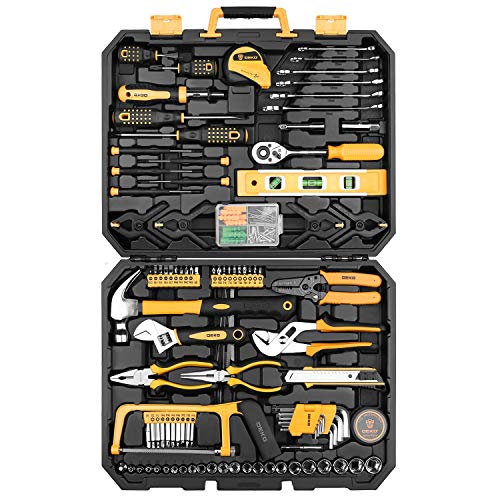
Best for a purpose-built car-repair combination
- 168-piece socket + wrench combination
- Ratchet handle, extension bars, spark-plug socket
- Chrome-vanadium and carbon-steel mix
- Deep plastic storage case
Why buy it: a combination set owners lean on for actual under-hood jobs — the spark-plug socket, extensions and combination wrenches mean fewer trips to buy the one tool you’re missing.

Best for the most complete kit before you leave the budget tier
- 201-piece mechanics set, SAE + metric
- 72-tooth quick-release ratchets
- Black-chrome sockets with laser-etched sizes
- Sturdy structural-foam case
Why buy it: the ceiling of the budget class — owners rate its ratchets and easy-read sockets highly, and the Stanley name carries a reputation that a no-name kit can’t match at the same money.
Prices are pulled from Amazon and were accurate as of Aug 22, 2026, 6:54 PM EDT. Product prices and availability are subject to change — the live price is shown on Amazon.