
Affiliate Disclosure
Some links on this page are affiliate links. As an Amazon Associate, we earn from qualifying purchases — at no extra cost to you. We do not buy, test, or physically handle the products we cover; our rankings come from aggregated owner reviews, ratings and expert consensus. Commissions never change our verdicts. How we rank & full disclosure.
The short version: the fastest upgrade to any car vacuum is not a more powerful vacuum. It is a twenty-dollar tool that reaches the dirt. Cars hide their filth under seat frames, along rails, in the gap between the console and the seat base, and inside vent slats — and the wide floor nozzle bundled with your machine reaches none of it. Ranked across thousands of owner reviews, our #1 is the ALL PARTS ETC. detailing kit and its 24-inch flexible crevice tool. The Shop-Vac 8011848 pair is the cheap essential, and the Cen-Tec Quick Click hose is the reach upgrade.
These are accessories, not vacuums. If you still need the machine itself, start with the car vacuums hub, or go straight to best shop vac for car detailing, best handheld car vacuum or the general ranking at best car vacuum.
Top Picks at a Glance
Why a Long Flexible Crevice Tool Is Our #1 Attachment
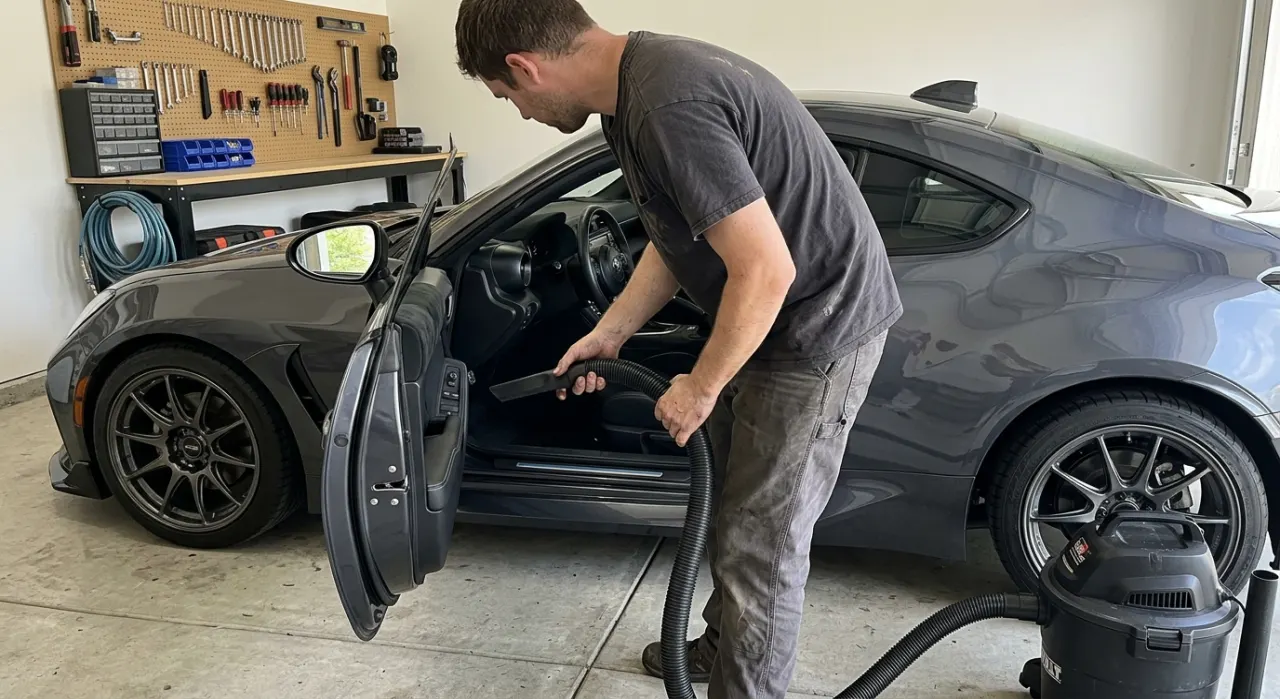
Ask a detailer what they would keep if they could only own one non-standard vacuum tool and the answer is consistently the same: a long, thin, semi-rigid crevice tool. The reason is geometry. The dirt in a car is not spread evenly across open carpet. It funnels into the places where two surfaces meet — under the seat pan, along the seat slide rails, down the channel between the console and the seat base, into the trunk hinge wells and the spare tire tray lip. Those are all narrow, all deep, and all behind an obstruction.
A rigid six-inch crevice nozzle stops at the first bend. Your arm stops shortly after. A 24-inch flexible tool goes past both, and owners consistently describe the same experience the first time they use one: a genuinely alarming quantity of material coming out of a car they thought was clean. That is not a marketing claim, it is a repeated theme across the review base.
The design detail that separates good from bad here is semi-rigidity. A tool that is truly floppy will not push forward — it folds the moment it meets the carpet edge. A tool that is completely rigid is just a long nozzle. What you want holds its own shape enough to be steered and flexes over an obstacle rather than stopping at it. The kit ranked first gets that balance right and fits the 1.25-inch port that most shop and utility vacuums use.
The honest trade-offs: a long narrow tool costs you airflow along its length, so it is a precision instrument rather than a general-purpose nozzle — take it off for open carpet. It is also slightly awkward to store, and the cheaper examples in this category crack at the cuff where they attach if you lever them hard sideways. Neither is a reason to skip it. This is the highest return per dollar in the entire vacuum category.
The Best Car Vacuum Attachments, Ranked

Best for reaching under seats and down between the console and seat base
- 24 in flexible crevice tool bends around seat rails
- Fits standard 1.25 in shop vac ports
- Doubles as a dryer vent and lint tool
- Semi-rigid so it pushes rather than folds
Why buy it: the long flexible crevice tool is the single attachment that changes what a shop vacuum can do in a car — it goes where your arm and a rigid nozzle simply cannot.
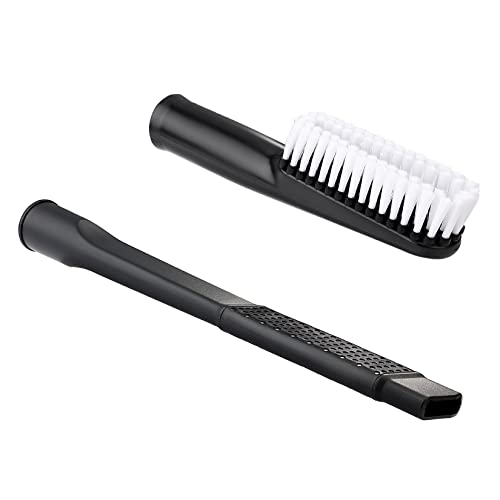
Best for the two tools every shop vac should have come with
- Flexible crevice tool plus soft auto brush
- Genuine 1-1/4 in Shop-Vac fitment
- Soft bristles safe on dash and trim
- Two pieces, no clutter
Why buy it: most shop vacuums ship with a floor tool and a giant crevice nozzle, neither of which fits a car — this fifteen-dollar pair fixes the gap without a drawer full of parts.
Best for leaving the vacuum in the garage and taking the hose to the car
- 16 ft of hose in a 1.25 in and 2.5 in compatible system
- Quick Click cuff locks tools without tape
- Multi-brand adapter set included
- Crush-resistant, stays flexible in cold
Why buy it: reach is the real constraint on a canister vacuum, and sixteen feet of quality hose with a locking cuff means the machine stays put while you work all the way to the third row.
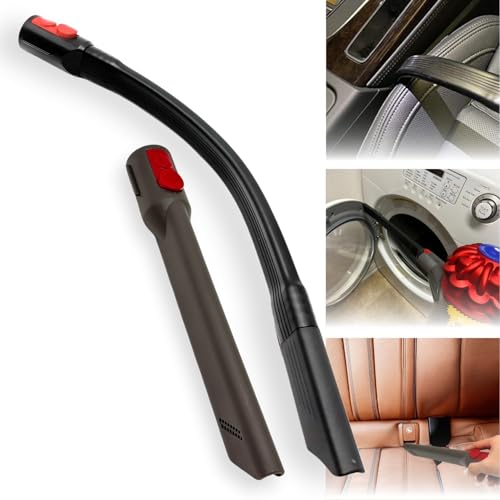
Best for giving a cordless stick genuine seat-rail access
- Clicks into the Dyson V-series bayonet
- Long flexible neck for corners and gaps
- Works for dryer vents and appliance gaps too
- No adapter needed on V7 through V15
Why buy it: Dyson supplies excellent tools and almost none of them are long, thin and flexible — this fills the one gap in the kit that actually matters in a car.
Best for dash vents, speaker grilles and textured trim
- Dozens of fine flexible straws instead of bristles
- Includes internal size adapters for most hoses
- Reaches into vent slats and seams
- Soft enough for piano-black trim
Why buy it: dust in vent slats and speaker grilles is unreachable with a nozzle and unwise with a stiff brush — flexible fingers get in there and lift it without scratching the plastic.

Best for cupholders, switchgear and gaps a normal nozzle dwarfs
- Nine micro nozzles and brushes
- Adapters fit most 1.25 in and 1.38 in hoses
- Tiny bore for keyboards, vents and seams
- Stores in a small pouch
Why buy it: micro tools trade airflow for precision, and for cupholders, shifter surrounds and switch clusters that is the right trade — you finally clean the parts that make an interior look neglected.
Prices are pulled from Amazon and were accurate as of Aug 22, 2026, 6:44 PM EDT. Product prices and availability are subject to change — the live price is shown on Amazon.
How to Choose Attachments That Actually Fit
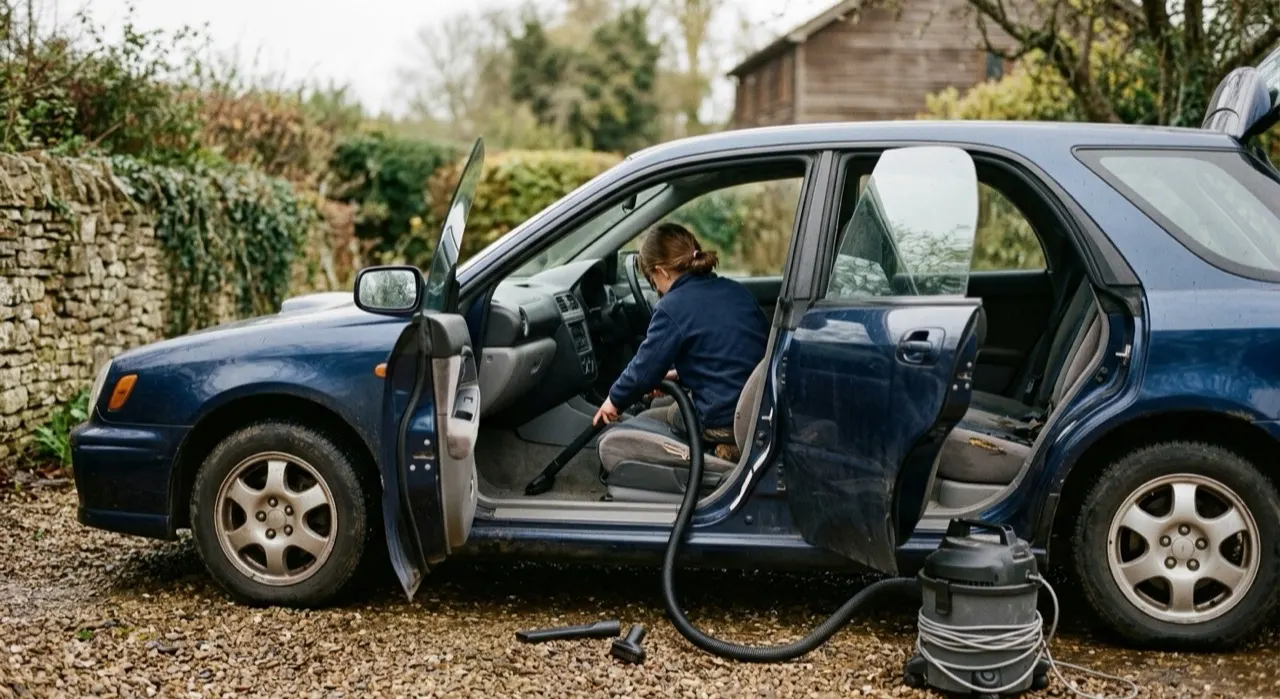
Start with the port size on your machine, because a tool that does not seat is worthless regardless of how good it is. Measure the outside diameter of the hose end you will attach to. Shop and utility vacuums are overwhelmingly 1.25 inch, with larger units at 2.5 inch. Household canisters cluster around 1.38 inch. Cordless sticks — Dyson, Shark, Bissell, BLACK+DECKER — use proprietary bayonet fittings and generally need a brand-specific tool or a purpose-made adapter.
Then decide which of the four jobs you are buying for. Deep narrow access wants a long flexible crevice tool. Dust on vents and trim wants soft flexible fingers or fine bristles, never a stiff brush — piano-black trim scratches from a hard bristle in one pass. Upholstery and carpet want agitation: a stiff brush or, better, a driven brush if pet hair is involved, which is covered in best car vacuum for pet hair. And reach — moving air from a heavy machine to a small space — wants hose length, not another nozzle.
Pay attention to cuff quality. The junction where an attachment meets the hose is where cheap tools fail: thin injection-molded collars split after a few dozen twist-on cycles. A locking system like Cen-Tec's Quick Click removes both the leak and the tape most people end up wrapping around a loose joint.
Finally, resist the twenty-piece kit temptation. Almost every large kit is three genuinely useful tools plus seventeen that stay in the box, and the useful three are usually not as good as buying them individually. Two well-chosen tools beat a bin full of them.
Attachment Specs Decoded
1.25 in vs 2.5 in vs 1.38 in. These are outside-diameter fitment sizes, not bore sizes, and they are the only compatibility figure that matters. Stepped adapters bridge them but add a leak point and cost a little suction.
Friction fit vs locking cuff. A friction fit relies on a tapered plastic collar and works until it wears. A locking cuff — bayonet or a Quick Click collar — stays put when you pull the tool back out of a seat rail, which is when friction fits come off inside the car.
Bristle grade. Horsehair and fine nylon are safe on dash plastics and gloss trim. Stiff nylon belongs on carpet and floor mats only. If a brush feels aggressive on the back of your hand, it will mark gloss black.
Bore diameter on micro tools. A very small bore raises tip velocity and drops airflow sharply. Excellent for a cupholder base, useless on a footwell, and it will clog on anything larger than grit — pull it off before you try to lift a leaf.
Common Mistakes with Attachments
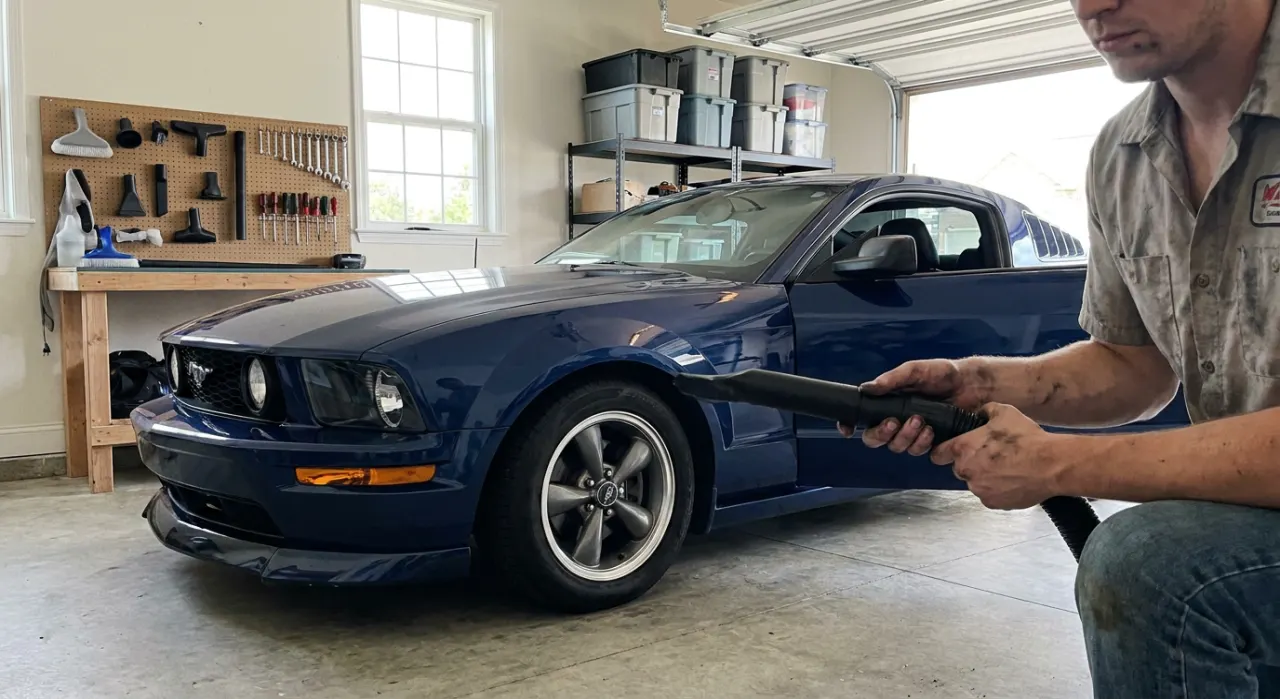
Buying before measuring. Fitment complaints dominate the negative reviews in this entire category, and nearly all of them are avoidable with a tape measure and thirty seconds.
Using a stiff brush on gloss trim. Piano-black surrounds scratch instantly and permanently. Soft bristles or flexible fingers only, and use a light hand — the paint-safe approach is covered in the detailing brushes guide.
Leaving a micro tool on for the whole clean. Small bores destroy airflow. Fit them for the detail work, take them off for the floor.
Blaming the vacuum for a clogged tool. A long flexible crevice tool blocks easily on a bottle cap or a wad of napkin. Check the tool before concluding the machine has lost suction — and check the filter second.
Forgetting the seat seams. The line where a backrest meets the cushion holds more debris than the rest of the seat combined. A rigid crevice tool pressed firmly along it is the highest-yield thirty seconds in a car clean.
How We Rank
We do not run a lab and we have not tested these tools on a bench or a flow meter. This ranking aggregates owner ratings and review volume across thousands of buyers, and for accessories we read the negative reviews far more closely than the positive ones, because fitment failures dominate them and fitment is binary. Four criteria carry the most weight. Honest fitment — whether the stated size is what arrives, and whether the supplied adapters actually bridge common hoses. Semi-rigidity on flexible tools, since a tool that folds instead of pushing is unusable in the exact place you bought it for. Bristle softness on brush tools, because scratched gloss trim is the most expensive mistake in this category. And cuff durability, which is where thin plastic tools crack first. We cross-check against the consensus among detailers about which tools stay in a working kit. Prices were current at the time of writing.
The Verdict
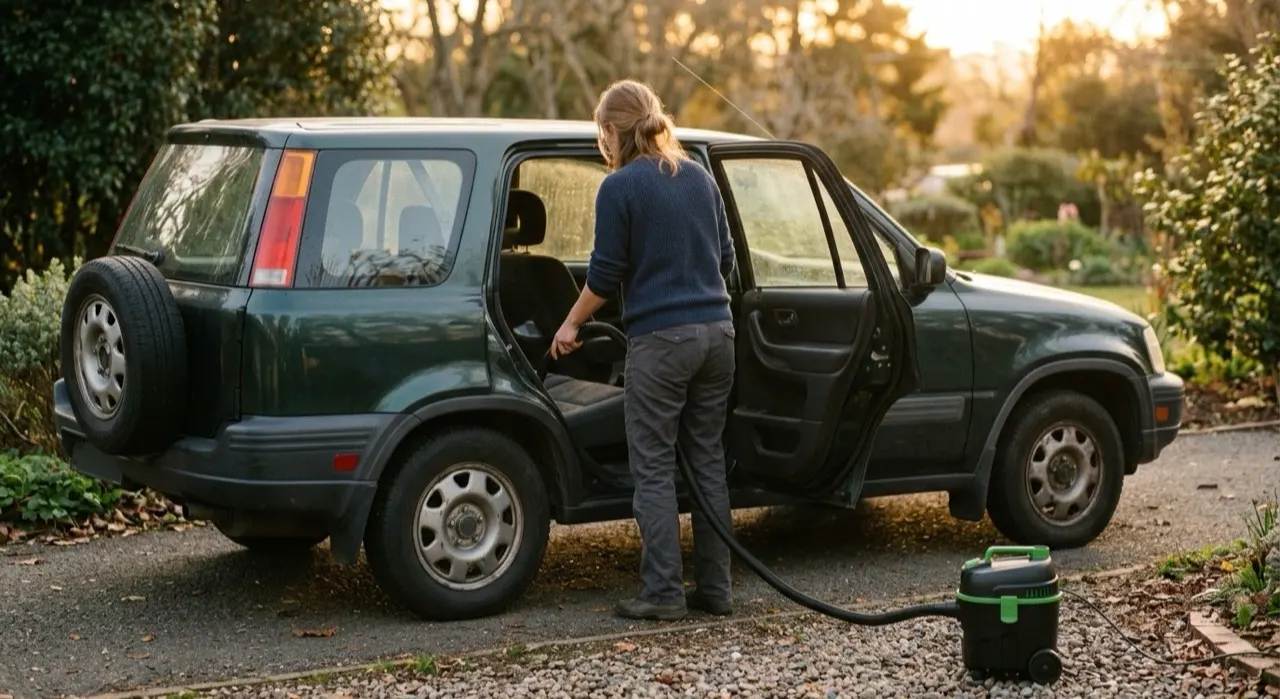
If you buy one thing, make it a long flexible crevice tool — the ALL PARTS ETC. kit is the well-reviewed version and it will find debris in a car you believed was clean. If you buy two things, add a soft brush; the Shop-Vac 8011848 pair covers both for fifteen dollars. If your vacuum is a canister that lives in the garage, the Cen-Tec Quick Click 16 ft hose solves the reach problem that stops most people finishing the job. Dyson owners should add the flexible V-series crevice tool, because it is the one shape missing from an otherwise excellent kit — the lineup itself is broken down in best Dyson for car detailing. And if your machine is a cheap 12V unit, the attachments will improve it more than a new vacuum would — see best budget car vacuum and the wider kit in detailing tools essentials.
Quick Comparison
ALL PARTS ETC. Car Detailing Vacuum Attachment Kit (24 in Flexible Crevice Tool)
Best for reaching under seats and down between the console and seat base
Best Value
Shop-Vac 8011848 2-Piece Car Cleaning Kit (1-1/4 in)
$14.99 · Check Price on Amazon
Best Premium
Cen-Tec Systems 94709 Quick Click 16 ft Hose with Power Tool Adapter Set
$58.75 · Check Price on Amazon
Best for Dyson Owners
Long Flexible Crevice Tool for Dyson V7 V8 V10 V11 V15
$13.25 · Check Price on Amazon
Best Vent and Dust Brush
Sealegend Universal Vacuum Attachment Dust Brush
Check Price on Amazon
Best Mini Detail Kit
9-Piece Universal Mini Vacuum Attachment Detailing Kit
$15.09 · Check Price on Amazon
Prices are pulled from Amazon and were accurate as of Aug 22, 2026, 6:44 PM EDT. Product prices and availability are subject to change — the live price is shown on Amazon.