
Affiliate Disclosure
Some links on this page are affiliate links. As an Amazon Associate, we earn from qualifying purchases — at no extra cost to you. We do not buy, test, or physically handle the products we cover; our rankings come from aggregated owner reviews, ratings and expert consensus. Commissions never change our verdicts. How we rank & full disclosure.
The short version: a shop vac is the cheapest route to genuine suction, and it is what a lot of working detailers quietly use. Sixty dollars buys more airflow than three hundred dollars of cordless, plus unlimited runtime and the ability to pick up liquid. Ranked across thousands of owner reviews, our #1 is the DEWALT DXV06P — it arrives with a car-friendly hose diameter and an attachment kit already in the box. Want to spend as little as possible? The STANLEY SL18116P. Shampooing carpets? The stainless Vacmaster VQ607SFD.
This page is specifically about wet/dry shop vacuums adapted to car work. For purpose-built detailing machines including the MetroVac, see best car detailing vacuum. For battery convenience instead of raw power, see best cordless car vacuum, and the trade-off is argued out in car vacuum vs shop vac.
Top Picks at a Glance
Why the DEWALT DXV06P Is Our #1 Shop Vac for Cars
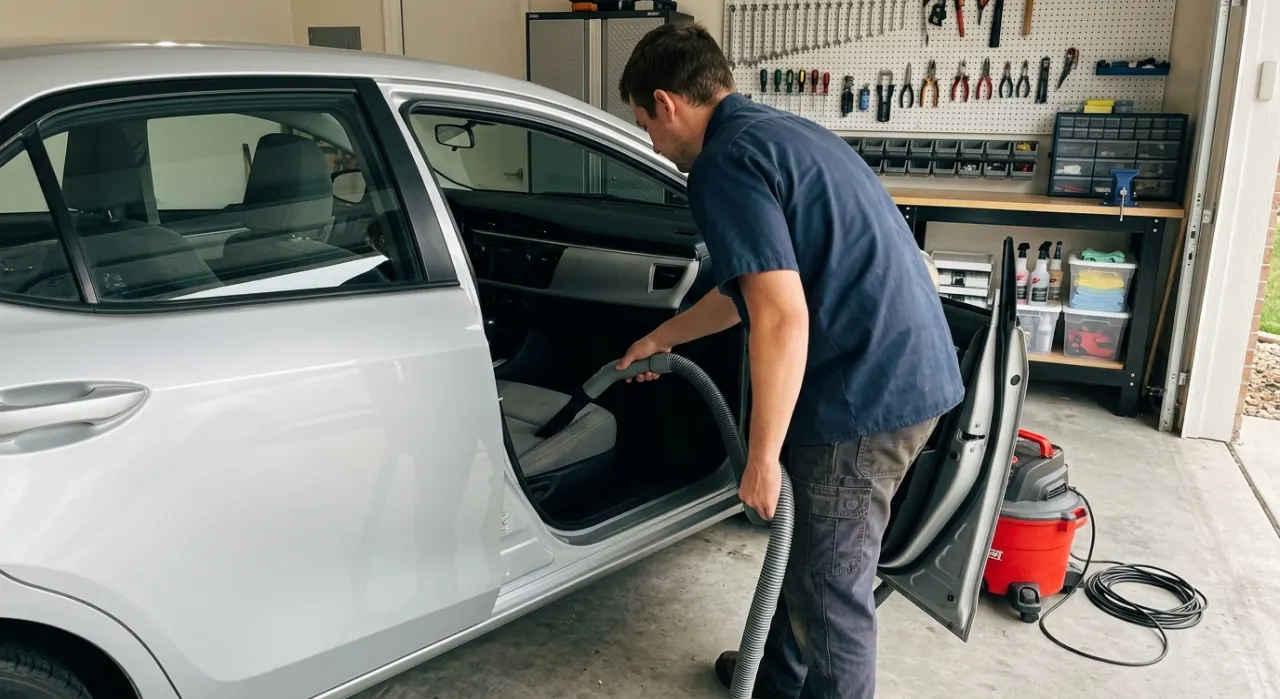
Almost every shop vac in this price range has more power than a car interior needs. What separates them for detailing is how much work you have to do before the machine is usable in a footwell — and the DXV06P starts closer to ready than most. It ships with a 1-7/8-inch attachment kit rather than the fat 2.5-inch jobsite hose that makes many shop vacs infuriating in a car, which means the stock nozzles are already steerable around a center console.
Owners consistently praise the build — a heavy-duty motor housing, sturdy latches and casters that do not snap off after a season, which is where cheap drums usually fail. The 4 peak HP is comfortably more than enough to lift grit once you have agitated it loose, and the rear blower port turns the machine into a dryer for door jambs, mirror housings and grille slats after a wash. The 6-gallon drum is the right size: big enough to clean two cars without emptying, small enough to lift onto a trunk lip.
The criticisms are the honest ones for the whole class. It is loud — plan on hearing protection. The stock filter is a general-purpose cartridge; if you are pulling powdery road dust out of carpet regularly, a fine-dust filter upgrade keeps suction up for far longer. And the included crevice tool is a jobsite part, not a detailing one — a $20 car detailing attachment kit is the first thing we would add, and it will change your results more than moving up a tier in vacuums would.
The Best Shop Vacs for Car Detailing, Ranked

Best for the shop vac that adapts to car work with the least fuss
- 4 peak HP with a 6-gallon poly drum
- Ships with a 1-7/8 in attachment kit
- Wet and dry pickup, rear blower port
- Heavy-duty casters and a stable base
Why buy it: it arrives with the attachment kit most shop vacs make you buy separately, and the hose diameter is closer to detailing size than the fat jobsite hoses on rivals.

Best for maximum airflow for the least money
- 4 peak HP, 6-gallon poly tank
- 1.25 in flexible hose — car-friendly diameter
- Three extension wands + gulper nozzle
- Rear blower port for drying
Why buy it: the cheapest way to genuinely out-suck a $300 cordless — and the 1.25-inch hose it ships with is exactly the diameter you want for footwells.

Best for shampoo extraction and a drum that rinses clean
- 3 peak HP, stainless steel drum
- Wet pickup without a filter swap drama
- 7 ft hose plus two extension wands
- On-board accessory storage
Why buy it: stainless is the upgrade that matters if you shampoo carpets — it rinses clean, does not stain, and does not carry the smell of last month’s extraction.

Best for road dust, brake dust and powdery carpet grit
- 3-layer fine dust filter as standard
- 5.0 peak HP in an 18 lb body
- Tug-A-Long locking hose stays attached
- 20 ft cord reaches the driveway
Why buy it: the filter is the reason it is here — fine car dust blinds ordinary cartridge filters within a couple of vehicles, and this one keeps pulling.

Best for a single-car garage or a shared parking space
- 2.5 peak HP in a genuinely small footprint
- 1-1/4 in hose sized for car interiors
- On-board tool and cord storage
- Blower port included
Why buy it: the shop vac for people who do not have floor space to give up — it stores on a shelf and still moves far more air than any handheld.

Best for blasting water out of jambs and mirrors after a wash
- 4.5 peak HP, 5-gallon stainless tank
- Dedicated blower function
- Wet and dry pickup
- Cartridge filter plus foam sleeve
Why buy it: the blower side is genuinely strong, and blowing trapped water out of badges, grille slats and mirror housings is what stops drip lines ruining a finished wash.
Prices are pulled from Amazon and were accurate as of Aug 22, 2026, 6:44 PM EDT. Product prices and availability are subject to change — the live price is shown on Amazon.
How to Choose a Shop Vac for Car Work
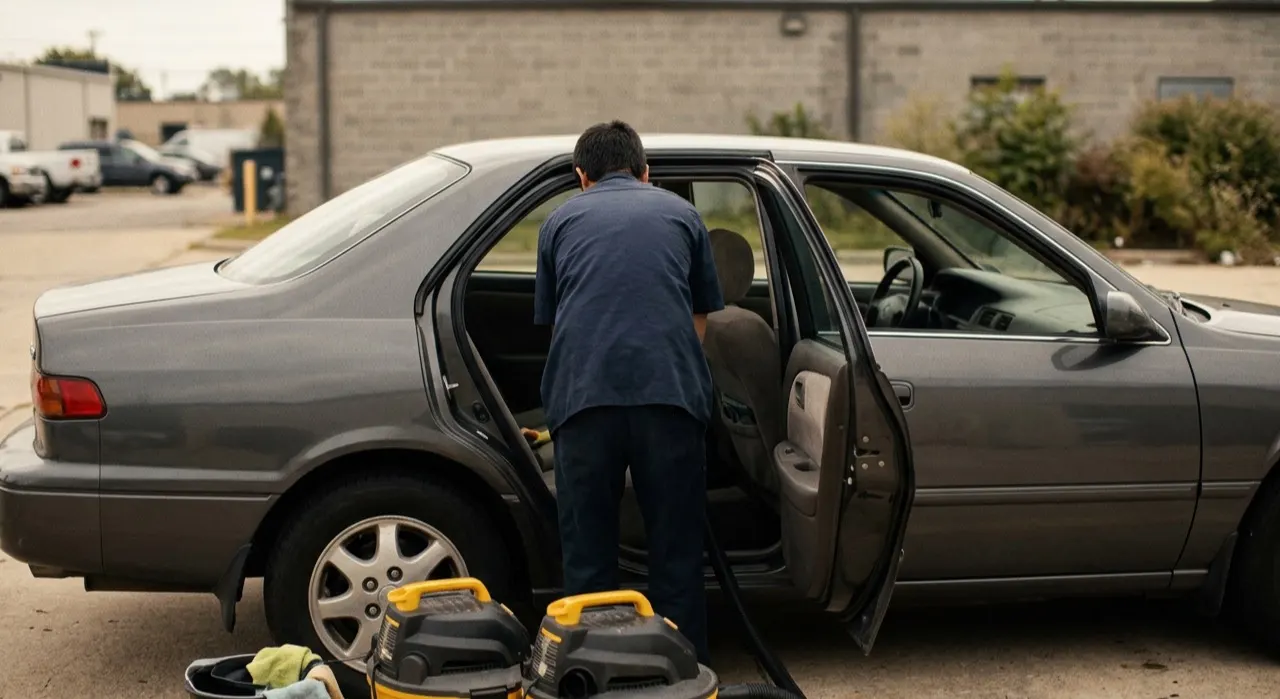
Hose diameter first. This is the spec nobody advertises and the one that decides whether the vacuum is pleasant to use in a car. A 2.5-inch hose is designed to swallow drywall chunks and is hopeless around a seat rail. A 1.25-inch or 1-7/8-inch hose is far easier to steer and loses almost nothing on fine debris. If your preferred vac has the big hose, confirm a reducer and detailing kit exist for it before you buy.
Then tank size and weight. Two and a half to six gallons covers home detailing. Under about 20 pounds means you can set the machine inside the vehicle — on the rear floor or the trunk lip — instead of dragging seven feet of hose in from a corner of the garage. That single change makes people clean more thoroughly, because the nozzle is no longer fighting for slack.
Then filtration. Car dirt is fine: road dust, brake dust, sand and fabric fiber. It blinds a coarse cartridge quickly, and a blinded filter costs more suction than any difference between two motors. Look for a fine-dust or HEPA-class cartridge, and plan on tapping it out mid-job on a dirty vehicle.
Finally, the extras that actually matter. A blower port for post-wash drying. A cord long enough — 20 feet or more — to reach a driveway without an extension. A locking hose that stays attached when you yank it around a seat. And wet pickup, which every unit here has and which you will be glad of the first time a bottle tips over in a footwell.
Specs Decoded: Peak HP, CFM and Water Lift
Peak horsepower is measured at the instant the motor stalls, not during normal running. It is a marketing figure and is only loosely useful for comparing units within one brand's own range. Two vacuums both claiming 4 peak HP can perform quite differently.
CFM (cubic feet per minute) is airflow, and it is the number that best predicts pulling debris off a carpet surface. It is also the number most likely to be missing from the box, which tells you something about how brands prefer to be compared.
Water lift (sealed suction), quoted in inches, measures how hard the machine pulls through a restriction. High water lift is what makes a narrow crevice tool feel strong and what makes wet pickup work. A good detailing vac balances the two — huge water lift with low airflow feels powerful at the nozzle tip but moves debris slowly.
Tank material is about cleanup, not performance. Stainless rinses clean after shampoo extraction and resists staining and odor; poly is lighter and cheaper. If you plan to run a carpet extractor chemical through the vac, stainless is worth the premium.
Common Mistakes Using a Shop Vac on a Car
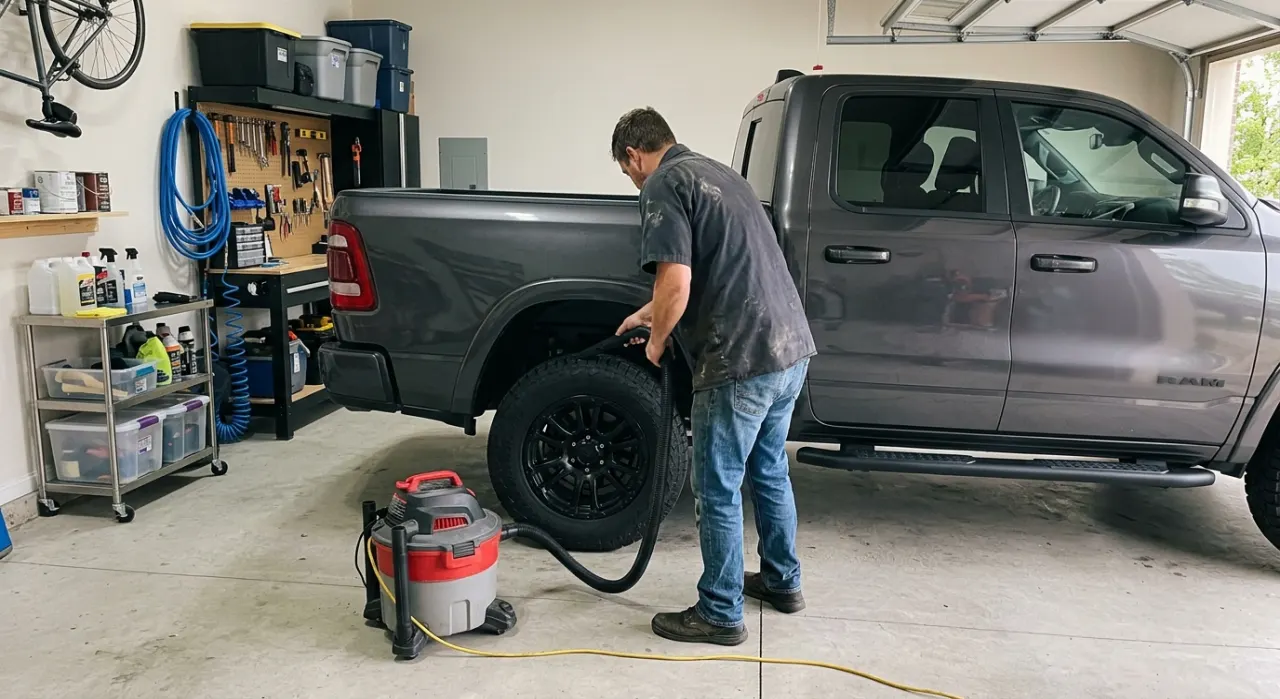
Using the stock jobsite nozzles. A wide floor tool cannot reach the seat-to-console gap, the rails or the seam where the backrest meets the cushion — which is where most of the dirt lives. Buy the detailing kit.
Dragging hard plastic across trim. Jobsite nozzles are unpadded and will scuff a soft-touch dash or a door card. Use a brush attachment on any surface you care about, and check the technique in how to clean car vents.
Vacuuming before agitating. Even 5 peak HP will skim over grit that is embedded in carpet pile. Break it loose with a stiff brush or a drill brush first — the sequence is in how to clean car carpet.
Running the dry filter for wet pickup. Most wet/dry vacs need the paper cartridge removed or a foam sleeve fitted before you suck up liquid. Skipping that soaks the filter and, on some units, damages the motor.
Ignoring the filter mid-job. On a genuinely filthy car, tap the cartridge out over a trash can between the front and rear of the vehicle. It recovers more suction than anything else you can do for free.
How We Rank
We have no lab, no test vehicle and no bench, and we would rather state that than imply otherwise. This ranking aggregates owner ratings and review volume across thousands of buyers, weighted toward reports written after a year of ownership. For car detailing specifically we weight hose diameter and included attachments heavily, because reach determines results far more than horsepower does. We also read for filter behavior on fine dust, since that is what fades suction mid-job; for portability, because a vac you can lift into the car gets used differently; for wet pickup reliability; and for long-run durability, since motor and hose failures dominate the negative reviews in this category. We cross-check against published specs and the consensus among professional detailers. Prices were current at the time of writing.
The Verdict
The DEWALT DXV06P is the shop vac we would point most home detailers at — well built, correctly sized, and shipped with a hose diameter that works in a car rather than fighting it. If the budget is the point, the STANLEY SL18116P delivers most of the same airflow for roughly half the money and comes with a 1.25-inch hose. If you shampoo carpets, spend up for the stainless Vacmaster VQ607SFD. Whichever you choose, add a car detailing attachment kit before your first job — then work through the process in how to detail a car interior and build out the rest of the setup from the car detailing kit hub.
Quick Comparison
DEWALT DXV06P 6-Gallon Poly Wet/Dry Vac (4 Peak HP)
Best for the shop vac that adapts to car work with the least fuss
Best Value
STANLEY SL18116P 6-Gallon Wet/Dry Vacuum (4 Peak HP)
$49.99 · Check Price on Amazon
Best Premium
Vacmaster VQ607SFD 6-Gallon Stainless Wet/Dry Vacuum
$79.99 · Check Price on Amazon
Best for Fine Dust
RIDGID WD4070 4-Gallon NXT Wet/Dry Vac (5.0 Peak HP)
Check Price on Amazon
Best for Tight Garages
CRAFTSMAN CMXEVBE17250 2.5-Gallon Wet/Dry Shop Vacuum
$49.99 · Check Price on Amazon
Best Blower Combo
Shop-Vac 5989305 5-Gallon Stainless Wet/Dry Vacuum with Blower
$108.97 · Check Price on Amazon
Prices are pulled from Amazon and were accurate as of Aug 22, 2026, 6:44 PM EDT. Product prices and availability are subject to change — the live price is shown on Amazon.