
Affiliate Disclosure
Some links on this page are affiliate links. As an Amazon Associate, we earn from qualifying purchases — at no extra cost to you. We do not buy, test, or physically handle the products we cover; our rankings come from aggregated owner reviews, ratings and expert consensus. Commissions never change our verdicts. How we rank & full disclosure.
Short version: Window tint is judged on two things people constantly confuse — how dark it is (VLT percentage) and how much heat it rejects (film type). They're not the same. Dark doesn't mean cool, and the darkest legal film isn't automatically the best one. This guide unpacks VLT, the film types worth knowing, heat rejection, and the legal limits so you walk into a tint shop knowing exactly what you're buying.
VLT: the number that matters most
VLT — Visible Light Transmission — is the percentage of visible light that passes through the film. It's the number everything else revolves around, including the law.
- 70% VLT — very light, lets 70% of light through. Often factory glass or a clear heat-rejection film.
- 35% VLT — a common, moderate tint. Noticeably darker but you can still see occupants.
- 20% VLT — dark. Popular on rear windows.
- 5% VLT — "limo" tint. Nearly black, blocks 95% of light. Illegal on front windows almost everywhere.
Lower number, darker film. The counterintuitive part: VLT tells you nothing about heat rejection. That comes from the film's construction, which is the next thing to understand.
Film types, from budget to best
The material inside the film decides how well it performs and how long it lasts. Here's the ladder, cheapest to best.
- Dyed film is the entry level. It gets darkness from a dye layer, looks matte, and is the cheapest. The catch: it rejects relatively little heat and the dye breaks down under UV, which is why old cheap tint fades to that telltale purple and bubbles.
- Metalized film uses tiny metal particles to bounce heat away. It rejects heat well and is durable, but the metal can interfere with radio, GPS, cell and keyless signals. Less common now for that reason.
- Carbon film skips the metal, so no signal issues. It rejects more heat than dyed film, has a nice flat black look that doesn't fade, and sits in the sensible mid-range for most drivers.
- Ceramic film is the premium tier. Non-metallic ceramic particles reject the most heat and UV while staying signal-friendly and fade-resistant. It costs the most, but if you live somewhere hot, the comfort difference is night and day.
Heat rejection: what you're really paying for
This is where people waste money. They buy the darkest legal film thinking it'll be the coolest, then wonder why the cabin still bakes. Heat rejection is a function of film type, not darkness. A light ceramic film can reject dramatically more heat than a dark dyed film.
The specs to look for are Total Solar Energy Rejected (TSER) and Infrared Rejection (IR). Higher is better. A cheap dyed film might reject a modest amount of solar energy; a good ceramic film rejects a large share of it and blocks the infrared that you actually feel as heat on your arm. If your goal is a cooler cabin and a steering wheel you can touch in summer, buy on these numbers.
There's a UV benefit too, and it's not just about comfort — most quality films block nearly all UV, which protects your skin on long drives and stops your dash and seats fading. That same UV story is why unprotected black trim and headlights degrade, which we cover in protecting a new car.
Legal limits: check before you commit
Tint laws are set at the state level in the US and they vary a lot. The law usually specifies a minimum VLT for each window — most commonly stricter on the front side windows and windshield than on the rear. A common pattern is something like 35% or higher allowed on front sides, with darker permitted on rear windows, plus rules about the windshield tint strip.
The practical advice: look up your specific state's limits before you book anything. A reputable tint shop will know local law and steer you to a legal shade, but the responsibility ends up being yours if you get pulled over. Getting a ticket and being told to strip the film is an expensive way to learn the rules.
DIY or pro?
You can tint your own windows, and for flat glass and a patient afternoon it's doable. But tint is genuinely hard to do cleanly — cutting film to fit curved glass, avoiding bubbles and dust, and wrapping the film into the top edge of a rolled-up window all take practice. Rear windshields with heavy curves are the hardest of all.
If you want to try it, we walk through the whole process in how to DIY window tint — including the honest markers for when to stop and pay a professional. For most people, on a car they care about, a pro install with a warranty is money well spent. The film cost is a fraction of the job; the skill is what you're really paying for.
How to choose your tint
Put the decision in this order:
- Legal shade first. Find the darkest VLT your state allows on each window. That's your ceiling.
- Then film type. Within that legal shade, pick the best film you can afford — carbon for value, ceramic if heat and comfort matter.
- Then the install. A cheap film installed brilliantly beats a premium film installed badly. Choose the shop on its reputation and warranty, not just the sticker price.
Tint is part of a bigger exterior-protection picture. If you're also weighing paint protection film for the front end, our PPF explainer covers how the two work together on a car you plan to keep.
See our top picks: for the protection gear reviewers consistently rate highly, browse our exterior protection roundup.
The bottom line
Understand two numbers and you understand tint: VLT for how dark it is, and heat-rejection specs for how well it performs. Buy the best film you can at the darkest shade your state legally allows, and don't cheap out on the install. Do that and you get a cooler cabin, protected upholstery, less glare and a cleaner look that lasts. For the full protection stack, head back to our exterior protection hub.
Recommended Products

Best for the best heat rejection without going too dark
- Nano-ceramic film rejects heat and UV without metal
- No signal interference (GPS, phone, keyless)
- 35% VLT is legal-friendly in many states — check yours
- Scratch-resistant top coat
Why buy it: the best all-round DIY film — ceramic heat rejection at a moderate shade, so the cabin stays cooler without you fighting the law over how dark it is.
Best for a low-cost carbon film to practice and learn on
- 2-ply carbon film that will not turn purple like cheap dyed tint
- Cheap enough to practice a panel before committing
- Non-reflective matte finish
- Widely used by first-time installers
Why buy it: the value pick — inexpensive carbon film that holds its color, so a beginner can learn the squeegee technique without wasting money.

Best for a darker ceramic film for rear glass privacy
- Same ceramic heat rejection at a darker 15% shade
- Good privacy for rear windows
- No metal, so no signal interference
- Check local law before fitting on front doors
Why buy it: the privacy option — the same ceramic performance in a darker shade, best kept to rear glass where dark tint is usually allowed.
Best for blacked-out rear windows on trucks and SUVs
- 5% limo shade for maximum darkness
- Wider 24-inch roll suits large SUV/truck glass
- Color-stable carbon construction
- Front-window use is illegal almost everywhere — rear only
Why buy it: the pick for a dark rear end — a wide limo-shade roll for big back glass, with the honest caveat that it belongs behind the driver, not up front.
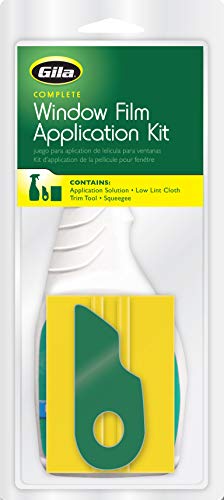
Best for getting the squeegee, blade and application solution in one box
- Application solution, squeegee and trim blade included
- Removes the guesswork on what tools you need
- Cheap insurance against a bubbled install
- Reusable for future tint jobs
Why buy it: the pick that makes the job go smoothly — the right tools matter more than the film for a bubble-free result, and this kit covers them.