
Affiliate Disclosure
Some links on this page are affiliate links. As an Amazon Associate, we earn from qualifying purchases — at no extra cost to you. We do not buy, test, or physically handle the products we cover; our rankings come from aggregated owner reviews, ratings and expert consensus. Commissions never change our verdicts. How we rank & full disclosure.
The short version: carburetor cleaner is one of the few products in this hub that does exactly what the can says. Stale gasoline turns into gum and varnish, that varnish blocks passages measured in thousandths of an inch, and a strong solvent dissolves it. What trips people up is format, not brand — a spray, a dip and a pour-in solve three different stages of the same problem, and buying the wrong one is why so many reviews say "did nothing." Ranked across aggregated owner reviews, our #1 all-round pick is CRC Clean-R-Carb, with Berryman Chem-Dip as the serious choice once the carb is off the engine.
Most carb cleaning today happens on small engines — mowers, trimmers, generators, chainsaws, motorcycles and classic cars — because that is where carburetors survive. If your vehicle is fuel injected, what you actually have is a throttle body, and the rules are different. Below is the full ranked field, how to choose a format, and how to use these products without damaging something expensive. The wider category is in the fuel system cleaners & additives hub.
Top Picks at a Glance

Our #1 Pick: CRC Clean-R-Carb
Clean-R-Carb takes the top spot because it does the thing this category exists to do: it cuts varnish quickly. Owners consistently describe it as noticeably stronger than the sensor-safe sprays and the supermarket cans — a single pass through a gummed throat and jets shifts deposits that gentler formulas only soften. On a lawnmower carburetor that has sat with untreated fuel since last fall, that difference is the whole job.
The extension straw is what makes it useful rather than merely strong. Carburetor problems live in passages you cannot see — the idle jet, the emulsion tube, the transition ports — and being able to direct a hard stream into a specific drilling is far more effective than flooding the outside of the casting. Owners who rebuild small engines regularly tend to keep a can of this and a can of a milder spray, using the strong one on parts and the mild one anywhere near a sensor.
Two warnings that matter. It is aggressive by design: it will strip paint, craze plastic and soften some rubber, so mask anything you care about and keep it away from painted bodywork. And it is a flammable solvent — never use it near a hot exhaust, a running engine, or any ignition source, and always work with real ventilation. Treat it as a chemical, not a spray-and-forget cleaner, and it will do more work per can than anything else on this list.
Best Carb Cleaners 2026: The Ranked Field

Best for the strong, fast-cutting spray most mechanics reach for
- High-solvency blend that cuts varnish fast
- Extension straw for jets and passages
- Cleans linkage, choke and unpainted metal
- Aggressive formula — not for painted surfaces
Why buy it: the spray owners reach for when a carburetor is genuinely gummed. It cuts varnish faster than the sensor-safe formulas, which is exactly what a neglected small engine needs.

Best for routine cleanups at the lowest price per can
- 14 oz — larger can than most rivals
- Cleans inside and outside the carburetor
- Works on cars, bikes and lawn equipment
- No disassembly required for basic cleanup
Why buy it: the cheapest can here that still cuts properly, and the largest volume of the sprays — which matters, because carb cleaning uses far more product than people expect.

Best for a full carburetor rebuild done properly
- Immersion cleaner with a parts basket
- Removes gum, varnish, sludge and carbon
- Works without heat or agitation
- Safe on most metals and alloys
Why buy it: the only thing here that truly cleans a carburetor rather than rinsing it. If the carb is off the engine and apart, a soak beats any amount of spray.
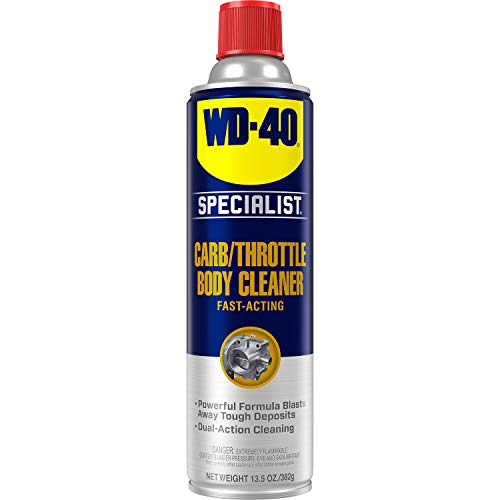
Best for engines with oxygen sensors and converters nearby
- Will not harm O2 sensors or converters on contact
- Attachable precision straw
- Dual-action solvent plus blast cleaning
- Leaves no residue behind
Why buy it: the safe choice around modern emissions hardware. Slightly gentler than the aggressive sprays, but the one to use anywhere overspray could reach a sensor.

Best for cleaning a carb you cannot easily take apart
- Pour-in treatment, no disassembly needed
- Dissolves gum, varnish and carbon
- Works on carbureted and injected engines
- A long-standing shop-favorite formula
Why buy it: the legendary pour-in. It will not rescue a solidly blocked jet, but for a mildly gummed carb on a running engine it saves an afternoon of disassembly.

Best for mowers, trimmers, chainsaws and generators
- Compact 6 oz can for small jobs
- Jet spray for tight passages
- Sized for lawn and garden equipment
- Cheapest way to keep one in the shed
Why buy it: the right size for the equipment that needs it most. Small-engine carbs are where varnish causes the most misery, and a small can lives in the shed without going to waste.
Prices are pulled from Amazon and were accurate as of Aug 22, 2026, 6:54 PM EDT. Product prices and availability are subject to change — the live price is shown on Amazon.
Spray, Dip or Pour-In: Pick the Format First
This is the decision that determines whether you are happy with your purchase, and it has almost nothing to do with brand.
Aerosol spray is for a carburetor still on the engine, or for parts you have just taken apart and want to blast clean. It is fast, cheap and precise with a straw, and it is the right tool for external gunk, sticky linkage, a dirty choke plate and jets you can reach. Its weakness is that it flows past a blockage rather than dissolving through it.
Dip or immersion cleaner is for a carburetor that is off the engine and disassembled. Soaking the metal body for hours lets the solvent work through every internal drilling, including the ones no straw can reach. This is what a shop does for a genuine rebuild, and owners who have tried both are almost unanimous that a soak beats an entire can of spray on a badly varnished carb.
Pour-in treatment goes in the fuel tank and cleans while the engine runs. It is the only option that requires no tools at all, and for a mildly gummed carb it works well enough to save an afternoon. It will not clear a jet that is solidly blocked — nothing that arrives dissolved in fuel can reach a passage that fuel cannot get through in the first place.
How to Clean a Carburetor Without Wrecking Anything
1. Work cold and ventilated. Engine off, fully cool, outdoors or in a well-ventilated shop. These solvents are flammable and the vapor is not something to breathe.
2. Protect yourself and the paint. Nitrile gloves and eye protection are non-negotiable — this stuff strips skin oils immediately and will genuinely hurt in an eye. Mask painted surfaces and plastic; overspray does not wipe off.
3. Remove what you can. The air filter comes off. On a small engine, pulling the bowl and the main jet takes ten minutes and gives you access to where the problem actually is.
4. Spray with the straw, deliberately. Into the jets, the idle passage, the throat and behind the throttle plate. Then let it sit a minute and repeat rather than emptying the can in one pass.
5. Blow it dry and reassemble. Compressed air through every passage. Never poke a jet with a drill bit or a paperclip — enlarging a calibrated orifice ruins the carburetor permanently. Use a proper jet cleaning wire if you must.
6. Fresh fuel, then treat it. Old fuel is what caused this. Refill with fresh gas and add a stabilizer if the machine is going to sit again — the picks are in best fuel stabilizer.
If Your Engine Is Fuel Injected
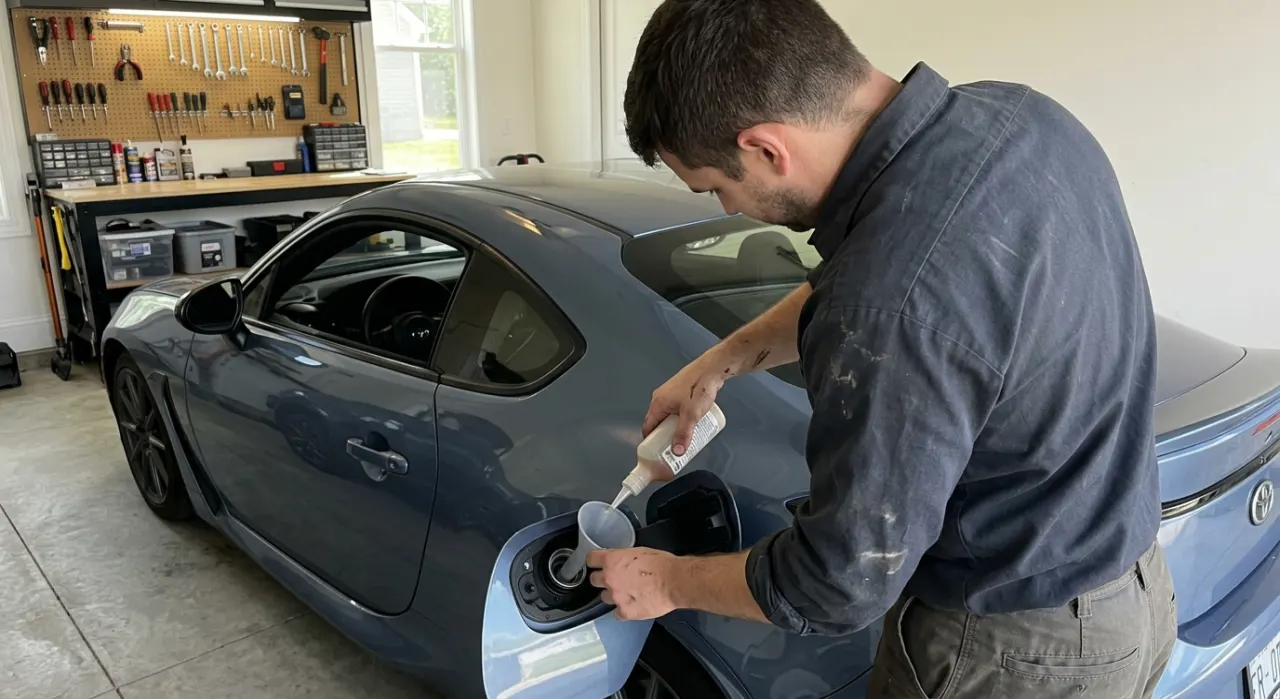
Most vehicles on the road no longer have a carburetor, and the equivalent maintenance is different in ways that matter. A throttle body collects an oily, sooty film that causes hesitation, a sticky pedal and an unstable idle, and it does need cleaning periodically — but with a product specifically labeled throttle-body safe, because some aggressive carb solvents can damage modern throttle plate coatings and anything they overspray onto. Never spray any of this into a mass airflow sensor; that hot wire needs its own dedicated cleaner and nothing else.
For deposits further into a fuel-injected engine, the fix is chemistry in the tank rather than a can in your hand — a concentrated PEA cleaner, ranked in best fuel system cleaner. And while you have the intake apart, the cosmetic side of the job is covered in engine bay detailing.
How We Rank
We do not run a bench and we have not stripped matched carburetors to compare cleaning results side by side. We rank by aggregating owner ratings and review volume, then weighing four things. Solvent strength relative to the job — strong is right for parts, wrong near sensors. Material safety, meaning what a product does to plastics, coatings, rubber and emissions hardware. Can size and cost per job, because carburetor cleaning uses far more product than first-timers expect. And the consensus among small-engine and motorcycle mechanics, who go through more of this than any other group. We deliberately rank across formats rather than pretending sprays and dips compete. Prices were current at the time of writing.
The Verdict
For most jobs, CRC Clean-R-Carb is the can to have on the shelf — strong, cheap and effective with the straw where it counts. If the carburetor is off the engine and in pieces, spend the extra on Berryman Chem-Dip and soak it properly; nothing in a spray can matches immersion. Around modern emissions hardware, the WD-40 Specialist formula is the sensible sensor-safe alternative, and for a mildly gummed carb you would rather not disassemble, Berryman B-12 Chemtool in the tank is worth a try first. Whatever you use, finish the job properly: fresh fuel, a stabilizer if the machine is going back into storage, and the varnish never comes back.
Gum, Varnish and Carbon Deposits Explained
Three kinds of gunk foul a carburetor, and a cleaner has to dissolve all of them. Gum and varnish form when fuel evaporates and leaves a sticky, then hard, resin in the passages — the classic stale-fuel blockage. Carbon deposits build from combustion byproducts around the throttle plate and choke. A strong solvent carb cleaner dissolves gum and varnish quickly and lifts carbon with a little dwell time. Owners consistently report that the tiny idle jet is where these deposits cause the most misery, since a passage measured in thousandths of an inch blocks completely long before the bigger drillings do. Match solvent strength to how baked-on the deposits are.
Carb Cleaner Spray vs In-Tank Fuel Additive
Two different products get called "carb cleaner," and they do different jobs. An aerosol spray cleans the metal directly — you point it at the jets, choke and throat. An in-tank fuel additive is poured into the gas and cleans as the engine runs, reaching the carb through the fuel it burns. Owners consistently report the spray is the fix for a genuinely gummed carb, while the additive is a maintenance dose that keeps a running engine's fuel system clean between services. For a no-start after storage, reach for the spray; for ongoing upkeep, a fuel additive in every few tanks does the preventive work.
Small Engines: Mowers, Motorcycles and Lawn Equipment
Carburetors survive mostly on small engines now, and that is where carb cleaner does the most work. A lawn mower, trimmer, generator, chainsaw or motorcycle left with untreated fuel over winter is the classic spring no-start, and varnish in the idle jet is usually the cause. Owners consistently report that a can of spray through the jets, or a full disassembly and dip, revives a large share of these lawn and garden engines. The lasting fix is prevention: drain or stabilize the fuel before storage so the carburetor does not gum up again. Keep a small can in the shed for the equipment that needs it most.
Quick Comparison
CRC 05079 Clean-R-Carb Carburetor Cleaner (12 wt oz)
Best for the strong, fast-cutting spray most mechanics reach for
Best Value
Gumout 800002231 Carb and Choke Cleaner (14 oz)
Check Price on Amazon
Best Premium
Berryman 0996 Chem-Dip Carburetor and Parts Cleaner (0.75 Gallon)
$38.99 · Check Price on Amazon
Best Sensor-Safe Spray
WD-40 Specialist Carb/Throttle Body & Parts Cleaner (13.5 oz)
Check Price on Amazon
Best In-Tank Treatment
Berryman 0116 B-12 Chemtool Carburetor, Fuel System and Injector Cleaner (15 oz)
Check Price on Amazon
Best for Small Engines
Gumout 800002241 Carb and Choke Cleaner Jet Spray (6 oz)
Check Price on Amazon