

Affiliate Disclosure
Some links on this page are affiliate links. As an Amazon Associate, we earn from qualifying purchases — at no extra cost to you. We do not buy, test, or physically handle the products we cover; our rankings come from aggregated owner reviews, ratings and expert consensus. Commissions never change our verdicts. How we rank & full disclosure.
The short version: gasoline is a perishable product, and the additive aisle has few clearer wins than this one. Untreated modern fuel starts degrading within weeks, and ethanol blends pull moisture out of the air on top of that — which is why the mower that ran perfectly in October will not start in April, and why small-engine shops are buried in gummed carburetors every spring. A few dollars of stabilizer added to fresh fuel before storage routinely prevents a repair that costs a hundred times more. Ranked across aggregated owner reviews, our #1 pick is STA-BIL Storage.
The honest limit: if you drive the vehicle every week, you do not need any of this. Fuel that gets cycled every couple of weeks never has time to go bad. Stabilizer is for things that sit — boats, mowers, snowblowers, generators, motorcycles, RVs and collector cars. Below is the full ranked field, how long fuel really lasts, and how to store a tank properly. The rest of the category sits in the fuel system cleaners & additives hub.
Top Picks at a Glance
Our #1 Pick: STA-BIL Storage
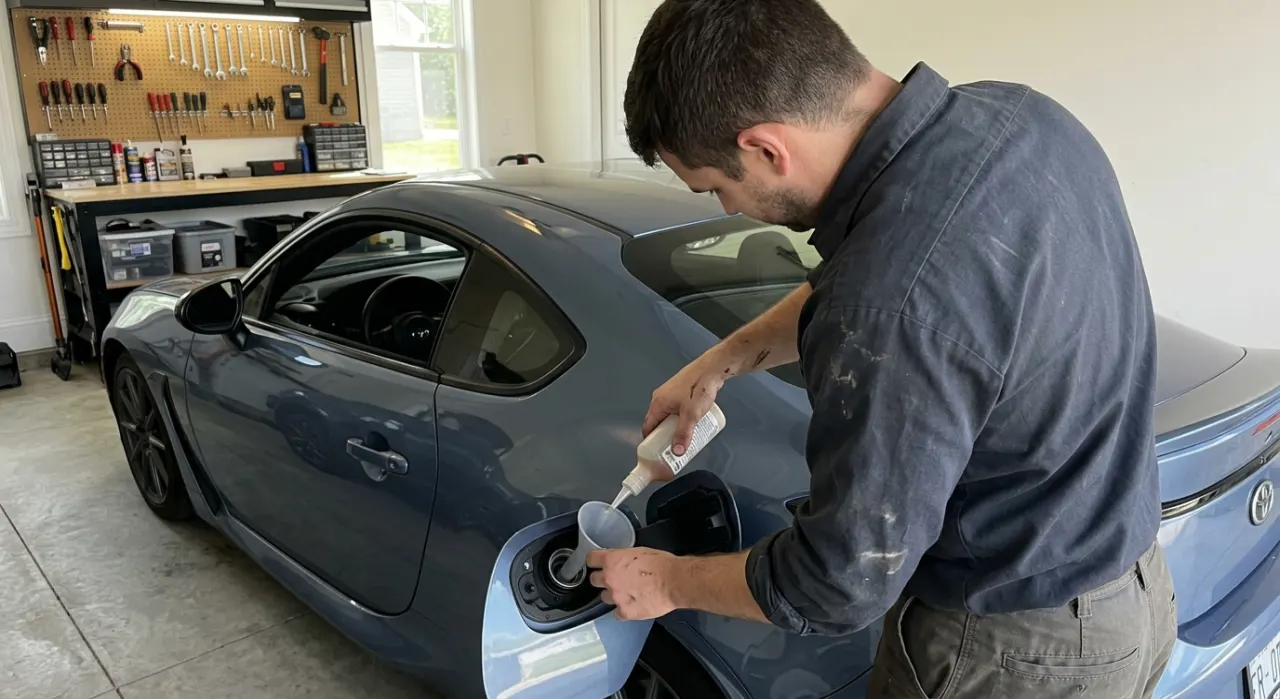
STA-BIL Storage is the default recommendation in this category for the least glamorous of reasons: it has been doing the job since long before ethanol made the problem worse, and the review base behind it is enormous. Across tens of thousands of owners the reported pattern barely varies — equipment treated in the fall starts in the spring, equipment that was not treated does not.
The chemistry is straightforward and honest about what it does. Antioxidants slow the oxidation reactions that turn gasoline into gum and varnish, corrosion inhibitors protect the metal in the tank and fuel system, and the formula is rated to keep fuel usable for up to 24 months — comfortably longer than any normal seasonal layup. The storage dose is one ounce per 2.5 gallons, which means a 32 oz bottle treats 80 gallons and will cover several seasons of mowers, blowers and a motorcycle without needing to be replaced.
Two practical notes that come up constantly in reviews. First, treat fresh fuel — stabilizer slows degradation, it does not reverse it, so adding it to gas that already smells like varnish is damage limitation at best. Second, run the engine for five to ten minutes after adding it, so treated fuel actually reaches the carburetor or fuel rail. Stabilizer sitting in the tank does nothing for the bowl that is about to fill with varnish, and that single skipped step accounts for a large share of the disappointed reviews in this whole category.
Best Fuel Stabilizers 2026: The Ranked Field

Best for the default answer for anything being parked for a season
- Keeps fuel fresh for up to 24 months
- 32 oz treats 80 gallons at storage dose
- Protects against ethanol and corrosion
- One ounce per 2.5 gallons for storage
Why buy it: the bottle every small-engine mechanic in the country recommends, backed by one of the largest review bases in the additive aisle — and it costs less than one carburetor rebuild.
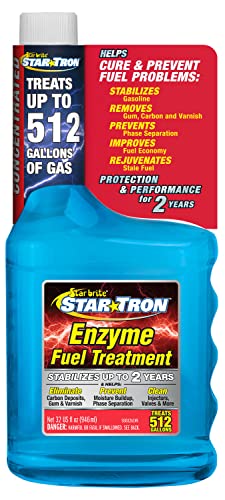
Best for the lowest cost per treated gallon by a wide margin
- One ounce treats 16 gallons
- Enzyme technology rather than solvent
- Stabilizes fuel up to 2 years
- Also revives fuel that has already gone stale
Why buy it: wildly concentrated — a single 32 oz bottle treats hundreds of gallons, which makes it the cheapest per-gallon protection here and a favorite among boat and RV owners.

Best for multi-year storage and genuinely long layups
- Treats at roughly 1:2000 — 256 gallons per bottle
- Marketed for multi-year fuel storage
- Safe in two-stroke and four-stroke engines
- Can be re-dosed annually to extend storage
Why buy it: the long-haul option. Generator owners, preppers and collectors storing fuel for years rather than months rate it above everything else, and it is the only one designed to be re-dosed.

Best for stabilizing, cleaning and treating oil from one can
- 1 oz per gallon stabilizes fuel up to 2 years
- 100% pure petroleum, no harsh solvents
- Also usable in the crankcase or as a cleaner
- Safe for converters and oxygen sensors
Why buy it: the most-reviewed can in the country and the most flexible one on the shelf — a genuine stabilizer that also cleans, which suits a garage with mixed equipment.
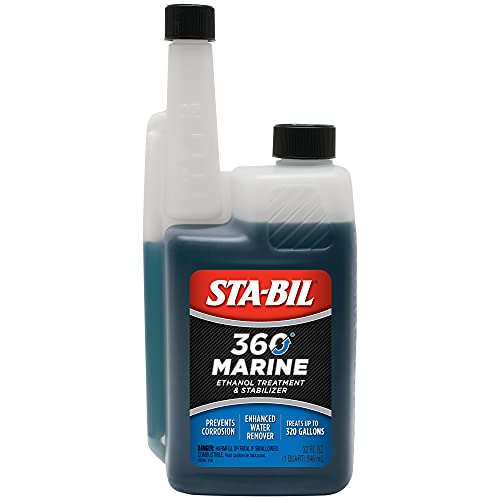
Best for ethanol and water problems in a marine tank
- 32 oz treats up to 320 gallons
- Removes water from the fuel system
- Vapor-phase corrosion protection above the fuel
- Cleans injectors and carburetors as it treats
Why buy it: built for the one problem boats have that cars do not — condensation and phase separation in a tank that lives in humid air. Marine owners rate it accordingly.

Best for mowers, blowers, chainsaws and generators
- Dosed for small tanks — 1 oz per 6 gallons
- Rejuvenates gasoline that has already aged
- Targets ethanol-related running problems
- Sized so a bottle does not sit half-used for years
Why buy it: the right bottle for the equipment that suffers most. Small carburetors are the first thing stale fuel kills, and this is dosed for tanks measured in quarts, not gallons.
Prices are pulled from Amazon and were accurate as of Aug 22, 2026, 6:54 PM EDT. Product prices and availability are subject to change — the live price is shown on Amazon.
Why Gas Goes Bad, and What Ethanol Changed
Two separate things happen to stored gasoline, and it helps to keep them apart.
Oxidation. Gasoline is a cocktail of hydrocarbons, and the lightest, most volatile ones — the fractions that make an engine start easily — evaporate first. What is left oxidizes and polymerizes into gum and varnish. That sticky residue coats float bowls, blocks the tiny jets in a carburetor, and gums injector tips. This process starts within weeks and is well advanced within six months in a vented tank.
Water and phase separation. Ethanol is hygroscopic — it pulls moisture straight out of humid air through the tank vent. Up to a point the water stays dissolved in the fuel and burns harmlessly. Past that point, the ethanol and water separate out and drop to the bottom of the tank as a distinct layer. That layer will not burn, it is corrosive to aluminum and steel, and it sits exactly where the fuel pickup is. This is the failure mode that ruins boat seasons, and it is why marine formulas focus so heavily on water handling.
Heat and air accelerate both. A tank stored half empty in a hot shed is the worst case; a nearly full tank in a cool garage is the best.
How to Store Fuel Properly
1. Fill the tank almost full. Less air space means less condensation and less oxygen. Leave a little room for expansion, but do not store a vehicle on a quarter tank.
2. Add stabilizer to fresh fuel. If the fuel in the tank is already old, drain it or run it out and refill before treating.
3. Run the engine 5 to 10 minutes. This is the step that protects the carburetor or fuel rail, not just the tank.
4. For small engines, consider running the carb dry as well. Some mechanics prefer to shut the fuel valve and run the bowl empty on top of treating the tank. Both approaches work; doing both is belt and braces.
5. Store cool and out of the sun. Heat cycles drive evaporation and condensation harder than anything else.
Come spring, if something still will not start, the problem is usually varnish in the carburetor rather than the fuel in the tank — the sprays and dips that cut it are ranked in best carb cleaner.
How to Choose the Right One
For a car, bike or mower over one winter, STA-BIL Storage is the simplest correct answer. Buy it, use it, forget it.
For the lowest cost per gallon — RVs, boats, anyone treating large volumes — Star Tron Enzyme is dramatically more concentrated and works out cheapest by a wide margin.
For genuinely long storage, meaning years rather than a season, PRI-G is the product built for it and the only one here designed to be re-dosed annually to extend protection.
For a boat, water is the enemy more than oxidation, so a marine formula like STA-BIL 360 Marine is worth the premium.
For mowers, blowers and chainsaws, a small-engine formula dosed for tiny tanks avoids the classic problem of a huge bottle going stale in the shed before you use half of it.
How We Rank
We do not operate a fuel laboratory and we have not measured gum content on stored samples. We rank by aggregating owner ratings and review volume across tens of thousands of buyers, then weighing four factors. Claimed and reported storage duration, and how consistently owners confirm it a season later. Treat ratio and cost per treated gallon, which varies by more than tenfold across this category and reorders it completely versus sticker price. Scope of protection — whether the formula addresses ethanol, water and corrosion or only oxidation. And the consensus among small-engine and marine mechanics, who see the results of untreated fuel arrive on a trailer every spring. Prices were current at the time of writing.
The Verdict
For almost everyone, STA-BIL Storage is the fuel stabilizer to buy — proven, cheap, universally recommended, and rated for longer than any normal layup. If you are treating large volumes and want the lowest cost per gallon, Star Tron Enzyme Fuel Treatment is the concentrate to reach for, and PRI-G is the specialist for multi-year storage. Boat owners should pay the small premium for STA-BIL 360 Marine and its water-handling chemistry, and anyone whose storage problem is a shed full of two-stroke equipment will get on best with the Star Tron Small Engine Formula. And if the vehicle in question is driven every week, skip the whole category — put the money into a fuel system cleaner or a proper oil change instead.
Quick Comparison
STA-BIL Storage Fuel Stabilizer (32 oz, 22214)
Best for the default answer for anything being parked for a season
Best Value
STAR BRITE Star Tron Enzyme Fuel Treatment (32 oz, 093032)
$32.80 · Check Price on Amazon
Best Premium
PRI-G Gasoline Treatment (16 oz)
$39.99 · Check Price on Amazon
Best Multi-Purpose
Sea Foam SF-16 Motor Treatment (16 oz)
Check Price on Amazon
Best for Boats
STA-BIL 360 Marine Fuel System Treatment (32 oz)
$21.59 · Check Price on Amazon
Best for Small Engines
STAR BRITE Star Tron Enzyme Fuel Treatment Small Engine Formula (8 oz, 14308)
Check Price on Amazon
Prices are pulled from Amazon and were accurate as of Aug 22, 2026, 6:54 PM EDT. Product prices and availability are subject to change — the live price is shown on Amazon.