
Affiliate Disclosure
Some links on this page are affiliate links. As an Amazon Associate, we earn from qualifying purchases — at no extra cost to you. We do not buy, test, or physically handle the products we cover; our rankings come from aggregated owner reviews, ratings and expert consensus. Commissions never change our verdicts. How we rank & full disclosure.
Short version: The best upholstery cleaner is the one you use with restraint. Cloth seats and carpet stain because dirt bonds to fibers — but they also trap water, and over-wetting is what ruins most DIY jobs. The winning approach is a good enzymatic or surfactant cleaner, gentle agitation, and thorough extraction so the padding underneath never stays soaked.
I have pulled some genuinely grim things out of car fabric — spilled coffee, kid meltdowns, gym bags left in a hot trunk. The gear matters less than the technique. Get the method right and a modest cleaner outperforms an expensive one used carelessly. Think of it like tire pressure before a run: the fancy setup means nothing if the fundamentals are off.
Our Top Upholstery Cleaner Picks
The types of upholstery cleaner, honestly compared
There are three families worth knowing. Foaming aerosols are the drugstore classic — spray, scrub, wipe. They are convenient and fine for surface grime, but they can leave residue and rarely reach anything set-in. Pump-spray liquid cleaners (the detailer's staple) give you control over how much you apply, which is exactly what you want for stain work. Enzymatic cleaners are the specialists — they digest organic messes like food, drinks, vomit, and pet accidents, and they are the only category that reliably kills the smell as well as the stain.
For a general interior refresh, a controllable liquid all-purpose interior cleaner does most of the work. You only need the enzymatic stuff when the mess is biological. If you are still figuring out your core cleaner, our best car interior cleaner picks cover the versatile bottles we reach for first.
Why "extraction" is the word that matters
Ask any detailer why a customer's seats look worse a week after cleaning and the answer is almost always the same: they wet the fabric and never got the moisture back out. Cloth seats sit on foam. Foam is a sponge. Push cleaner and water into it and gravity pulls the dirty solution down, where it sits, wicks back up as it dries, and leaves a ring darker than the original stain.
Extraction means pulling that dirty solution out before it can settle. A wet/dry vacuum or a dedicated carpet extractor does it mechanically. Without a machine, you extract by blotting aggressively with a dry, absorbent towel — press, lift, rotate to a clean spot, repeat until the towel comes up nearly dry. It is more effort than spraying, but it is the whole game.
The method, step by step
Start clean. Vacuum the seat and carpet thoroughly first so you are not grinding loose grit deeper. This is part of the wider routine, and doing it in the right sequence matters — our full interior detailing walkthrough shows where upholstery work fits in the overall order.
Then work in these steps:
- Test first. On older or brightly dyed fabric, test your cleaner on a hidden patch. Some dyes bleed.
- Apply light. Mist the cleaner onto the fabric — damp, not saturated. You can always add more; you cannot un-soak foam.
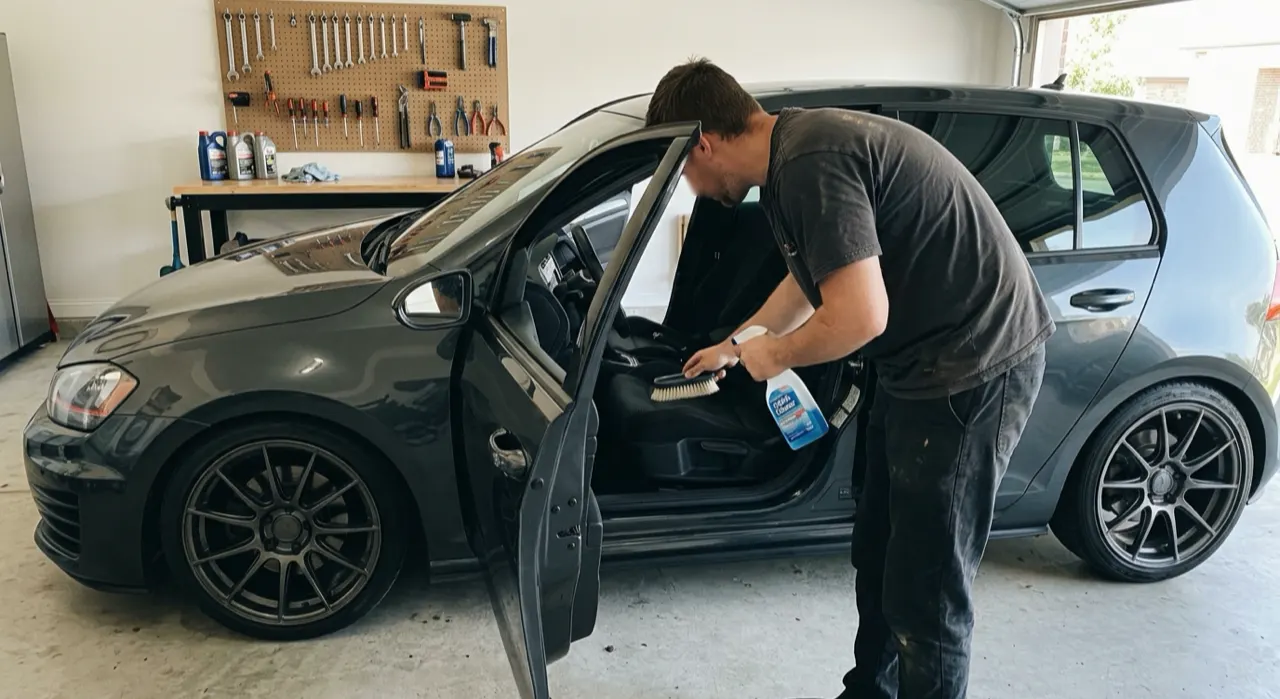
- Agitate gently. A soft upholstery brush works the cleaner into the weave. Circular motion, light pressure. Let it dwell a minute so the chemistry can lift the dirt.
- Blot and extract. Press a dry microfiber towel in hard, lift, move to a clean area, repeat. If you have an extractor, this is where it earns its keep.
- Dry with airflow. Crack the windows, run a fan or leave it in the sun with doors open. The faster it dries, the less chance of wicking or mildew.
Beating specific stains
Work stains from the outside edge inward so you shrink the ring instead of spreading it. For coffee and soda, act fast and hit it with a general cleaner. For grease and food oil, a slightly stronger degreasing interior cleaner helps break the bond. For anything organic — milk, pet accidents, sweat-soaked seats — reach straight for an enzymatic cleaner, because a normal surfactant may lift the visible mark but leave the smell behind. When the odor lingers after the stain is gone, that is a signal to switch approaches; our guide to removing car odors covers finding and killing the source rather than masking it.
The mistakes I see most
Three errors ruin more upholstery jobs than anything else. First, over-wetting — covered above, and the single most common. Second, scrubbing too hard, which frays and pills the fabric and can drive the stain deeper; let the chemistry do the lifting and keep your brush pressure light. Third, using the wrong product on the wrong material — leather is not cloth. If your seats are hide rather than fabric, you want a dedicated leather approach, not an upholstery cleaner; our leather seat cleaner guide covers the cleaner-then-conditioner routine that keeps leather supple.
What you actually need to buy
A realistic kit is small: a controllable liquid upholstery or interior cleaner, one enzymatic cleaner for emergencies, a soft upholstery brush, and a stack of clean, absorbent microfiber towels. That handles the vast majority of cars. A wet/dry extractor is the one upgrade worth considering, and even then, rent or borrow before you buy unless you clean interiors often.
One more piece of gear worth mentioning: a decent nylon or upholstery scrub brush. The soft brushes sold for delicate interior plastics are too gentle to agitate carpet properly, while a stiff wire brush will damage fabric. A medium-stiffness upholstery brush is the sweet spot — firm enough to work cleaner into the weave, soft enough not to fray the fibers. Pair it with restraint on the trigger and you have the whole toolkit most cars will ever need.
The honest truth is that spending more on cleaner rarely fixes a bad result — spending more on technique does. Keep the water low, extract thoroughly, dry fast. For everything else in the cabin, from dash to glass to odor, the interior detailing hub pulls the full process together in one place.
Recommended Upholstery Cleaners

Best for set-in stains on cloth seats and carpet — the dedicated stain job
- Purpose-built stain remover for seats, carpet and upholstery
- Controllable spray so you apply cleaner without soaking the foam
- Large owner base reports it lifts coffee, grease and ground-in dirt
- Ships with a microfiber towel for the blot-and-extract step
Why buy it: the pick that matches this whole guide — a controllable, fabric-focused cleaner made for exactly the stain work cloth seats need, backed by one of the biggest satisfied owner bases in the category.
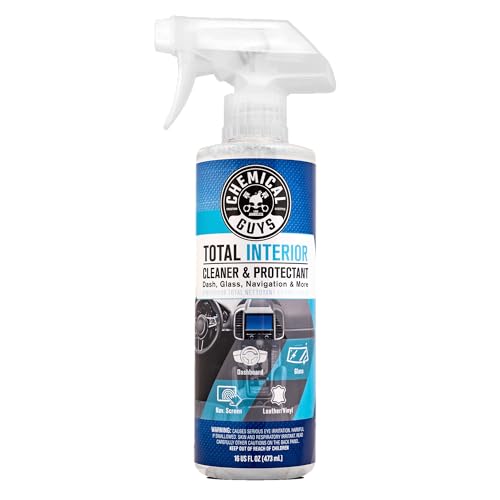
Best for owners who want one bottle for fabric, plastic, vinyl and trim
- Cleans seats, door panels, dash and trim in one pass
- The most-reviewed interior cleaner on this page by a wide margin
- Light enough to mist on fabric without over-wetting
- Leaves a residue-light finish so cloth does not re-soil fast
Why buy it: the versatile default — if you would rather not stock a shelf of specialist bottles, this handles light fabric refreshing alongside every other cabin surface, and it carries the largest owner consensus here.

Best for brightly dyed or older fabric where you worry about residue
- Formulated for water-safe fabric, vinyl and plastic
- Rinses to a residue-free finish that will not attract dirt
- Gentle enough to test on delicate or faded dyes first
- 32 oz bottle covers a full interior refresh
Why buy it: the gentle option — a residue-free formula that suits older or brightly dyed cloth, where the real risk is a harsh cleaner leaving a sticky ring rather than not lifting the stain.
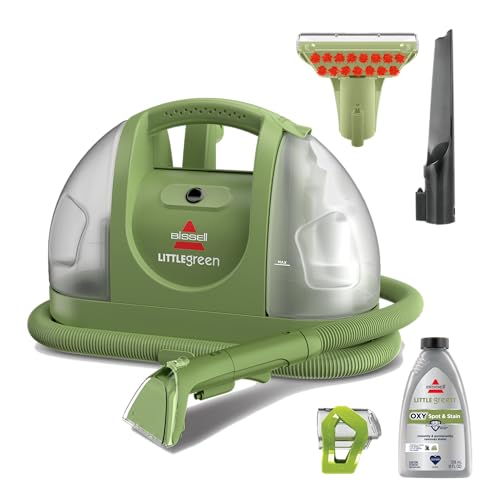
Best for neglected interiors and spills that reached the foam padding
- Sprays cleaner and vacuums the dirty solution back out
- Does mechanically what blotting only does partly — real extraction
- Specialty upholstery tools included for seats and tight areas
- The tool for wicking-prone stains that keep coming back
Why buy it: the machine that solves the problem this guide keeps naming — extraction. For set-in stains or a whole tired cabin it pulls dirt and moisture out of the padding, which is the single thing blotting cannot fully do.

Best for a fast between-details wipe-down of light grime
- All-purpose interior cleaner for regular light maintenance
- Handy for surface grime before it sets into the weave
- Works across fabric, plastic and vinyl in the cabin
- Strong owner rating for a quick maintenance product
Why buy it: the maintenance bottle — not a heavy stain remover, but the one you reach for weekly to knock down light grime before it works into the fabric and becomes a real job.

Best for everyday spills plus lingering smells on a budget
- Inexpensive multi-surface cleaner that handles fabric
- Odor-elimination technology tackles the smell, not just the mark
- Easy to find and cheap enough to keep in the trunk
- Good owner rating across thousands of reviews
Why buy it: the cheap-and-cheerful pick — it will not out-clean the dedicated stain removers, but for everyday spills and the musty-smell problem it is a low-cost bottle that pulls double duty.
Prices are pulled from Amazon and were accurate as of Aug 22, 2026, 6:54 PM EDT. Product prices and availability are subject to change — the live price is shown on Amazon.