
Affiliate Disclosure
Some links on this page are affiliate links. As an Amazon Associate, we earn from qualifying purchases — at no extra cost to you. We do not buy, test, or physically handle the products we cover; our rankings come from aggregated owner reviews, ratings and expert consensus. Commissions never change our verdicts. How we rank & full disclosure.
Short version: Rinseless and waterless washes are legitimate, water-saving methods — but only on lightly to moderately dirty paint. Rinseless uses a bucket and encapsulating solution; waterless is a spray-and-wipe with no bucket. Both scratch a genuinely filthy car. Match the method to the level of dirt, use lots of clean microfiber, and when the car is truly grimy, get the hose out.
Low-water washing gets a bad rap it half deserves. Done wrong — on a muddy car, with two towels and no patience — it is a swirl factory. Done right, on the correct level of dirt, it is a genuinely safe, fast, water-saving way to keep a car clean, and it is a lifesaver for apartment dwellers, drought areas and quick touch-ups. The trick is knowing which method to use, when, and where the line is. Read the conditions before you commit, same as any run.
The two methods, clearly
People use these terms interchangeably, but they are different tools for different jobs.
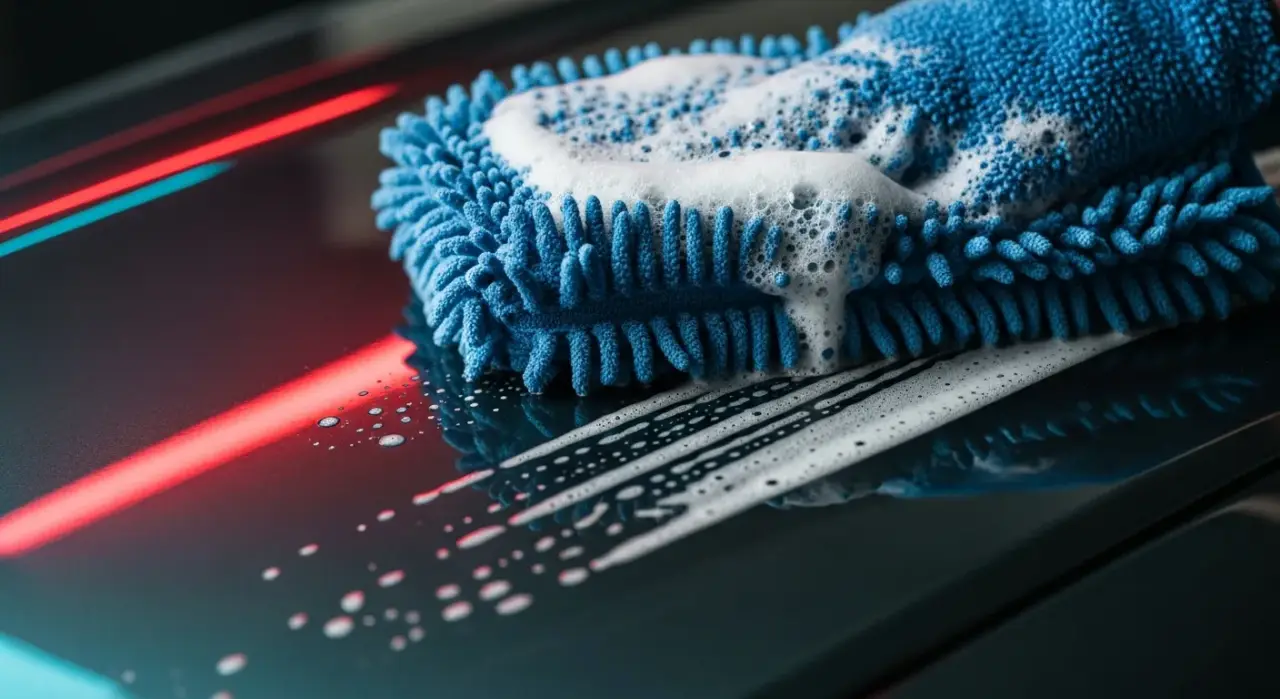
Rinseless wash: You mix a special solution into a bucket of water. The chemistry "encapsulates" dirt — wrapping each particle so it lifts off the paint and stays suspended rather than grinding in. You wipe a panel with a soaked microfiber, then dry it, with no separate hose rinse. It uses a modest amount of water, far less than a traditional wash.
Waterless wash: A spray-on product used with essentially no water and no bucket. You spray a section, let it dwell for a second, then wipe it off with a plush microfiber and buff dry. The lubricating spray does the encapsulating. It is the lightest-duty option of all.
The one thing that decides which to use: dirt level
Here is the mental model that keeps you safe. Both methods work by lubricating and encapsulating dirt so it wipes away instead of dragging across the clear coat. That chemistry has limits. There is only so much grit it can safely lift before you are just smearing abrasive around.
- Dusty / very light dirt — waterless is perfect. Minimal grit, easy to encapsulate and wipe.
- Light to moderate dirt — rinseless shines. The bucket of solution gives you more lubrication and more capacity to handle the dirt safely.
- Heavy dirt, mud, road salt, caked grit — neither. This is a scratch zone. You need flowing water to flush grit away, which means a traditional wash.
Ignore this and you will scratch your paint, and then blame the product. The product was fine — it was used on the wrong car. Respect the dirt level and both methods are safe.
How to do a rinseless wash safely
Rinseless is the more capable of the two, and my preferred low-water method for a normally dirty car. The safe routine:
- Mix the solution in a bucket per the label. Some people keep a second bucket of plain water for rinsing towels.
- Work one panel at a time, top to bottom. Soak a plush microfiber, lay it flat, and pull it gently across the panel — do not scrub.
- Flip to a clean face of the towel constantly and swap towels often. This is the two-bucket principle applied to towels: keep grit off the paint.
- Follow immediately with a clean, dry microfiber to buff the panel dry before moving on.
The whole car might use a handful of clean towels and a single bucket of solution. It is quiet, tidy, and can be done in a garage or carport — which is exactly why it is so popular where hoses are not an option.
How to do a waterless wash safely
Waterless is for the near-clean car. Spray a generous coat of product on one section, give it a moment to encapsulate the light dust, then wipe with a plush microfiber using minimal pressure and buff with a second dry towel. Because there is even less lubrication in play than rinseless, the margin for error is smaller — so it is genuinely only for dusty or very lightly soiled paint.
Great uses: a garaged car that just needs the dust knocked off, a quick freshen-up before an event or photos, or a car show touch-up. Bad uses: anything the sun has baked pollen onto, or a car back from a rainy road trip. When in doubt, step up to rinseless or a full wash.
Why clean towels matter more here
In a traditional wash, flowing water carries grit off the paint and down the driveway. In low-water washing, there is no flowing water — so the only thing keeping grit off your clear coat is your towels and your discipline. That means lots of clean, plush microfiber, constant face-flipping, frequent swaps, and never, ever re-wiping a dirty towel across the paint.
This is the same swirl-prevention logic that governs every wash, covered in full in how to prevent swirl marks. If anything, low-water methods demand more towel discipline than a hose wash, not less. Buy plenty of good microfiber and rotate ruthlessly.
When to just get the hose out
I love a good rinseless wash, but I will always tell you the honest thing: when the car is genuinely filthy, nothing beats a traditional two-bucket wash with a proper rinse. Flowing water is the safest way to remove heavy grit, and no encapsulating chemistry fully replaces it on a mud-caked car. For the complete safe routine, see how to wash a car and pair it with a plush mitt from our best wash mitt roundup.
The bottom line
Rinseless and waterless washes are real, safe methods when you respect their limits. Use waterless on a dusty car, rinseless on a lightly-to-moderately dirty one, and a full hose wash on anything truly grimy. Keep your microfiber clean and plentiful, work one section at a time, and never scrub. Do that and you can keep a car clean all year with a fraction of the water — and without putting a single swirl into the paint.