
Affiliate Disclosure
Some links on this page are affiliate links. As an Amazon Associate, we earn from qualifying purchases — at no extra cost to you. We do not buy, test, or physically handle the products we cover; our rankings come from aggregated owner reviews, ratings and expert consensus. Commissions never change our verdicts. How we rank & full disclosure.
Short version: A plush wash mitt lifts grit up and away from the paint; a flat sponge grinds it in. That single mechanical difference is why sponges cause swirls and mitts do not. Use a deep microfiber or lambswool mitt on your paint, keep the sponge for tires and wheel wells, and never let a wheel tool touch the body.
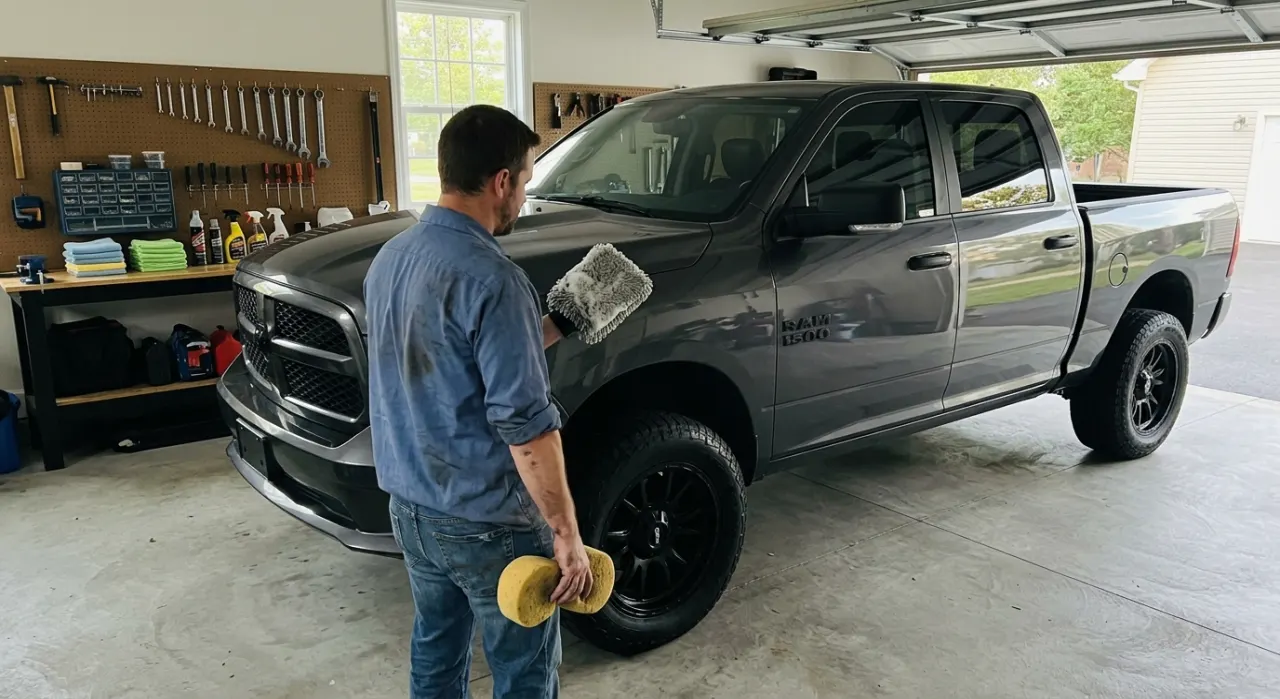
The kitchen sponge is probably the most damaging tool in the average person's car-washing setup, and almost nobody realizes it. It feels soft, it makes suds, it seems perfectly reasonable. And every wash it is quietly carving fine scratches into the clear coat. Understanding why comes down to one simple idea: where does the dirt go when your tool passes over it? Picture it like tires on a wet track — one setup grips and clears, the other just skates the grit around.
The core difference: lift versus grind
When you wash a car, your tool is constantly picking up abrasive road grit. What happens to that grit next decides whether your paint stays glossy or gets swirled.
A sponge has a flat, closed surface. When it passes over a piece of grit, there is nowhere for that grit to go — it gets trapped between the sponge and the paint and dragged along, acting like fine sandpaper. Every stroke presses the dirt into the clear coat.
A plush mitt — deep microfiber or genuine lambswool — has long fibers with lots of open space. When it passes over grit, the fibers pull that grit up off the surface and hold it deep in the nap, away from the paint, until you rinse it out. The dirt is lifted, not ground.
That is the entire argument. Same dirt, same paint, same pressure — but one tool lifts the abrasive away and the other presses it in. It is not marketing; it is just physics of the two surfaces.
Why this shows up as swirls
Those trapped grit particles under a sponge are exactly what creates swirl marks — the hazy spider-web scratches that light up under sunlight. A sponge is essentially a swirl-generating machine, adding a fresh layer of fine scratches every time you wash. Do it for a year and the paint develops that dull, cobwebbed look, and the only fix is polishing clear coat away.
We break down the full mechanism of how swirls form and how to stop them in how to prevent swirl marks — but tool choice is the front line. If you want to understand why your paint hazed over, the sponge is usually the first suspect.
Not all mitts are equal
Swapping to a mitt is the right move, but the quality of the mitt matters. Here is how the common types stack up:
- Genuine lambswool — the plushest, safest option, with dense natural fibers that hold enormous amounts of grit away from the paint. A favorite of careful detailers.
- Deep-pile microfiber (chenille) — the popular "noodle" or "spaghetti" mitts. Excellent grit-lifting, easy to rinse clean, machine washable, and affordable. My default recommendation for most people.
- Thin or cheap mitts — better than a sponge, but with shallow nap they trap less grit and sit closer to sponge behavior. Fine in a pinch, not what you want long term.
Because the mitt is the one thing touching your paint on every wash, it is worth buying well. We dug through owner reports on the popular options for our best wash mitt roundup, and one of the most-hyped options gets its own honest review in our Chemical Guys mitt review.
When a sponge is still the right tool
None of this means sponges are useless — they are just wrong for paint. There are plenty of car-washing jobs where scratching does not matter and a sponge is perfectly fine:
- Scrubbing tires and rubber
- Cleaning inner wheel wells
- Washing floor mats
- Any rough, dirty surface where a mitt would just get destroyed
Keep a dedicated sponge for these low-risk, high-dirt jobs. The rule is simple: sponges for the ugly stuff, mitts for the paint, and never cross the two over.
Even the best mitt needs good technique
A great mitt gives you a safety margin, but it is not a free pass. If you dunk a dirty mitt into a single bucket and reload it with the same grit every pass, you have undone its main advantage. The mitt keeps grit off the paint only if you keep the mitt clean — which means two buckets, rinsing the mitt after every panel, and washing top-to-bottom in straight lines.
That is the full technique covered in our two-bucket method guide. Tool plus technique is the combination that actually keeps paint swirl-free; either one alone only gets you partway.
The one contamination trap to avoid
One last warning that catches people out. Your wheels are covered in brake dust — which contains embedded metal particles — and road tar. If you use your paint mitt on the wheels, those particles get lodged in the fibers permanently, and now your "safe" mitt is scratching every panel it touches. Always keep a separate mitt or brush for wheels, and it never touches the body. Ever.
The bottom line
If your car-washing tool is a sponge, swapping to a plush mitt is the single highest-value upgrade you can make — bigger than any soap, wax or gadget. It costs very little and directly prevents the most common form of paint damage there is. Put the sponge in the tire bucket, get a good chenille or lambswool mitt for the paint, and pair it with two-bucket technique. Your clear coat will thank you every time the sun comes out. For the full wash routine it all fits into, start with how to wash a car.
Recommended Products
We won't send you to a sponge for your paint — the whole point of this page is that it swirls the clear coat. Here are the plush mitts worth putting on your paint instead, plus the two-bucket kit that keeps any mitt safe. Keep a cheap sponge for tires and wheel wells only.

Best for the default safe-wash mitt for most people
- Deep chenille "noodle" pile that lifts grit off the paint
- Rinses clean easily and is machine washable
- Huge owner review base
- Cheap enough to keep several on rotation
Why buy it: the high-consensus pick — deep grit-lifting nap, easy to rinse, and the mitt most detailers point beginners to.

Best for a proven, thick microfiber mitt on a budget
- Super-thick microfiber pile for scratch-free washing
- Traps grit deep, away from the clear coat
- Thousands of positive owner reviews
- Reusable and machine washable
Why buy it: the value mitt — a thick, trusted microfiber that does the one job that matters for the price of a coffee.
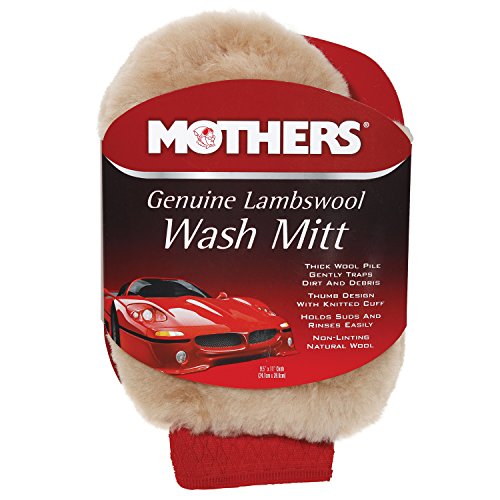
Best for careful detailers who want the plushest, safest option
- Dense natural lambswool — the plushest nap here
- Holds enormous amounts of grit away from paint
- A favourite of careful detailers
- Pricier and needs proper drying between washes
Why buy it: the premium mitt — genuine lambswool holds the most grit off the paint, for the swirl-conscious detailer.

Best for pairing a good mitt with the technique that keeps it safe
- Two buckets with grit-trap inserts to rinse grit out of the mitt
- Includes mitts and wash essentials
- Turns "tool" into a full swirl-safe routine
- The technique the whole mitt argument depends on
Why buy it: the do-it-right kit — a mitt only stays safe if the grit gets rinsed out of it, and two buckets are how you do that.
Prices are pulled from Amazon and were accurate as of Aug 22, 2026, 6:54 PM EDT. Product prices and availability are subject to change — the live price is shown on Amazon.