
Affiliate Disclosure
Some links on this page are affiliate links. As an Amazon Associate, we earn from qualifying purchases — at no extra cost to you. We do not buy, test, or physically handle the products we cover; our rankings come from aggregated owner reviews, ratings and expert consensus. Commissions never change our verdicts. How we rank & full disclosure.
EBC Brakes
A British manufacturer with an unusually broad, color-coded street lineup — Ultimax2, Greenstuff 2000, Redstuff, Yellowstuff, Bluestuff NDX and Orangestuff — spanning OE replacement to full race.
Best for: Daily drivers where low dust, quiet operation and strong cold bite matter more than track heat capacity
Typically $70–$180 per axle set depending on compound and application
- Redstuff is one of the most widely praised low-dust street pads owners report, and it keeps wheels visibly cleaner
- Color coding makes the range easy to navigate compared with alphanumeric part codes
- Most street compounds ship with a brake-in surface coating that speeds up the bedding process
- Very broad application coverage, including a lot of European and older platforms Hawk does not list
- Ultimax2 and Greenstuff 2000 give genuine cold bite from the first stop, which suits stop-start commuting
- Redstuff is widely reported to run out of bite on heavier vehicles and under sustained hard use
- Yellowstuff draws polarized owner feedback — strong when hot, noisy and grabby when cold on the street
- Rotor wear on the more aggressive compounds is often reported as higher than equivalent Hawk pads
- Less motorsport pedigree than Hawk in US club racing and time attack paddocks
Hawk Performance
A US manufacturer built out of a motorsport friction background, with a lineup that runs HPS, HPS 5.0, Performance Ceramic, HP Plus and the DTC race series.
Best for: Enthusiasts who want a genuine performance step over stock, and anyone doing autocross or track days
Typically $70–$200 per axle set depending on compound and application
- HPS and HPS 5.0 are consistently reported as the reliable street performance upgrade, with strong initial bite and predictable pedal feel
- Deep motorsport credibility — the DTC series is a paddock staple in US club racing
- HP Plus gives real track capability at a street-pad price for occasional track-day use
- Performance Ceramic covers the quiet, low-dust daily role without giving up much stopping power
- Compound behavior is well documented, so matching a pad to your use case is straightforward
- HP Plus is noisy, dusty and weak when cold — a poor choice for a pure daily driver despite being sold as street-legal
- The aggressive compounds are hard on rotors and will shorten disc life noticeably
- Application coverage on older and niche European platforms is thinner than EBC’s
- Premium compounds sit at the top of the price band for a street pad
How they score, side by side
Scores reflect aggregated owner reviews and expert consensus — not our own bench testing.
- Street cold bite79
- Low dust on a daily driver97
- Fade resistance on track79
- Noise behavior76
- Rotor friendliness66
- Application coverage97
- Value for the money88
Spec-by-spec comparison chart
| Factor | EBC Brakes | Hawk Performance |
|---|---|---|
| Origin | UK — Northampton, England | US — Ohio, motorsport friction background |
| Street lineup | Ultimax2, Greenstuff 2000, Redstuff, Yellowstuff | HPS, HPS 5.0, Performance Ceramic |
| Track lineup | Bluestuff NDX, Orangestuff | HP Plus, DTC-30 / 60 / 70, ER-1, Blue 9012 |
| Best low-dust option | Redstuff (ceramic-type) | Performance Ceramic |
| Best street all-rounder | Greenstuff 2000 or Yellowstuff | HPS 5.0 |
| Cold bite on street compounds | Good on Greenstuff; weaker on Yellowstuff | Strong on HPS and HPS 5.0 |
| Reported rotor wear | Moderate to high on aggressive compounds | Moderate to high on aggressive compounds |
| Bedding aid included | Yes — brake-in surface coating on most street pads | No coating; follow the published bed-in procedure |
| Application coverage | Very broad, strong on European and older platforms | Strong on US, JDM and popular enthusiast platforms |
| Typical price per axle set | $70–$180 | $70–$200 |
| Motorsport reputation | Established, more Europe-weighted | Very strong in US club racing |
Our Top 3 Picks
The three highest-rated options in this category, if you'd rather skip straight to a proven pick.
Best for a genuine street performance step with strong cold bite — pick the HPS 5.0 part number for your exact vehicle fitment
- High-friction street compound
- Strong bite from the first cold stop
- Predictable, refined pedal feel
- Order by your vehicle fitment
Why buy it: The most consistently recommended street upgrade in either lineup. Shown listing fits specific applications — confirm the HPS 5.0 set for your car before buying.
Best for the cleanest wheels on a daily driver — select the Redstuff (DP3-series) set that matches your vehicle
- Best-known low-dust street pad
- Brake-in coating speeds bedding
- Quiet, civilized daily manners
- Confirm fitment for your car
Why buy it: EBC's value champion for clean wheels on lighter, moderately powered cars. Vehicle-specific — pick the Redstuff part number listed for your exact model.

Best for a civilized step above stock for everyday driving — order the HPS set for your specific vehicle fitment
- Long-standing street upgrade
- Better bite than stock, still quiet
- Low-to-moderate dust
- Choose by your vehicle fitment
Why buy it: The default, well-mannered Hawk street pad. This listing fits particular applications — verify the HPS part number for your car.
Prices are pulled from Amazon and were accurate as of Aug 22, 2026, 6:54 PM EDT. Product prices and availability are subject to change — the live price is shown on Amazon.
What each brand actually is
These two names come up together constantly, and for good reason: they occupy the same slice of the market — the step above a parts-store pad, below motorsport-only friction — and they price within a few dollars of each other.
EBC Brakes is a British manufacturer that makes its own friction material and has built its identity around a color-coded street range. Where most brands offer two or three street options, EBC lists Ultimax2 for OE-equivalent replacement, Greenstuff 2000 as a fast-street upgrade, Redstuff as a low-dust ceramic-type pad, Yellowstuff as a street-and-track compound, then Bluestuff NDX and Orangestuff for track use. EBC also covers an enormous number of applications, including older and European platforms that US-focused brands skip.
Hawk Performance comes from the opposite direction. It grew out of a motorsport friction background, and its street pads are recognizably descended from race compounds. The DTC series is a fixture in US club racing paddocks, and that credibility flows down into how HPS, HPS 5.0 and HP Plus are perceived. Hawk's application list skews toward US, Japanese and popular enthusiast platforms.
Neither brand is a cheap knock-off. The consensus among enthusiasts is that both make good pads and that most bad experiences come down to picking the wrong compound for the use case rather than the wrong brand. That is the real decision, and it deserves more attention than the badge.
Decoding the lineups: which compound is which
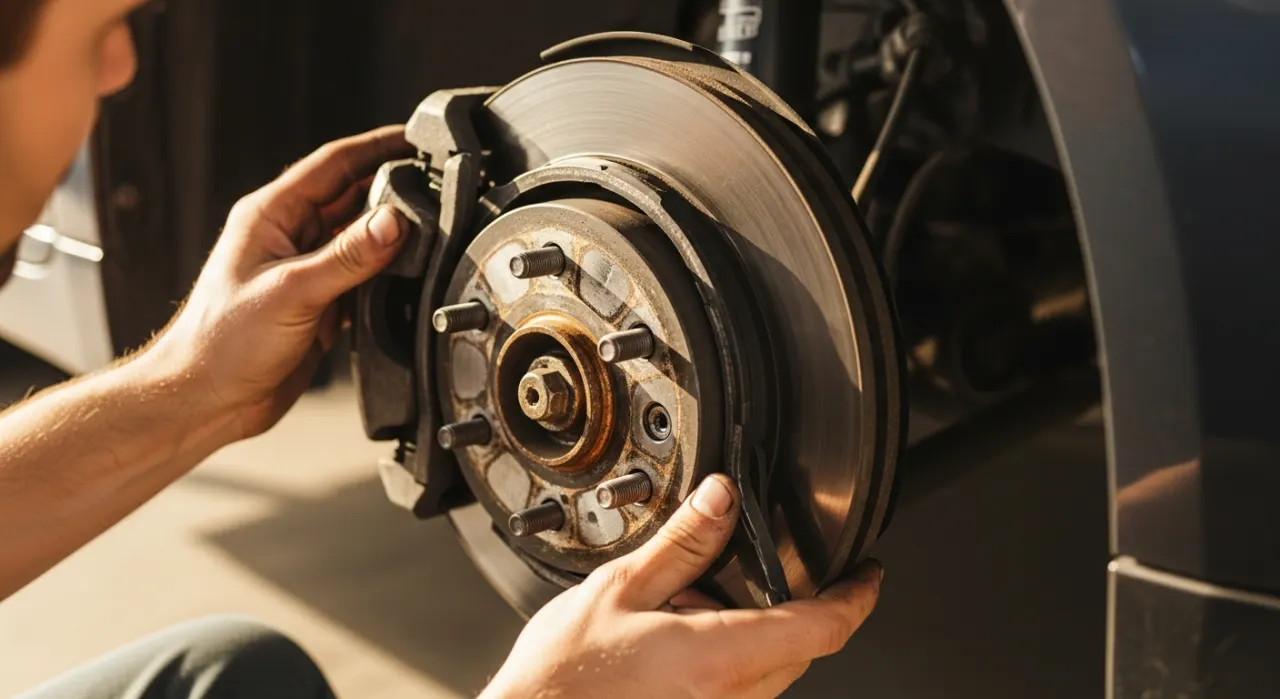
Buy on compound, not brand. Here is the practical mapping most owners and shops use.
EBC:
- Ultimax2 — OE replacement, aimed at restoring stock feel rather than improving it.
- Greenstuff 2000 — fast-street pad with good cold bite, popular on lighter daily drivers wanting a modest step up.
- Redstuff — the low-dust option owners single out for keeping wheels clean. Best on lighter, moderately powered cars.
- Yellowstuff — street-and-track. Higher friction and heat range, and the most polarizing compound for cold-street behavior.
- Bluestuff NDX / Orangestuff — track and race compounds, not for a car that mostly commutes.
Hawk:
- Performance Ceramic — the quiet, low-dust daily option, Hawk's direct answer to Redstuff.
- HPS — High Performance Street. The long-standing default upgrade: better bite than stock, still civilized.
- HPS 5.0 — a higher-friction evolution of HPS with more heat range, and the most commonly recommended all-rounder for a spirited street car.
- HP Plus — autocross and track-day capable, street legal, openly acknowledged to be noisy, dusty and weak until warm.
- DTC-30 / 60 / 70, ER-1, Blue 9012 — race compounds with progressively higher temperature windows.
The parallels are clear: Redstuff maps to Performance Ceramic, Greenstuff 2000 loosely to HPS, Yellowstuff sits between HPS 5.0 and HP Plus, and the race series face each other directly. If you are also weighing a factory pad against either brand, our OEM vs aftermarket brake pads comparison covers what you give up and gain.
On the street: bite, dust and noise
For a car that mostly commutes with occasional enthusiastic driving, three things determine whether you like the pads: cold bite, dust and noise.
Cold bite is where aggregated owner reviews separate the two most clearly. Hawk HPS and HPS 5.0 are repeatedly described as confident from the first stop of the morning, and EBC Greenstuff 2000 earns similar praise. EBC Yellowstuff is the outlier: a higher-temperature compound that a meaningful share of owners report feeling wooden until it has heat in it, then grabby once it does. That is compound behavior, not a defect, but it is a bad match for a car that never gets worked hard.
Dust is EBC's strongest street argument. Redstuff has a genuine reputation for keeping wheels clean, and owners with light-colored wheels rate it highly on that alone. Hawk Performance Ceramic is also low-dust and well regarded, but Redstuff is the name that comes up first. Note the trade: both low-dust compounds give up outright stopping power, and Redstuff in particular is widely reported to feel under-braked on heavier vehicles and SUVs.
Noise is close to a wash and depends heavily on installation. Both brands make compounds that can squeal, and the aggressive ones — Yellowstuff, HP Plus — are expected to. New hardware, clean and lubricated caliper slide pins, and shims or paste on the backing plate eliminate most of it; our brake pad refresh guide covers those details.
On track: fade resistance and rotor wear
Once you add heat, the pad's operating temperature window becomes the only thing that matters. A street pad taken onto a track does not just fade — the friction material can outgas and glaze, and in the worst case the pedal goes long enough to be genuinely dangerous.
Hawk's reputation is stronger here, and it comes from the race side of the business. HP Plus is the classic entry point: enough heat range for a track day or an autocross season at a street-pad price, with the documented penalty of being noisy and dusty on the drive home. Above it, the DTC series covers progressively higher temperatures. EBC's answer is Bluestuff NDX, which owners rate well for fast road and light track duty, with Orangestuff for race use. Yellowstuff sits below both — a fast-road compound that tolerates occasional heat, not a track pad.
Rotor wear is the honest cost on both sides. Higher-friction compounds are more abrasive, and owners of both brands report noticeably shorter disc life on the aggressive pads. Budget for rotors as a consumable if you run HP Plus, Yellowstuff or anything above them — and pair them with a rotor design that actually helps, which our drilled vs slotted rotors comparison covers. One more practical point: on many cars brake fluid becomes the limiting factor before the pad does, and a high-temperature fluid is a cheaper first upgrade than a race pad for anyone doing one or two track days a year.
Bedding in — where most complaints actually come from
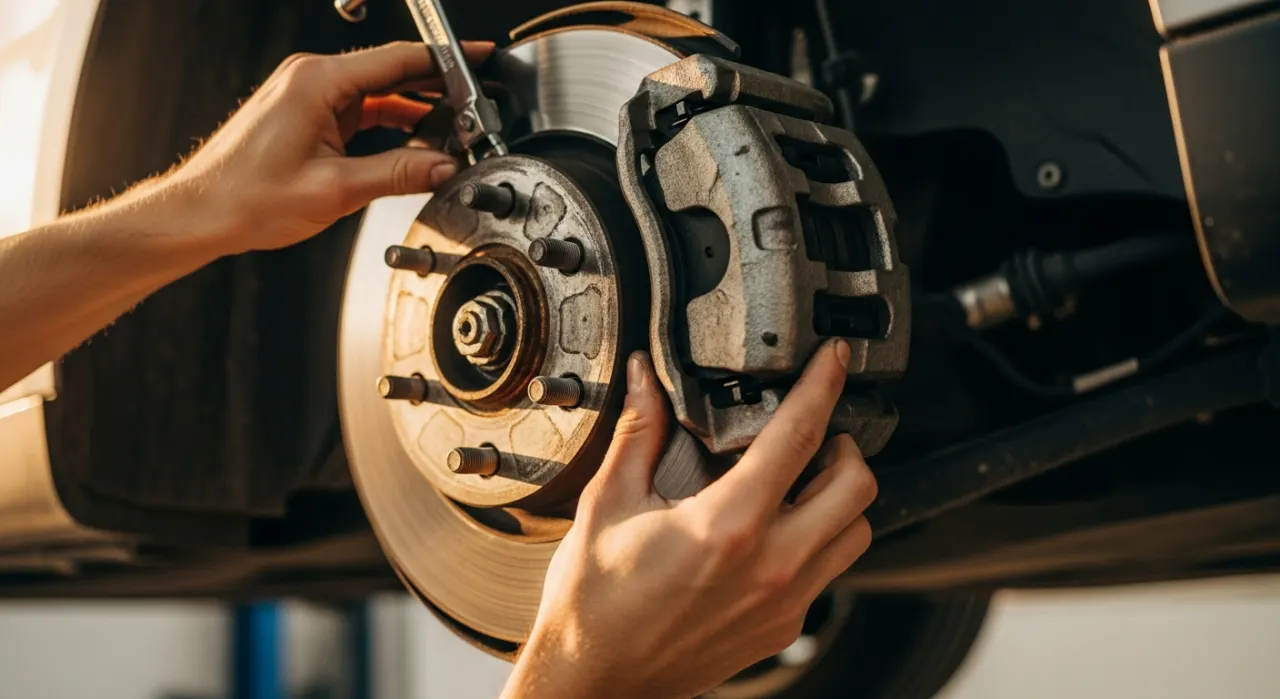
Read enough owner reviews of either brand and a pattern emerges: a large share of the one-star complaints — squealing, judder, poor initial stopping power, uneven wear — describe pads that were never bedded in correctly.
Bedding transfers an even layer of friction material onto the rotor face. Get it right and the pad works against its own material, which is what the compound was engineered to do. Get it wrong and you end up with patchy deposits that feel exactly like a warped rotor. Published procedures differ slightly by compound, but the shape is consistent: a series of moderate stops from around 35 mph to build heat gradually, then harder stops from around 55 mph, then several minutes of driving without coming to a complete stop so the brakes cool evenly. Do not hold the car stationary on the pedal while the rotors are hot — that is how you imprint a pad-shaped deposit.
EBC gives you a head start by shipping most street pads with a brake-in surface coating that speeds the transfer process; Hawk expects you to follow its published bed-in procedure. Neither removes the requirement to do it properly. Also worth stating plainly: always replace pads in axle sets and inspect the rotors when the pads come off, because fitting fresh pads to grooved or heavily glazed discs sabotages bedding before it starts.
Real cost across the life of a set
Prices land close together. Both brands typically run $70–$180 per axle set for street compounds, with aggressive options pushing toward $200 on larger applications. Compare like compound for like compound and neither is meaningfully cheaper.
Where cost diverges is consumption. Low-dust compounds — Redstuff, Performance Ceramic — are easy on rotors and last well in normal driving. High-friction compounds are not: expect shorter pad life and noticeably shorter rotor life, so factor discs into the running cost if you track the car.
The other real cost is buying twice. Owners who fit HP Plus or Yellowstuff to a pure commuter frequently pull them back off over noise and cold-bite complaints, then buy a street compound as well. Choosing correctly the first time is worth more than any price difference between the brands. If you are still deciding on friction type rather than brand, start with our ceramic vs semi-metallic brake pads comparison.
Which should you buy — and how to decide
Buy Hawk if you want a performance step you can feel in normal driving. HPS or HPS 5.0 is the most consistently recommended street upgrade in either lineup, with strong cold bite and predictable feel. If you plan on autocross or track days, Hawk's ladder from HP Plus up through the DTC series is the more proven path, and its motorsport reputation is earned.
Buy EBC if your priority is clean wheels and quiet, civilized daily driving — Redstuff is the standout there — or if you want a modest, well-mannered upgrade in Greenstuff 2000. EBC is also frequently the right answer simply because it lists an application for your car when Hawk does not, particularly on older and European platforms.
Match the compound to the actual car, honestly. A heavy SUV should not run a low-dust pad chosen for wheel cleanliness, and a car that never sees a track has no business on HP Plus or Orangestuff. Aggregated owner reviews make this clear over and over: the brand rarely causes the disappointment, the compound choice does.
Then do the boring parts properly. Replace pads in axle sets, fit the new hardware in the box, clean and lubricate the caliper slides, resurface or replace worn rotors, and follow the bed-in procedure to the letter. Do that and both brands deliver what their compound chart promises.
Recommended Products
Our top picks in this category, ranked on aggregated owner reviews.
Best for a genuine street performance step with strong cold bite — pick the HPS 5.0 part number for your exact vehicle fitment
- High-friction street compound
- Strong bite from the first cold stop
- Predictable, refined pedal feel
- Order by your vehicle fitment
Why buy it: The most consistently recommended street upgrade in either lineup. Shown listing fits specific applications — confirm the HPS 5.0 set for your car before buying.
Best for the cleanest wheels on a daily driver — select the Redstuff (DP3-series) set that matches your vehicle
- Best-known low-dust street pad
- Brake-in coating speeds bedding
- Quiet, civilized daily manners
- Confirm fitment for your car
Why buy it: EBC's value champion for clean wheels on lighter, moderately powered cars. Vehicle-specific — pick the Redstuff part number listed for your exact model.
Best for a civilized step above stock for everyday driving — order the HPS set for your specific vehicle fitment
- Long-standing street upgrade
- Better bite than stock, still quiet
- Low-to-moderate dust
- Choose by your vehicle fitment
Why buy it: The default, well-mannered Hawk street pad. This listing fits particular applications — verify the HPS part number for your car.
Best for fast-road use with occasional track heat — pick the Yellowstuff (DP4-series) set for your exact fitment
- High friction, wide heat range
- Works from cold, tolerates track heat
- Aggressive — expect more rotor wear
- Order by your vehicle fitment
Why buy it: EBC's dual-purpose compound for a spirited car that sees the odd track day. Vehicle-specific — confirm the Yellowstuff set for your model.
Best for autocross and track days on a street-legal pad — select the HP Plus set matching your vehicle fitment
- Ferro-Carbon track-day compound
- Real heat range for the track
- Noisy and weak until warm
- Confirm fitment before ordering
Why buy it: Hawk's classic street-legal track pad — best for cars that actually see a circuit, not pure commuters. Pick the HP Plus part number for your car.
Best for a modest, well-mannered upgrade on a lighter daily driver — choose the Greenstuff (DP2-series) set for your fitment
- Good cold bite for the street
- Brake-in coating speeds bedding
- Fully shimmed and slotted
- Order by your vehicle fitment
Why buy it: EBC's fast-street pad for a modest step above stock. Vehicle-specific — verify the Greenstuff 2000 set listed for your exact model.
Prices are pulled from Amazon and were accurate as of Aug 22, 2026, 6:54 PM EDT. Product prices and availability are subject to change — the live price is shown on Amazon.