
Affiliate Disclosure
Some links on this page are affiliate links. As an Amazon Associate, we earn from qualifying purchases — at no extra cost to you. We do not buy, test, or physically handle the products we cover; our rankings come from aggregated owner reviews, ratings and expert consensus. Commissions never change our verdicts. How we rank & full disclosure.
Matte PPF (Stealth Film)
The same 8-mil thermoplastic polyurethane as clear film, but with a frosted, light-diffusing top coat that converts glossy factory paint into a flat satin finish. XPEL STEALTH, SunTek Ultra Matte and 3M Scotchgard Matte are the mainstream options.
Best for: Owners who want a factory-matte look without matte paint, and anyone protecting genuine matte or frozen OEM paint
Roughly $1,100–$1,900 installed for a full front end; $6,000–$9,000 for full-vehicle coverage
- Delivers a satin finish that is fully reversible — peel the film and the glossy paint underneath is untouched
- The only practical protection for factory matte paint, which cannot be polished or corrected
- Same self-healing TPU construction and same 10-year manufacturer warranties as gloss film
- Hides light orange peel and minor texture in the paint that gloss film tends to magnify
- Rock-chip and bug-etch protection is identical to clear film — the sheen is a top-coat difference only
- Partial coverage looks wrong — the sheen break against glossy paint is obvious from across a parking lot
- Wax, sealant, glaze and most quick detailers will blotch or gloss up the texture permanently
- Water spots, fingerprints and oily residue show more because the micro-texture holds contaminants
- Costs 10–20% more than the equivalent gloss film from the same brand
Gloss PPF (Clear Film)
Optically clear self-healing urethane designed to disappear on the paint. XPEL ULTIMATE PLUS, SunTek Ultra and 3M Pro Series are the volume sellers, and the top coat is engineered to match or slightly exceed factory gloss.
Best for: The vast majority of cars — anyone who wants the paint protected without changing how the car looks
Roughly $900–$1,700 installed for a full front end; $5,000–$8,000 for full-vehicle coverage
- Invisible when installed well, so partial coverage like a front clip blends instead of announcing itself
- Compatible with normal detailing chemistry — sealants, ceramic coatings and quick detailers all work
- Light polishing of the film itself is possible with care, so scuffs and stains are often recoverable
- Cheaper per square foot than matte from the same manufacturer, and far more installers stock it
- Slightly amplifies gloss on dark paint, which owners consistently report as a visible upgrade
- Shows swirls and installer imperfections more readily because the surface is a mirror
- Does nothing to disguise orange peel or paint texture underneath
- Edges and relief cuts are more visible on light colors under direct sun
- Cannot be used over factory matte paint without destroying the flat look
How they score, side by side
Scores reflect aggregated owner reviews and expert consensus — not our own bench testing.
- Chip & impact protection99
- Visual subtlety39
- Ease of maintenance59
- Product compatibility410
- Value per square foot68
- Installer availability610
- Suits factory matte paint101
Spec-by-spec comparison chart
| Factor | Matte PPF (Stealth Film) | Gloss PPF (Clear Film) |
|---|---|---|
| Film construction | Aliphatic TPU, typically 8 mil (~200 micron) | Aliphatic TPU, typically 8 mil (~200 micron) |
| Finish after install | Flat / satin — diffuses reflections | Optically clear — matches or beats factory gloss |
| Self-healing top coat | Yes — heat-activated, same chemistry | Yes — heat-activated, same chemistry |
| Impact & chip protection | Identical — the sheen is cosmetic only | Identical — the sheen is cosmetic only |
| Full front end, installed | $1,100–$1,900 | $900–$1,700 |
| Full vehicle, installed | $6,000–$9,000 | $5,000–$8,000 |
| Typical warranty | 10 years (XPEL STEALTH, SunTek Ultra Matte) | 10 years (XPEL ULTIMATE PLUS, SunTek Ultra) |
| Works with normal wax/sealant | No — will gloss or blotch the texture | Yes — standard detailing chemistry is fine |
| Ceramic coating over the top | Matte-specific coatings only | Any consumer or pro ceramic coating |
| Partial coverage looks natural | No — obvious sheen break | Yes — this is the normal way it is sold |
| Can the film itself be polished | No — polishing burnishes it shiny | Yes, lightly and carefully |
Our Top 3 Picks
The three highest-rated options in this category, if you'd rather skip straight to a proven pick.

Best for the best DIY durability and gloss
- Graphene-infused hardness
- 2–5 year durability
- Slick, high-gloss finish
- Beginner-friendly kit
Why buy it: the best all-round DIY kit — long life and an easy application.

Best for maximum longevity
- Pro-grade hardness
- 2+ year protection
- Deep, warm gloss
Why buy it: a detailer favorite that survives years with proper prep.

Best for fast spray-on protection
- Spray-on / wipe-off
- SiO2 hydrophobic layer
- Great for beginners
Why buy it: spray-on ceramic protection in minutes with no cure fuss.
Prices are pulled from Amazon and were accurate as of Aug 22, 2026, 6:54 PM EDT. Product prices and availability are subject to change — the live price is shown on Amazon.
What actually separates matte and gloss PPF
Strip away the marketing and these two products are nearly the same thing. Both are aliphatic thermoplastic polyurethane, both are typically 8 mil thick — roughly 200 microns, or about four sheets of copy paper — and both carry a self-healing elastomeric top coat that closes light swirls when warmed by the sun or a heat gun. Cut a cross-section and you would struggle to tell them apart: adhesive layer, urethane core, top coat.
The difference lives entirely in that top coat. Gloss film is formulated to be optically clear, with a smooth surface that reflects light like a mirror. Matte film uses the same polymer with a micro-textured surface that scatters incoming light in every direction instead of bouncing it back in one. That scattering is the whole trick — it is why the paint underneath looks flat even though it is still glossy black or metallic gray under there.
Because the core urethane is identical, impact protection is identical. Spec sheets from XPEL, SunTek and 3M list the same thickness, the same warranty length and the same self-healing behavior across their matte and gloss lines. The film stops the same stone at the same speed either way.
What is not identical is everything that touches the surface after installation. A textured top coat interacts differently with water, mineral deposits, skin oils and every polish and wax in your garage. That is where the real decision lives. If you are still weighing film against a coating at all, our breakdown of PPF vs ceramic coating covers that upstream decision first.
Why coverage strategy decides this for you
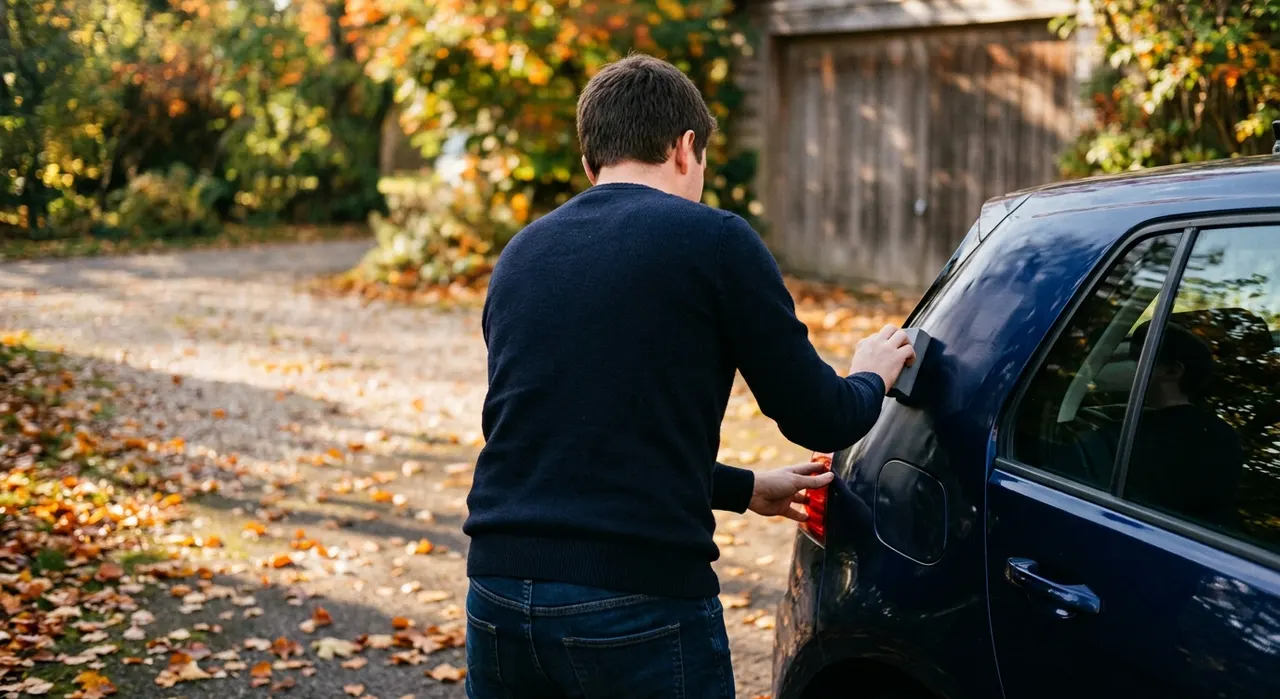
Most PPF is sold in partial packages. A "front clip" or "full front" typically covers the bumper, the full hood, both front fenders, the mirror caps and the headlights — the surfaces that eat highway debris. It is by far the most common install because it puts the money where the damage is.
With gloss film that works beautifully. The film is clear, the sheen matches, and a good installer wraps edges so the transition is invisible — owners consistently report a well-fitted front clip is undetectable at arm's length.
With matte film, partial coverage creates a hard visual line. A satin hood against glossy doors does not read as a design choice — it reads as a mismatched panel, and it is visible from thirty feet in daylight. That leaves you three options:
- Full-vehicle matte coverage — every painted panel filmed, sheen consistent everywhere. This is the clean answer, and it is why matte jobs skew expensive.
- Matte film plus a matte-look treatment on the rest — awkward, rarely convincing, and generally not recommended by installers.
- Panel-break coverage — matte the hood, roof and trunk as a deliberate two-tone accent. This can look intentional on the right car, but it is a styling statement, not protection strategy.
The practical rule the consensus among installers points to: if you cannot fund full coverage, buy gloss. Matte on a partial install is the single most common regret owners post about after the fact.
Maintenance: where matte film gets people in trouble
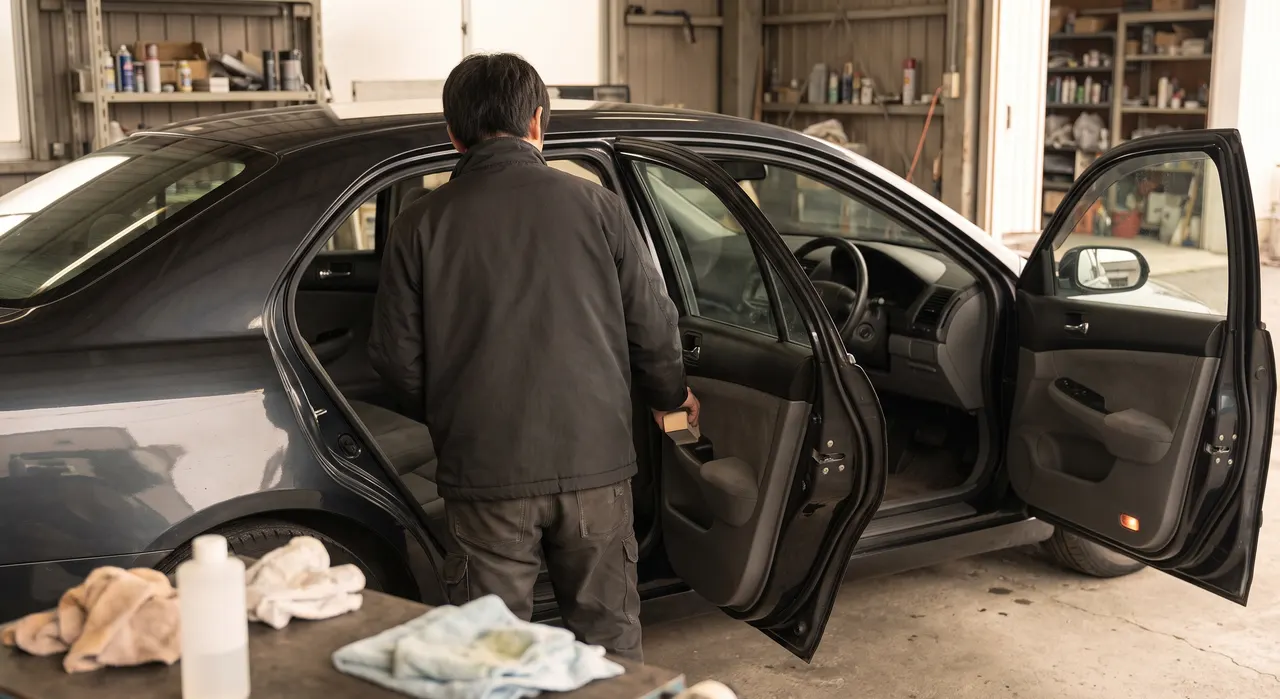
This is the part that catches new matte owners, and it is entirely avoidable if you know it going in. The micro-texture that creates the flat look also creates a surface that behaves differently from any paint you have washed before.
Nothing that fills, glosses or polishes may touch it. Carnauba wax, paint sealant, glaze, spray wax, most quick detailers and every "gloss enhancer" on the shelf will lodge in the texture and leave shiny, blotchy patches. Those patches are not always removable. The same applies to any machine polishing — burnishing a matte top coat permanently shines it, and there is no undoing that short of replacing the panel's film.
What you use instead is a short, specific list: a pH-neutral matte-safe car shampoo, a dedicated matte detail spray, and if you want extra protection, a matte-formulated ceramic coating such as XPEL FUSION PLUS Matte or Gyeon Q² Matte. These are engineered to bond without adding reflectivity. A standard ceramic coating over matte film will typically raise gloss and defeat the point.
Water spots are the other headache. Mineral deposits settle into the texture and are harder to wipe off than they would be on a smooth surface, so letting a matte car air-dry after a rinse is a genuinely bad habit. A soft drying towel, a filtered final rinse, or a leaf blower solves it. Our guide to the two-bucket wash method applies to both films, but on matte it is not optional — grit dragged across textured film is even less forgiving.
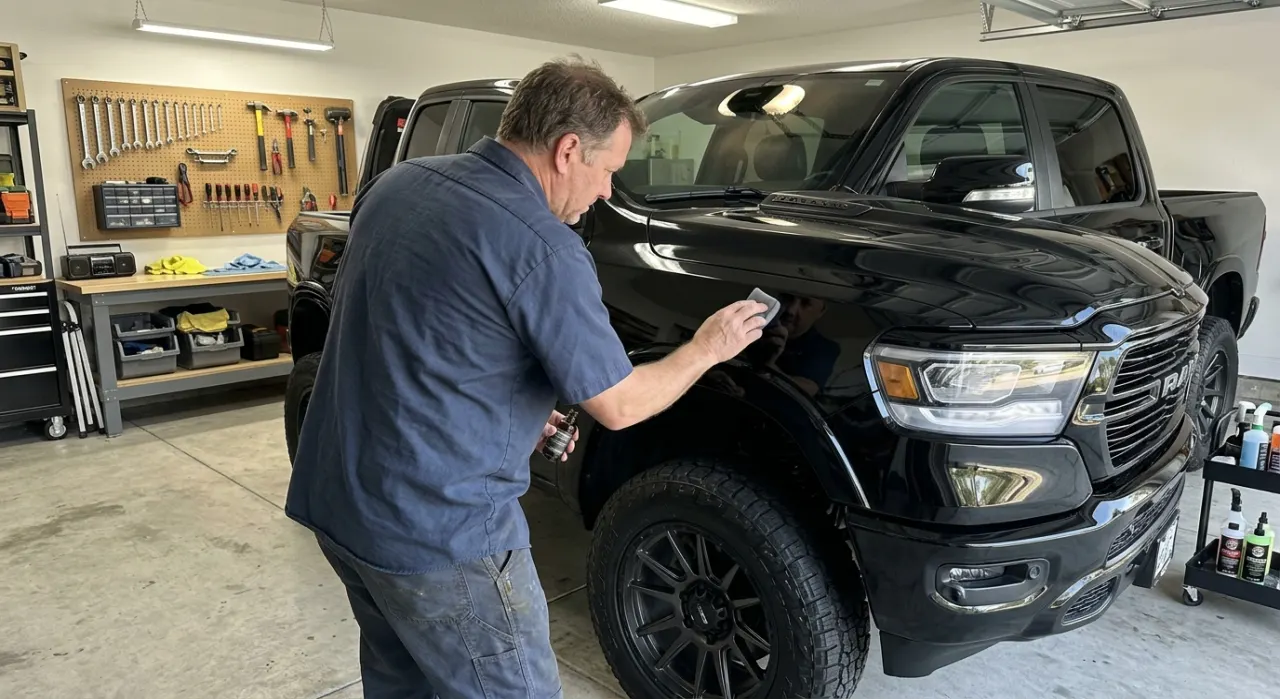
Gloss film asks nothing unusual. Wash it like paint, seal or coat it with whatever you already use, and light stains often polish out. That difference in daily tolerance is worth more to most owners than any spec on the data sheet.
The factory matte paint exception
There is one scenario where this comparison stops being a preference and becomes a technical requirement. If your car left the factory in genuine matte paint — BMW Frozen finishes, Audi Nardo-style matte options, Porsche satin exteriors, Mercedes MAGNO — then you are in a different situation entirely.
Matte paint cannot be corrected. There is no polishing out a scratch, no compounding a scuff, no wet sanding a chip repair to blend. Any abrasive contact permanently shines the spot, and the only fix is a repaint of the entire panel, which on these finishes is both expensive and notoriously hard to match.
That makes matte PPF the only sensible protection. It is sacrificial, it preserves the sheen exactly, and if it is damaged you replace a panel of film instead of a panel of paint. Gloss film over matte paint is not a compromise — it converts the car to gloss and erases the finish you paid a premium for. On a factory matte car, matte film is the answer and the price difference is irrelevant next to the alternative.
Real cost over five to ten years
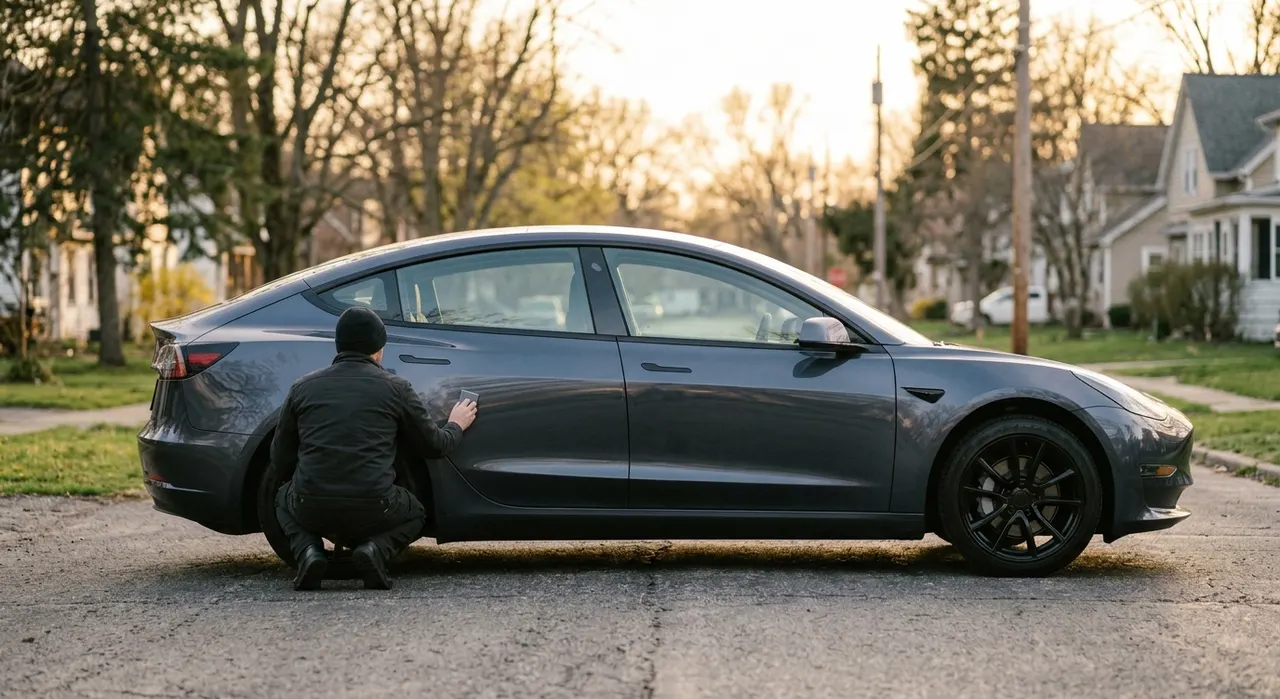
Priced per square foot, matte film generally runs 10–20% above gloss from the same manufacturer, and installers often add labor because matte is less forgiving of stretch marks and re-positioning — a heat-stretched matte panel can show sheen variation that gloss would hide.
In real numbers, a full front end lands roughly $900–$1,700 in gloss and $1,100–$1,900 in matte depending on the vehicle and region. Full-vehicle coverage runs about $5,000–$8,000 gloss and $6,000–$9,000 matte. Because matte realistically pushes you toward full coverage, the honest budget gap is wider than the per-foot premium suggests — you are often comparing a $1,300 gloss front clip to a $7,000 matte full wrap.
Both films carry 10-year manufacturer warranties on the leading products, and both should survive that decade without the yellowing that plagued the old PVC films of the 1990s. Modern aliphatic urethane top coats are UV-stable; yellowing complaints today almost always trace to budget imported film rather than a matte-versus-gloss issue.
The long-run consideration is consumables. Matte owners buy matte-specific shampoo and coatings from a shorter, pricier product list; gloss owners use whatever is already on the shelf. Our paint protection film guide covers coverage packages and warranty terms in depth.
Common myths and mistakes
"Matte film protects less because it is softer." False. Same core urethane, same thickness, same warranty. The top coat texture changes optics, not impact resistance.
"I can wax matte film to make it last longer." This is the mistake that ruins the most matte installs. Wax and sealant fill the micro-texture and leave permanent glossy blotches. Use matte-specific chemistry only.
"Matte film is the same as a matte vinyl wrap." No. Vinyl wrap is a thin cast film for color change with little impact resistance and typically a 5–7 year life. PPF is thick self-healing urethane built to absorb stone strikes. They overlap in appearance and nothing else — see vinyl wrap vs PPF for the full breakdown.
"I will just do the hood in matte for a racing look." You can, but understand you are making a styling choice, not a protection choice, and the resale market is mixed on two-tone film.
"Matte hides everything, so I can skip paint prep." Film magnifies whatever is underneath — dirt, wax residue and unrepaired chips all telegraph through. Both films demand a decontaminated, corrected surface.
Which should you buy — and how to decide
Buy gloss PPF if you want your car protected and looking exactly as it does now. It is cheaper, it works with every product you already own, it hides its own edges better, it is stocked by more installers, and partial coverage is genuinely invisible. For the large majority of owners this is not a close call.
Buy matte PPF in two situations. First, if you have factory matte paint — then it is the only correct answer and the premium is worth paying. Second, if you specifically want a satin car, can fund full coverage, and are willing to commit to matte-safe washing and coating chemistry for as long as you own it.
Whichever you choose, the variables that actually determine satisfaction are the same: hire an installer who wraps edges rather than cutting on the paint, insist on a full decontamination and correction before the film goes down, and confirm the warranty is registered in your name. Film brand and sheen matter far less than installation quality — a mediocre install in premium film will always look worse than a flawless install in mid-tier film.
Recommended Products
Our top picks in this category, ranked on aggregated owner reviews.
Best for the best DIY durability and gloss
- Graphene-infused hardness
- 2–5 year durability
- Slick, high-gloss finish
- Beginner-friendly kit
Why buy it: the best all-round DIY kit — long life and an easy application.
Best for maximum longevity
- Pro-grade hardness
- 2+ year protection
- Deep, warm gloss
Why buy it: a detailer favorite that survives years with proper prep.
Best for fast spray-on protection
- Spray-on / wipe-off
- SiO2 hydrophobic layer
- Great for beginners
Why buy it: spray-on ceramic protection in minutes with no cure fuss.

Best for the closest thing to a pro coating
- Near-professional hardness
- 5+ year durability
- Superb chemical resistance
Why buy it: pro-tier protection you can still apply at home.
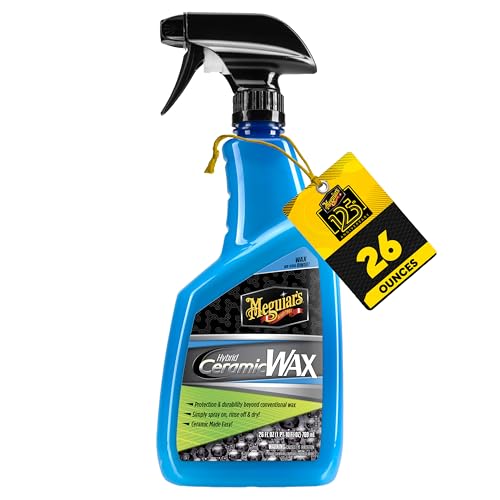
Best for cheap ceramic beading
- Spray on wet or dry
- Strong water beading
- Cheapest per use
Why buy it: the cheapest way to get ceramic-style beading fast.

Best for a complete beginner bundle
- Coating + applicators included
- Simple instructions
- Widely available
Why buy it: an all-in-one beginner bundle with everything you need.
Prices are pulled from Amazon and were accurate as of Aug 22, 2026, 6:54 PM EDT. Product prices and availability are subject to change — the live price is shown on Amazon.