
Affiliate Disclosure
Some links on this page are affiliate links. As an Amazon Associate, we earn from qualifying purchases — at no extra cost to you. We do not buy, test, or physically handle the products we cover; our rankings come from aggregated owner reviews, ratings and expert consensus. Commissions never change our verdicts. How we rank & full disclosure.
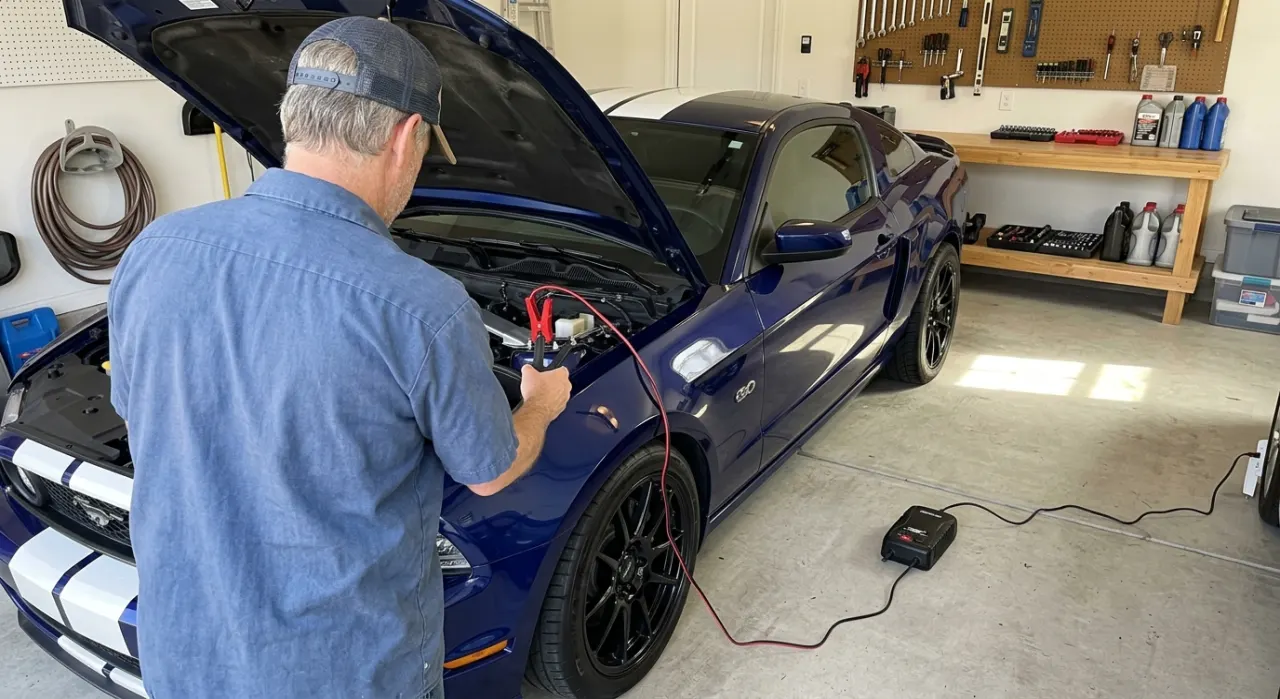
The short version: AGM batteries are now standard on anything with stop-start, and they are less forgiving than the flooded batteries most old chargers were built for. A sealed AGM cannot be topped up with water, so any gas it vents from overcharging is gone permanently — which is why the charger must hold a tighter voltage window and must never fire a desulfation pulse at it. Ranked across tens of thousands of owner reviews, our #1 pick is the NOCO GENIUS10: a labeled AGM profile, 10 amps of genuine charging speed, temperature compensation, and a repair mode kept safely on its own button. Below is the full ranked field, the voltages that matter, and the mistakes that kill AGM batteries early.
Not sure which battery you have? AGM vs flooded and AGM vs gel sort it out in a couple of minutes, and the label on the battery usually says so outright.
Top Picks at a Glance

Why the NOCO GENIUS10 Is Our #1
Three things make a charger genuinely suitable for AGM, and the GENIUS10 has all three. First, a separate, labeled 12V AGM mode that raises absorption voltage to the level AGM plates want without straying into flooded-battery territory. Second, thermal compensation — an internal sensor trims the voltage down in a hot garage and lifts it in a freezing one, which matters more on AGM than on flooded because the tolerance either side of correct is narrower. Third, and underrated, the repair mode is a deliberate, separate selection. On chargers that fold desulfation into the automatic cycle, an AGM battery can receive a high-voltage pulse it was never designed to take; here it cannot happen unless you choose it.
Beyond the AGM specifics it is simply a good charger. Ten amps refills a discharged group-35 battery in a few hours rather than overnight, force mode will start a battery that has fallen to zero volts, and once charging completes it settles into a float you can leave connected all winter. Owners consistently report using one unit across a stop-start car, a flooded truck battery and a lithium bike battery, changing only the mode.
The honest complaints: it costs more than a basic 10 amp charger, the blinking-LED status language needs the manual at least once, and it is deliberately conservative — a battery at genuine end of life will sit in diagnostics rather than being force-fed, which reads as a fault but is the charger doing its job.
Best AGM Battery Chargers 2026: The Ranked Field

Best for a dedicated AGM profile with real charging speed
- Separate 12V AGM charging mode
- 10A recovers a flat AGM in hours
- Thermal sensor trims voltage when hot
- Repair mode kept on a separate button
Why buy it: the charger owners with stop-start and AGM batteries rate highest — a labeled AGM curve, and the desulfation pulse is never applied by accident.

Best for one AGM battery, correctly charged, cheaply
- Selectable AGM setting
- 5A four-stage switch-mode charging
- Automatic float when charging completes
- Ring harness plus clamps included
Why buy it: the sensible AGM buy — 5 amps matches a normal car battery, and it holds the correct float voltage without any supervision.
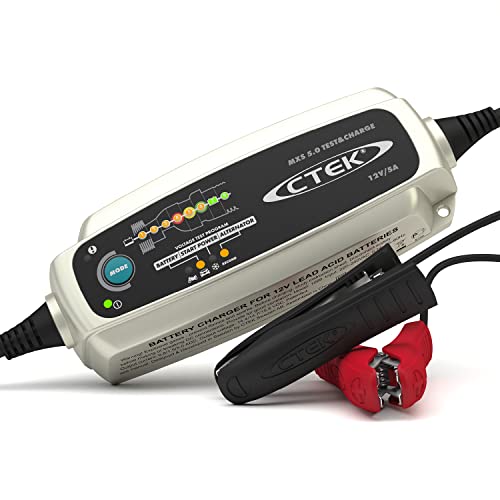
Best for tight voltage control and cold-weather charging
- AGM mode raises absorption to 14.7V
- Snowflake mode for freezing garages
- Built-in battery and alternator test
- Recond mode restricted to flooded use
Why buy it: the European standard for AGM care — owners praise how precisely it holds absorption voltage, which is exactly what AGM plates want.

Best for spiral-wound AGM and deeply discharged race batteries
- 12A charging with AGM-specific profile
- Recovers batteries from deep discharge
- Digital display with battery health info
- Maintain mode for long-term storage
Why buy it: the charger Optima owners buy for their own batteries — high current with a profile built for spiral-wound AGM rather than flooded plates.

Best for holding an AGM battery at float over winter
- 1A with a dedicated AGM mode
- Thermal compensation for cold storage
- Reconditions automatically every 24 hours
- Eyelet harness for permanent mounting
Why buy it: the cheapest correct way to store an AGM battery — the right float voltage for months, in a unit small enough to leave bolted under the hood.

Best for AGM charging plus a way to crank a dead vehicle
- AGM-capable 6A charging mode
- 100A engine-start assist
- Battery and alternator tester built in
- Automatic float maintenance
Why buy it: the practical wall unit — it charges AGM correctly and will still crank an engine when someone leaves the lights on.
Prices are pulled from Amazon and were accurate as of Aug 22, 2026, 6:44 PM EDT. Product prices and availability are subject to change — the live price is shown on Amazon.
Why AGM Charging Is Different
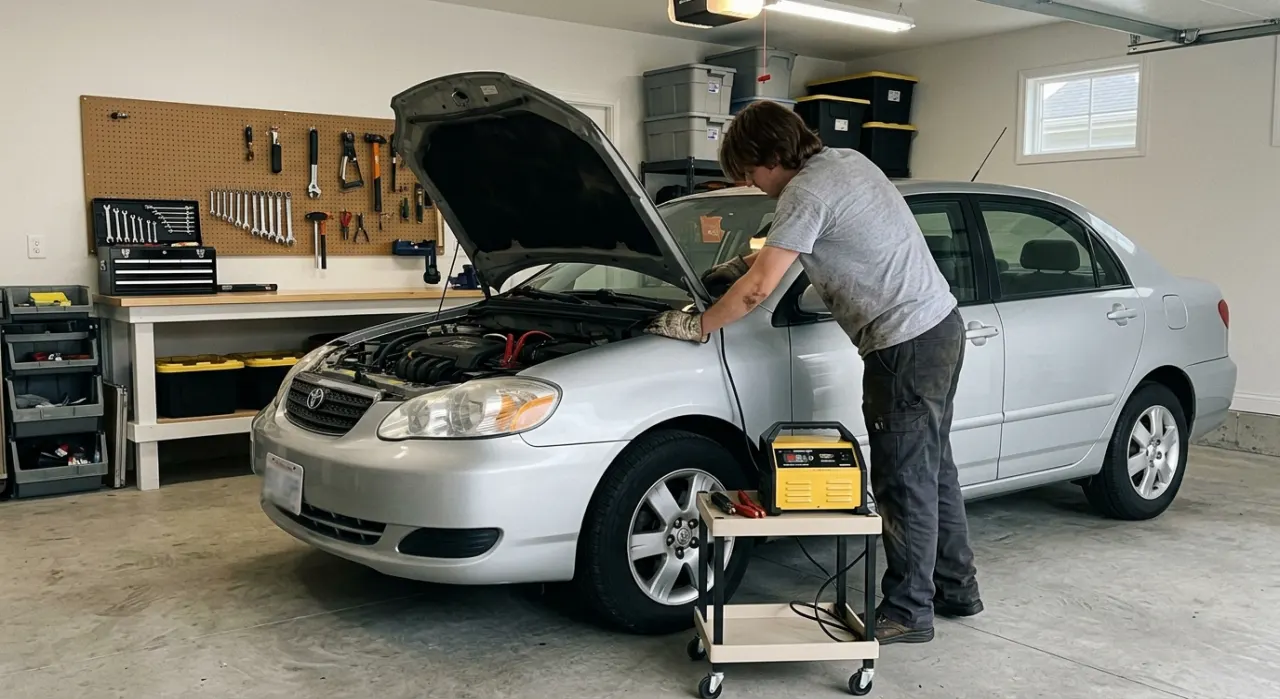
An AGM battery holds its electrolyte in a glass mat under compression, sealed behind a pressure-relief valve. That construction is what makes it spill-proof, vibration-resistant and able to accept current quickly — and it is also what makes overcharging permanent. A flooded battery that gasses can be refilled with distilled water. An AGM that gasses has lost that electrolyte for good, the mat dries out where it vented, and the capacity never comes back. Every AGM charging rule follows from that single fact.
In practice it means three things. Absorption voltage should sit in the 14.4 to 14.7 volt range rather than the higher equalization voltages some chargers apply to flooded batteries. Float voltage should be around 13.4 to 13.8 volts for long-term maintenance. And pulse desulfation must stay off — the technique exists to shock sulfate crystals off flooded plates, and applying it to a sealed AGM is asking the battery to vent. If your charger has a single automatic program with no chemistry selection, it is a flooded charger, whatever the box says.
How to Choose an AGM Charger
Start by insisting on a labeled AGM mode. Not "suitable for all battery types" in the marketing copy — an actual button or setting. Next, choose amperage the same way you would for any battery: about 10 percent of the amp-hour rating, so 5 amps for a typical car battery and 10 amps if you want a flat battery back in an afternoon or you are charging truck-sized batteries. AGM can accept current faster than flooded lead-acid, but there is little benefit in pushing 30 amps at a 50Ah battery.
Then look for temperature compensation, which is the feature that separates chargers that keep AGM batteries healthy for years from chargers that quietly cook them each summer. If the vehicle is stored, prioritize a genuine float stage so the charger can stay connected for months — a 1 amp maintainer with an AGM mode, like the GENIUS1, is the cheapest correct answer. Finally, check whether the desulfation feature can be disabled or is separately selected; if it fires automatically on every cycle, buy something else.
Common Mistakes
Using an old unregulated charger. A constant-current charger with a needle gauge has no idea what an AGM battery is and will push voltage past the vent point. This is the fastest way to ruin an expensive battery.
Running repair or recondition mode "just in case". On AGM it is not a tune-up, it is stress. Keep it for flooded batteries — battery desulfation explained covers where it genuinely helps.
Assuming an AGM upgrade needs no other changes. Some older vehicles charge at a voltage tuned for flooded batteries; on stop-start cars, the new battery often needs to be registered to the BMS so the alternator uses the right profile.
Judging state of charge by flooded numbers. A rested, fully charged AGM reads around 12.8 to 12.9 volts, not 12.6. Reading it as "overcharged" leads people to undercharge, which sulfates the battery instead.
How We Rank
We do not have a lab and we do not bench-test chargers ourselves. We rank by aggregating owner ratings, review volume and the recurring themes in long-term reviews, weighed against published specifications and against what AGM manufacturers actually publish about charging voltages. For this category the criteria are stricter than usual. A charger must have a labeled AGM profile to be listed at all. We favor temperature compensation, because AGM tolerates less voltage error than flooded lead-acid. We mark down any unit that applies desulfation pulses automatically with no way to avoid them. And we weigh long-term owner reports heavily, since AGM damage from a bad charger shows up over months rather than immediately. Prices were current at the time of writing.
The Verdict
For a modern car with an AGM battery, the NOCO GENIUS10 is the charger owners rate highest — correct AGM voltage, useful speed, and no chance of an accidental repair pulse. If you only need to look after one battery, the 5 amp Battery Tender does the same job for less. Owners who want the tightest voltage control, especially in a cold garage, should buy the CTEK MXS 5.0, and anyone running spiral-wound performance AGM will get more from the OPTIMA Digital 1200. For winter storage alone, the GENIUS1 is all you need.
Related reading: best smart battery charger, lithium (LiFePO4) chargers, trickle chargers and maintainers, and the battery chargers hub. To check whether the battery is worth charging at all, see how to test a car battery.
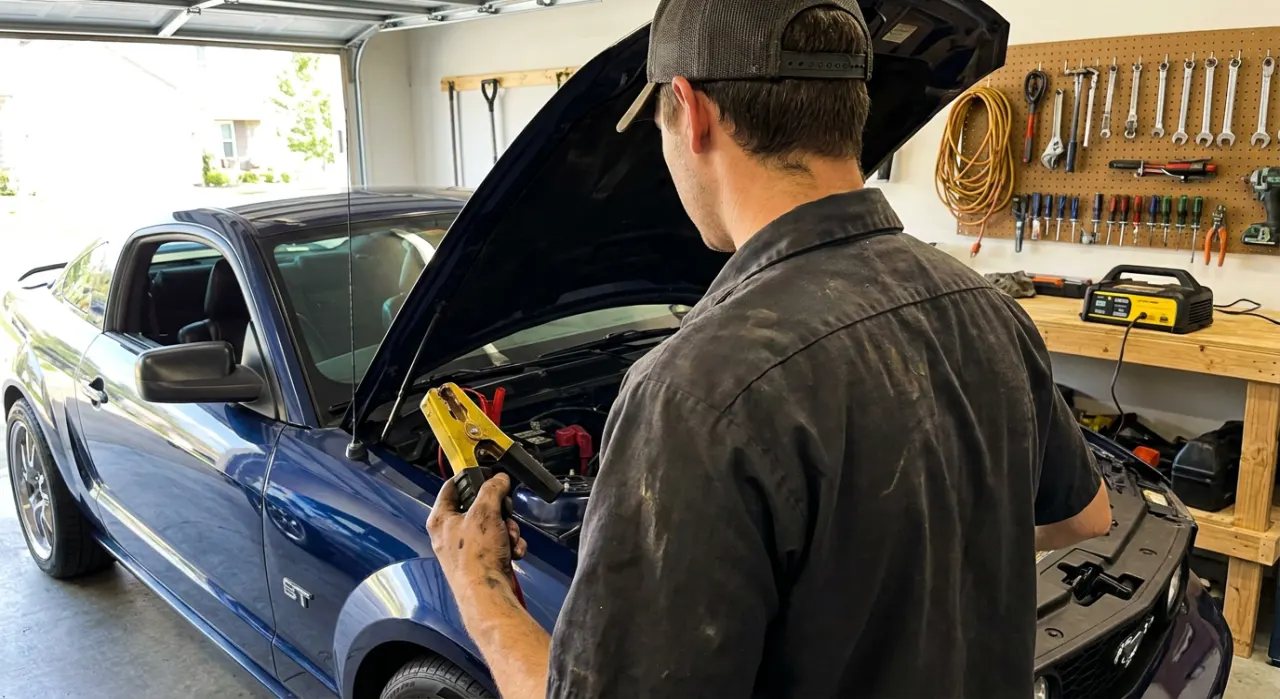
AGM Chargers with a Jump-Starter Built In
Some wall chargers double as an engine-start unit, and it is a genuinely useful combination for a driveway. The Schumacher SC1281 on this list charges AGM correctly and delivers a 100-amp start assist to crank a dead vehicle without a second car. Owners consistently report reaching for the jump-starter function on a cold morning far more than they expected. If you want the power in your pocket instead, a separate portable jump starter lives in the trunk and needs no outlet. What you should not do is rely on the start-boost as a charger; a hard boost puts a big surge into an AGM, so follow it with a proper AGM charge cycle to refill the battery gently.
Charger vs Battery Maintainer — Which You Actually Need
A charger and a battery maintainer are not the same tool, and buying the wrong one is common. A charger pushes real current — 5 to 10 amps — to refill a discharged 12V battery in hours. A maintainer trickles a fraction of an amp to hold an already-full battery at the correct AGM float over weeks of storage. Owners consistently report needing both jobs: a 10-amp unit for a flat battery after a dead accessory, and a 1-amp maintainer bolted under the hood of a seasonal car. Several units here, like the NOCO GENIUS range, do both automatically — charge hard when the battery is low, then settle to a maintenance float. If a car sits more than it drives, the maintainer mode is the feature that keeps the AGM alive.
Quick Comparison
NOCO GENIUS10 (10A)
Best for a dedicated AGM profile with real charging speed
Best Value
Battery Tender 5A 12V (022-0186G-DL-WH)
Check Price on Amazon
Best Premium
CTEK MXS 5.0 Test & Charge (4.3A)
$230.95 · Check Price on Amazon
Best for Performance AGM
OPTIMA Digital 1200 12V Charger
Check Price on Amazon
Best for AGM Storage
NOCO GENIUS1 (1A)
$29.87 · Check Price on Amazon
Best with Engine Start
Schumacher SC1281 (6A + 100A Start)
$89.99 · Check Price on Amazon
Prices are pulled from Amazon and were accurate as of Aug 22, 2026, 6:44 PM EDT. Product prices and availability are subject to change — the live price is shown on Amazon.