
Affiliate Disclosure
Some links on this page are affiliate links. As an Amazon Associate, we earn from qualifying purchases — at no extra cost to you. We do not buy, test, or physically handle the products we cover; our rankings come from aggregated owner reviews, ratings and expert consensus. Commissions never change our verdicts. How we rank & full disclosure.
The short version: lithium iron phosphate (LiFePO4) is now in everything from sport bikes to RV house banks, and it does not charge like lead-acid. A 12V LiFePO4 pack wants roughly 14.6 volts, a hard stop rather than a long float, and absolutely no desulfation pulse. Using a lead-acid charger on one is not a shortcut — it can drive the pack past its safe window, trip or damage the BMS, and in the worst case create a genuine fire risk. Ranked across tens of thousands of owner reviews, our #1 pick is the NOCO GENIUS5 for its explicit lithium mode in a garage that also has lead-acid batteries. If everything you own is lithium, a lithium-only charger like the Redodo 14.6V 20A removes the chance of picking the wrong setting entirely.
Not sure which chemistry you have? Lithium packs are dramatically lighter than a lead-acid battery of the same rating and usually say "LiFePO4" on the case. Our lithium vs lead-acid explainer covers the differences, and AGM chargers covers the other chemistry people confuse it with.
Top Picks at a Glance
Why the NOCO GENIUS5 Is Our #1
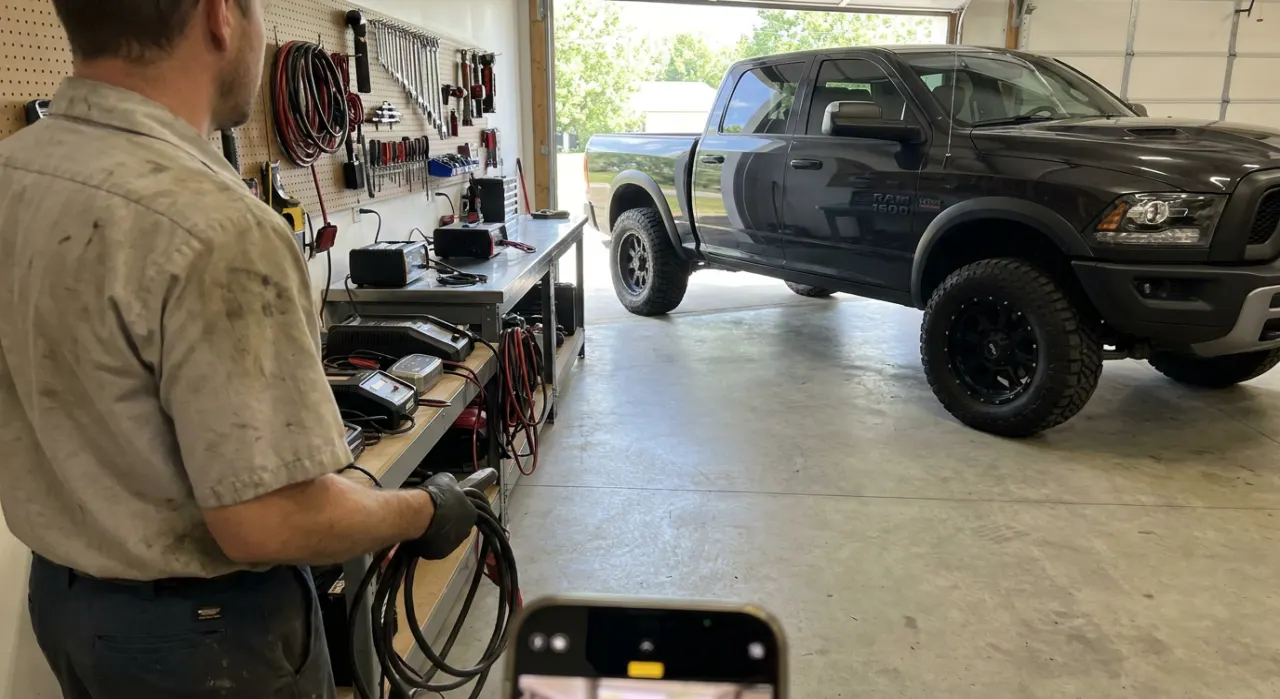
Most people shopping for a lithium charger do not have an all-lithium garage. They have a LiFePO4 battery in a bike or a camper, an AGM in the daily driver and a flooded battery in something older, and they would rather own one charger than three. The GENIUS5 is the unit that handles all of it correctly: a labeled 12V lithium mode that runs the LiFePO4 curve, separate 12V and 12V AGM modes for the lead-acid batteries, and — critically — a repair mode that only runs when you deliberately choose it. Chargers that fold desulfation into every automatic cycle are the ones that get lithium owners in trouble.
Five amps is a sensible middle. It fills a 20Ah powersports lithium battery quickly and will handle a small house battery overnight, without the heat and cable bulk of a 20 or 25 amp unit. The thermal sensor adjusts output for ambient temperature, force mode will push current into a pack that has fallen to zero volts and shut its BMS down, and the whole thing is small enough to travel.
What it is not: a fast charger for a big bank. If you are refilling a 100Ah LiFePO4 house battery regularly, five amps means a twenty-hour charge, and a dedicated 14.6V 20A unit is the right tool. It also has no display or app — you get status LEDs and nothing more, which is exactly what the Victron pick below solves.
Best Lithium Battery Chargers 2026: The Ranked Field

Best for a garage with lithium and lead-acid batteries
- Dedicated 12V LiFePO4 charging mode
- 5A across 6V and 12V lead-acid too
- Thermal sensor adjusts for ambient temp
- Repair mode kept on a separate button
Why buy it: the most useful lithium charger for a mixed garage — an explicit LiFePO4 profile, with the lead-acid repair pulse safely on its own selection.

Best for charging a 12V LiFePO4 bank quickly and cheaply
- 14.6V 20A, LiFePO4 only
- Three-stage CC/CV lithium algorithm
- 0V recovery wakes a BMS-locked pack
- Aluminum case, LED status indicator
Why buy it: a lithium-only charger with no lead-acid setting to pick by mistake — 20 amps refills a 100Ah LiFePO4 battery in about five hours.
Best for tunable profiles and app monitoring
- Selectable LiFePO4 algorithm
- Bluetooth app shows every charge stage
- IP65 sealed against dust and spray
- Storage mode for long layups
Why buy it: the charger van and boat owners buy once — you can watch absorption and float on your phone and match the profile to the pack exactly.
Best for house batteries, trolling banks and off-grid packs
- 14.6V 20A dedicated LiFePO4 output
- Anderson connector and ring terminals
- 0V activation for sleeping BMS packs
- Rated for 100Ah+ deep-cycle banks
Why buy it: the workhorse for big 12V lithium banks — deep-cycle owners rate it for charging a 100Ah pack in a single afternoon.
Best for LiFePO4 motorcycle and ATV batteries
- 10-step 12.8V lithium-only program
- Cell-balancing maintenance charge
- Recovers packs a BMS has shut down
- Weatherproof, for 2–60Ah packs
Why buy it: the powersports lithium specialist — its balancing maintenance stage is what keeps a small LiFePO4 pack usable through a long layup.

Best for large lithium banks and workshop duty
- 25A on 6V/12V, 12.5A on 24V
- Lithium (LiFePO4) profile selectable
- Doubles as a ripple-free power supply
- Thermal compensation and 0V force mode
Why buy it: the professional-grade unit for people charging large lithium banks — 25 amps, plus a power-supply mode for module programming.
Prices are pulled from Amazon and were accurate as of Aug 22, 2026, 6:44 PM EDT. Product prices and availability are subject to change — the live price is shown on Amazon.
Why Lithium Charging Is Genuinely Different
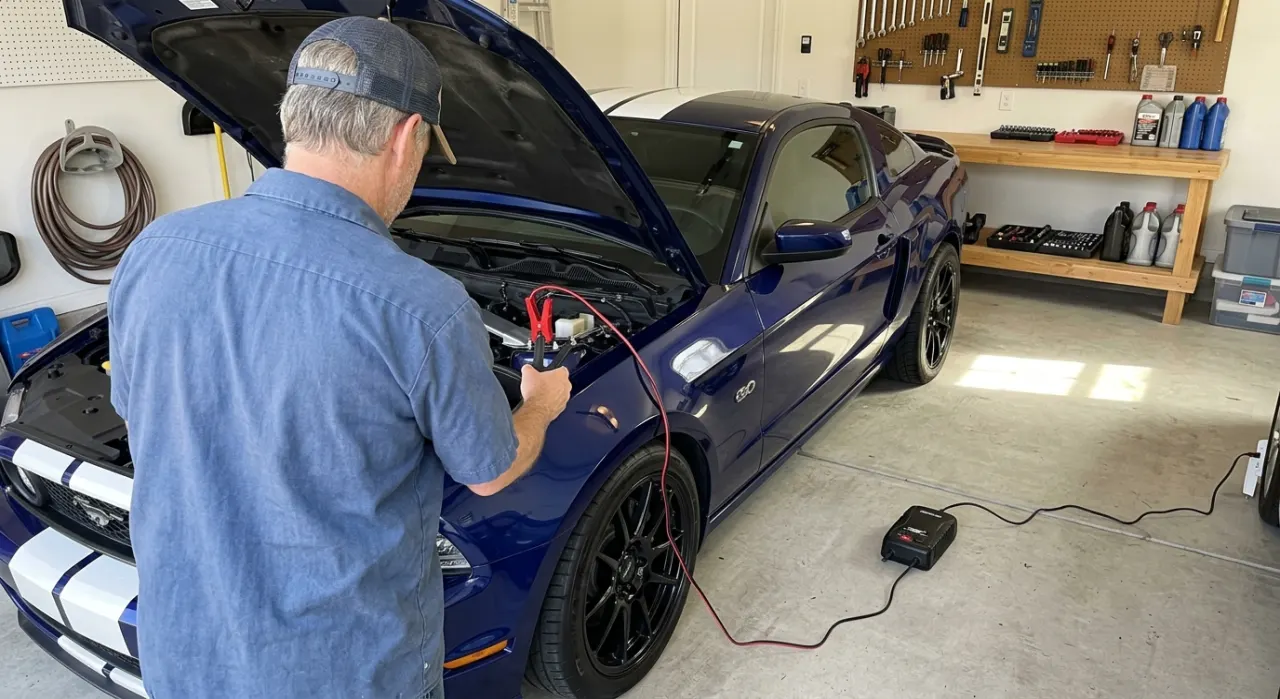
Four differences drive every recommendation on this page. Voltage. A 12V LiFePO4 pack is four cells at a nominal 3.2 volts, charged to about 3.65 volts each — roughly 14.6 volts at the terminals, then stop. The curve. Lead-acid needs a long absorption stage to reach full charge and then a permanent float; lithium takes current at almost full rate right up to the end and then terminates, so a lead-acid charger reading a lithium pack often thinks the battery is behaving strangely. No sulfation. There is nothing in a lithium cell for a desulfation pulse to fix, so the pulse is pure stress on the pack. The BMS. Every lithium battery has a battery management system that can disconnect the pack entirely if it is over-discharged, and getting it to reconnect requires a charger that can push current into what looks, electrically, like zero volts.
Put together: a lithium charger is not a marketing distinction. The safety statement worth repeating is that charging a LiFePO4 battery on a lead-acid profile, or applying a repair or desulfation pulse to it, can damage the pack and create a real fire risk. Set the mode before every charge, and if you cannot set the mode, use a different charger.
How to Choose a Lithium Charger
Answer three questions. How big is the pack? Charge current of roughly 20 to 50 percent of the amp-hour rating is normal for LiFePO4, which accepts current far faster than lead-acid — so a 100Ah house battery is happy at 20 amps, while a 12Ah bike battery wants 1 to 5. Is your garage all-lithium? If yes, a lithium-only charger like the Redodo or LiTime removes any chance of selecting a lead-acid profile by mistake. If no, buy a multi-chemistry smart charger and get into the habit of checking the mode LED before you walk away. Where does it live? Boats, campers and outdoor storage justify a sealed IP65 unit; a bench charger in a dry garage does not need it.
Two features are worth paying for. 0V recovery (variously called force mode, BMS activation or wake-up) is what saves a pack whose BMS has latched off after a deep discharge — without it, an otherwise healthy battery can look dead. And a storage or maintenance mode that lets the pack rest instead of holding it at absorption voltage is better for long-term life than a lead-acid style permanent float.
Common Mistakes
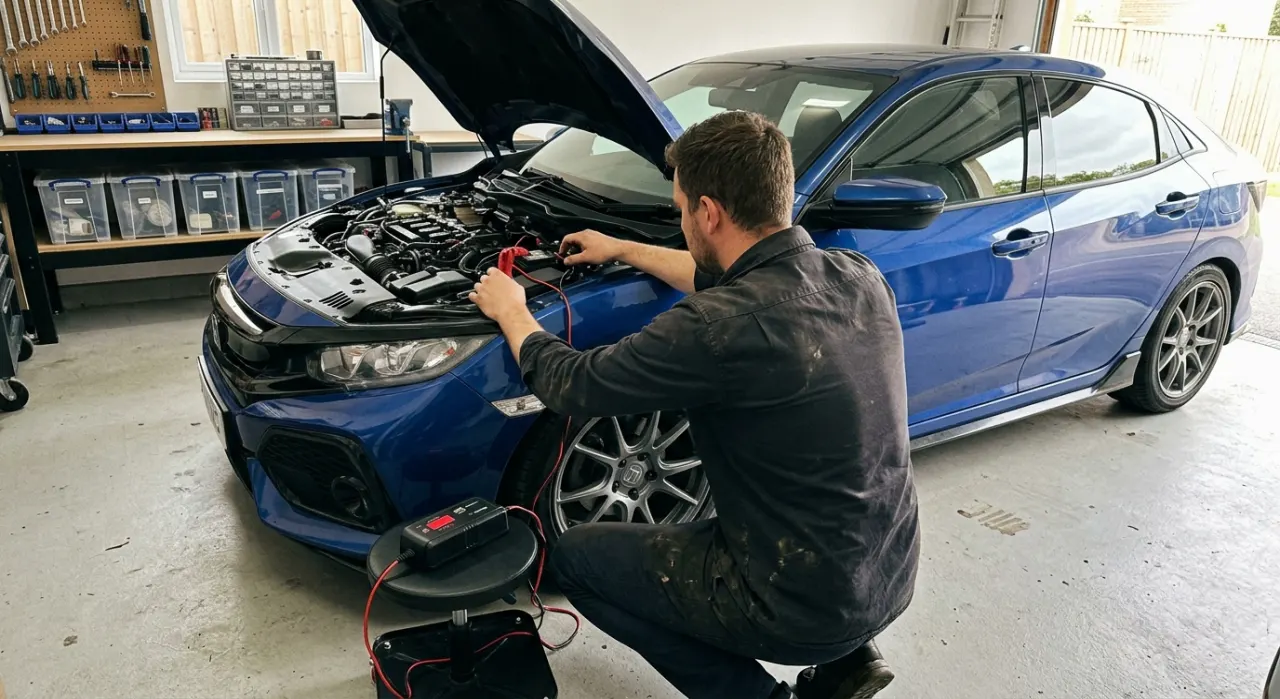
Charging on a lead-acid setting "just this once". The pack may survive it; the habit will not. Always select lithium.
Running desulfation or repair mode. It does nothing useful on lithium and stresses cells that are not built for high-voltage pulsing.
Charging below freezing. Lithium plating below 32°F permanently reduces capacity. Warm the battery first, or use a pack with a low-temperature cutoff or self-heating.
Assuming a jump starter charges the battery. Lithium jump packs supply cranking current and add essentially nothing to the vehicle battery — see is a lithium jump starter worth it.
How We Rank
We have no lab and we do not bench-test chargers ourselves. We rank by aggregating owner ratings, review volume and the recurring themes in long-term reviews, weighed against published specifications and against what LiFePO4 manufacturers publish about charge voltage and temperature limits. This category gets the strictest filter we apply anywhere: a charger must have an explicit lithium profile or be lithium-only to be listed. After that we weight charge voltage accuracy against the 14.6V target, 0V BMS recovery, whether desulfation is separately selected rather than automatic, and owner-reported reliability over years rather than months. Prices were current at the time of writing.
The Verdict
For a mixed garage, the NOCO GENIUS5 is the lithium charger owners rate highest — a proper LiFePO4 profile, plus correct handling of the lead-acid batteries you also own. If your batteries are all lithium and you want speed without complication, the Redodo 14.6V 20A or the LiTime 14.6V 20A are the straightforward answers, and both wake a BMS-locked pack. Riders should buy the OptiMate Lithium 4s for its balancing maintenance stage, and anyone charging large banks regularly will justify the NOCO GENIUSPRO25.
Related reading: AGM chargers, marine and deep-cycle chargers, motorcycle chargers, and the battery chargers hub. For the EV side of lithium, see EV care.
Quick Comparison
NOCO GENIUS5 (5A, Lithium Mode)
Best for a garage with lithium and lead-acid batteries
Best Value
Redodo 14.6V 20A LiFePO4 Charger
$75.99 · Check Price on Amazon
Best Premium
Victron Blue Smart IP65 12V 15A
Check Price on Amazon
Best for RV & Solar Banks
LiTime 14.6V 20A LiFePO4 Charger
Check Price on Amazon
Best for Powersports
OptiMate Lithium 4s 5A (TM-291)
Check Price on Amazon
Best High-Output
NOCO GENIUSPRO25 (25A)
Check Price on Amazon
Prices are pulled from Amazon and were accurate as of Aug 22, 2026, 6:44 PM EDT. Product prices and availability are subject to change — the live price is shown on Amazon.