
Affiliate Disclosure
Some links on this page are affiliate links. As an Amazon Associate, we earn from qualifying purchases — at no extra cost to you. We do not buy, test, or physically handle the products we cover; our rankings come from aggregated owner reviews, ratings and expert consensus. Commissions never change our verdicts. How we rank & full disclosure.
The short version: motorcycle batteries almost never die of old age — they die of neglect. A bike battery is typically 8 to 20 amp-hours against 45 to 70 for a car, so it has far less reserve, and it spends months parked with an alarm, a clock and an ECU quietly drawing on it. Below about 12.4 volts sulfation starts, and a battery left over one winter can lose enough capacity that it never cranks properly again. A maintainer prevents essentially all of that for around the price of a tank of premium. Ranked across tens of thousands of owner reviews, our #1 is the Battery Tender Junior. Riders with AGM or lithium batteries should buy the NOCO GENIUS1 instead, for one specific reason we get into below.
To be clear about what this page is not: a maintainer will not start a bike that is already dead in a parking lot. That is a jump starter, which supplies cranking current and charges nothing. The three-way distinction is laid out in battery charger vs maintainer.
Top Picks at a Glance

Why the Battery Tender Junior Is Our #1
The Junior has been the default rider recommendation for so long that it is effectively the benchmark, and the aggregated review record backs it up. The core reason is that 800 milliamps is the right number for a bike. It is enough to bring a slightly drained 12Ah battery back over a night or two, and small enough that it can never stress a battery that size. Larger chargers do not charge a motorcycle battery better; they just make more heat in a case that has very little room to dissipate it.
The second reason is the harness. The permanently mounted ring-terminal lead with a weatherproof cap is what makes riders actually use the thing — you route it out from under the seat once, and after that every connection is a click. Owners repeatedly say this is the difference between a charger that lives on the bike all winter and one that stays in a drawer. The third reason is longevity: reviews from riders a decade into ownership are common at this price point, which is unusual.
The limitations are worth knowing. It will not recover a battery that has fallen very low — for that the OptiMate 4 and its 0.5-volt recovery program is a genuinely better tool. The status LEDs are two colors and no more, so there is no voltage readout. And while it supports lithium, riders whose entire fleet is LiFePO4 are better served by a dedicated lithium unit with no lead-acid mode to select by accident.
Best Motorcycle Battery Chargers 2026: The Ranked Field
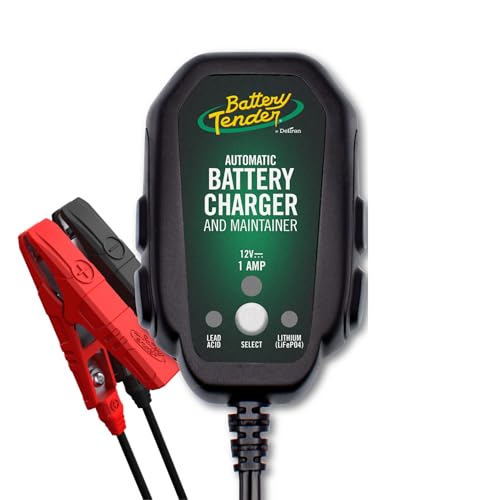
Best for the classic bolt-it-on-and-forget-it bike tender
- 800mA — ideal for 8–20Ah bike batteries
- Four-stage charging with true float
- Permanent ring-terminal harness
- Lead-acid and lithium settings
Why buy it: the maintainer riders have used for decades — 800 milliamps is exactly right for a small battery, and it holds float all winter without cooking it.

Best for a cheap automatic charger for powersports batteries
- 1.5A, 6V and 12V automatic
- Charge, maintain and float modes
- Handles 6V batteries on older bikes
- Reverse hook-up protection
Why buy it: the budget pick that still floats properly — and one of the few cheap chargers that covers 6-volt batteries on vintage machines.
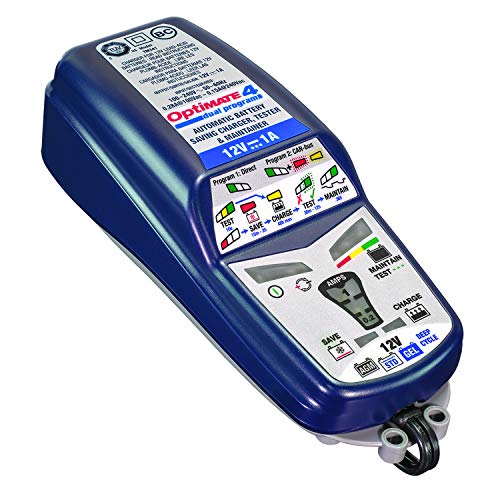
Best for CAN-bus bikes and batteries left flat too long
- 9-step 12V 1A powersports program
- Recovers batteries from as low as 0.5V
- Dual program charges via the CAN-bus port
- Weatherproof, recommended by OEMs
Why buy it: the charger dealers and OEMs point riders at — its recovery program brings back batteries most maintainers refuse to even start on.

Best for a garage with more than one battery chemistry
- Selectable AGM and lithium modes
- 6V and 12V, thermal compensation
- Force mode charges from 0 volts
- Eyelet harness and clamps included
Why buy it: the small charger that lets you set the chemistry explicitly — the safe way to maintain an AGM or LiFePO4 bike battery with one cheap unit.
Best for LiFePO4 powersports batteries and nothing else
- Dedicated 12.8V LiFePO4 program only
- 8-step charge with cell-balancing float
- Wakes BMS-protected packs safely
- Weatherproof, for 2–60Ah lithium packs
Why buy it: a lithium-only charger with no lead-acid mode to select by mistake — the safest option if every battery you own is LiFePO4.
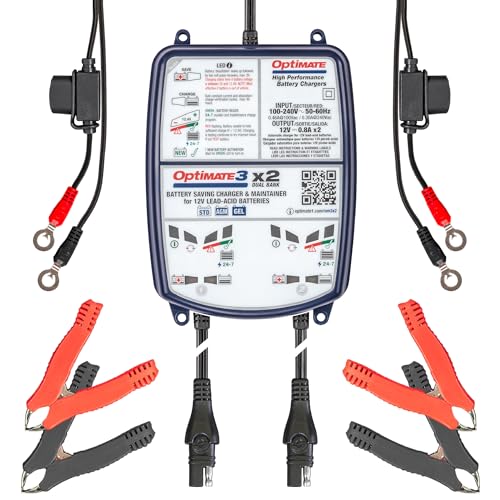
Best for maintaining two machines from one outlet
- Two independent 12V 0.8A banks
- 7-step charging on each bank
- Weatherproof sealed housing
- Each bank charges a different battery
Why buy it: the multi-bike answer — two genuinely independent banks, so a healthy battery and a tired one are each charged on their own schedule.
Prices are pulled from Amazon and were accurate as of Aug 22, 2026, 6:44 PM EDT. Product prices and availability are subject to change — the live price is shown on Amazon.
Lithium, AGM and Why the Mode Button Matters
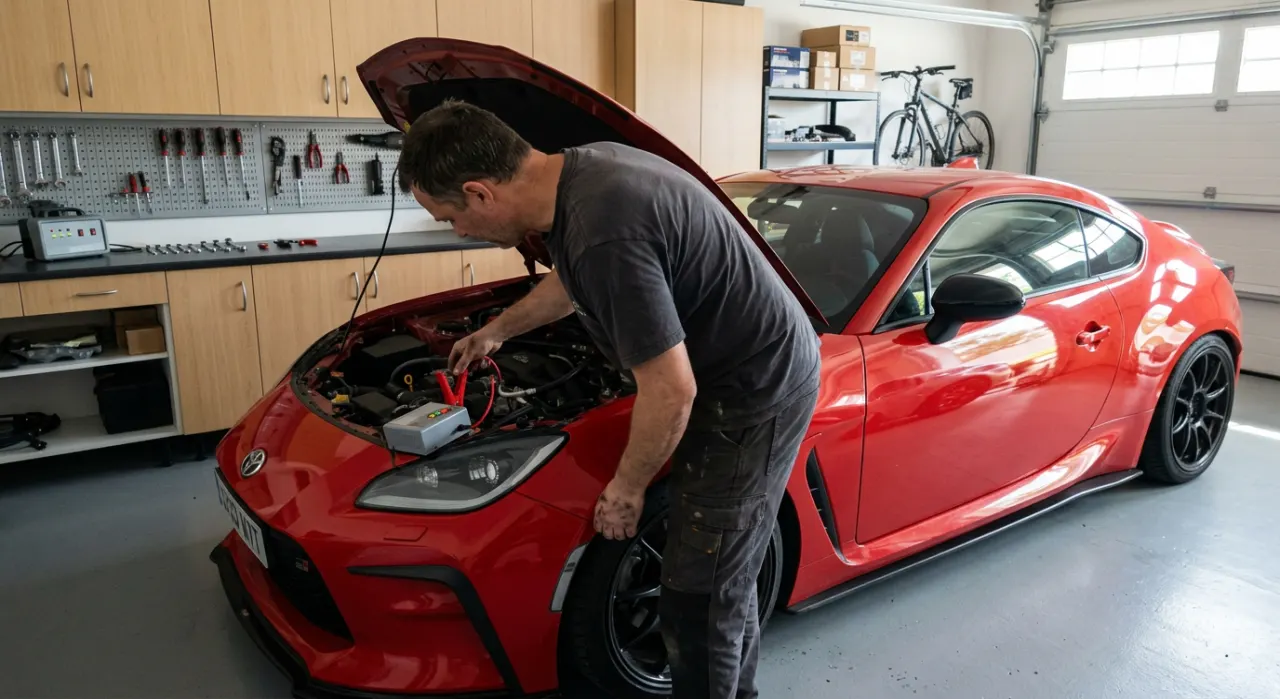
Powersports batteries used to be simple flooded lead-acid units you topped up with distilled water. Now a rider might have a sealed AGM in a cruiser, a LiFePO4 pack in a sport bike and a flooded battery in an old dual-sport, and those three want different treatment. AGM is sealed and pressure-regulated, so it tolerates less overvoltage than flooded and should not receive a desulfation pulse. LiFePO4 is a different world again: a lower absorption voltage, a different end-of-charge behavior, no meaningful float, and an internal BMS that may disconnect the pack entirely if it is over-discharged.
The safety point is worth stating plainly: charging a lithium battery on a lead-acid profile, or firing a repair pulse at a lithium or AGM battery, can damage it and in the worst case create a genuine fire risk. That is why every pick here either has a labeled chemistry mode or is lithium-only. If your charger has one program and no selector, it is a flooded lead-acid charger regardless of what the packaging claims. The broader chemistry rules are covered in best lithium battery charger and best AGM battery charger.
How to Choose a Motorcycle Charger
Work through four questions. What chemistry is the battery? Read the label and buy a charger with that mode. How low does it go? If the bike has already sat for a season, prioritize a charger with a recovery or force mode that will start on a battery below 3 volts — most maintainers simply refuse. Where will the charger live? A sealed, weatherproof unit matters if it hangs on a bike parked under a carport; a plastic-cased charger belongs indoors. How many machines? Two bikes plus a mower is a real argument for a dual-bank unit rather than three chargers and one outlet.
Ignore amperage marketing. On a motorcycle, more amps is not an upgrade — 0.8 to 1.5 amps covers essentially every bike battery, and the only riders who should look higher are those with large touring or side-by-side batteries in the 20 to 30 amp-hour range.
Common Mistakes
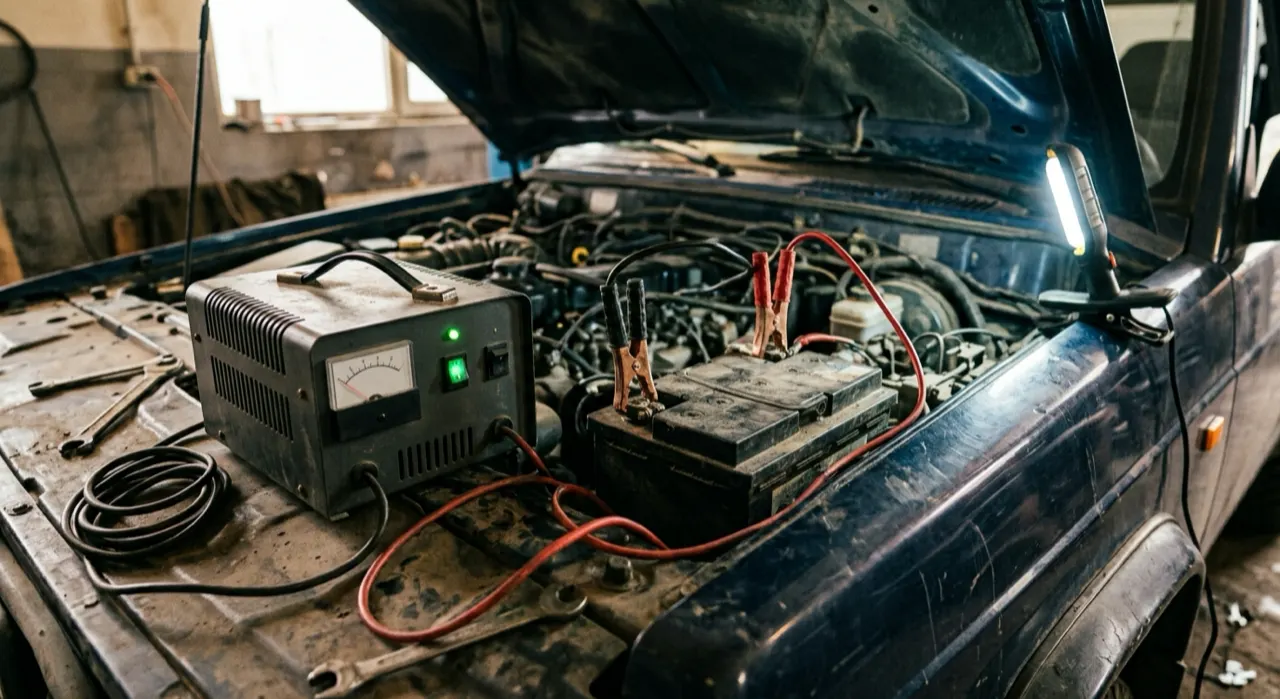
Using a car charger on a bike battery. A 10 amp charger aimed at a 12Ah battery makes heat the case cannot shed. Stay at or under about 1.5 amps.
Leaving an unregulated trickle charger connected. Old constant-current chargers keep pushing after the battery is full, boiling off electrolyte. Only regulated float chargers can be left connected.
Charging a lithium battery on a lead-acid setting. Set the mode first, every time. If the charger has no lithium mode, do not use it on a lithium battery.
Storing the battery on a concrete floor and forgetting it. The concrete myth is overstated, but leaving a battery disconnected and unmaintained for six months is not — it will sulfate. Put it on a maintainer or check it monthly.
How We Rank
We have no lab and we do not bench-test chargers ourselves. We rank by aggregating owner ratings, review volume and the recurring themes riders report after living with a charger for years, weighed against published specifications and the consensus among dealers and powersports forums. Four criteria carry the most weight. Appropriate current — a charger sized for a small battery, not a car battery. A true float stage, because a bike charger is judged mostly on whether it can safely stay connected all winter. Chemistry selection, since AGM and lithium bike batteries are now everywhere and mismatched profiles are a safety matter. And build and harness quality — weatherproofing, cable length and the quick-connect lead that determines whether the charger is used at all. Prices were current at the time of writing.
The Verdict
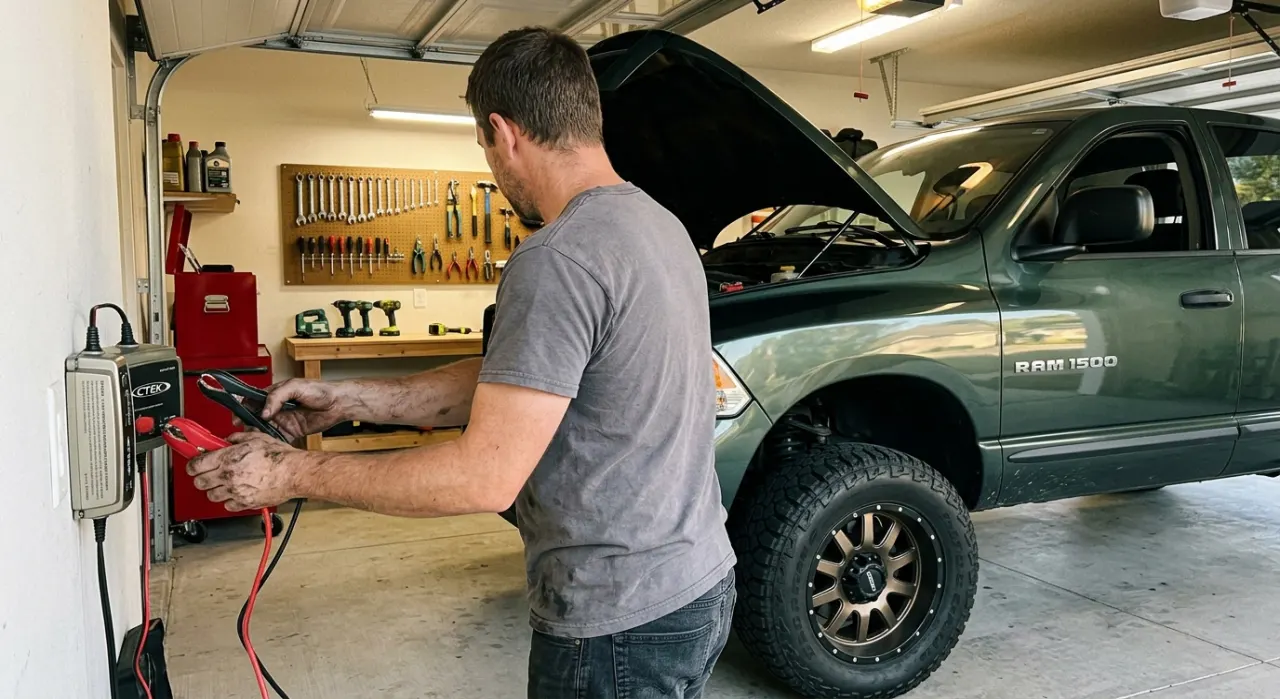
For a flooded or AGM bike battery and a normal winter layup, the Battery Tender Junior is still the maintainer riders rate above everything else, and it costs less than a single battery replacement. If your fleet includes AGM and lithium, spend the same money on the NOCO GENIUS1 and use the chemistry modes. If a battery has already been left flat for months, the OptiMate 4 is the one with a real chance of bringing it back, and riders with two machines should just buy the OptiMate 3 Dual Bank and be done.
Related reading: best trickle charger for cars and everything else, lithium chargers, the battery chargers hub, and jump starters for motorcycles for the roadside side of the problem.
Quick Comparison
Battery Tender Junior (800mA)
Best for the classic bolt-it-on-and-forget-it bike tender
Best Value
Schumacher SC1319 (1.5A, 3-in-1)
Check Price on Amazon
Best Premium
OptiMate 4 Dual Program (TM-341)
Check Price on Amazon
Best for AGM & Lithium Bikes
NOCO GENIUS1 (1A)
$29.87 · Check Price on Amazon
Best for Lithium Batteries
OptiMate Lithium 4s 0.8A (TM-471)
$76.95 · Check Price on Amazon
Best for Two Bikes
OptiMate 3 Dual Bank (TM-451)
$150.95 · Check Price on Amazon
Prices are pulled from Amazon and were accurate as of Aug 22, 2026, 6:44 PM EDT. Product prices and availability are subject to change — the live price is shown on Amazon.