

Affiliate Disclosure
Some links on this page are affiliate links. As an Amazon Associate, we earn from qualifying purchases — at no extra cost to you. We do not buy, test, or physically handle the products we cover; our rankings come from aggregated owner reviews, ratings and expert consensus. Commissions never change our verdicts. How we rank & full disclosure.
The short version: a marine charger is not an automotive charger in a waterproof box. It stays permanently mounted on the boat, it is sealed against spray and humidity, it is ignition protected so it cannot set off fuel vapor in a bilge, and it has multiple independent banks because a boat carries a starting battery and one or more deep-cycle batteries that need entirely different treatment. Ranked across thousands of owner reviews, our #1 is the NOCO Genius GEN5X2: two independent 5 amp banks, sealed and ignition protected, with lead-acid, AGM and lithium profiles. Below is the full ranked field, how to count banks properly, and the specs that separate a marine charger from a garage one.
For the roadside-equivalent problem — a dead cranking battery at the ramp — see jump starters for boats and marine. A jump starter delivers cranking current and charges nothing; the two products do not overlap.
Top Picks at a Glance
Why the NOCO Genius GEN5X2 Is Our #1
Most boats have exactly two batteries: one to start the engine and one to run the trolling motor or the accessories. The GEN5X2 is built for that boat. Two fully independent 5 amp banks mean the cranking battery and the deep-cycle battery are each charged on their own curve — which matters more than it sounds, because a healthy start battery reaches float in an hour while a drawn-down deep-cycle battery is still in bulk. Chargers that split a single output between batteries end up compromising both.
The construction is the other half of the argument. It is fully sealed and ignition protected, which is what makes permanent installation in an engine compartment acceptable, and it is markedly smaller and lighter than the previous generation of on-board chargers — owners repeatedly mention fitting it in places a bigger unit could not go. An integrated thermal sensor trims output in a hot engine bay and lifts it in cold water storage, and each bank can be set for flooded, AGM or lithium, which matters as more anglers move trolling banks to LiFePO4.
The honest limits: 5 amps per bank is a maintenance-and-overnight-recovery rate, not a fast charge. If you fish back-to-back days and draw a 100Ah deep-cycle battery down hard, a 10 or 12 amp per bank unit like the ProSport 12 will get you back out sooner. Installation also takes real work — this is a mounted, wired device, not something you clip on.
Best Marine Battery Chargers 2026: The Ranked Field
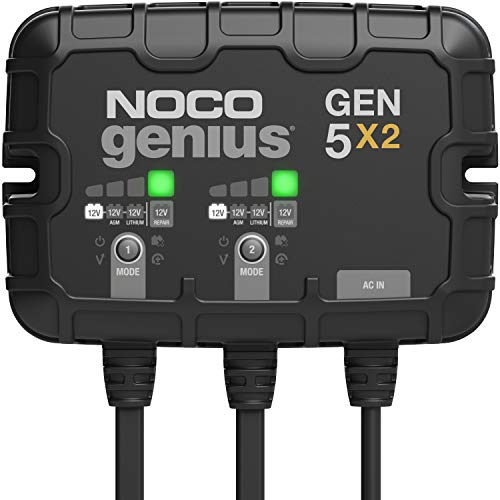
Best for a starting battery plus one trolling battery
- 5A per bank, banks charge independently
- Fully sealed and ignition protected
- AGM, lithium and deep-cycle profiles
- Thermal sensor for hot engine bays
Why buy it: the on-board charger boaters rate highest — compact enough to mount anywhere, with independent banks so a tired battery does not drag the good one down.

Best for small boats and dual-battery maintenance
- 2A per bank, 6V and 12V capable
- Sealed housing, mountable anywhere
- AGM and lithium modes per bank
- Maintains two batteries all off-season
Why buy it: the cheapest sensible way to keep two boat batteries alive — 2 amps a bank is maintenance current, but it covers the layup months perfectly.
Best for serious fishing boats and 12/24V systems
- 12A total, distributed on demand
- 12V and 24V trolling configurations
- Waterproof aluminum case, ignition protected
- Monthly automatic reconditioning cycle
Why buy it: the charger tournament anglers keep buying — it reallocates current to whichever bank needs it instead of splitting it evenly and wasting time.
Best for trolling motor banks on a bass boat
- Digital 2-bank on-board charger
- Selectable AGM, flooded and gel
- Waterproof, vibration-resistant mounting
- Multi-stage charge with maintenance mode
Why buy it: the name trolling motor owners already trust — matched profiles for deep-cycle batteries and a mount built for the pounding a bass boat takes.
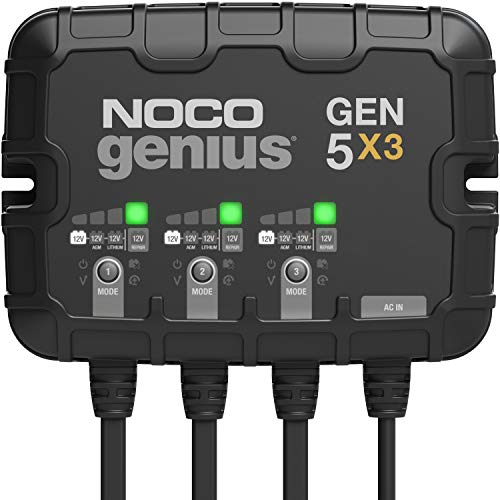
Best for a cranking battery plus a 24V trolling pair
- 5A per bank across three banks
- Each bank independently regulated
- Sealed, ignition protected housing
- Lead-acid and LiFePO4 supported
Why buy it: the right shape for the common three-battery boat — one start battery and two trolling batteries, each charged on its own terms.

Best for large deep-cycle house banks on cruisers
- 25A single output, IP67 sealed
- Bluetooth monitoring and configuration
- Adaptive lead-acid and LiFePO4 curves
- Storage mode for long layups
Why buy it: the cruiser answer — enough current to refill a large house bank in a day, and the app shows exactly what every stage is doing.
Prices are pulled from Amazon and were accurate as of Aug 22, 2026, 6:44 PM EDT. Product prices and availability are subject to change — the live price is shown on Amazon.

Counting Banks and Getting the Wiring Right
The most common buying mistake in this category is buying too few banks. One bank per battery — always. A 24V trolling motor running two 12V batteries in series still needs two banks, because each battery must be charged individually to stay balanced; charging the pair as a 24V string through one output slowly drifts them apart and one dies early. So a bass boat with a cranking battery and a 24V trolling pair is a three-bank boat, and a 36V trolling system makes it four.
Wiring follows the same logic: each bank's positive and negative leads go directly to that battery's own terminals, not to a shared busbar, and the AC side terminates at a dedicated marine inlet or a properly rated shore cord. Fuses belong close to the battery on each DC lead — most quality on-board chargers ship with in-line fuses precisely for this. And mount the charger high and dry where you can: sealed does not mean submersible for most units.
Deep-Cycle Batteries Charge Differently
A starting battery is designed to deliver a huge current for a few seconds and then be immediately topped back up by the alternator. A deep-cycle battery is designed to be drained to 50 percent or lower and refilled slowly, over and over. They want different charging: deep-cycle batteries need a longer absorption stage to actually reach 100 percent, and chronic undercharging — stopping at 85 or 90 percent, day after day — is the single biggest cause of premature deep-cycle failure. That is why marine chargers advertise long absorption phases and monthly reconditioning cycles, and why an automotive charger that terminates early is a poor substitute.
Chemistry adds another layer. AGM deep-cycle batteries are common on boats and should never receive a desulfation pulse. LiFePO4 trolling batteries are increasingly common and must be charged on a lithium profile — a lead-acid curve can push them outside their safe voltage window, which is a safety matter rather than an efficiency one. Every pick here supports selectable chemistry; set it per bank, because your start battery and your trolling batteries may not match. The chemistry rules are covered in full in best lithium battery charger and best AGM battery charger.
How to Choose a Marine Charger
Work through it in this order. Bank count first, because it is the one thing you cannot fix later without buying another charger — one bank per battery, counting each 12V battery in a 24V or 36V trolling string separately. Amps per bank second: 2 amps a bank is an off-season maintainer, 5 amps recovers a deep-cycle battery overnight, and 10 to 12 amps a bank is what you want if you fish consecutive days. Chemistry profiles third — check that each bank can be set for what is actually connected to it, because a boat with an AGM cranking battery and lithium trolling batteries needs both.
Then the marine-specific details. Confirm the unit states ignition protection and an ingress rating; look for corrosion-resistant hardware and a housing designed to be through-bolted rather than stuck down; and check the DC lead length actually reaches from a sensible mounting point to the battery compartment. Finally, think about the AC side: a dedicated marine inlet is a far better long-term answer than an extension cord run through a hatch, and it is what keeps the charger usable on a mooring or in a covered slip.
Common Mistakes
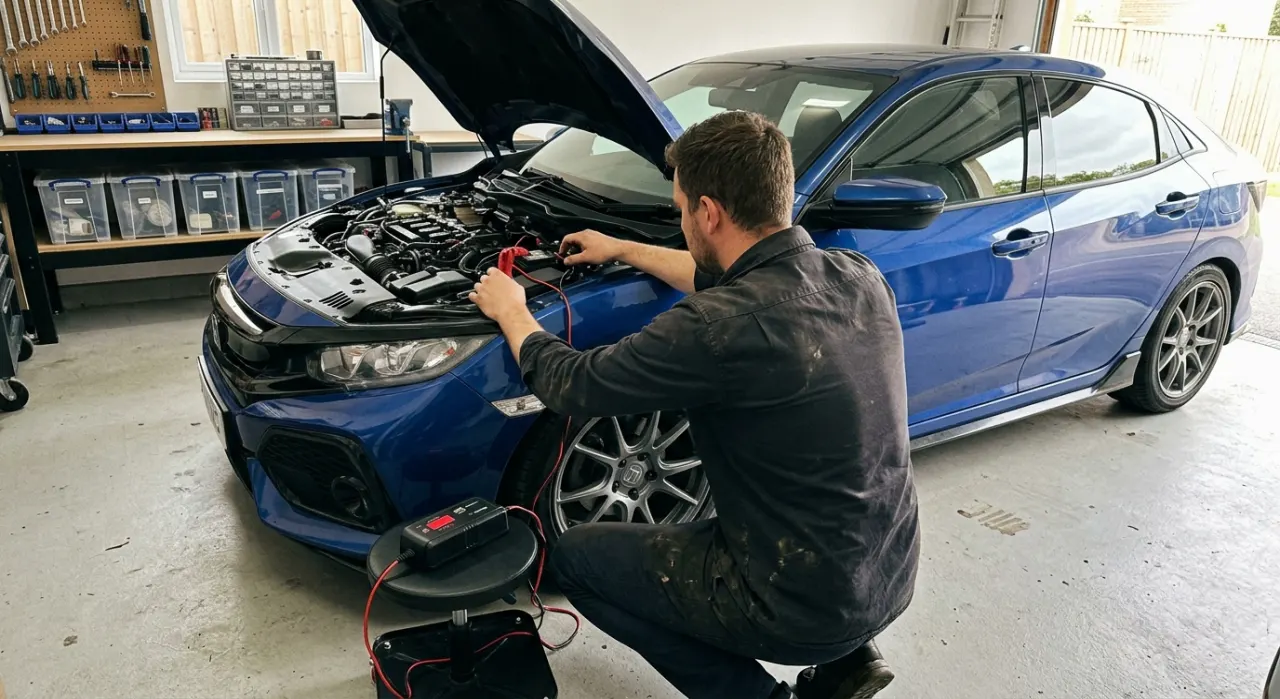
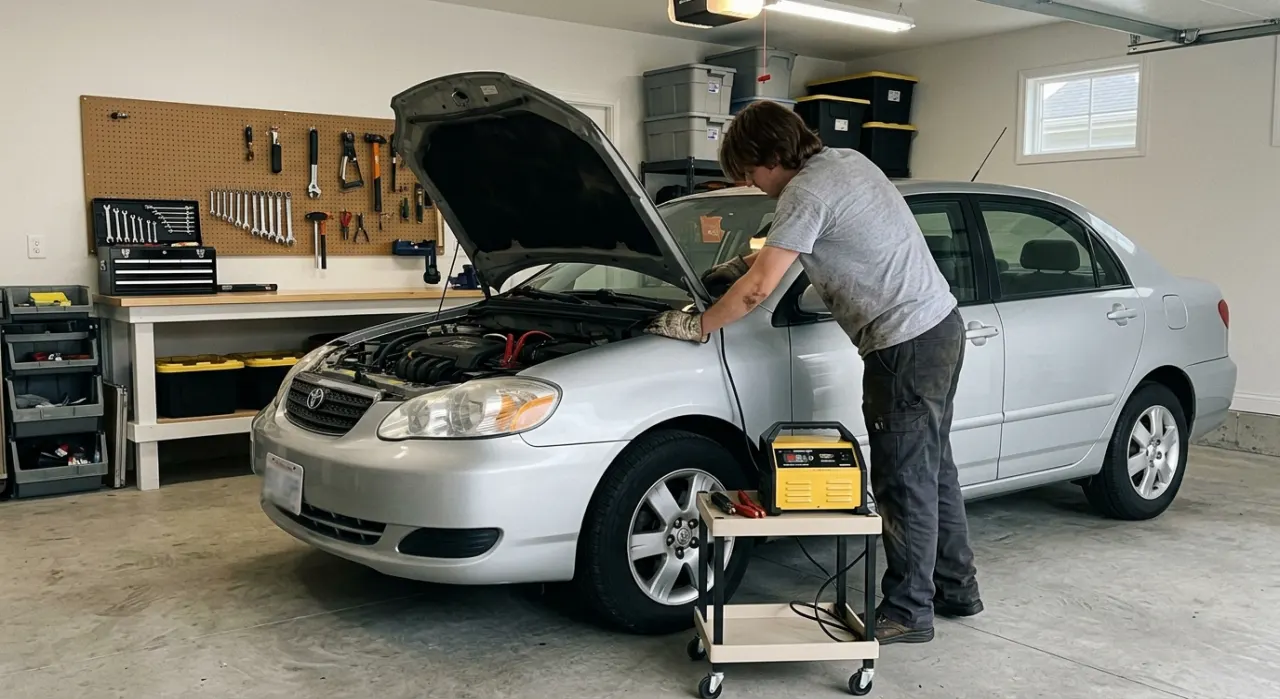
Installing an automotive charger on the boat. No ignition protection, no sealing, no independent banks. Use one only on a battery removed to the garage.
Charging a 24V trolling pair through one bank. The batteries drift out of balance and one fails early. One bank per battery.
Leaving batteries partially charged over winter. A lead-acid deep-cycle battery stored at 60 percent sulfates. Charge fully, then leave the on-board charger connected or use a maintainer — see best trickle charger.
Ignoring corrosion at the ring terminals. Marine failures are usually connection failures. Check and grease the terminals each season.

How We Rank
We have no lab, no test boat, and we do not bench-test chargers ourselves. We rank by aggregating owner ratings, review volume and the recurring themes boaters report across seasons, weighed against published specifications and standard marine electrical practice. Marine chargers face a stricter filter than automotive ones: an on-board unit must be sealed and state ignition protection to be listed. From there we weight bank independence, deep-cycle and chemistry profile support, current per bank relative to realistic battery sizes, and corrosion and vibration durability, which is where owner reports after two or three seasons are far more revealing than any spec sheet. Prices were current at the time of writing.
The Verdict
For the two-battery boat that most people own, the NOCO Genius GEN5X2 is the on-board charger owners rate highest — independent banks, sealed and ignition protected, and small enough to mount where older units would not fit. Anglers who fish hard on consecutive days should step up to the ProMariner ProSport 12 for its higher current and on-demand distribution, and three-battery boats should simply buy the GEN5X3. If your problem is one large house bank rather than several small ones, the Victron Blue Smart IP67 25A is the better shape. On a tight budget, the NOCO GENIUS2X2 will at least keep two batteries alive through the off-season.
Related reading: the battery chargers hub, 12V chargers for the garage bench, and roadside emergency for what belongs in the tow vehicle.
Quick Comparison
NOCO Genius GEN5X2 (2-Bank, 10A Total)
Best for a starting battery plus one trolling battery
Best Value
NOCO GENIUS2X2 (4A, 2-Bank)
$99.95 · Check Price on Amazon
Best Premium
ProMariner ProSport 12 (2-Bank, 12A)
Check Price on Amazon
Best for Trolling Motors
Minn Kota MK 210D (2-Bank, 5A per Bank)
Check Price on Amazon
Best 3-Bank
NOCO Genius GEN5X3 (3-Bank, 15A Total)
$199.95 · Check Price on Amazon
Best for Big House Banks
Victron Blue Smart IP67 12V 25A
Check Price on Amazon
Prices are pulled from Amazon and were accurate as of Aug 22, 2026, 6:44 PM EDT. Product prices and availability are subject to change — the live price is shown on Amazon.