
Affiliate Disclosure
Some links on this page are affiliate links. As an Amazon Associate, we earn from qualifying purchases — at no extra cost to you. We do not buy, test, or physically handle the products we cover; our rankings come from aggregated owner reviews, ratings and expert consensus. Commissions never change our verdicts. How we rank & full disclosure.
That squeal from your brakes stops traffic — literally and figuratively. It could mean something minor, something you need to address this weekend, or something you should not drive on until you fix it. The trick is knowing which one you are dealing with.
This guide breaks down every common brake noise by type, tells you exactly what is causing it, and gives you the practical fixes that actually work. We will also be straight with you about the one noise that is never acceptable and always dangerous.
First: What Kind of Noise Is It?
Not all brake noise is created equal. The sound — its pitch, when it happens, and how long it lasts — tells you a lot before you even pull a wheel.
- High-pitched squeal when braking: Usually vibration-related. Glazed pads or rotors, missing shims, no anti-squeal grease, or budget pads with poor damping.
- Thin, persistent squeal at low speed: Almost certainly the wear indicator. This is your brake system telling you the pads are at minimum thickness. Do not ignore it.
- Squeal in the morning that disappears: Overnight surface rust on the rotor face. Normal in most climates. If it clears within a few stops, not a problem.
- Grinding, scraping, or metal-on-metal: The pad material is gone. You are grinding bare metal caliper bracket or backing plate directly into your rotor. This is a safety emergency. Stop driving and fix it immediately.
The Wear Indicator Squeal: Replace Now
Most quality brake pads include a small steel tab called a wear indicator. When the friction material wears down to its minimum safe thickness — typically 2–3 mm — that tab contacts the rotor face and creates a deliberate, high-pitched squeal.
This is not a defect. It is the system working. Your pads are telling you they need replacing before they damage your rotors.
If you hear a consistent squeal that goes away when you press the brake pedal, that is a classic wear indicator pattern. The pressure lifts the tab off the rotor. Release the pedal, tab drops back, squeal returns.
Check your pad thickness using the guide at when to replace brake pads and compare against the signs of worn brakes safety checklist if you are unsure whether you are still in the safe zone.
Grinding Brakes: A Safety Emergency
Let us be completely clear: grinding is never normal. There are no exceptions.
When you hear a grinding, metal-on-metal scrape — especially one that worsens under braking — the friction material on your pad is gone. The steel backing plate is now contacting the rotor directly. Every second you drive like this you are:
- Cutting grooves into your brake rotor (an expensive repair that was avoidable)
- Generating heat with no friction material to manage it
- Dramatically increasing your stopping distance
- Risking brake fade, rotor cracking, or complete loss of braking on that corner
Pull over safely, arrange a tow if you have to, and do not move the vehicle under its own power until the brakes are replaced. Grinding almost always means rotor damage too — inspect both before assuming a pad swap alone will sort it.
Visit our safety spoke for a full rundown on what constitutes a non-negotiable repair.
Why Brake Pads Squeal: The Main Causes
1. Vibration Between Pad and Rotor
The most common source of brake squeal is vibration. During braking, the pad and rotor can enter a resonance frequency — essentially a very fast oscillation — that produces that familiar high-pitched noise.
This is more common with:
- Semi-metallic pads, which are harder and transmit vibration more readily
- Cold brakes on the first stop of the day
- Light, gentle braking that does not fully dampen the pad against the rotor
2. Glazed Pads or Rotors
Glazing happens when the pad surface or rotor face gets overheated and the friction material hardens and polishes to a glassy finish. Common causes include riding the brakes on long descents, not bedding in new pads correctly, or running pads beyond their heat rating.
A glazed pad squeals because the hardened surface vibrates against the rotor instead of gripping it. The fix is either proper bedding-in procedure to clean up light glazing, or replacement if it is severe.
3. Missing or Worn Anti-Squeal Shims
Brake pad shims are thin metal or composite layers bonded or clipped to the backing plate. Their job is to dampen vibration and act as a thermal barrier between the pad and the caliper piston.
If shims are missing, damaged, or have detached, you get direct metal-to-metal contact between the pad backing plate and the piston face. That creates the perfect conditions for squeal.
When fitting new pads, always check that shims are present and correctly seated. Many aftermarket pads include shims — but not all. If yours did not come with them, source OEM-spec shims separately.
4. No Anti-Squeal Grease on Contact Points
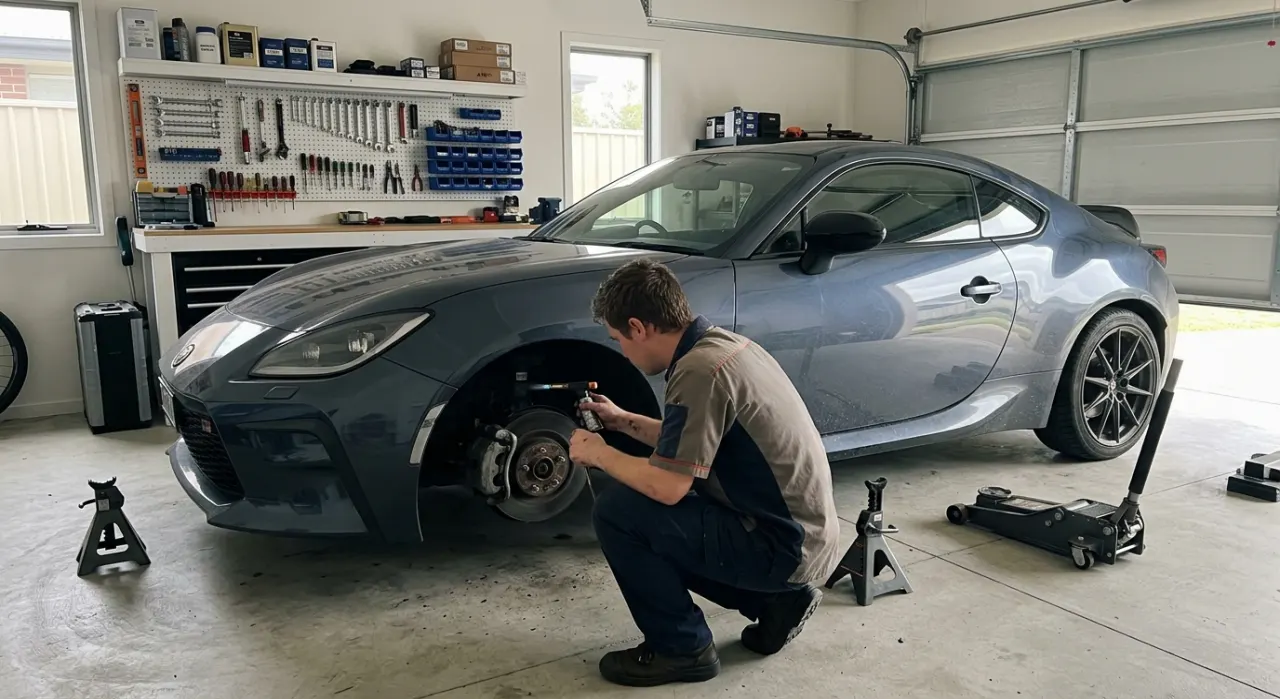
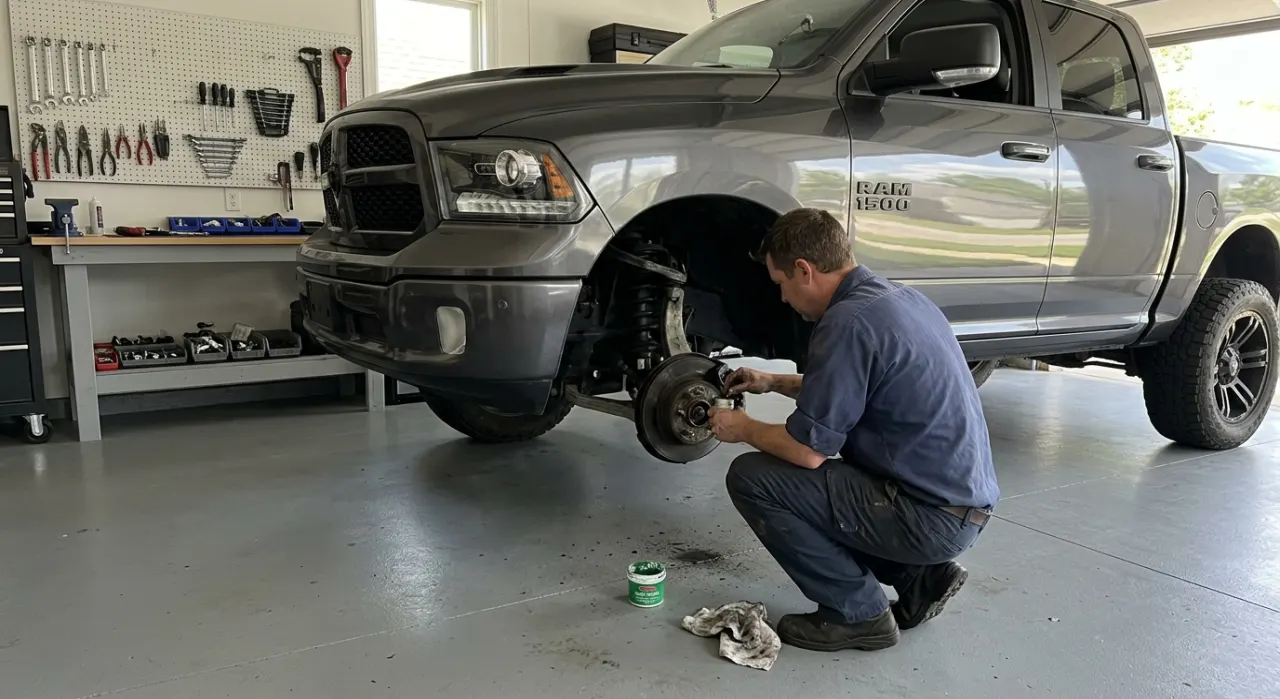
Brake caliper slides, the abutment contact points on the caliper bracket, and the pad backing plate (never the friction face) all benefit from a thin application of high-temperature ceramic anti-squeal grease.
Without it, the metal-to-metal contact points become a vibration transmitter. The pad cannot move freely on the slides, which affects even pad wear and introduces the stick-slip vibration that causes squeal.
Use the right grease. Do not use standard wheel bearing grease. Do not use copper grease on aluminum calipers. Ceramic-based brake lubricant is the right call — it stays stable at braking temperatures and does not attack rubber boots.
5. Low-Quality or Wrong-Spec Pads
Budget brake pads frequently squeal because the friction compound formulation is inconsistent, the backing plate material is inferior, and the shims (if present at all) are low-grade. You generally do get what you pay for with brake pads.
If you have installed aftermarket pads and they squeal despite correct installation, the pad spec may also be wrong for your vehicle's weight, rotor type, or typical use. For a thorough comparison, see our guide to ceramic vs semi-metallic vs organic brake pads.
Brakes Squeaking After New Pads: What Is Normal and What Is Not
Fresh pads on a street car commonly squeal for the first few hundred miles. This is normal and expected.
New brake pads have a release coating on the friction surface from the manufacturing process, and the surface is perfectly flat — not yet matched to the micro-profile of your specific rotor. Until that coating burns off and the surfaces mate, some squeal is the price of admission.
Normal bedding-in noise typically:
- Appears on the first several braking events
- Reduces noticeably within 120–300 miles of normal driving
- Is a light squeal, not a grinding or scraping noise
- Disappears completely after a proper bedding-in cycle
If squeal persists beyond that window, something else is going on. The most common culprits after a pad change are:
- Anti-squeal grease not applied to backing plate and caliper abutments
- Shims not refitted or absent from the new pads
- Anti-rattle clips not reinstalled correctly or missing
- Glazing caused by insufficient bedding-in or excessive heat on early stops
- Wrong pad spec for your rotor type or vehicle weight
Our bedding-in guide walks you through the correct procedure step by step to prevent glazing and reduce break-in squeal.
How to Fix Squealing Brake Pads
Apply Anti-Squeal Shims and Grease Correctly
This is the fix that addresses the majority of installation-related squeal. When fitting pads:
- Clean the caliper slide pins and regrease with fresh brake lubricant
- Apply a very thin smear of ceramic anti-squeal paste to the caliper abutment contact points where the pad ears sit — not the friction material, not the rotor
- Apply a thin film to the pad backing plate face that contacts the caliper piston
- Ensure shims are properly attached and seated flat against the backing plate
- Reinstall all anti-rattle clips and spring clips — these are not optional hardware
Perform a Proper Bedding-In Cycle
New pads need to transfer an even layer of friction material onto the rotor surface. If you skip this step or do it poorly, you get uneven deposits, hot spots, and glazing — all squeal contributors.
The short version: a series of progressively firm braking events from highway speed, with full cool-down intervals between them. Do not come to a complete stop while the rotors are hot. Full procedure at our bedding-in guide.
Chamfer the Leading and Trailing Edges
Some professional brake technicians chamfer (bevel at roughly 45 degrees) the leading and trailing edges of a new pad using a file or angle grinder. This reduces the abrupt edge contact that can initiate resonance.
It is not always necessary, but for pads that squeal despite correct installation and grease, it is worth trying. Light material removal, clean angled cut, no sharp corners.
Torque Caliper Bolts to Spec
Loose caliper bolts allow the caliper to move slightly under braking load. That movement introduces vibration pathways that feed squeal. Always torque caliper mounting bolts and guide pin bolts to the manufacturer specification — not just hand-tight, not by feel. Torque wrench, proper spec, done.
Upgrade to Better Pads
If you have sorted all of the above and squeal persists, the pads are the variable. Ceramic pads are generally quieter than semi-metallic alternatives for street driving because the compound dampens vibration rather than transmitting it. For a full comparison of compound types and their trade-offs, check our ceramic vs semi-metallic vs organic breakdown.
When Brake Noise Is a Real Safety Problem
To summarise the lines you do not want to cross:
- Grinding at any time = stop driving, fix immediately. Metal is contacting metal. Your stopping distance is compromised.
- Persistent squeal that does not resolve after bedding-in = investigate. Something is wrong with the installation or the pads are worn.
- Wear indicator squeal = replace pads this week, not next month.
- Squeal accompanied by pulling to one side = caliper or hardware issue. Get it inspected.
- Any brake noise after a recent repair = go back and recheck the installation.
The signs of worn brakes safety page gives you the full decision framework for when to keep driving and when to stop.
For a complete overview of the entire brake pad replacement process, return to the Brake Pad Refresh hub.
Recommended Products
If your diagnosis points to the pads themselves, these are quiet, low-dust sets worth a look. We aggregate owner reviews rather than bench-testing brakes ourselves, and prices are indicative — check the live listing.

Best for the quietest, lowest-dust daily driving
- Ceramic compound built for near-silent braking
- Very low dust keeps your wheels clean
- OE-quality feel and long pad life
Why buy it: if squeal is driving you mad, a quiet ceramic compound is the single biggest fix — this is the benchmark for silent daily braking.

Best for a squeal-free install with shims already in the box
- Ships with new shims, clips and hardware
- Synthetic lubricant pre-applied on the shims
- Quiet ceramic friction formula
Why buy it: most persistent squeal traces back to missing shims and hardware — this set includes them, so you fix the root cause on install.

Best for dependable, quiet everyday braking on a budget
- One-piece design damps vibration at the source
- Quiet operation across the temperature range
- Widely available for most vehicles
Why buy it: a proven, low-noise pad that tackles the vibration behind most squeal without costing much.

Best for stronger bite that still stays quiet and clean
- Carbon-fiber ceramic compound
- Low dust for the added grip
- Confident cold bite
Why buy it: if you want more stopping power without trading back into noise and dust, this is the quiet performance upgrade.
Prices are pulled from Amazon and were accurate as of Aug 22, 2026, 6:54 PM EDT. Product prices and availability are subject to change — the live price is shown on Amazon.